Fluorescent Dye
Fluorescence is a phenomenon of photoluminescence in luminescence. When an atom is irradiated by light, some electrons around the nucleus jump from their original orbitals to higher energy orbitals under the influence of light energy, i.e., from the ground state to the first or second excited single-line state, etc. Due to the instability of the first or second excited singlet state, the electron returns from the excited singlet state to the ground state accompanied by released energy, resulting in fluorescence.
Fluorescent dyes can be covalently bound or physically adsorbed in the structure of the substance. The fluorescence properties allow for the characterization, localization and quantitative analysis of the labeled object. Fluorescent dyes have shown great potential for the detection of proteins, nucleic acids, cells, and immunoassays, attributed to the advantages in non-radioactive contamination, simple experimental operation and easy observation.
Fluorescent dyes have penetrated many fields such as pharmacology, physiology, environmental science, and information science, as well as functional studies of proteins and drug screening.
All Product Categories
-
Fluorescent Dye Related Products (4894)
Related Products (4894)

-
Antibodies (4)
-
Alizarin Red S Indicator (4.3-6.3), IND
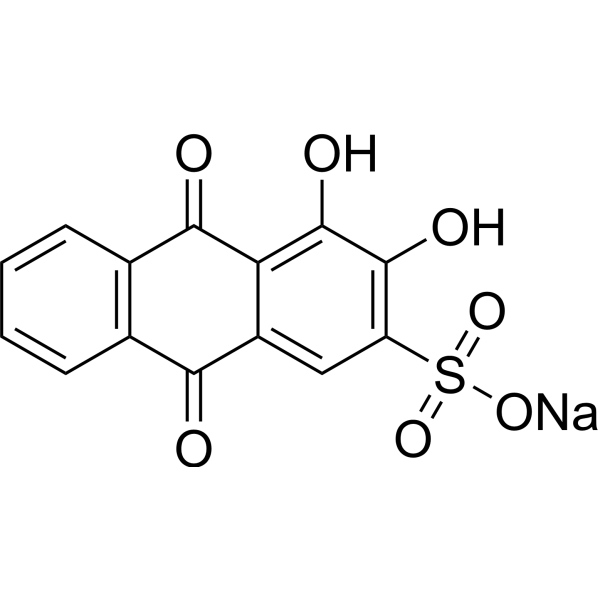 0 ImagesCat. No.: HY-W110927CAS No.: 130-22-3Alizarin red S indicator (C.I. 58005) is a reductively active (quinone-based) anthraquinone dye that forms complexes with metal ions (such as zirconium, calcium) or boric acid to label calcium deposition and perform electrochemical sensing functions. Alizarin Red S undergoes reversible redox reactions (for electrochemical detection) and irreversible chelation (for bone staining). Alizarin Red S is mainly used in bone metabolism research (labeling mineralized tissue), sugar detection (boric acid-sugar competition system) and metal ion sensing (such as zirconium ion detection), and can be used in osteoporosis and metabolic disease research.
-
DiAzKs hydrochloride
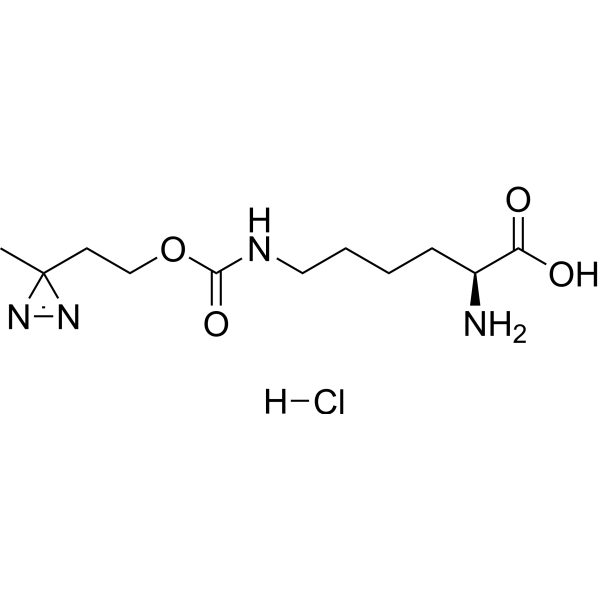 0 ImagesSynonyms: H-L-Photo-lysine hydrochlorideDiAzKs (H-L-Photo-lysine) hydrochloride is a diazirine-containing lysine amino acid and is a photo-cross-linker. DiAzKs hydrochloride can site-selective incorporated into proteins and is used to crosslink protein-protein interactions in vitro and in living cells. DiAzKs hydrochloride acts as a UV light-activated photo-crosslinking probe.
-
6-FAM-PEG3-Azide
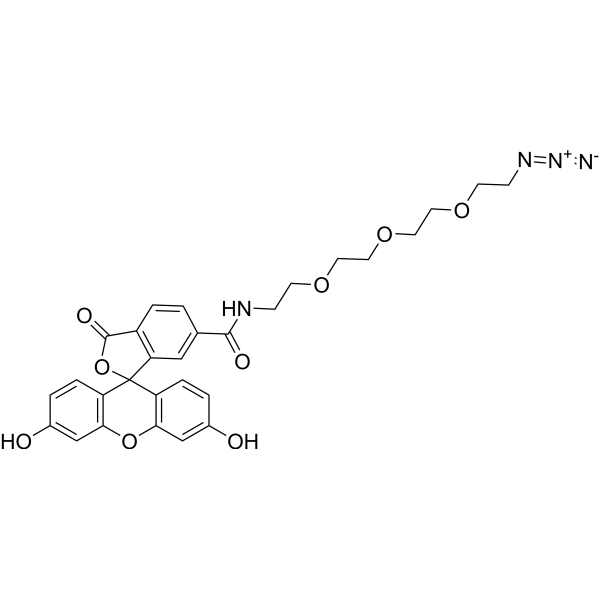 0 Images6-FAM-PEG3-Azide is a fluorescent dye that can be used to label oligonucleotide. 6-FAM-PEG3-Azide is a click chemistry reagent, it contains an Azide group and can undergo copper-catalyzed azide-alkyne cycloaddition reaction (CuAAc) with molecules containing Alkyne groups. It can also undergo strain-promoted alkyne-azide cycloaddition (SPAAC) reactions with molecules containing DBCO or BCN groups.
-
Halo tag TMR (solution)
 0 ImagesCat. No.: HY-DY1107CAS No.: 2764890-88-0Halo tag TMR (solution) is a red fluorescent dye composed of Halo tag ligand molecules and TMR (TAMRA). Halo tag can quickly and stably covalently bind to Halo protein with high specificity and affinity (Ex/Em = 550/576 nm).
Solvent and concentration: DMSO: 5 mM
-
RB-OPD
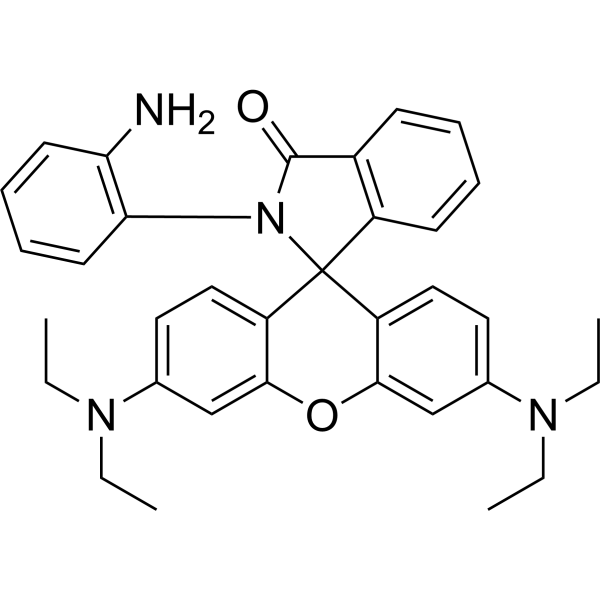 0 ImagesSynonyms: NO-redRB-OPD (NO-red) is a o-phenylenediamine (OPD)-locked rhodamine nitric oxide (NO) fluorescent probe with great sensitivity and selectivity (λex=550 nm, λem=590 nm).
-
D-Luciferin 6′-methyl ether
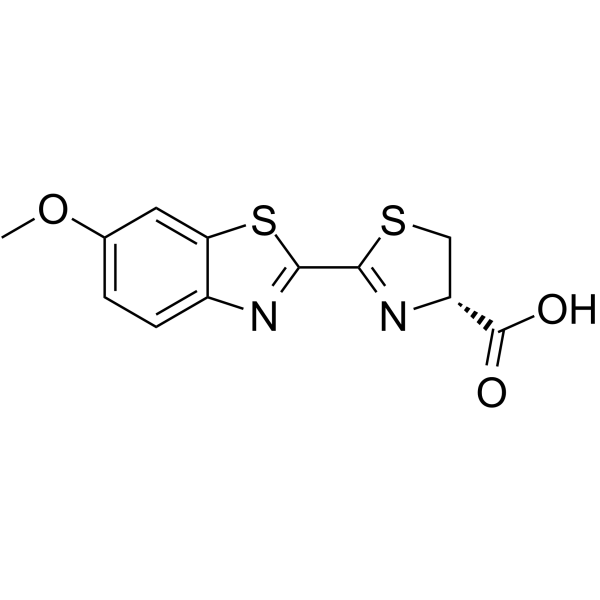 0 ImagesSynonyms: 6′-MethoxyluciferinD-Luciferin 6′-methyl ether (6′-Methoxyluciferin; compound 19a) is a potent luciferase from the North American firefly Photinus pyralis (PpyLuc) inhibitor with an IC50 of 0.1 µM. D-Luciferin 6′-methyl ether, a D-luciferin analog, shows non-specific interactions at ATP- and luciferin-binding sites of the PpyLuc active site.
-
DBCO-PEG-SH (MW 3400)
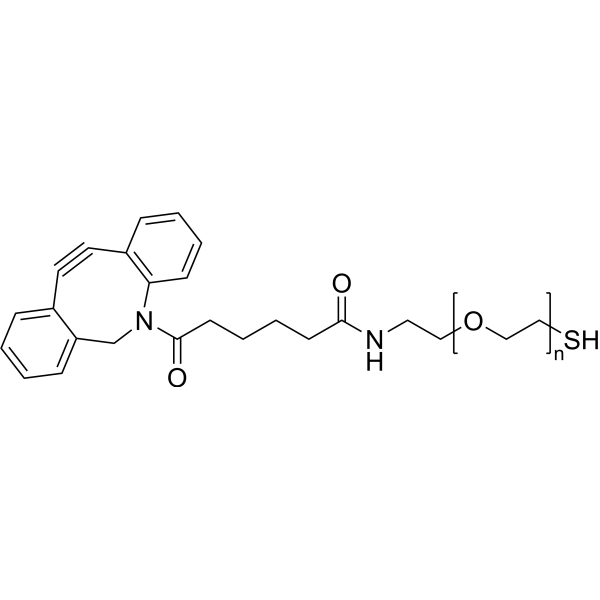 0 ImagesCat. No.: HY-D2306Synonyms: DBCO-PEG-Thiol (MW 3400)DBCO-PEG-SH is a multifunctional dye. Dyes are important tools in biological experiments. They can help researchers observe and analyze cell structures, track biomolecules, evaluate cell functions, distinguish cell types, detect biomolecules, study tissue pathology and monitor microorganisms. Their applications range from basic scientific research to clinical A wide range of diagnostics. Dyes are also widely used in traditional fields such as textile dyeing, as well as in emerging fields such as functional textile processing, food pigments and dye-sensitized solar cells.

-
CalFluor 488 Azide
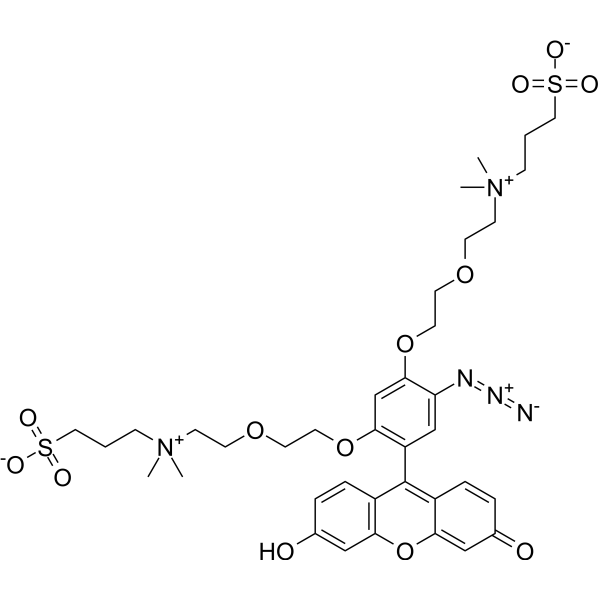 0 ImagesCat. No.: HY-151708CAS No.: 1798305-98-2CalFluor 488 Azide is a water-soluble fluorogenic azide probe. CalFluor 488 Azide is activated by Cu-catalyzed or metal-free click reaction. CalFluor 488 Azide is not fluorescent until it is reacted with alkynes. It contains an azide group and can undergo copper-catalyzed azide-alkyne cycloaddition (CuAAc) with molecules containing alkyne groups. It can also undergo ring strain-promoted alkyne-azide cycloaddition (SPAAC) with molecules containing DBCO or BCN groups.
-
Biotin-PEG2000-azide
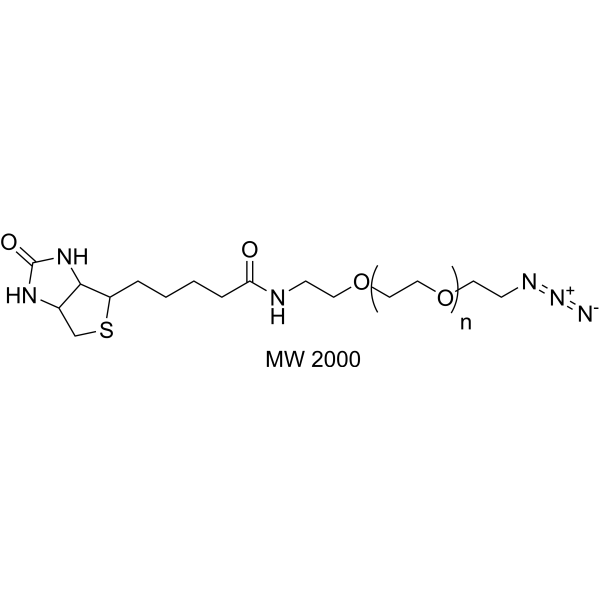 0 ImagesBiotin-PEG2000-azide is a biotin labeled PEG derivative. Biotin is an enzyme co-factor, can be used for labeling protein; PEG is a hydrophilic and water-soluble polymer with low toxicity; azide, is a moderately good leaving group, can react with alkyne by Cu-catalyzation, which improve the efficiency of biotin binding targets. It contains an azide group and can undergo copper-catalyzed azide-alkyne cycloaddition (CuAAc) with molecules containing alkyne groups. It can also undergo ring strain-promoted alkyne-azide cycloaddition (SPAAC) with molecules containing DBCO or BCN groups.
-
1,1',3,3,3',3'-Hexamethylindodicarbocyanine iodide
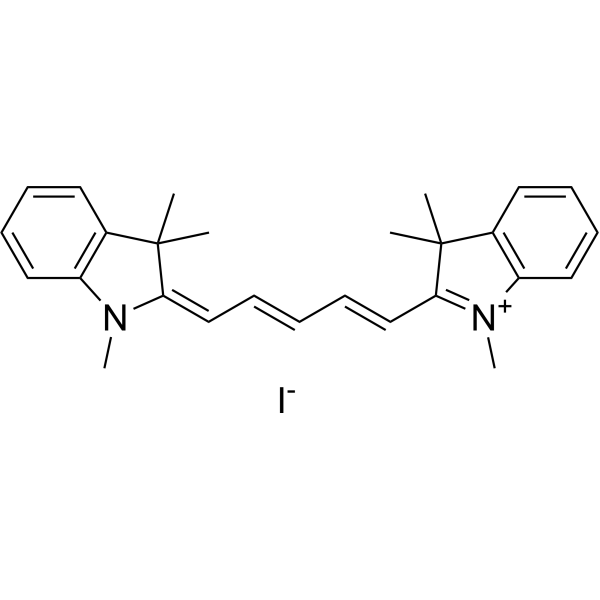 0 ImagesSynonyms: HIDC1,1',3,3,3',3'-Hexamethylindodicarbocyanine iodide is a carbocyanine dye that stains mitochondria of live cells.
-
Wheat germ agglutinin-AF647
 0 ImagesCat. No.: HY-NP163ESynonyms: WGA-AF647Wheat germ agglutinin-AF647 (WGA-AF647) is a plant lectin that contains the fluorescent dye AF647, which can be used to identify carbohydrate chains. Wheat germ agglutinin-AF647 can be used to assess abnormal glycosylation levels in the body. The specific glycosylation detection sites of Wheat germ agglutinin is bis-GlcNAc, SA.

-
Desthiobiotin-NHS ester
 0 ImagesDesthiobiotin-NHS ester is a biotinylated biochemical assay reagent that reacts with amine groups (such as lysine residues) of proteins or other biomolecules to form stable amide bonds. Desthiobiotin-NHS ester can be used as probes for metalloproteins.
-
Sulfo-Cy3(Me)COOH
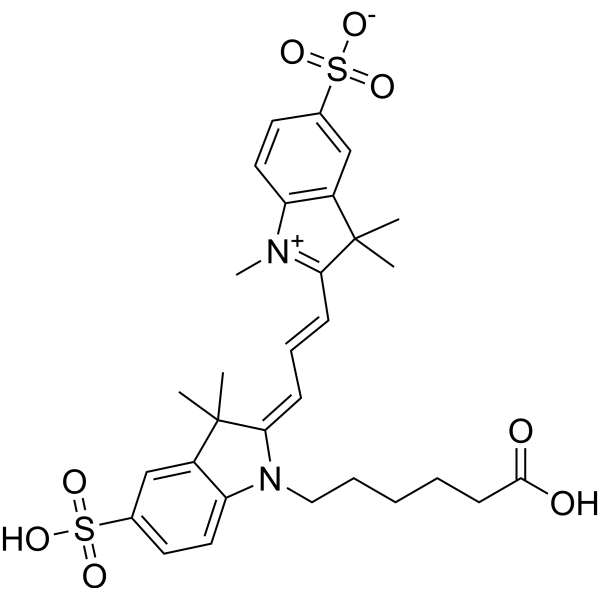 0 ImagesCat. No.: HY-D1365CAS No.: 1121756-11-3Sulfo-Cy3(Me)COOH is a sulfo-Cyanine3 derivative. Cyanine3 is an orange-fluorescent label dye for protein and nucleic acid (Ex=554 nm, Em=568 nm).
-
BHQ-1 NHS
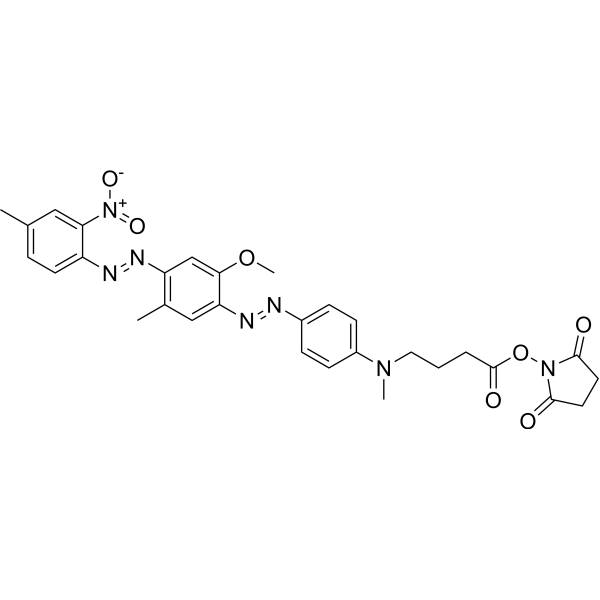 0 ImagesCat. No.: HY-154834CAS No.: 916753-61-2BHQ-1 NHS is a quencher and fluorescent dye. BHQ-1 NHS enables direct labeling via fluorescently labeled nucleotides.
-
FITC-dextran sulfate (MW 500kDa)
 0 ImagesCat. No.: HY-172163CFITC-dextran sulfate, 500kDa is a sodium dextran sulfate labeled with FITC, with an average molecular weight of 500 kDa.
-
FAM amine, 6-isomer
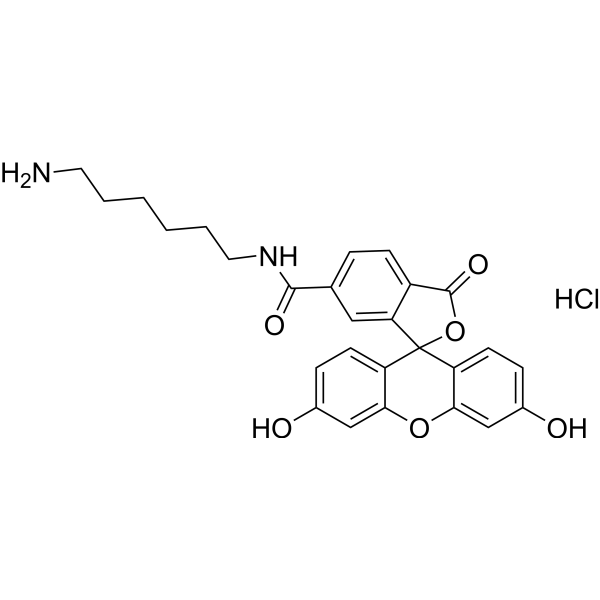 0 ImagesFAM amine, 6-isomer is a fluorescein derivative with an amine group and contains an isomer of the fluorophore. Can be used to modify biomolecules through enzymatic transamination. Its fatty amine groups can also react with electrophiles such as activated esters. The amine can also be conjugated to carbonyl compounds (aldehydes and ketones) by reductive amination.
-
Firefly luciferase-IN-3
 0 ImagesCat. No.: HY-160870CAS No.: 898155-17-4Firefly luciferase-IN-3 (CID: 17087944) is an inhibitor of ATP-dependent luciferase (Firefly luciferase) and has nM-level inhibitory activity against NanoLuc (pIC50=7.5).