



Fluorescent Dye
Fluorescence is a phenomenon of photoluminescence in luminescence. When an atom is irradiated by light, some electrons around the nucleus jump from their original orbitals to higher energy orbitals under the influence of light energy, i.e., from the ground state to the first or second excited single-line state, etc. Due to the instability of the first or second excited singlet state, the electron returns from the excited singlet state to the ground state accompanied by released energy, resulting in fluorescence.
Fluorescent dyes can be covalently bound or physically adsorbed in the structure of the substance. The fluorescence properties allow for the characterization, localization and quantitative analysis of the labeled object. Fluorescent dyes have shown great potential for the detection of proteins, nucleic acids, cells, and immunoassays, attributed to the advantages in non-radioactive contamination, simple experimental operation and easy observation.
Fluorescent dyes have penetrated many fields such as pharmacology, physiology, environmental science, and information science, as well as functional studies of proteins and drug screening.
All Product Categories
-
Fluorescent Dye Related Products (4914)
Related Products (4914)

-
Antibodies (4)
-
7-Methoxy-4-(trifluoromethyl)coumarin
 0 ImagesSynonyms: MFC7-Methoxy-4-(trifluoromethyl)coumarin (MFC) is a fluorescent substrate for cytochrome P450 and can quantify CYP activity.
-
TAMRA alkyne,5-isomer
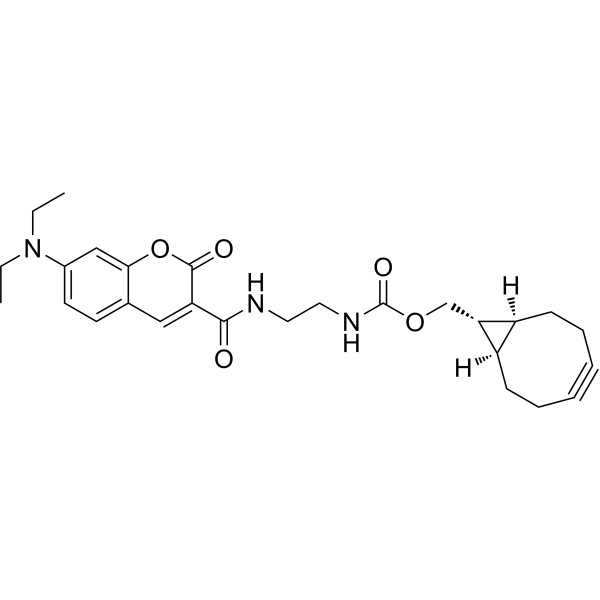
 0 ImagesCat. No.: HY-W423080CAS No.: 945928-17-6TAMRA alkyne, 5-isomer (Compound 3) is an alkyne derivative of TAMRA and can be used for the enrichment, in-gel fluorescence detection, and identification of O-GlcNAc-modified proteins. TAMRA alkyne, 5-isomer contains an Alkyne group and can undergo copper-catalyzed azide-alkyne cycloaddition reaction (CuAAc) with molecules containing Azide groups. It can also undergo strain-promoted alkyne-azide cycloaddition (SPAAC) reactions with molecules containing DBCO or BCN groups.
-
5-ROX
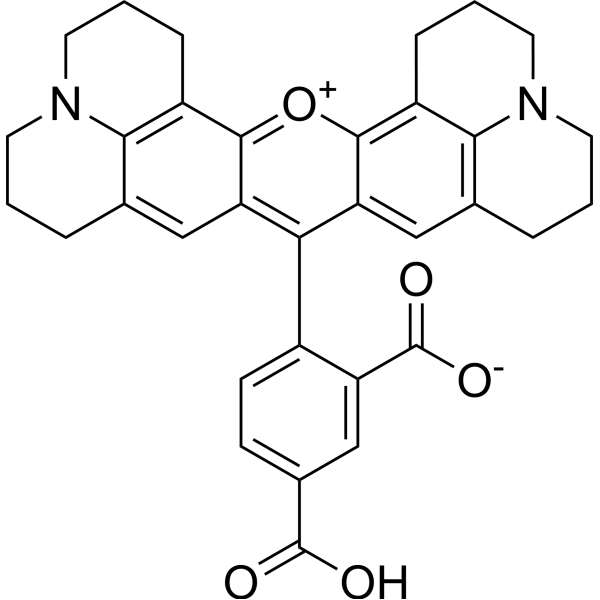 0 ImagesSynonyms: 5-Carboxy-X-rhodamine5-ROX (5-Carboxy-X-rhodamine), a rhodamine dye, exhibits strong fluorescence property in aqueous buffer with the λexit of 580 nm (ε=3.6×10⁴ M-1 cm-1), and λemit of 604 nm (=0.94).
-
Fluorescein O-methacrylate
 0 ImagesCat. No.: HY-W923198CAS No.: 480439-15-4Synonyms: Methacryloyloxy fluoresceinFluorescein O-methacrylate (Methacryloyloxy fluorescein) is a pH-responsive fluorescent monomeric dye. Fluorescein O-methacrylate exhibits pH-responsive fluorescence properties: its fluorescence is activated under alkaline conditions and quenched under neutral or acidic conditions; reversible switching of fluorescence is achievable by adjusting the pH of the solution. Fluorescein O-methacrylate can be used as a monomer for the synthesis of amphiphilic fluorescein polymers. These polymers can self-assemble into stable polymer nanoparticles with enhanced aqueous-phase fluorescence, and also enable the conjugation of nanoparticles with amine-containing biomolecules to support sensitive optical detection of biomarkers (Ex/Em = 490/520 nm).
-
FITC-dextran sulfate (MW 40kDa)
 0 ImagesCat. No.: HY-172163BFITC-dextran sulfate, 40kDa is a sodium dextran sulfate labeled with FITC, with an average molecular weight of 40 kDa.
-
HBmito Crimson
 0 ImagesCat. No.: HY-D2346HBmito Crimson is a deep red fluorescent probe (λex: 658 nm, λem: 678 nm) for the inner mitochondrial membrane. HBmito Crimson is a cell membrane-permeable probe with high selectivity for the mitochondrial inner membrane, suitable for specific fluorescence staining of the inner mitochondrial membrane in living cells. HBmito Crimson has high photostability and brightness, suitable for long-term dynamic fluorescence imaging.
-
Sel-green
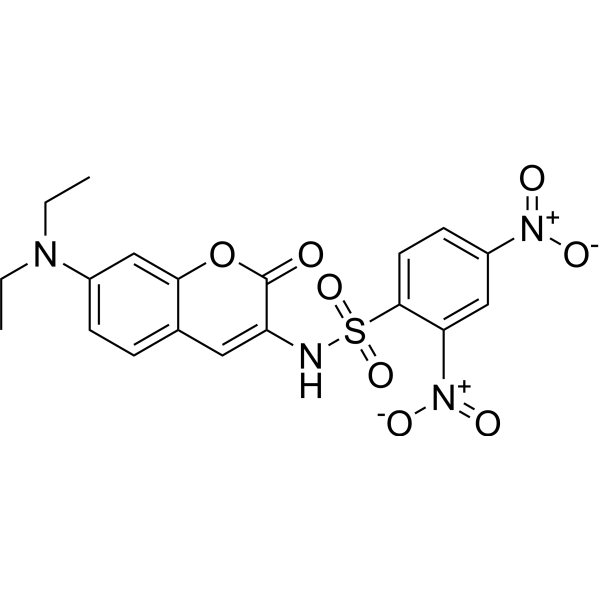 0 ImagesSel-green, a selective selenol fluorescent probe, is applied to quantify the Sec content in the selenoenzyme thioredoxin reductase and image endogenous Sec in live HepG2 cells.
-
TMA-DPH (solution)
 0 ImagesCat. No.: HY-DY1057CAS No.: 115534-33-3TMA-DPH (solution) is a hydrophobic fluorescent membrane probe (Ex=355 nm; Em=430 nm). TMA-DPH is able to anchor on the cell surface and localize to different regions of the phospholipid bilayer. By analyzing the fluorescence polarization values of TMA-DPH in the plasma membrane and membrane substructures, the fluidity of the cell membrane can be determined.
Solvent and concentration: DMSO: 10 mM
-
Janelia Fluor® 646, Tetrazine
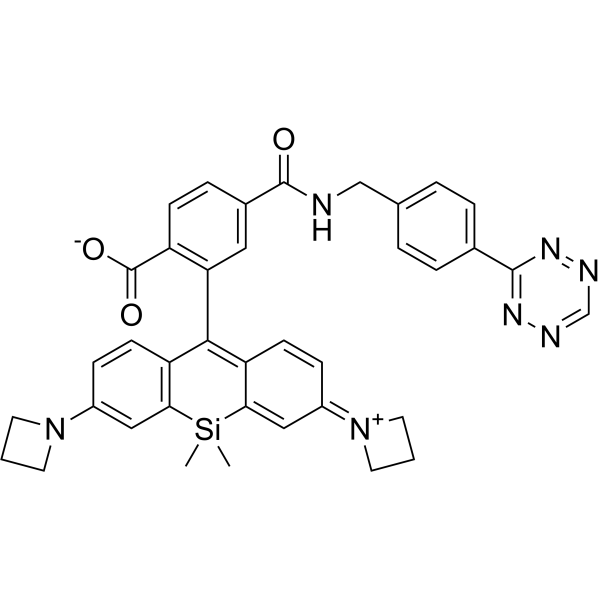 0 ImagesCat. No.: HY-138659CAS No.: 2042192-00-5Synonyms: JF646, TetrazineJanelia Fluor 646, Tetrazine (JF646, Tetrazine) a red fluorescent dye that contains a tetrazine group. JF646, Tetrazine can be used in cellular imaging. Janelia Fluor fluorescent dyes can be chemically conjugated to the specific HaloTag substrate (a chloroalkane ligand) to form a fluorescent ligand, rather than binding directly to the HaloTag protein itself. Janelia Fluor products are licensed under U.S. Pat. Nos. 9,933,417, 10,018,624 and 10,161,932 and other patents from Howard Hughes Medical Institute. Janelia Fluor 646, Tetrazine is a click chemistry reagent, it contains a Tetrazine group that can undergo an inverse electron demand Diels-Alder reaction (iEDDA) with molecules containing TCO groups (Ex/Em = 646/664 nm).
-
PS-SCOTfluor-12
 0 ImagesCat. No.: HY-D2418CAS No.: 2351933-31-6PS-SCOTfluor-12 (compound 10) is a fluorescent probe for imaging Lactic acid (HY-B2227) metabolism in live cells. λex/λem= 485/605 nm.
-
Crystal Violet (solution)
 0 ImagesCrystal Violet (solution) , also known as Gentian violet, methyl violet 10B, is a triphenyl-methane, an alkaline dye that binds to DNA in the nucleus of a cell, staining it a deep purple. It is often used for Gram staining to classify bacteria, or for cell or histological staining.
Solvent and Concentration: Sterile water: 5 mg/mL (0.5%)
-
Peanut Agglutinin (Fluorescein)
 0 ImagesCat. No.: HY-NP0138Synonyms: PNA (Fluorescein)Peanut Agglutinin (PNA) Fluorescein is a fluorescently labeled lectin that specifically binds to glycosylated cells and Haemonchus contortus. Peanut Agglutinin Fluorescein specifically recognizes and binds to the D-Gal-β(1→3)-D-GalNAc disaccharide sequence and terminal D-galactosyl residues on the cell surface; its binding can be inhibited by D-galactose but is not affected by glucose. Peanut Agglutinin Fluorescein specifically labels cone photoreceptor segments and can also be used to distinguish immature thymocytes from lymphocyte subsets, serving as an effective tool for studying cellular glycosylation status and isolating specific cell populations.
-
Fluo-4 AM (solution)
 0 ImagesCat. No.: HY-DY1028CAS No.: 273221-67-3Fluo-4 AM (solution) is a cell-permeable Ca2+ (calcium ion) indicator (Ex/Em = 485/526 nm) .
Solvent and concentration: DMSO: 1 mM
-
Arsenazo III
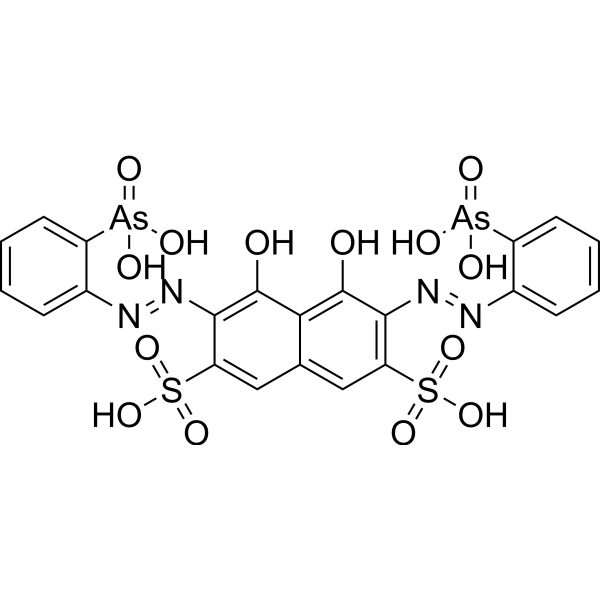 0 ImagesArsenazo III is an azo derivative of chromotropic acid, a metal chrome dye, a chelating agent, and a cation complexing agent. Arsenazo III forms stable 1:1 complexes with Ca2+, Mg2+, Sr2+, Ba2+, K+, and Na+, and its binding affinity for Ca2+ depends on pH, alkali metal cation concentration, and buffer parameters. Arsenazo III serves as a colorimetric indicator for micromolar ionized Ca2+ in cells.
-
Arachidonic acid-biotin
 0 ImagesArachidonic acid-Biotin is a biotin-labeled Arachidonic acid (HY-109590) that can be used to detect complexes of arachidonic acid with protein binding partners such as fatty acid binding proteins (FABPs).
-
Calcium Orange AM
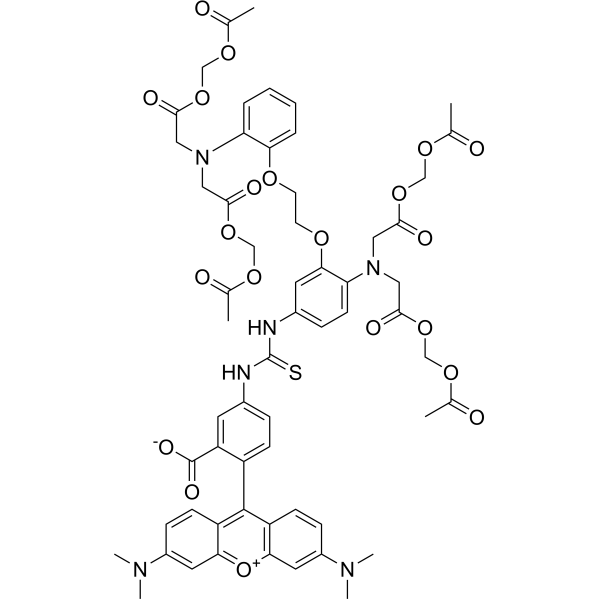 0 ImagesCalcium Orange AM is an intracellular calcium reporter. Specific fluorescence can be detected when free calcium binds to Calcium Orange AM (Ex/Em=549/576 nm). Calcium Orange AM does not enter the vacuoles and does not compartmentalize into acidic vesicles.
-
Eosin 5-isothiocyanate
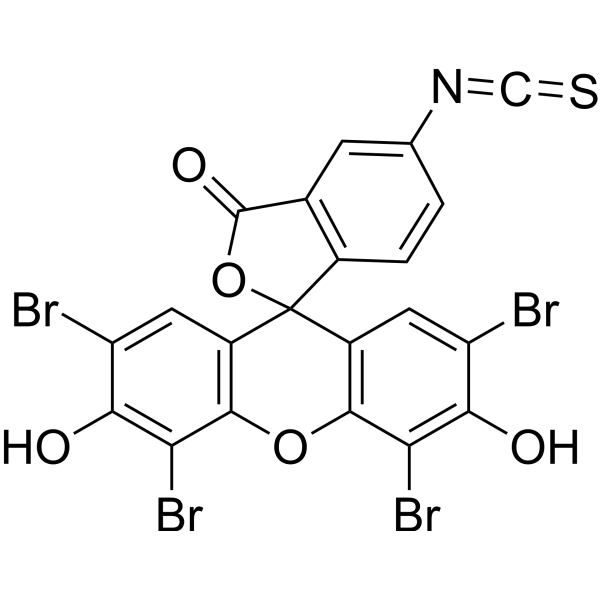 0 ImagesEosin 5-isothiocyanate is an orange-red fluorescent and phosphorescent probe that reacts with amino groups. Eosin 5-isothiocyanate also acts as a photocatalyst. Eosin 5-isothiocyanate can be used for protein labeling, investigation of molecular rotational diffusion, and serves as a fluorescence resonance energy transfer (FRET) acceptor.
-
Abz-AGLA-Nba
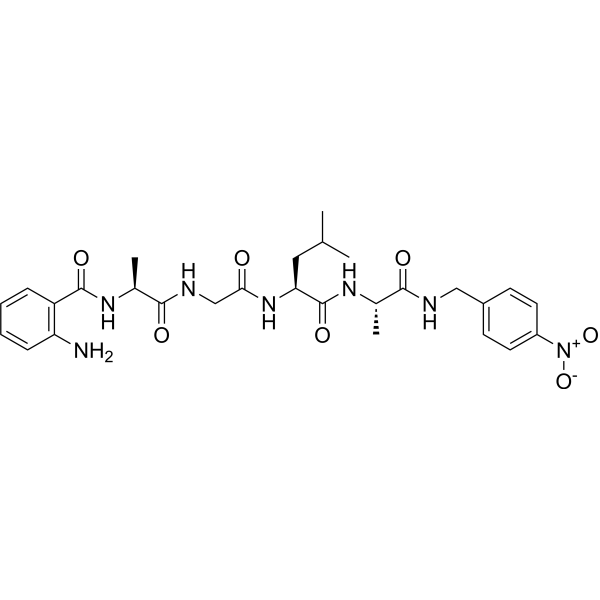 0 ImagesAbz-AGLA-Nba is a fluorogenic substrate for the determination of protease activity. Abz-AGLA-Nba is hydrolyzed to release aminoacyl benzimide (Abz-AGLA) and 2-naphthylaminoacyl (Nba). The product Abz-AGLA produced by this hydrolysis reaction is fluorescent under ultraviolet light and can emit a fluorescent signal.




