



LDLR
Low-density lipoprotein receptor
The low-density lipoprotein receptor (LDLR) gene family includes LDLR, very LDLR, and LDL receptor-related proteins (LRPs) such as LRP1, LRP1b (aka LRP-DIT), LRP2 (aka megalin), LRP4, and LRP5/6, and LRP8 (aka ApoER2). LDLR family members constitute a class of closely related multifunctional, transmembrane receptors, with diverse functions, from embryonic development to cancer, lipid metabolism, and cardiovascular homeostasis.
All Product Categories
-
LDLR Related Products (89)
Related Products (89)

-
Antibodies (4)
-
Milpocitide
 0 ImagesCat. No.: HY-147279CAS No.: 2643306-81-2Milpocitide is a low-density lipoprotein receptor (human LDL receptor, LDLR), (293-333)-peptide fragment (EGF-like domain 1).
-
H-PEG6-VH4127-NH2
 0 ImagesCat. No.: HY-P10697B
-
PCSK9-IN-36
 0 ImagesCat. No.: HY-187677CAS No.: 94159-34-9PCSK9-IN-36 is a PCSK9 inhibitor and a flavonoid glycoside derivative. PCSK9-IN-36 binds stably within the surface groove of PCSK9 through hydrophobic interactions involving its flavonoid scaffold and an electrostatic hydrogen-bonding network formed by its polar glycosidic group, thereby competitively blocking the interaction between PCSK9 and the low-density lipoprotein receptor (LDLR). PCSK9-IN-36 can be used for research on hypercholesterolemia.

-
IETP2
 0 ImagesCat. No.: HY-P10911CAS No.: 2314338-36-6IETP2 targets low-density lipoprotein receptor-related protein 1 (LRP1) with a KD of 738 nM and can be used for drug- and imaging agents delivery across the blood-labyrinth barrier (BLB).
-
PCSK9 Inhibitor, EGF-A
 0 ImagesCat. No.: HY-P11071PCSK9 Inhibitor, EGF-A is a PCSK9 inhibitor with LDLR degradation inhibitory activity and LDLR recycling promoting activity. PCSK9 Inhibitor, EGF-A is a synthetic peptide consisting of 42 amino acid residues, which contains the calcium-binding site of the epidermal growth factor A domain (EGF-A). PCSK9 Inhibitor, EGF-A reduces plasma LDL cholesterol levels by maintaining hepatic LDLR levels and enhancing the clearance capacity of circulating LDL. PCSK9 Inhibitor, EGF-A can be used in research related to hypercholesterolemia, premature atherosclerosis, coronary heart disease and familial hypercholesterolemia.
-
VH-N412
 0 ImagesCat. No.: HY-P10698CAS No.: 1801681-81-1VH-N412 is a vectorized neuropeptide (NT) with good blood-brain barrier permeability. VH-N412 binds to the low-density lipoprotein receptor (LDLR) and neuropeptide receptor 1 (NTSR-1), and acts as a pharmacological-induced hypothermia (PIH) inducer. VH-N412 exhibits anticonvulsant and neuroprotective effects, and can be used in the study of neurological diseases such as epilepsy.
-
F 2833
 0 ImagesCat. No.: HY-105961CAS No.: 107430-45-5F 2833 is a lipid-lowering agent. F 2833 can reduce the levels of cholesterol, triglycerides, and plasma phospholipids. F 2833 can be used for research on diseases such as hyperlipidemia.
-
MeIm
 0 ImagesCat. No.: HY-161941CAS No.: 2043947-71-1
-
Butenoyl-PAF
 0 ImagesCat. No.: HY-126551CAS No.: 474944-25-7Butenoyl-PAF is a phospholipid analog of platelet activating factor (PAF-like) that is generated in oxidized low-density lipoprotein (DLDR). Butenoyl-PAF can activate cells that express human PAF receptors, such as neutrophils, monocytes, and platelets, and it stimulates an increase in intracellular calcium ion concentration.
-
Obicetrapib sodium
 0 ImagesCat. No.: HY-18778ACAS No.: 866399-88-4Synonyms: TA-8995 sodium; DEZ-001 sodium; AMG-899 sodiumObicetrapib (TA-8995; DEZ-001) sodium is an orally active cholesteryl ester transfer protein (CETP) inhibitor. Obicetrapib sodium potently reduces atherogenic lipoproteins (such as LDL-C, ApoB, Lp (a)) and increases HDL-C. Obicetrapib sodium can be used for the research of dyslipidemia and atherosclerotic cardiovascular disease (ASCVD).
-
Piceatannol 4'-O-glucoside
 0 ImagesCat. No.: HY-167870CAS No.: 116181-54-5Piceatannol 4'-O-glucoside is an antioxidant. Piceatannol 4'-O-glucoside is active against oxidation of the human LDL. Piceatannol 4'-O-glucoside can be isolated from Mexican Bamboo.
-
(KKEEE)3K
 0 ImagesCat. No.: HY-P11452CAS No.: 1637464-75-5(KKEEE)3K is a kidney-targeting peptide. (KKEEE)3K enters renal tubular cells via megalin receptor-mediated endocytosis. (KKEEE)3K can be used in the research of renal drug delivery.
-
Kylo-0603
 0 ImagesCat. No.: HY-172661CAS No.: 2661053-09-2Kylo-0603 is an orally active thyroid hormone receptor β (THR-β) agonist with an EC50 of 31.07 nM against human targets, and it exhibits much higher selectivity for THR-β than for THR-α. Kylo-0603 enables hepatocyte-targeted delivery via GalNAc modification. Kylo-0603 reduces serum cholesterol and low-density lipoprotein cholesterol levels. Kylo-0603 alleviates hepatic steatosis, inflammatory responses, hepatocyte ballooning, and non-alcoholic steatohepatitis activity scores. Kylo-0603 inhibits the progression of hepatic fibrosis. Kylo-0603 can be used for research on metabolic dysfunction-associated steatohepatitis (MASH).
-
2-Hydroxyacetaldehyde
 0 Images2-Hydroxyacetaldehyde acts as a ribonucleotide synthesis precursor and a LDL modifier. 2-Hydroxyacetaldehyde specifically targets lysine residues of high-affinity LDL receptors and their apolipoproteins. By blocking the ε-amino groups of apolipoproteins, 2-Hydroxyacetaldehyde prevents receptor recognition, thereby reducing LDL degradation by macrophages. 2-Hydroxyacetaldehyde generates modified LDL, which serves as a probe for investigating non-receptor-dependent catabolic pathways.
-
Moxonidine-d4
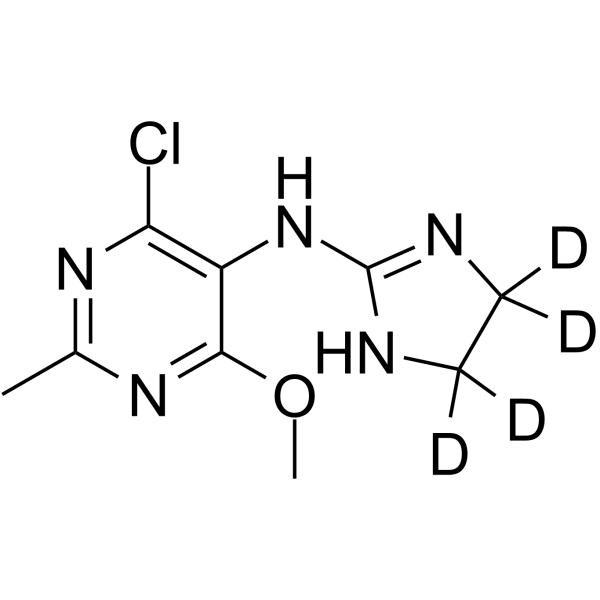 0 ImagesCat. No.: HY-B0374SCAS No.: 1794811-52-1Moxonidine-d4 (BDF5895-d4) is the deuterium labeled Moxonidine (HY-B0374). Moxonidine (BDF5895) is an orally active imidazoline type 1 receptor (I1-R) agonist. Moxonidine activates imidazoline I1 receptors and α2 adrenoceptors, affecting oxidized low-density lipoprotein uptake. Moxonidine reduces atherosclerotic lesions and lowers blood pressure. Moxonidine can be used in the study of hypertension, heart failure, and atherosclerosis.
-
S12340
 0 ImagesCat. No.: HY-123260CAS No.: 144754-35-8S12340 is a a inhibitor of the oxidative modification of low-density lipoprotein and shows protective effect on cardiac cells exposed to oxidative stress.
-
Moxonidine (Standard)
 0 ImagesCat. No.: HY-B0374RCAS No.: 75438-57-2Synonyms: BDF5895 (Standard)Moxonidine (Standard) is the analytical standard of Moxonidine (HY-B0374). This product is intended for research and analytical applications. Moxonidine (BDF5895) is an orally active imidazoline type 1 receptor (I1-R) agonist. Moxonidine activates imidazoline I1 receptors and α2 adrenoceptors, affecting oxidized low-density lipoprotein uptake. Moxonidine reduces atherosclerotic lesions and lowers blood pressure. Moxonidine can be used in the study of hypertension, heart failure, and atherosclerosis.
-
Terbufibrol (Standard)
 0 ImagesCat. No.: HY-101812RCAS No.: 56488-59-6Terbufibrol (Standard) is the analytical standard of Terbufibrol (HY-101812). This product is intended for research and analytical applications. Terbufibrol is an orally active lipid-lowering agent. Terbufibrol inhibits hepatic Cholesterol 7 alpha-hydroxylase. Terbufibrol blocks a step between Acetate and HMG-CoA in the hepatic cholesterol synthesis process. Terbufibrol reduces serum total cholesterol, HDL, LDL, lipoprotein levels, and the cholesterol/phospholipid ratio, with dose- and sex-dependent changes in lipoprotein components. Terbufibrol exerts sustained cholesterol-lowering activity in baboons and rats. Terbufibrol can be used in research related to hypercholesterolemia.
-
Moxonidine hydrochloride (Standard)
 0 ImagesSynonyms: BDF5895 hydrochloride (Standard)Moxonidine hydrochloride (Standard) is the analytical standard of Moxonidine hydrochloride (HY-B0374A). This product is intended for research and analytical applications. Moxonidine (BDF5895) is an orally active imidazoline type 1 receptor (I1-R) agonist. Moxonidine activates imidazoline I1 receptors and α2 adrenoceptors, affecting oxidized low-density lipoprotein uptake. Moxonidine reduces atherosclerotic lesions and lowers blood pressure. Moxonidine can be used in the study of hypertension, heart failure, and atherosclerosis.




