



LDLR Inhibitor
- 1
- 2
-
Anti-Mouse/Rat/Human LRP1/CD91 Antibody (11H4)
 0 ImagesCat. No.: HY-P990202Purity: 98.10%
Anti-Mouse/Rat/Human LRP1/CD91 Antibody (11H4) is a mouse-derived IgG1 κ type antibody, targeting to mouse/rat/human LRP1/CD91. Anti-Mouse/Rat/Human LRP1/CD91 Antibody (11H4) binds to the β chain of LRP1. Anti-Mouse/Rat/Human LRP1/CD91 Antibody (11H4) can be used for western blot (WB) and other detections.
-
20-HC-Me-Pyrrolidine
 0 ImagesCat. No.: HY-145001Purity: 99.69%
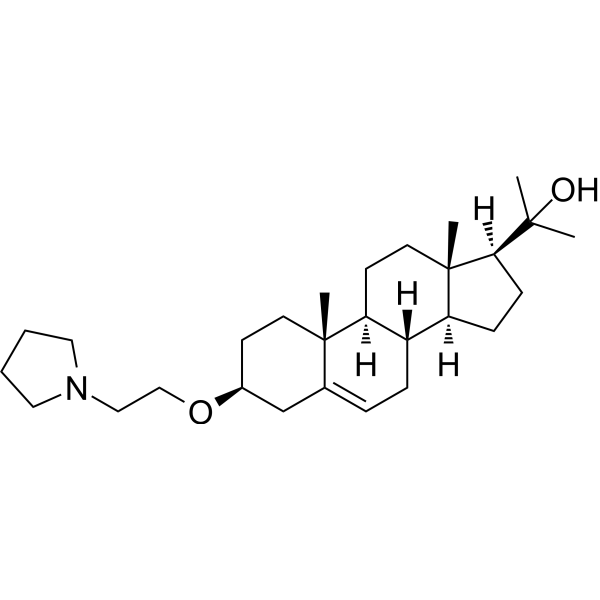
20-HC-Me-Pyrrolidine (compound AI-3d) is a potent Aster protein inhibitor with IC50s of 0.11 μM, 0.06 μM, and 0.71 μM for Aster-A, Aster-B, and Aster-C, respectively. 20-HC-Me-Pyrrolidine blocks the ability of Asters to bind and transfer cholesterol. 20-HC-Me-Pyrrolidine also inhibits the movement of low-density lipoprotein (LDL) cholesterol to the endoplasmic reticulum (ER).
-
Lomitapide mesylate
 0 ImagesSynonyms: AEGR-733 mesylate; BMS-201038 mesylate
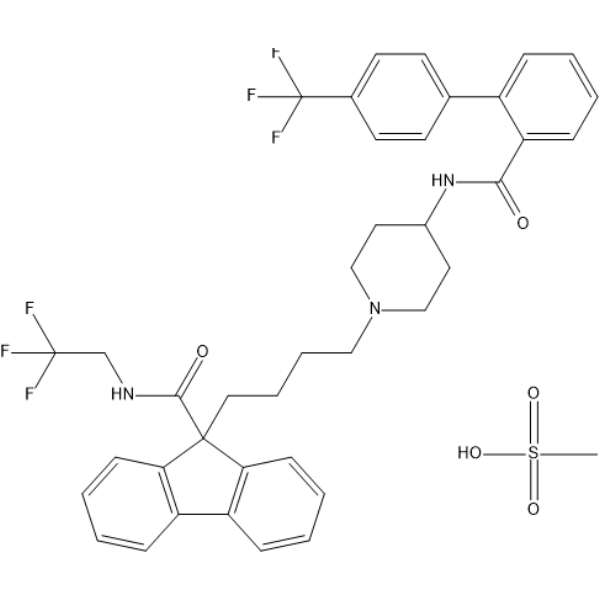
Lomitapide (AEGR-733; BMS-201038) mesylate is an orally active microsomal triglyceride transfer protein (MTP) inhibitor and a selective mTORC1 inhibitor with lipid-lowering activity and BBB permeability. Lomitapide mesylate significantly reduces plasma LDL levels by blocking the assembly and secretion of very-low-density lipoprotein (VLDL). Lomitapide mesylate inhibits mTORC1 in an ATP-dependent manner, thereby inducing AMPK-independent autophagic cell death and suppressing cancer cell growth and apoptosis. Lomitapide mesylate also enhances tumor infiltration of CD8+ T cells. In addition, Lomitapide mesylate inhibits HDAC, improves endothelial function, effectively alleviates vascular inflammation and oxidative stress, and exerts neuroprotective effects in a cerebral ischemia/reperfusion injury model. Lomitapide mesylate can be used in research on related diseases such as colorectal cancer, breast cancer, melanoma, ischemic stroke, and familial hypercholesterolemia.
-
Obicetrapib
 0 ImagesSynonyms: TA-8995; DEZ-001; AMG-899
Obicetrapib (TA-8995; DEZ-001) is an orally active cholesteryl ester transfer protein (CETP) inhibitor. Obicetrapib potently reduces atherogenic lipoproteins (such as LDL-C, ApoB, Lp (a)) and increases HDL-C. Obicetrapib can be used for the research of dyslipidemia and atherosclerotic cardiovascular disease (ASCVD).
-
2-Acetamidophenol
 0 ImagesSynonyms: Orthocetamol
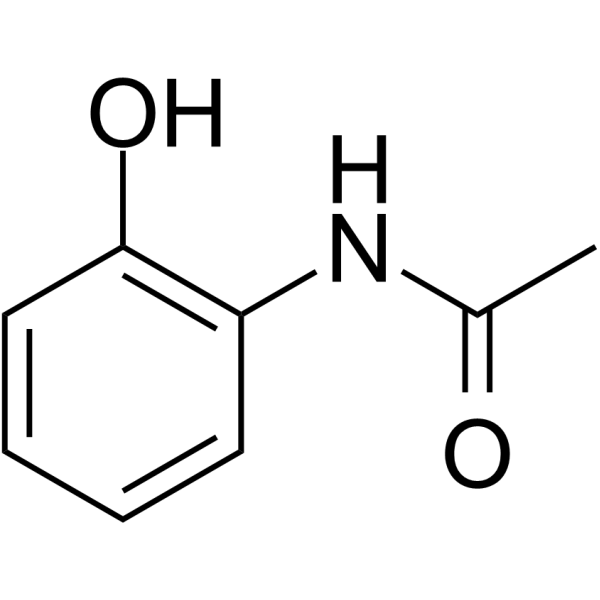
2-Acetamidophenol (Orthocetamol) is a regulator that targets ferroptosis and glutathione metabolic pathways, is the ortho-regioisomer of Paracetamol (HY-66005). 2-Acetamidophenol has anti-atherosclerotic activity, and inhibiting total cholesterol (TC) and triglyceride (TG) in a zebrafish hyperlipidemia model with IC50s for 30 μM and 40 μM, respectively. 2-Acetamidophenol upregulates the expression of glutathione synthesis-related genes (such as GCLC, GCLM, GSS) and iron ion transport genes (such as FPN1, FTH), reduces the accumulation of intracellular reactive oxygen species (ROS) and ferrous ions (Fe2+), and enhances the activity of glutathione peroxidase GPX4, thereby inhibiting macrophage phagocytosis of oxidized low-density lipoprotein (ox-LDL) and foam cell formation.
-
LSN3353871
 0 Images
LSN3353871 is an orally active inhibitor of lipoprotein (a) (Lp (a)) formation, with Kd values of 756 nM (apo (a) KIV8), 605 nM (apo (a) KIV7-8), and 423 nM (apo (a) KIV5-8), respectively, and an IC50 of 1.69 μM against apo (a) KIV5-8. LSN3353871 reduces circulating Lp (a) levels in transgenic mice and cynomolgus monkeys. LSN3353871 can be used in the research of atherosclerotic cardiovascular disease and calcific aortic valve disease.
-
Orticumab
 0 ImagesSynonyms: MLDL1278A
Orticumab (MLDL1278A) is an antibody targeting to oxidized or malondialdehyde-modified lipoprotein (LDL). Orticumab specifically inhibits oxidized low-density lipoproteins (oxLDL). Orticumab involves in modulation of autoimmune responses against oxLDL, improves atherosclerosis in animal model. Orticumab also can be used for research of psoriasis improvement.
-
Gemcabene
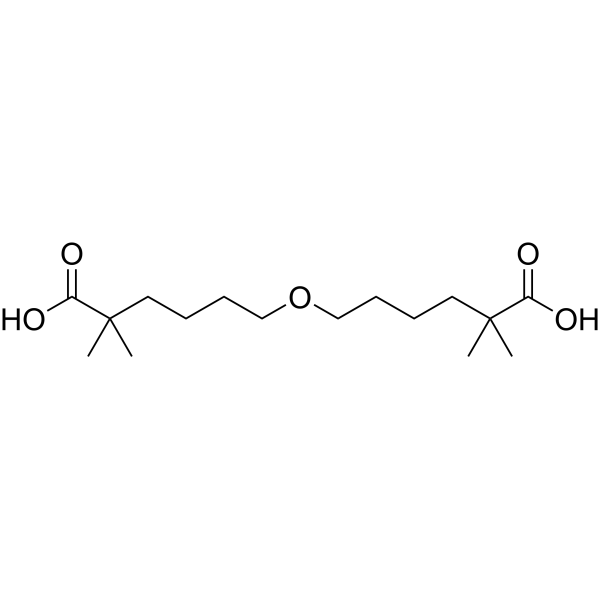 0 ImagesSynonyms: PD-72953
Gemcabene (PD-72953), a first-in-class lipid-lowering agent, lowers low-density lipoprotein cholesterol (LDL-C), decreases triglycerides, and raises high-density lipoprotein cholesterol (HDL-C) and lowers pro-inflammatory acute-phase protein, C-reactive protein (CRP), exerting anti-inflammatory activity.
-
Vitisin A
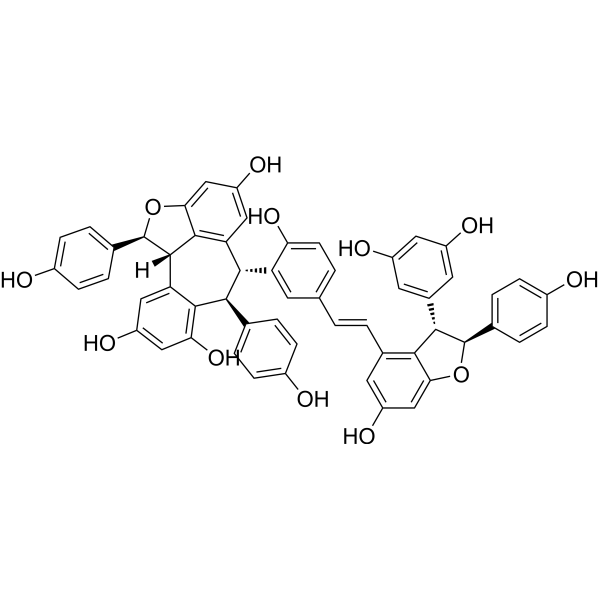 0 ImagesCat. No.: HY-142026CAS No.: 142449-89-6Synonyms: (+)-Vitisin A
Vitisin A ((+)-Vitisin A) is an orally active natural product with multiple pharmacological activities including anti-inflammatory, anti-tumor, anti-oxidant, anti-pathogenic microorganism, hypoglycemic and lipid-regulating, anti-osteoporotic, neuroprotective and cardiovascular protective effects. Vitisin A exhibits inhibitory effects on human AChE and MAO-B with IC50 values of 1.29 µM and 4.94 µM, respectively. Vitisin A inhibits the ERK, MAPK, NF-κB, STAT1, HMGCR and TRAF6 pathways, downregulates the related phosphorylation and protein expression, while activates the Nrf2/HO-1 pathway and upregulates p21 expression. Vitisin A induces tumor cell apoptosis and cell cycle arrest, inhibits adipogenesis and lipid accumulation, while alleviates oxidative stress, suppresses inflammatory responses, blocks hepatic fibrosis, Cuproptosis and cholesterol synthesis, and increases the expression levels of central BDNF and TrkB. Vitisin A can be used in the research of tumors, infectious diseases, metabolic diseases, bone and joint diseases, liver diseases, skin injuries, as well as neurodegenerative and cognitive dysfunction-related diseases.
-
LDL-IN-2
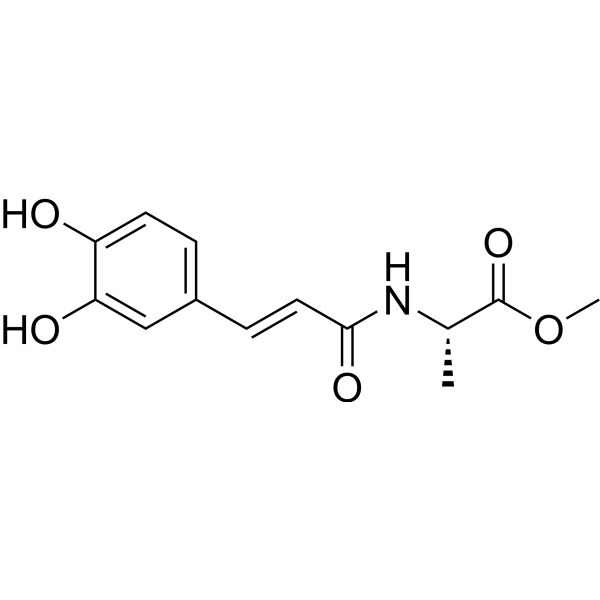 0 Images
LDL-IN-2 (compound 3) is an antioxidant against copper mediated low-density lipoproteins (LDL) oxidation.
-
LDLRAP1-IN-1
 0 Images
LDLRAP1-IN-1 (Compound B19) is a LDLRAP1 inhibitor and antiviral agent, with an IC50 of 4.98 μM for disrupting the interaction between LDLRAP1 and LDLR. LDLRAP1-IN-1 covalently modifies the C119 residue of LDLRAP1 at the LDLRAP1-LDLR binding interface, thereby disrupting the interaction between LDLRAP1 and LDLR. LDLRAP1-IN-1 exhibits antiviral activity against HCoV-OC43.
-
Gemcabene calcium
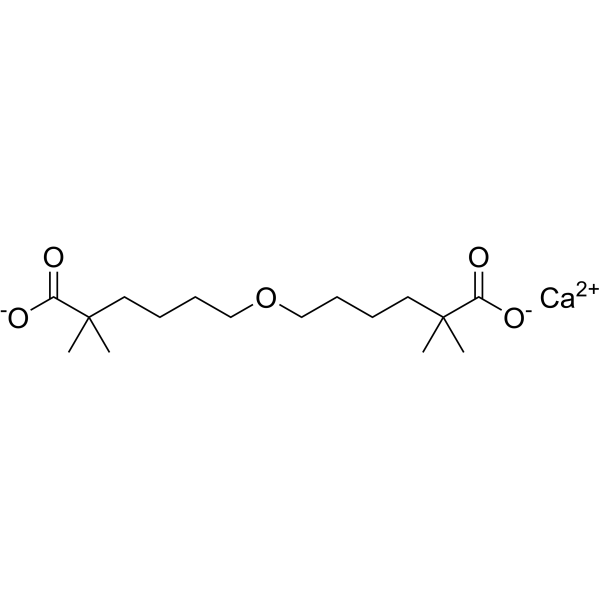 0 ImagesSynonyms: PD-72953 calcium
Gemcabene calcium (PD-72953 calcium), a first-in-class lipid-lowering agent, lowers low-density lipoprotein cholesterol (LDL-C), decreases triglycerides, and raises high-density lipoprotein cholesterol (HDL-C) and lowers pro-inflammatory acute-phase protein, C-reactive protein (CRP), exerting anti-inflammatory activity.
-
Anti-Mouse/Rat/Bovine VLDL-R Antibody (IgG-6A6)
 0 ImagesCat. No.: HY-P990143
Anti-Mouse/Rat/Bovine VLDL-R Antibody (IgG-6A6) is an anti-mouse/rat/bovine VLDL-R IgG1 monoclonal antibody. Anti-Mouse/Rat/Bovine VLDL-R Antibody (IgG-6A6) can specifically recognize VLDLR type-I and type-II expressed in CHO cells. Anti-Mouse/Rat/Bovine VLDL-R Antibody (IgG-6A6) can be used to detect the expression of VLDLR in different cells and tissues. Anti-Mouse/Rat/Bovine VLDL-R Antibody (IgG-6A6) often used in western blot experiments.
-
LDL-IN-3
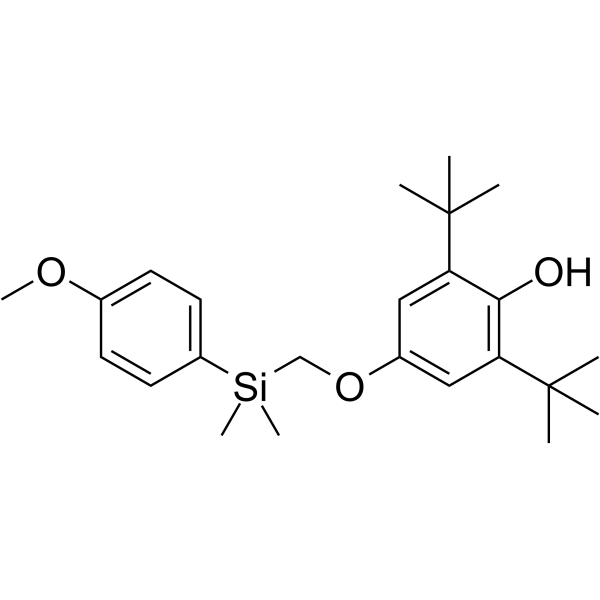 0 ImagesCat. No.: HY-U00054CAS No.: 180908-67-2
LDL-IN-3 is an anti-atherosclerotic compound extracted from patent WO/2005/039596A1, example C25 and patent US 6133467, example 3.
-
17β-Hydroxy exemestane
 0 ImagesCat. No.: HY-138089CAS No.: 122370-91-6
17β-Hydroxy exemestane (17-H-EXE) is the primary active metabolite of Exemestane (HY-13632). 17β-Hydroxy exemestane is an aromatase inhibitor (IC50 = 69 nM) and an androgen receptor (AR) agonist (IC50 = 39.6 nM) that is selective for AR over estrogen receptor α (ERα; IC50 = 21.2 μM). 17β-Hydroxy exemestane stimulates growth of AR- and ERα-positive MCF-7 (EC50= 2.7 μM) and T47D breast cancer cells (EC50s = 0.43 and 1500 nM for AR- and ER-mediated growth, respectively) and inhibits proliferation of testosterone-treated aromatase-overexpressing MCF-7 cells. 17β-Hydroxy exemestane inhibits increases in serum cholesterol and LDL levels and prevents decreases in bone mineral density in the lumbar vertebrae and femur, as well as femoral bending strength and compressive strength of the fifth lumbar vertebrae in ovariectomized rats.
-
SGC-CK1γ-1
 0 Images
SGC-CK1γ-1 is a potent and selective probe for the CK1γ subfamily. SGC-CK1γ-1 can inhibit LRP6 phosphorylation levels. SGC-CK1γ-1 can selectively inhibit the CK1γ kinases in living cells and inhibit both WNT signaling and human cytomegalovirus (CMV) replication. SGC-CK1γ-1 can be used for the research of infection.
-
2-Acetamidophenol (Standard)
 0 ImagesSynonyms: Orthocetamol (Standard)
2-Acetamidophenol (Standard) is the analytical standard of 2-Acetamidophenol. This product is intended for research and analytical applications. 2-Acetamidophenol (Orthocetamol) is a regulator that targets ferroptosis and glutathione metabolic pathways, is the ortho-regioisomer of Paracetamol (HY-66005). 2-Acetamidophenol has anti-atherosclerotic activity, and inhibiting total cholesterol (TC) and triglyceride (TG) in a zebrafish hyperlipidemia model with IC50s for 30 μM and 40 μM, respectively. 2-Acetamidophenol upregulates the expression of glutathione synthesis-related genes (such as GCLC, GCLM, GSS) and iron ion transport genes (such as FPN1, FTH), reduces the accumulation of intracellular reactive oxygen species (ROS) and ferrous ions (Fe2+), and enhances the activity of glutathione peroxidase GPX4, thereby inhibiting macrophage phagocytosis of oxidized low-density lipoprotein (ox-LDL) and foam cell formation.
-
LAB687
 0 ImagesCat. No.: HY-177291CAS No.: 256397-11-2
LAB687 is a microsomal triglyceride transfer protein (MTP) inhibitor with an IC50 of 0.9 nM for apolipoprotein B (apoB) secretion in HepG2 cells. LAB687 also acts as a Smoothened (Smo) antagonist, with IC50 values of 2.48 μM and 3.42 μM against mouse and human Smo receptors, respectively. LAB687 reduces triglyceride and low-density lipoprotein cholesterol (LDL-C) levels, and inhibits the Hedgehog signaling pathway. LAB687 can be used in studies related to Hedgehog-dependent cancers.
-
Habenariol
 0 ImagesCat. No.: HY-167873CAS No.: 216752-89-5
Habenariol is a substantial phenolic antioxidant activity that can be isolated from the freshwater orchid, Habenaria repens.
-
SJ-300
 0 ImagesCat. No.: HY-179459CAS No.: 1210357-06-4
SJ-300 is a potent and selective, orally active and brain-penetrat DKK3-LRP1 interaction inhibitor. SJ-300 restores Aβ clearance in AD models. SJ 300 binds to mLRPIV with a Kd of 7.9 μM, inhibits the DKK3 mLRPIV complex with an IC50 of 3.2 μM, and does not disrupt the binding of Aβ to LRP1. SJ 300 rescues cognitive function and ameliorates neuropathology (Aβ plaque reduction ≈ 73.3 %) in vivo. SJ 300 can be employed for research in Alzheimer’s disease.
- 1
- 2



