



PANoptosis Activator
-
Cucurbitacin E
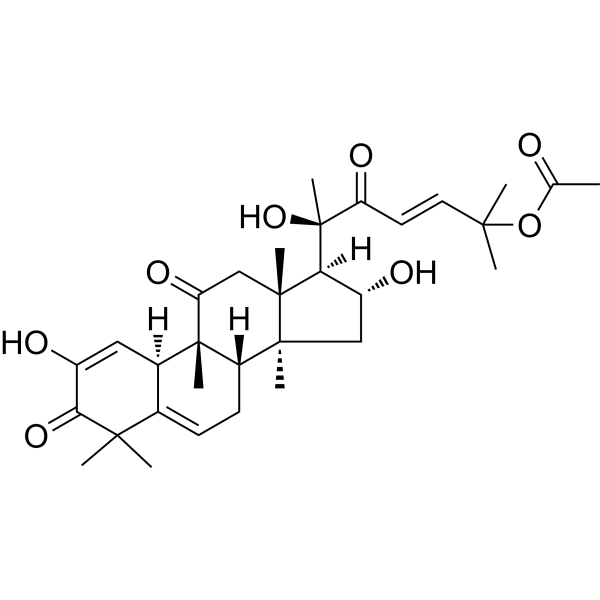 0 ImagesSynonyms: α-Elaterin; α-Elaterine
Cucurbitacin E is a CDK1 inhibitor that significantly inhibits the activity of the cyclin B1/CDC2 complex. Cucurbitacin E also induces PANoptosis in adrenocortical carcinoma cells in a ZBP1-dependent manner. Cucurbitacin E exhibits synergistic effects with Mitotane (HY-13690); when used in combination, they effectively eliminate tumors.
-
TD1092
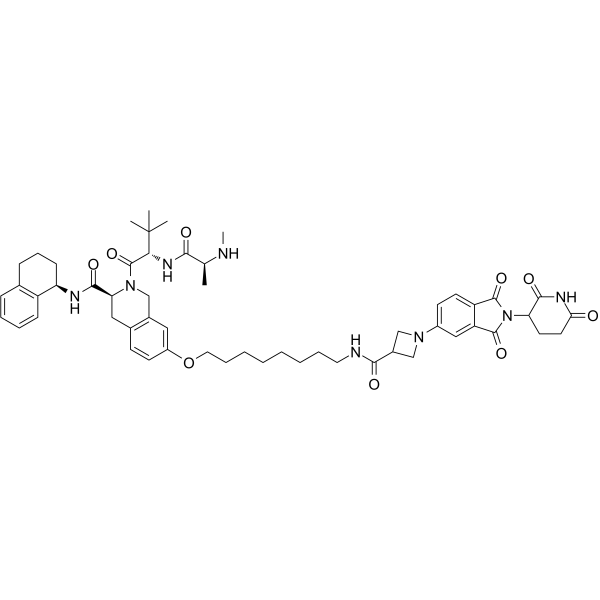 0 Images
TD1092 is a pan-inhibitor of apoptosis protein (IAP) PROTAC degrader that targets cIAP1, cIAP2, and XIAP for degradation. TD1092 induces cell apoptosis by activating caspase. TD1092 inhibits the NF-κB signaling pathway induced by TNFα. TD1092 suppresses TNFα-induced epithelial-mesenchymal transition, cancer cell migration, and invasion. TD1092 is suitable for research on breast cancer, ovarian cancer, melanoma, and inflammation-related diseases.
-
Cucurbitacin E (Standard)
 0 ImagesCat. No.: HY-N0417RCAS No.: 18444-66-1Synonyms: α-Elaterin (Standard); α-Elaterine (Standard)
Cucurbitacin E (Standard) is the analytical standard of Cucurbitacin E. This product is intended for research and analytical applications. Cucurbitacin E is a natural compound which from Cucurbitaceae plants. Cucurbitacin E significantly suppresses the activity of the cyclin B1/CDC2 complex.
-
Photosensitizer-9
 0 ImagesCat. No.: HY-182066
Photosensitizer-9 is an iridium (III)-based photosensitizer with anti-melanoma activity. Photosensitizer-9 exhibits significant phototoxicity (IC50=0.98 μM) and an ideal phototoxicity index (PI=3.05). Under light irradiation, Photosensitizer-9 generates large amounts of intracellular •OH in an oxygen-independent manner. Photosensitizer-9 mediates photodynamic therapy under hypoxic conditions and synergistically activates PANoptosis (by upregulating cleaved Caspase-3, GSDMD-N, p-MLKL), ferroptosis (by disrupting the GSH-GPX4-LPO axis), apoptosis, pyroptosis and necroptosis in melanoma cells. Photosensitizer-9 induces immunogenic cell death by promoting the release of damage-associated molecular patterns under hypoxic conditions and increases the maturation rate of dendritic cells. Photosensitizer-9 reduces tumor volume in melanoma-bearing mice. Photosensitizer-9 is applicable to relevant studies on melanoma.



