



Photosensitizer
Photosensitizers are light absorbers that alter the course of a photochemical reaction. They usually are catalysts. Photosensitizers have been used as light-responsive drugs with their imaging capabilities, easy synthesis, tunable energy levels, and biocompatibility, which make them an innovative tool for therapeutic approaches in treatment of various cancers. Among different methods for cancer therapy, photodynamic therapy (PDT) using a photosensitizer can take advantage of penetrated light into a targeted tissue for improving tumor control. The PDT comprises of three major components; photosensitizer, oxygen, and light source of appropriate wavelength, which when act together, generate a photochemical reaction. Depending on the part of the body being treated, the photosensitizing agent is either administered into the bloodstream through a vein or placed directly on the skin. By irradiation light on the targeted area, the excited photosensitizer emits energy in the form of heat and exhibits intersystem crossing (ISC), leading to the formation of reactive oxygen species (ROS) in triplet state.
Photosensitizers can function by many mechanisms, sometimes they donate an electron to the substrate, sometimes they abstract a hydrogen atom from the substrate. At the end of this process, the photosensitizer returns to its ground state, where it remains chemically intact, poised to absorb more light. One branch of chemistry which frequently utilizes photosensitizers is polymer chemistry, using photosensitizers in reactions such as photopolymerization, photocrosslinking, and photodegradation. Photosensitizers are also used to generate prolonged excited electronic states in organic molecules with uses in photocatalysis, photon upconversion and photodynamic therapy. Generally, photosensitizers absorb electromagnetic radiation consisting of infrared radiation, visible light radiation, and ultraviolet radiation and transfer absorbed energy into neighboring molecules[1][2].
Photosensitizers can function by many mechanisms, sometimes they donate an electron to the substrate, sometimes they abstract a hydrogen atom from the substrate. At the end of this process, the photosensitizer returns to its ground state, where it remains chemically intact, poised to absorb more light. One branch of chemistry which frequently utilizes photosensitizers is polymer chemistry, using photosensitizers in reactions such as photopolymerization, photocrosslinking, and photodegradation. Photosensitizers are also used to generate prolonged excited electronic states in organic molecules with uses in photocatalysis, photon upconversion and photodynamic therapy. Generally, photosensitizers absorb electromagnetic radiation consisting of infrared radiation, visible light radiation, and ultraviolet radiation and transfer absorbed energy into neighboring molecules[1][2].
References:
- [1]. Kwiatkowski S, et, al. Photodynamic therapy - mechanisms, photosensitizers and combinations. Biomed Pharmacother. 2018 Oct:106:1098-1107. [Content Brief]
- [2]. Dash BS, et, al. Photosensitizer-Functionalized Nanocomposites for Light-Activated Cancer Theranostics. Int J Mol Sci. 2021 Jun 22;22(13):6658. [Content Brief]
All Product Categories
-
Photosensitizer Related Products (79)
Related Products (79)

-
Benzophenone-13C
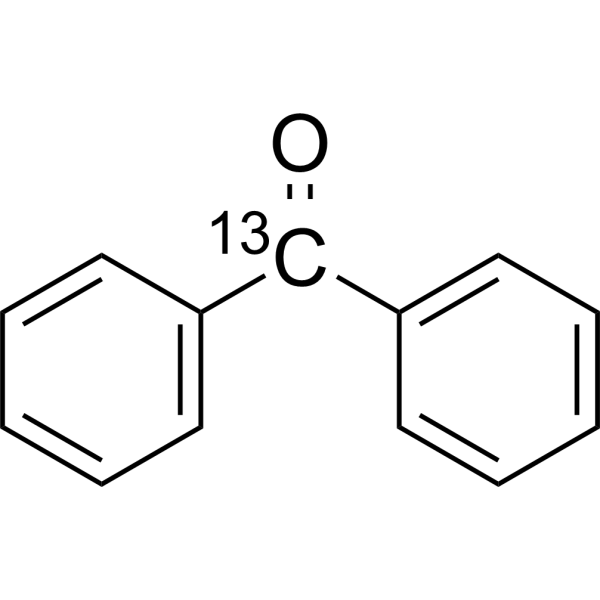 0 ImagesBenzophenone-13C is the 13C labeled Benzophenone (HY-Y0546). Benzophenone is an endogenous metabolite. Benzophenone is a photosensitizer, that absorbs UV light, transfers its energy to DNA, and triggers DNA damage. Benzophenone can be used as the fragrance enhancer, ultraviolet curing agent, additive in plastics, or the flavor ingredient. Benzophenone can also be used in the manufacturing of insecticides, agricultural chemicals, hypnotics, antihistamines, and other pharmaceuticals. Benzophenone exhibits certain carcinogenicity in mouse/rat models under long term exposure. Benzophenone exhibits estrogenic activity.
-
m-THPP
 0 ImagesCat. No.: HY-W075248CAS No.: 22112-79-4Synonyms: Tetra(3-hydroxyphenyl)porphyrin; 3-THPPm-THPP (Tetra(3-hydroxyphenyl)porphyrin; 3-THPP) is a photosensitizer. m-THPP can weakly induce ROS production and shows antitumor and antibacterial activity. m-THPP can be used for the research of photodynamic therapy (PDT).
-
Aluminum phthalocyanine disulfonate disodium
 0 ImagesCat. No.: HY-164294AAluminum phthalocyanine disulfonate disodium is a potential photosensitizer used for the research of Sonodynamic therapy (SDT) .
-
Aluminum phthalocyanine disulfonate
 0 ImagesCat. No.: HY-164294CAS No.: 68637-19-4Aluminum phthalocyanine disulfonate is a potential photosensitizer used for the research of Sonodynamic therapy (SDT).
-
Benzophenone-d5
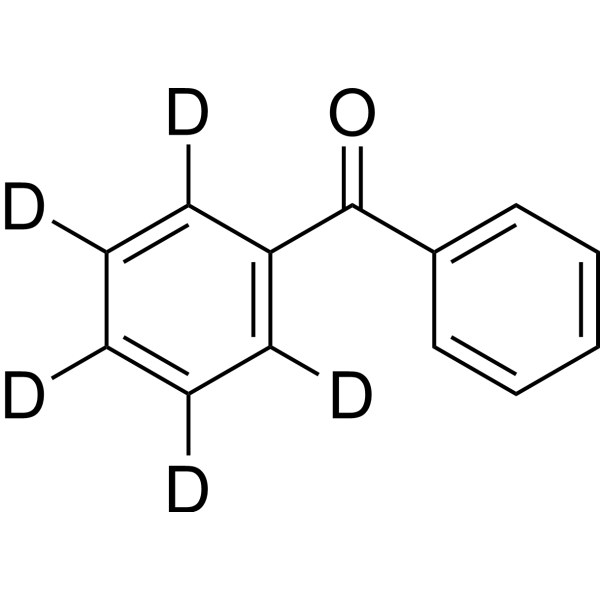 0 ImagesBenzophenone-d5 is the deuterium labeled Benzophenone (HY-Y0546). Benzophenone is an endogenous metabolite. Benzophenone is a photosensitizer, that absorbs UV light, transfers its energy to DNA, and triggers DNA damage. Benzophenone can be used as the fragrance enhancer, ultraviolet curing agent, additive in plastics, or the flavor ingredient. Benzophenone can also be used in the manufacturing of insecticides, agricultural chemicals, hypnotics, antihistamines, and other pharmaceuticals. Benzophenone exhibits certain carcinogenicity in mouse/rat models under long term exposure. Benzophenone exhibits estrogenic activity.
-
3-Hydroxypyridine (Standard)
 0 Images3-Hydroxypyridine (Standard) is the analytical standard of 3-Hydroxypyridine (HY-Y1129). This product is intended for research and analytical applications. 3-Hydroxypyridine is a compound that can be isolated from bamboo grass. As an endogenous photosensitizer present in human skin, 3-hydroxypyridine can mediate oxidative stress, proliferation inhibition and apoptosis of skin cells through UVA/UVB excitation.
-
Methyl aminolevulinate
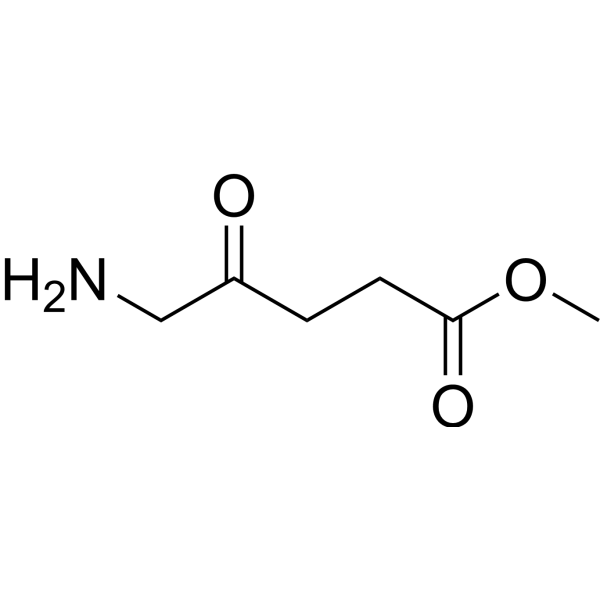 0 ImagesCat. No.: HY-A0169CAS No.: 33320-16-0Methyl aminolevulinate is a sensitizer used in photodynamic therapy (PDT). Methyl aminolevulinate penetrates the skin and induces the production of photoactive porphyrins including protoporphyrin IX in cells; upon exposure to appropriate light, it generates ROS, which triggers cellular oxidation and cell death. Methyl aminolevulinate acts as a photo-damage reversing agent through epidermal reconstruction, cytokine-mediated activation of dermal fibroblasts, elastin breakdown, new collagen formation, and compression of dilated capillaries. Methyl aminolevulinate reduces the expression of the proliferation marker Ki-67 and the early skin carcinogenesis marker TP53. Methyl aminolevulinate delays the onset of ultraviolet-induced skin tumors and reduces tumor burden in hairless mice. Methyl aminolevulinate is applicable to research related to actinic keratosis and basal cell carcinoma.
-
Photosensitizer-2
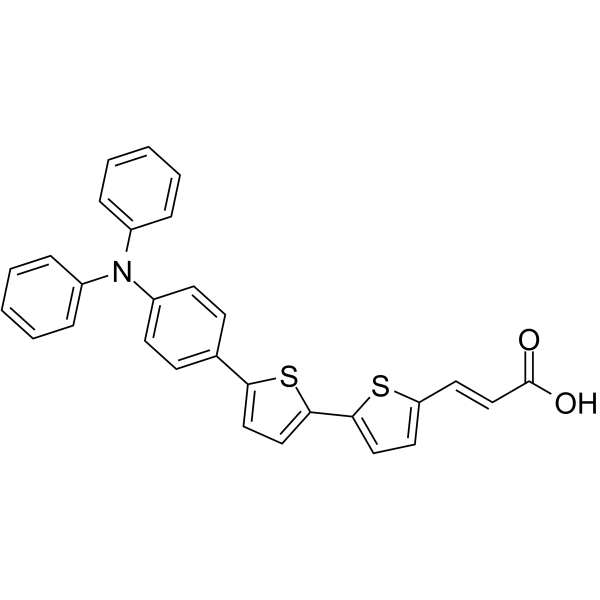 0 ImagesCat. No.: HY-147690CAS No.: 2138330-43-3Photosensitizer-2 (compound 1) is a organic D-π-A sensitizer against phototoxicity. Photosensitizer-2 contains an acrylic acid moiety that exerts high levels of phototoxicity. Photosensitizer-2 shows antitumor activity against HeLa cells, with IC50 values of 20.9 ± 4.5 μM (dark) and 0.046 ± 0.012 μM (irradiation), respectively.

-
anti-TNBC agent-8
 0 ImagesCat. No.: HY-173211anti-TNBC agent-8 (Compound TP2) is a photodynamic therapeutic agent targeting mitochondrial DNA G4 (mtG4). Under white light irradiation, its IC50 against 4T1 cells is 0.42 μM. anti-TNBC agent-8 binds tightly to mtG4 and generates a large amount of reactive oxygen species (ROS) under white light irradiation, leading to the loss of mitochondrial membrane potential (MMP), a decrease in ATP production, and an increase in the ROS level. This, in turn, induces significant apoptosis in triple-negative breast cancer (TNBC) cells, exerting the activity of inhibiting tumor cell growth. anti-TNBC agent-8 can be used in the research of triple-negative breast cancer.
-
SL-052
 0 ImagesCat. No.: HY-19873CAS No.: 925438-34-2SL-052 is a hypocrellin-based photosensitizer that has recently shown promising results in clinical and preclinical testing for cancer photodynamic therapy (PDT). SL-052 is encapsulated in biodegradable polylactic-co-glycolic acid (PLGA) polymer nanoparticles optimized using single emulsion solvent evaporation technology. The SL-052-PLGA nanoparticles were more effective in PDT treatment of subcutaneous SCCVII squamous cell carcinoma compared to polyvinylpyrrolidone (PVP)-based and standard liposomal SL-052 formulations. A longer time interval between drug injection and tumor illumination can improve tumor cure rates, and SL-052-PLGA nanoparticles showed the best therapeutic effect among all SL-052 formulations.
-
5-Methoxysterigmatocystin
 0 ImagesCat. No.: HY-126841CAS No.: 22897-08-15-Methoxysterigmatocystin is a mycotoxin with cytotoxic and genotoxic properties. 5-Methoxysterigmatocystin exhibits cytotoxicity against cancer cells A549 and HepG2 (IC50 of 5.5 and 0.7 μM), and induces DNA damage. 5-Methoxysterigmatocystin is a photosensitizer, which utilizes the visible to generate singlet oxygen (1O2).
-
3-Hydroxypyridine-d4
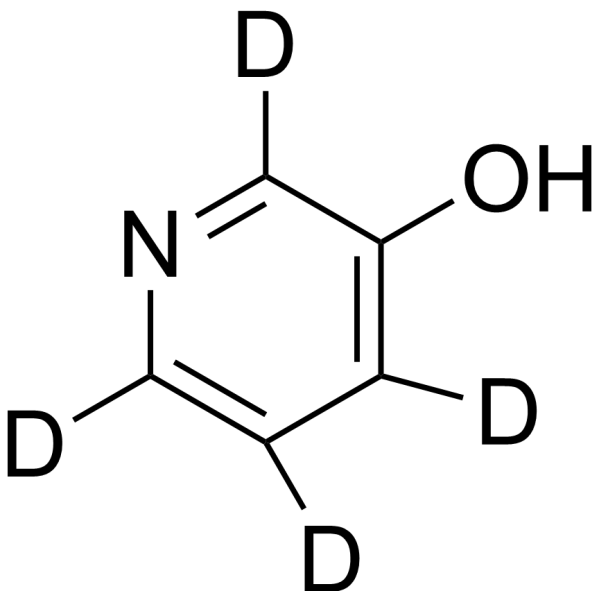 0 ImagesCat. No.: HY-Y1129SCAS No.: 2241864-90-23-Hydroxypyridine-d4 is the deuterium labeled 3-Hydroxypyridine (HY-Y1129). 3-Hydroxypyridine is a compound that can be isolated from bamboo grass. As an endogenous photosensitizer present in human skin, 3-hydroxypyridine can mediate oxidative stress, proliferation inhibition and apoptosis of skin cells through UVA/UVB excitation.
-
Purpurin 18 methyl ester
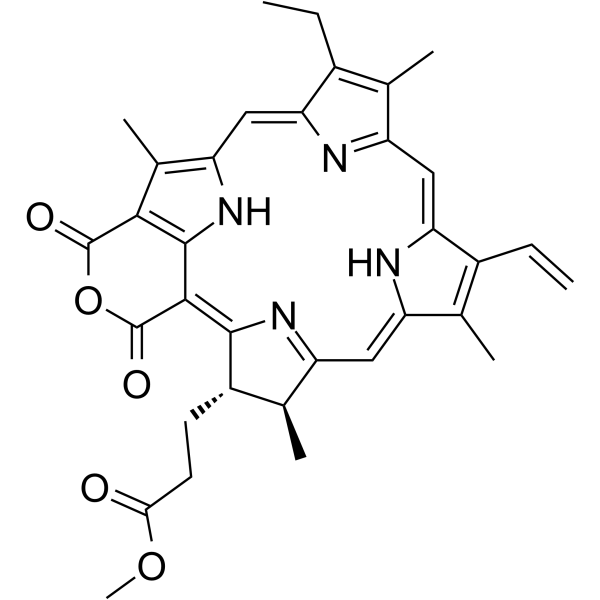 0 ImagesCat. No.: HY-137474CAS No.: 51744-55-9Purpurin 18 methyl ester, a chlorophyll-a derivative, is a photosensitizer that can be used in photodynamic therapy (PDT). Purpurin 18 methyl ester has photodynamic activity to induce cancer cell death.
-
photoCORM-1
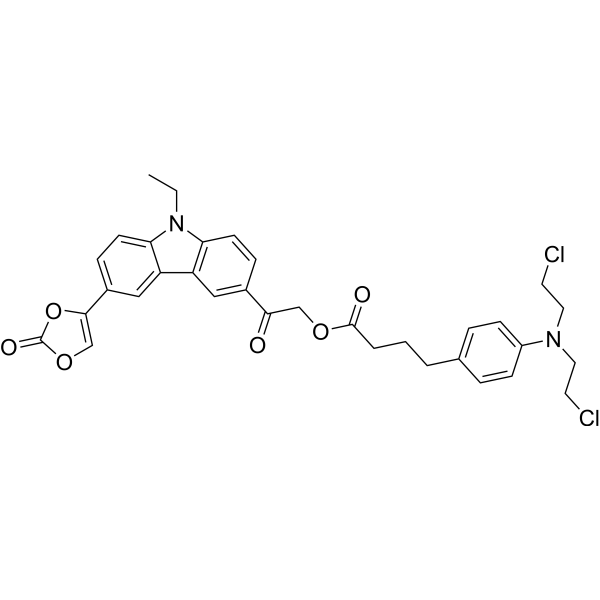 0 ImagesCat. No.: HY-143617CAS No.: 2892235-56-0photoCORM-1 (compound 8) is a combinatorial carbon monoxide releasing molecule (CORM). photoCORM-1 exhibits good cellular uptake and real-time monitoring ability of CO uncaging by a color change approach. photoCORM-1 has anti-tumor antivity.
-
Photosensitizer-7
 0 ImagesCat. No.: HY-175591Photosensitizer-7 is a endoplasmic reticulum (ER)-targeted photosensitizer (PS) (λab = 610 nm, λem = 622 nm). Photosensitizer-7shows an IC50 of 4.006 μM in HeLa cells and 3.28 μM in MCF-7 cells under light irradiation. Photosensitizer-7 exhibits dose-dependent cellular uptake and predominant colocalization with ER. Photosensitizer-7 induces dose-dependent intracellular ROS generation, reduces mitochondrial membrane potential, and increases apoptosis upon light irradiation in cells. Photosensitizer-7 significantly inhibits tumor growth in MCF-7 tumor-bearing mice. Photosensitizer-7 can be used for the study of photodynamic anticancer applications.
-
TTQ-SA
 0 ImagesCat. No.: HY-170490TTQ-SA is a near-infrared (NIR) spiro-AIEgen (aggregation-induced emission luminogen), that converts near-infrared light (NIR) into thermal energy, causing thermal damage and death of tumor cells. TTQ-SA exhibits cellular uptake and targeting ability in cancer cell MF-7. TTQ-SA silences the expression of survivin gene with combination of DNAzyme, enhances the sensitivity of tumor cells to photothermal therapy.
-
Talaporfin
 0 ImagesCat. No.: HY-16477ACAS No.: 110230-98-3Synonyms: ME2906 free acid; Mono-L-aspartyl chlorin e6 free acid; NPe6 free acidTalaporfin sodium, can be used in intraoperative photodynamic therapy (PDT) with a 664-nm semiconductor laser, was evaluated for efficacy and safety in treating primary malignant parenchymal brain tumors.
-
IRDye700Dx (Maleimide)
 0 ImagesCat. No.: HY-D2309IRDye700Dx Maleimide is a Photosensitizer. When conjugated with HER2 Affibody and activated by near-infrared light, IRDye700Dx Maleimide induces death in HER2-positive breast cancer cells without causing damage to HER2-negative breast cancer cells.
-
Antitumor photosensitizer-2
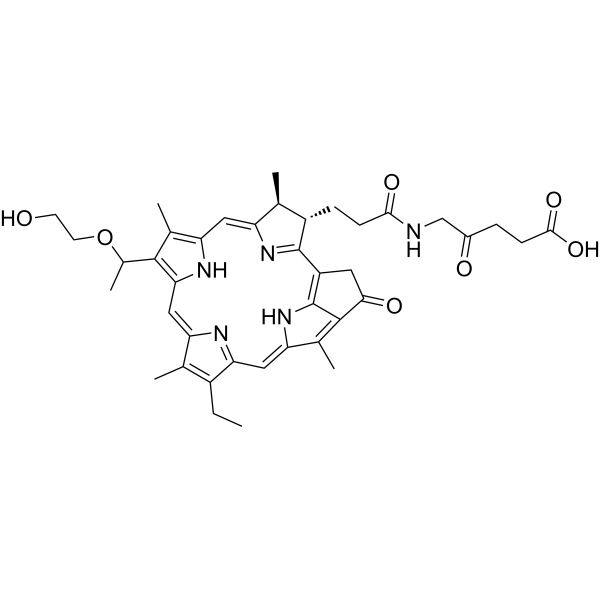 0 ImagesCat. No.: HY-146416CAS No.: 2344751-92-2Antitumor photosensitizer-2 (Compound 11) is a potent photosensitizer. Antitumor photosensitizer-2 has outstanding photodynamic anti-tumor effects without obvious skin photo-toxicity, and can act as new agent candidates for photodynamic research.



