



Radionuclide-Drug Conjugates (RDCs)
Radionuclide-drug conjugates (RDCs) are one of the most promising development directions for nuclear drug targeted therapy. RDC is composed of targeting element, linker, chelate and radioactive isotope. RDC has advantages in early tumor diagnosis, treatment and postoperative tumor evaluation. The same ligand can be connected to nuclides used for disease diagnosis and treatment respectively, promoting the integration of diagnosis and treatment of RDC drugs. This entry provides molecular intermediates that can be used in the synthesis and research of RDC.
Radionuclide-Drug Conjugates (RDCs) Isoform Specific Products
All Product Categories
-
Radionuclide-Drug Conjugates (RDCs) Related Products (225)
Related Products (225)

-
Radionuclide-Drug Conjugates (RDCs) Isoform Comparison
-
DOTA-JR11
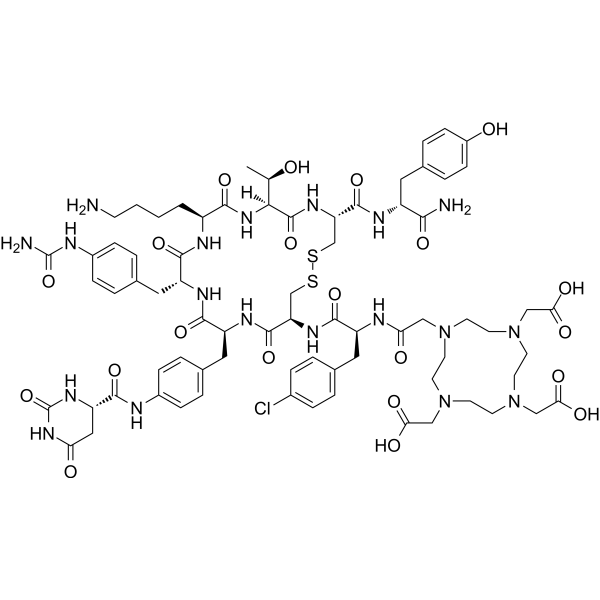 0 ImagesSynonyms: Satoreotide tetraxetanDOTA-JR11 is a somatostatin receptor 2 (SSTR2)antagonist. DOTA-JR11 can be labeled by 68Ga, used for paired imaging in neuroendocrine tumors (NETs) research. DOTA-JR11 can be used for the synthesis/research of Radionuclide-Drug Conjugates (RDCs).
-
NOTA
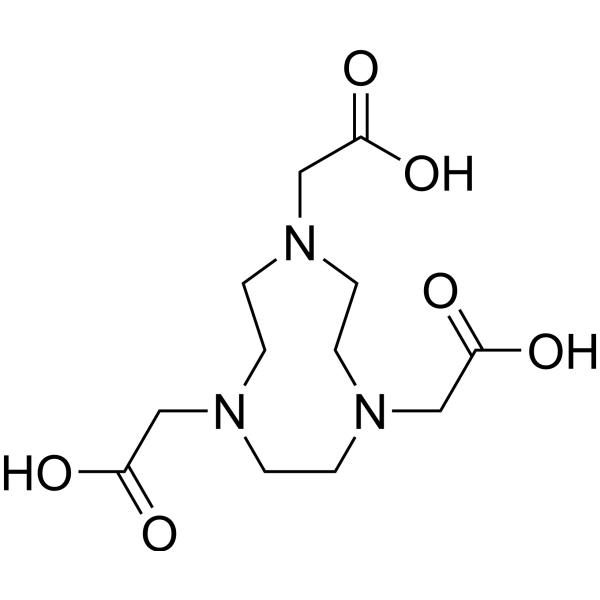 0 ImagesNOTA is a bifunctional chelate which acts as the framework to construct PET imaging tools. NOTA also can be used for probe design and signal amplification via the multivalent effect. NOTA can be used in multiple myeloma, breast cancer, lymphoma and myocardial infarction research.
-
DOTA-GA-maleimide
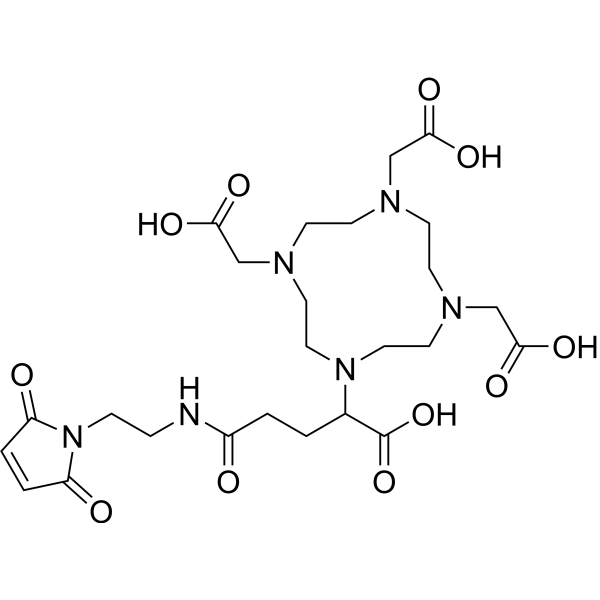 0 ImagesDOTA-GA-maleimide is a bifunctional chelator with protein conjugation and radiometal chelation capabilities. DOTA-GA-maleimide forms stable complexes with 111In and conjugates with proteins via maleimide chemistry. DOTA-GA-maleimide conjugates with LFn, enabling 111In radiolabeling of LFn through direct or pre-labeling strategies. Radiolabeled LFn is applicable to MMP activity imaging studies. DOTA-GA-maleimide is used in cancer research.
-
Deferoxamine-DBCO
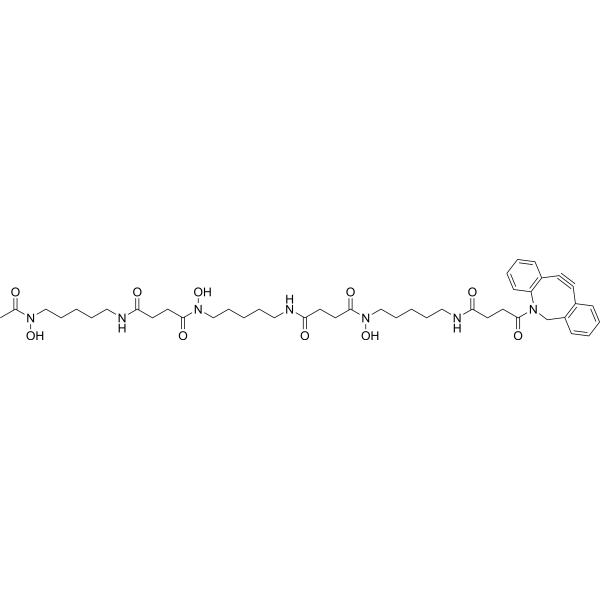 0 ImagesCat. No.: HY-158067CAS No.: 2359695-48-8Synonyms: DFO-DBCODeferoxamine-DBCO is a bifunctional chelating agent. Deferoxamine-DBCO efficiently chelates with radioactive metals (such as 89Zr) through the DFO structure to achieve radiolabeling. Deferoxamine-DBCO undergoes a metal-free Huisgen cycloaddition reaction with azide-containing biomolecules (such as siRNA, monoclonal antibodies) under bioorthogonal conditions through the DBCO structure to achieve targeted coupling. Deferoxamine-DBCO has efficient metal chelating ability and specific bioorthogonal reaction activity. Deferoxamine-DBCO can be used for targeted radioactive imaging studies of tumors.
-
p-SCN-Bn-NOTA trihydrochloride
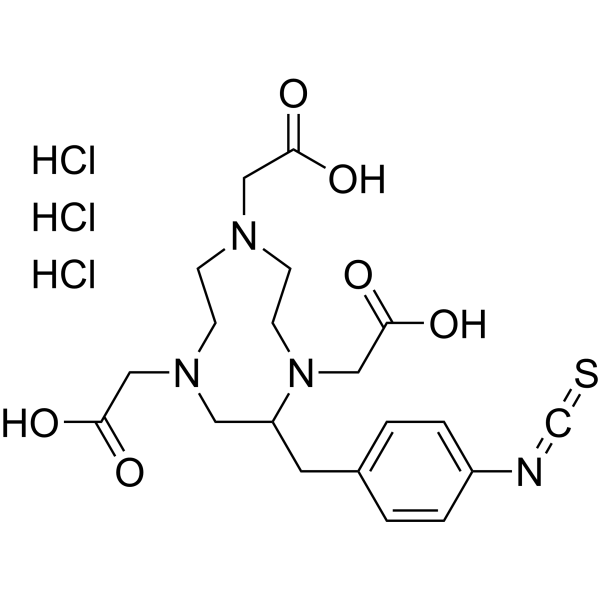 0 Imagesp-SCN-Bn-NOTA trihydrochloride is a macrocyclic chelator. p-SCN-Bn-NOTA trihydrochloride can be covalently coupled to molecules such as peptides through the thiocyanate group to form hexacoordinate copper (such as 64Cu) complexes. p-SCN-Bn-NOTA trihydrochloride specifically binds to GRPR or EGFR highly expressed on the surface of tumor cells, mediating tumor enrichment of radioactive probes. p-SCN-Bn-NOTA trihydrochloride can be used to study malignant tumors expressing GRPR or EGFR, such as prostate cancer and colorectal cancer.
-
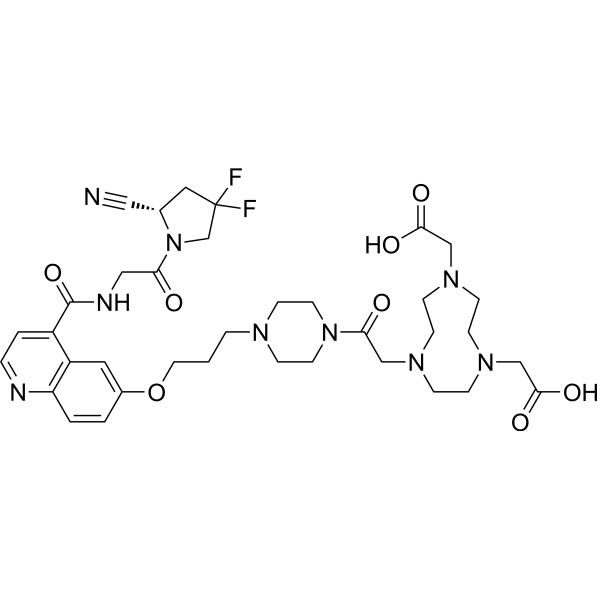
FAPI-mFS
 0 ImagesFAPI-mFS is a selective fibroblast activation protein (FAP) inhibitor with an IC50 of 0.0014 μM against human FAP. Through its covalent binding property with FAP, FAPI-mFS enhances its uptake and retention time in cancer cells. When radiolabeled with 68Ga, FAPI-mFS serves as a PET/CT imaging agent with superior tumor-to-background tissue contrast and lesion detection capability. When radiolabeled with 177Lu or 225Ac, FAPI-mFS induces tumor regression and inhibition in preclinical models. FAPI-mFS can be used in studies related to cancer and radionuclide-conjugated drugs (RDC).
-
3BP-3940
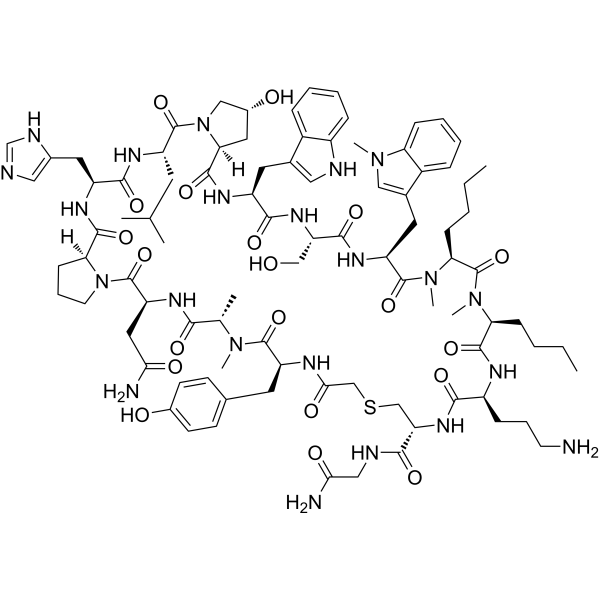
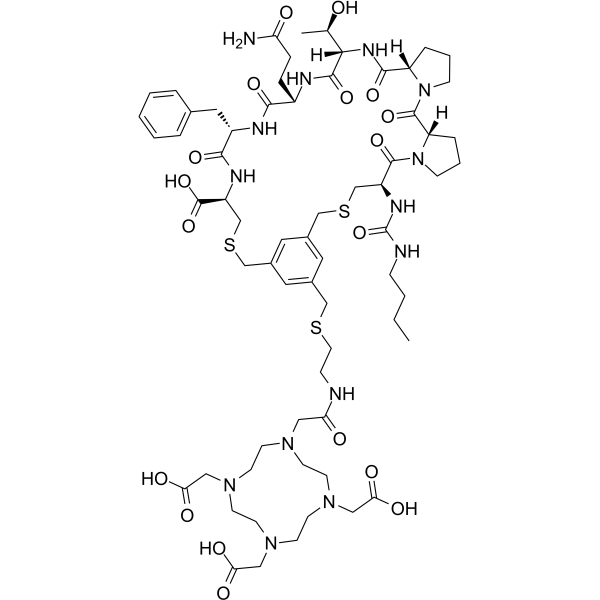 0 Images3BP-3940 is a highly potent and selective peptide inhibitor of FAP that targets cancer-associated fibroblasts (CAFs) in the tumor microenvironment. 3BP-3940 can be labeled with radionuclides (such as Ga-68) for precise tumor imaging or Lu-177 for the development of targeted anticancer technologies. 3BP-3940 accumulates in tumor lesions and can be used to diagnose and inhibit various solid cancers and CAFs-related diseases.
-
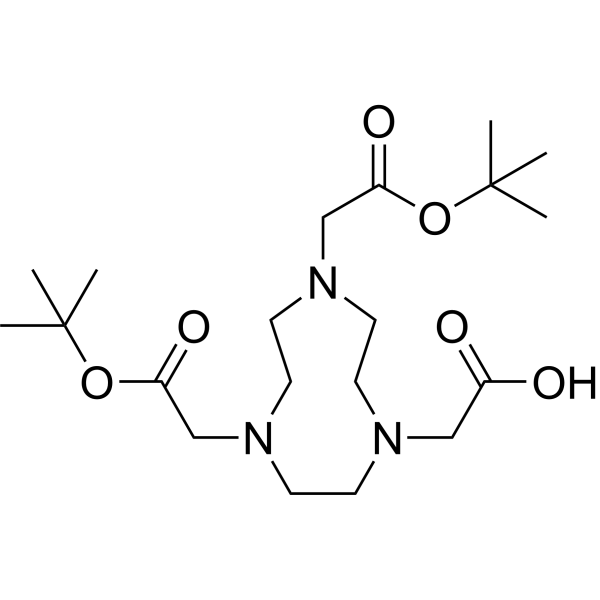
Satoreotide
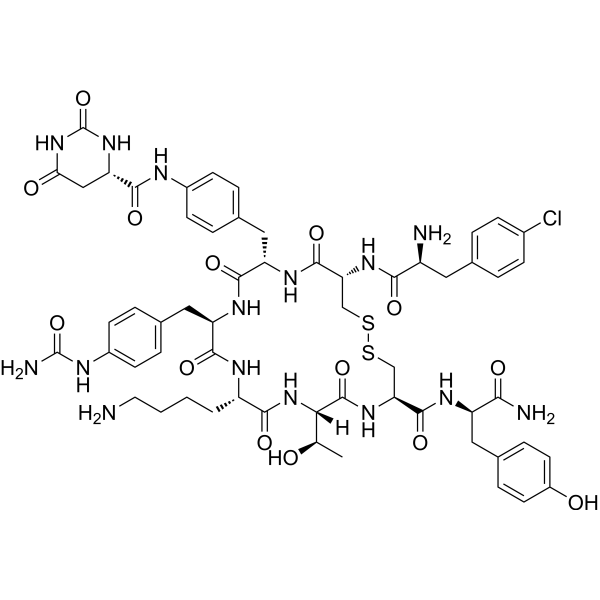 0 ImagesSynonyms: JR11Satoreotide (JR11) is a somatostatin receptor subtype 2 (sstr2)-selective antagonist. Satoreotide can be used as a PET imaging agent when labeled with 68Ga. Satoreotide can be used for cancer research.
-
PSMA-BCH
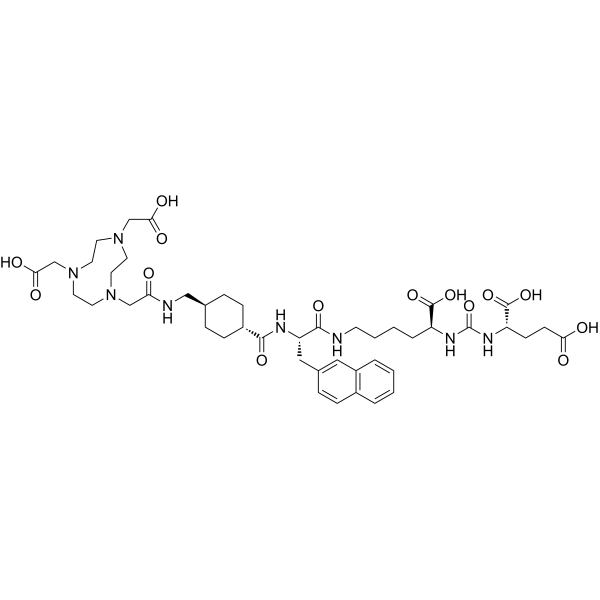 0 ImagesSynonyms: NOTA-PSMAPSMA-BCH (NOTA-PSMA) is a NOTA-conjugated precursor. NOTA is a bifunctional chelate which acts as the framework to construct PET imaging tools.
-
α-Synuclein aggregate binder 1
 0 Imagesα-Synuclein aggregate binder 1 (Compound C05-05) is a specific binder for α-synuclein aggregates and can inhibit α-synuclein aggregation. α-Synuclein aggregate binder 1 can be used as a fluorescent probe (excitation wavelength 900 nm, detection wavelength 500-550 nm) for optical imaging, and can also inhibit α-synuclein fibril formation by blocking the aggregation process. α-Synuclein aggregate binder 1 can be used for positron emission tomography (PET) imaging after being labeled with 18F. α-Synuclein aggregate binder 1 can be used for visual diagnosis of brain lesions and mechanism research of neurodegenerative diseases such as Parkinson's disease and Lewy body dementia.
-
NODAGA-LM3
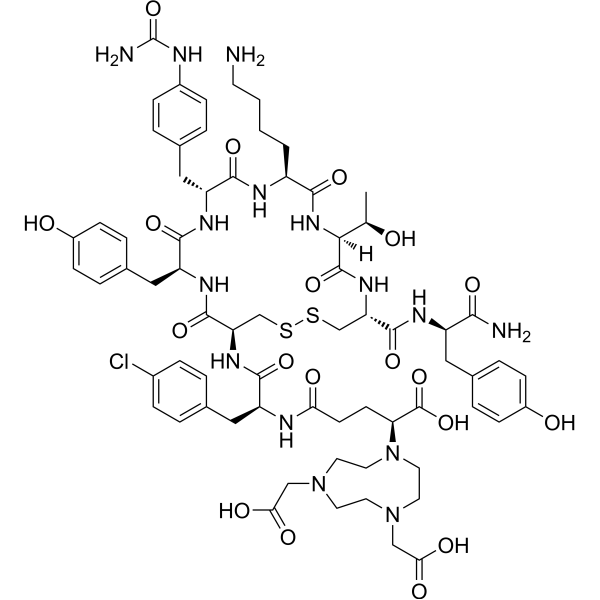 0 ImagesCat. No.: HY-P5362Purity: 99.65%NODAGA-LM3 is a ligand that can cross the blood-brain barrier and targets somatostatin receptor SSTR2 with high affinity (IC50 = 1.3 nM). NODAGA-LM3 does not trigger the internalization of SSTR2 and can inhibit agonist-induced internalization processes. NODAGA-LM3 shows low uptake in normal tissues such as the liver and spleen, but high uptake in the lungs and blood pool. 68Ga-labeled NODAGA-LM3 can serve as a PET imaging agent for well-differentiated neuroendocrine tumors, and is applied in studies related to small cell lung cancer and well-differentiated neuroendocrine tumors.
-
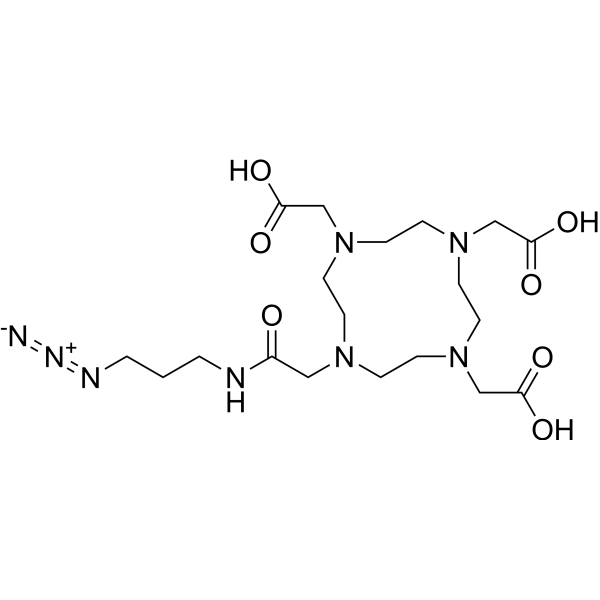
NH2-PEG4-DOTA
 0 ImagesNH2-PEG4-DOTA is a bifunctional DOTA chelator with one carboxyl group modified by NH2-PEG4, possessing both a metal-binding domain and a chemically reactive functional group. NH2-PEG4-DOTA can be used for time-resolved fluorescence assays.
-
2-Aminoethyl-mono-amide-DOTA-tris(tBu ester)
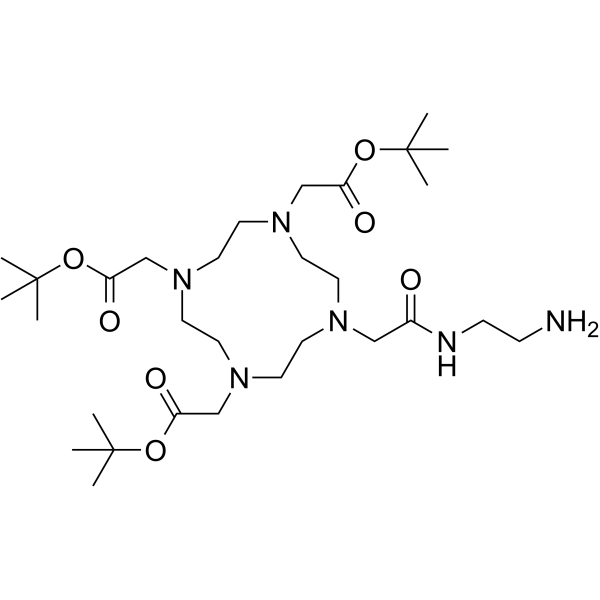 0 Images2-Aminoethyl-mono-amide-DOTA-tris(tBu ester) is a metal chelator precursor containing a DOTA macrocyclic structure. DOTA can form highly stable complexes with metal ions (such as 68Ga, 177Lu) through four nitrogen atoms and four carboxylic acid groups to mediate targeted delivery of radionuclides. The tert-butyl ester group (tBu ester) of 2-Aminoethyl-mono-amide-DOTA-tris(tBu ester) also protects the carboxylic acid group during synthesis, and forms a free carboxyl group after deprotection reaction for coupling with targeting molecules (such as antibodies, peptides). 2-Aminoethyl-mono-amide-DOTA-tris(tBu ester) may be combined with tumor pre-targeting systems through bioorthogonal reactions (such as reverse electron demand Diels-Alder reaction) to study radioactive imaging or therapy of tumor tissues, and is mainly used in tumor pre-targeting research in the field of nuclear medicine.
-
DOTA-NOC
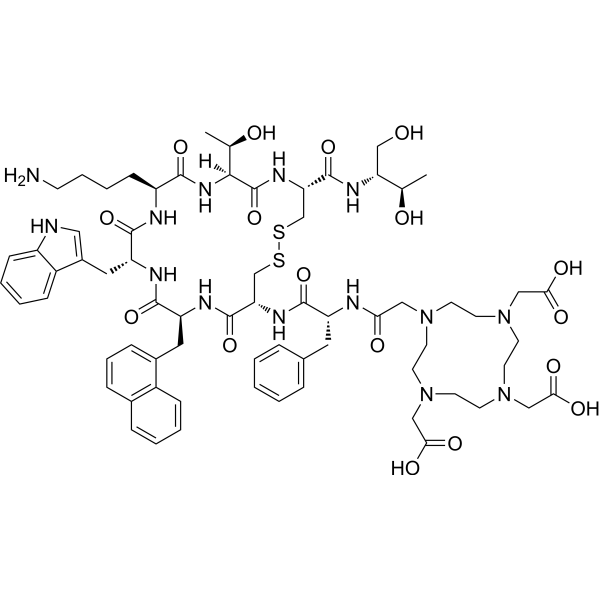 0 ImagesSynonyms: DOTA-Nal3-octreotideDOTA-NOC (DOTA-Nal3-octreotide) is a high-affinity ligand of somatostatin receptor subtypes 2, 3 and 5. DOTA-NOC can be used for labeling with various radiometals, and development of radiopeptide imaging. DOTA-NOC can be used for the synthesis/research of Radionuclide-Drug Conjugates (RDCs).
-
NOTA-AE105
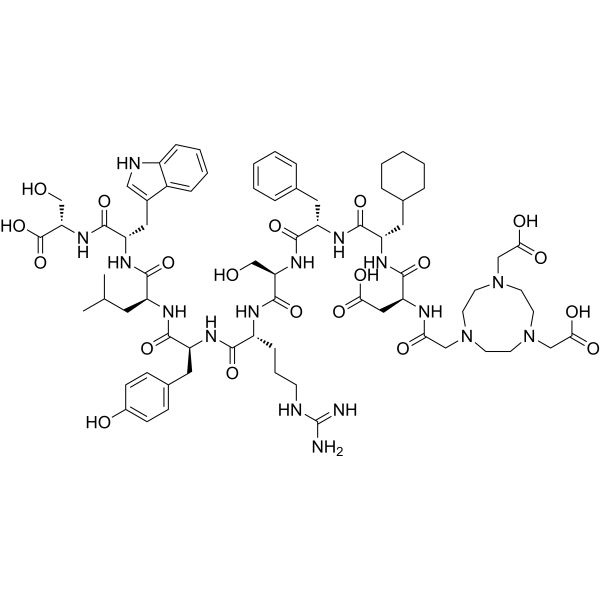 0 ImagesNOTA-AE105 is a PET ligand for the urokinase-type plasminogen activator receptor (uPAR). NOTA-AE105 can be radiolabeled with 64Cu and 68Ga. Images of 68Ga-NOTA-AE105 and 64Cu-NOTA-AE105 demonstrate high contrast and clear tumor delineation. NOTA-AE105 can be used in the synthesis of radionuclide-conjugated compounds (RDCs).
-
DOTA-GPC3 targeting peptide 2
 0 ImagesDOTA-GPC3 targeting peptide 2 (Sequence 30) is a RDC peptide targeting GPC3, with Kd of 0.3 nM. DOTA-GPC3 targeting peptide 2 is composed of DOTA and GPC3 targeting peptide 2. DOTA-GPC3 targeting peptide 2 can be labeled with radioactive elements.



