



RDC Bifunctional Chelators
Bifunctional chelators (BFCs) are core structural components of radiometal-based radiopharmaceuticals because they provide a stable linkage between a metallic radionuclide and a biologically active targeting vector[1]. The primary biological role of a BFC is not target recognition itself, but preservation of radiometal coordination under physiological conditions while maintaining the biological properties of the carrier molecule[1]. Mechanistically, BFCs participate in the coordination chemistry that governs radiolabeling efficiency, complex stability, and resistance to transchelation or metal release in vivo[1][2]. These properties directly influence biodistribution, target-to-background ratios, and the suitability of radiopharmaceuticals for molecular imaging or radionuclide therapy[1]. In oncology-focused applications, BFC-containing radiopharmaceuticals have been widely developed for positron emission tomography (PET), single-photon emission computed tomography (SPECT), and endoradiotherapy, where stable radiometal retention is a prerequisite for accurate targeting and therapeutic performance[1][2]. Compared with related chelator classes, both acyclic and macrocyclic BFCs have been employed, with chelator selection guided by the coordination requirements of specific radiometals and the need for high thermodynamic stability and kinetic inertness[1]. For experimental applications, commonly used platforms include DOTA-, NOTA-, DTPA-, and related chelator frameworks that enable attachment to peptides, antibodies, and other targeting molecules for preclinical and clinical radiopharmaceutical development[1][2].
References:
- [1]. Sarko D, et al. Bifunctional chelators in the design and application of radiopharmaceuticals for oncological diseases. Curr Med Chem. 2012;19(17):2667-88. [Content Brief]
- [2]. Davey PRWJ, et al. Modern Developments in Bifunctional Chelator Design for Gallium Radiopharmaceuticals. Molecules. 2022 Dec 26;28(1):203. [Content Brief]
-
RDC Bifunctional Chelators Related Products (60)
Related Products (60)

-
DOTA-tri(t-butyl ester)
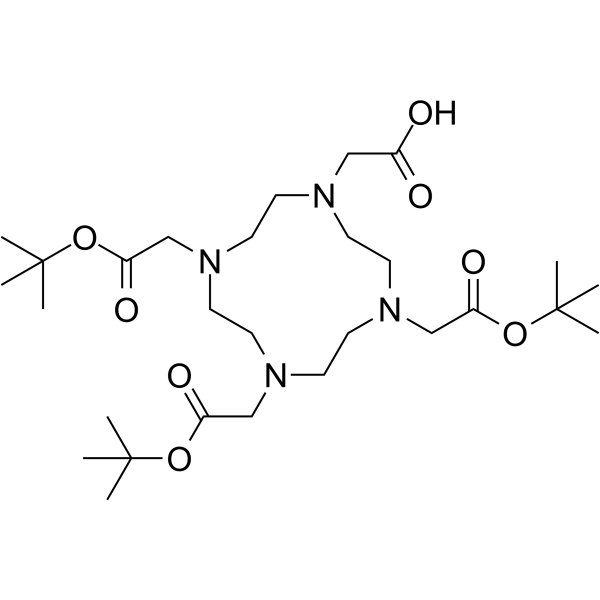 0 ImagesDOTA-tri(t-butyl ester) belongs to the DOTA class of chelating agents. DOTA-tri(t-butyl ester) is a key raw material for synthesizing nanospherical magnetic resonance imaging (MRI) contrast agents, which are used in MR angiography and tumor angiogenesis imaging.
-
NOTA-NHS ester
 0 ImagesCat. No.: HY-W087028CAS No.: 1338231-09-6NOTA-NHS ester is a chelating agent. NOTA-NHS ester can be coupled with T140 (HY-P4810) to produce NOTA-T140. NOTA-T140 can be radiolabeled with Al[18F]. The uptake of Al[18F]NOTA-T140 in tumors is correlated with the expression level of CXCR4. Al[18F]NOTA-T140 can be used in tumor PET imaging studies. NOTA-NHS ester can be used for fluorescent labeling.
-
Maleimide-NOTA
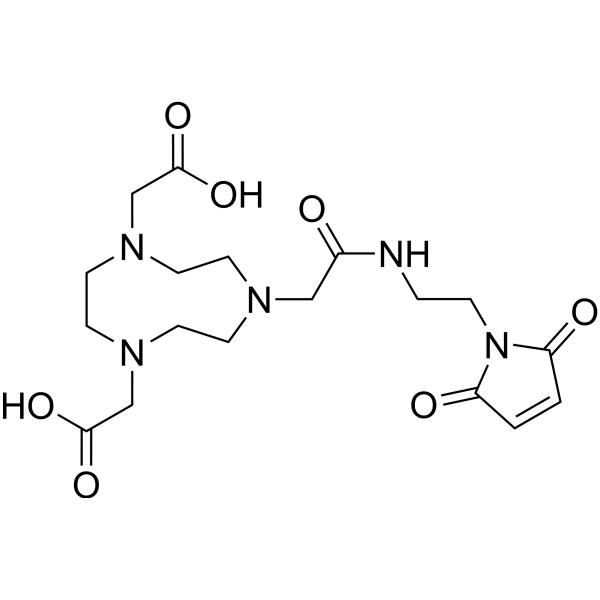 0 ImagesMaleimide-NOTA is a chelate. Maleimide-NOTA can be site-specifically coupled to the hPD-L1 nanobody bearing the Cys-tag. Maleimide-NOTA can specifically conjugate to A20FMDV2 (HY-P1654). The [68Ga]Ac-CG6 formed by the conjugation of 68Ga radiolabeled Maleimide-NOTA with A20FMDV2 can be used for PET imaging of αvβ6 integrin-positive pancreatic ductal adenocarcinoma.
-
DOTAGA-anhydride
 0 ImagesDOTAGA-anhydride is a DOTA-based metal chelator that can bind to radionuclides and is used to prepare radionuclide drug conjugates (RDCs). DOTAGA-anhydride has been successfully used for labeling antibodies (e.g., Trastuzumab (HY-P9907)). DOTAGA-anhydride can be used for the synthesis of a bimodal tag for Single-photon emission computed tomography (SPECT) or PET/optical imaging.
-
NOTA
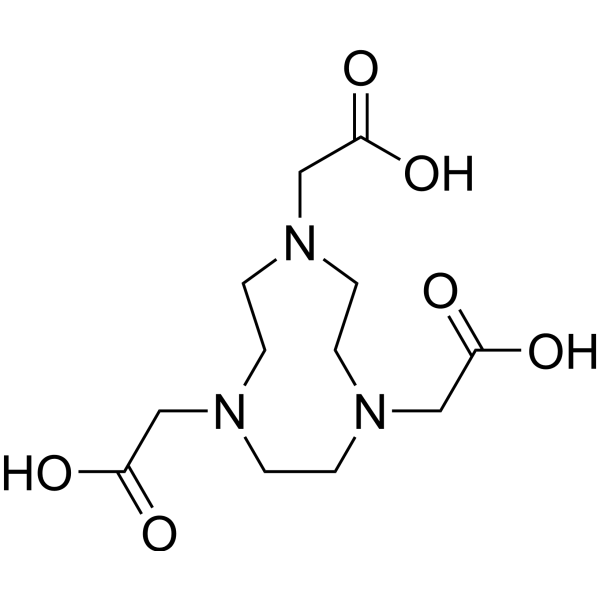 0 ImagesNOTA is a bifunctional chelate which acts as the framework to construct PET imaging tools. NOTA also can be used for probe design and signal amplification via the multivalent effect. NOTA can be used in multiple myeloma, breast cancer, lymphoma and myocardial infarction research.
-
Deferoxamine-DBCO
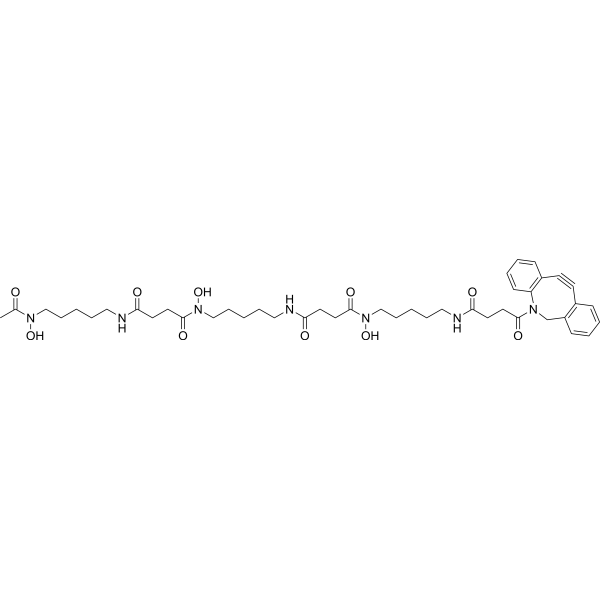 0 ImagesCat. No.: HY-158067CAS No.: 2359695-48-8Synonyms: DFO-DBCODeferoxamine-DBCO (DFO-DBCO) is a bifunctional small-molecule synthetic building block obtained by covalent conjugation of the DFO metal-chelating group with DBCO, and is a bifunctional chelator. Deferoxamine-DBCO efficiently chelates radioactive metals (such as 89Zr) through the DFO moiety to achieve radiolabeling. Deferoxamine-DBCO undergoes a metal-free Huisgen cycloaddition reaction with azide-containing biomolecules (such as siRNA and monoclonal antibodies) through the DBCO moiety under bioorthogonal conditions to accomplish targeted conjugation. Deferoxamine-DBCO is applicable to research related to bioconjugation chemistry and the preparation of PET radiotracer probes.
-
p-SCN-Macropa
 0 ImagesCat. No.: HY-W1129940CAS No.: 2417821-30-6p-SCN-Macropa is a bifunctional macrocyclic chelator featuring macrocyclic polyamine skeletons and thiocyanate (-SCN) reactive moieties. p-SCN-Macropa can conjugate with monoclonal antibodies including Nimotuzumab (HY-P9968), Rituximab (HY-P9913) and Trastuzumab (HY-P9907)-PEG6-DM1 for 225Ac radiolabeling to construct radioimmunoconjugates. p-SCN-Macropa is applicable for the research of colorectal cancer, HER2-positive breast cancer, TROP-2-positive cancers, and PSMA-positive cancers.
-
SCN-PYTA
 0 ImagesCat. No.: HY-183600SCN-PYTA is a bifunctional chelator for trivalent radiometals. After conjugation with monoclonal antibodies, SCN-PYTA forms a stable complex with 225Ac to achieve efficient radiolabeling. SCN-PYTA can be used in cancer research.
-
DOTA-GA-maleimide
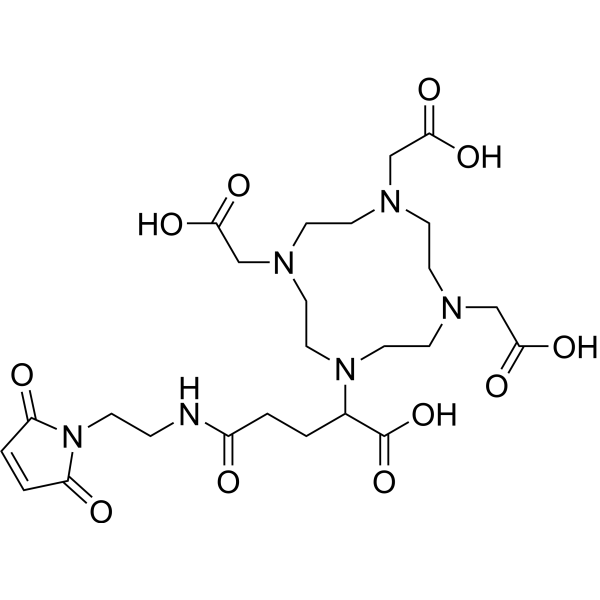 0 ImagesDOTA-GA-maleimide is a bifunctional chelator with protein conjugation and radiometal chelation capabilities. DOTA-GA-maleimide forms stable complexes with 111In and conjugates with proteins via maleimide chemistry. DOTA-GA-maleimide conjugates with LFn, enabling 111In radiolabeling of LFn through direct or pre-labeling strategies. Radiolabeled LFn is applicable to MMP activity imaging studies. DOTA-GA-maleimide is used in cancer research.
-
p-SCN-Bn-NOTA trihydrochloride
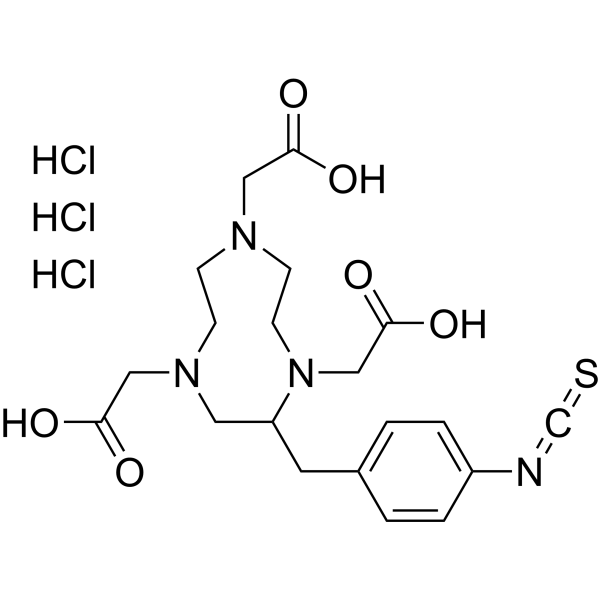 0 Imagesp-SCN-Bn-NOTA trihydrochloride is a macrocyclic chelator. p-SCN-Bn-NOTA trihydrochloride can be covalently coupled to molecules such as peptides through the thiocyanate group to form hexacoordinate copper (such as 64Cu) complexes. p-SCN-Bn-NOTA trihydrochloride specifically binds to GRPR or EGFR highly expressed on the surface of tumor cells, mediating tumor enrichment of radioactive probes. p-SCN-Bn-NOTA trihydrochloride can be used to study malignant tumors expressing GRPR or EGFR, such as prostate cancer and colorectal cancer.
-
PSMA-BCH
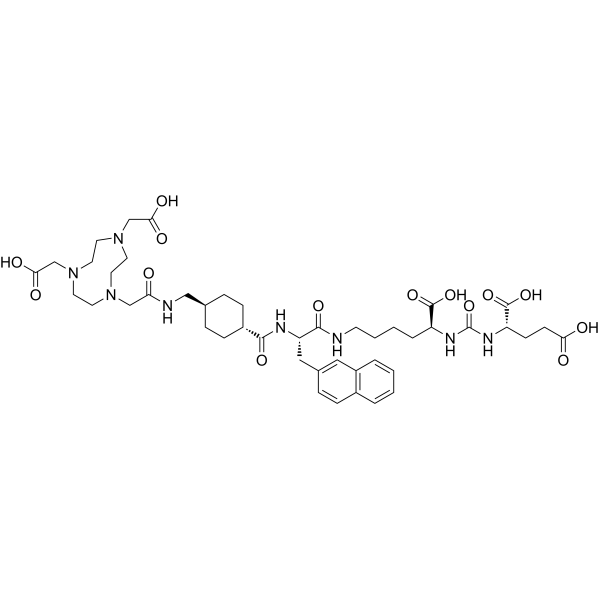 0 ImagesSynonyms: NOTA-PSMAPSMA-BCH (NOTA-PSMA) is a NOTA-conjugated precursor. NOTA is a bifunctional chelate which acts as the framework to construct PET imaging tools.
-
NH2-PEG4-DOTA
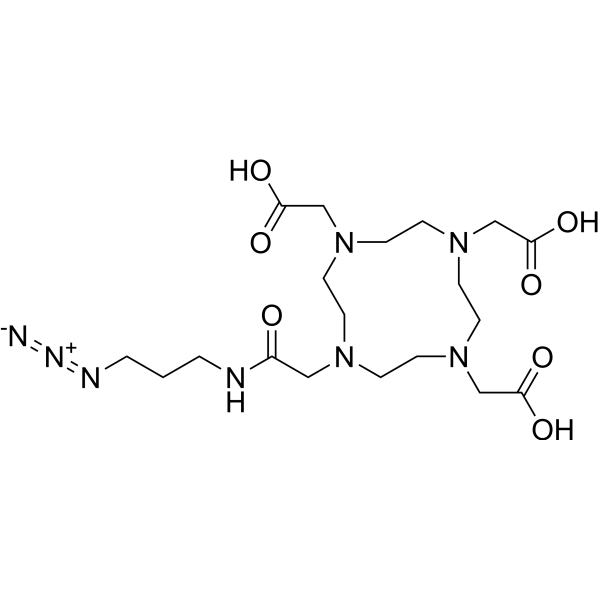
 0 ImagesNH2-PEG4-DOTA is a bifunctional DOTA chelator with one carboxyl group modified by NH2-PEG4, possessing both a metal-binding domain and a chemically reactive functional group. NH2-PEG4-DOTA can be used for time-resolved fluorescence assays.
-
2-Aminoethyl-mono-amide-DOTA-tris(tBu ester)
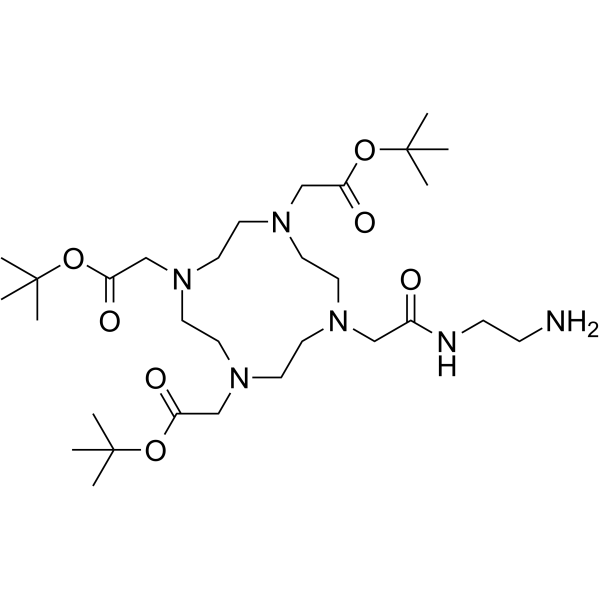 0 Images2-Aminoethyl-mono-amide-DOTA-tris(tBu ester) is a metal chelator precursor containing a DOTA macrocyclic structure. DOTA can form highly stable complexes with metal ions (such as 68Ga, 177Lu) through four nitrogen atoms and four carboxylic acid groups to mediate targeted delivery of radionuclides. The tert-butyl ester group (tBu ester) of 2-Aminoethyl-mono-amide-DOTA-tris(tBu ester) also protects the carboxylic acid group during synthesis, and forms a free carboxyl group after deprotection reaction for coupling with targeting molecules (such as antibodies, peptides). 2-Aminoethyl-mono-amide-DOTA-tris(tBu ester) may be combined with tumor pre-targeting systems through bioorthogonal reactions (such as reverse electron demand Diels-Alder reaction) to study radioactive imaging or therapy of tumor tissues, and is mainly used in tumor pre-targeting research in the field of nuclear medicine.
-
NH2 DOTA-GA
 0 ImagesNH2 DOTA-GA is a DOTA-based metal chelator that can be used to prepare radionuclide drug conjugates (RDCs) whose carboxylic acid groups can complex metal ions, for example, NH2 DOTA-GA complexes Gd(III) ions.
-
DOTA-GA(tBu)4
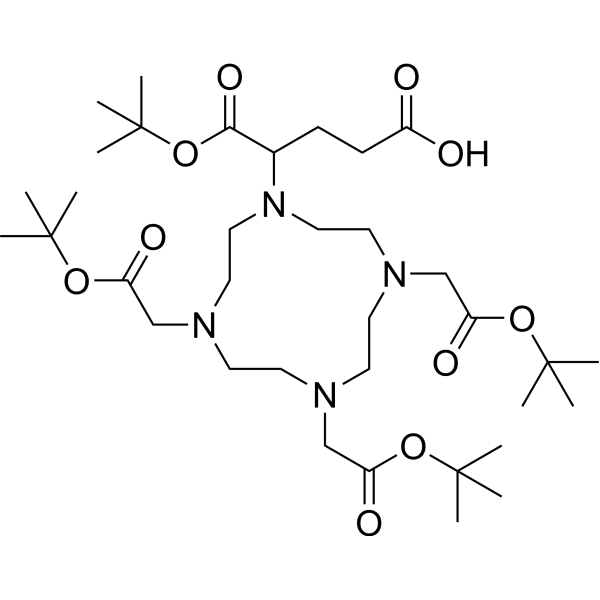 0 ImagesDOTA-GA(tBu)4 stabilizes the attachment of radiometals to ligands. DOTA-GA(tBu)4 improves the biodistribution of radiolabeled second-generation Affibody molecules by increasing their net negative charge and reducing hepatic uptake, leading to enhanced tumor-to-blood and tumor-to-liver ratios. DOTA-GA(tBu)4 targets HER2>-expressing breast and gastrointestinal cancer.
-
DOTAM-mono-acid
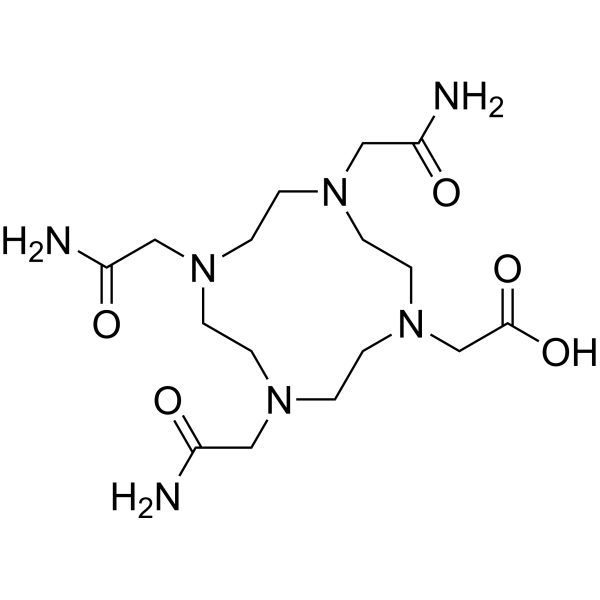 0 ImagesDOTAM-mono-acid is a chelator with DOTAM as its core. DOTAM-mono-acid contains a carboxylic acid group that can be activated to form an amide bond with the N-terminus of a peptide. DOTAM-mono-acid can form peptide conjugates for radiometal labeling.
-
p-NCS-Bz-NODA-GA
 0 Imagesp-NCS-Bz-NODA-GA is a bifunctional chelator.



