



RDC Peptides
RDC peptides serve as tumor-targeting vectors in radionuclide-drug conjugates (RDCs), directing diagnostic or therapeutic radionuclides to disease-associated receptors while enabling localized radiation delivery and molecular imaging[1][2]. Mechanistically, peptide-based RDCs bind membrane targets with high specificity and concentrate radioactive payloads at tumor sites, where emitted α-, β-, or Auger-particle radiation induces localized biological damage and can generate cross-fire effects within tumor tissue[1][3]. This targeting strategy is highly relevant to oncology because RDCs integrate receptor-directed delivery with radionuclide therapy, supporting both tumor visualization and therapeutic intervention in a single platform[1][2]. Peptide ligands represent a distinct RDC targeting class alongside monoclonal antibodies and small molecules, offering a compact molecular format that is widely used in radiotheranostic design[2][4]. A clinically established example is lutetium (^177Lu) dotatate, a radiolabeled somatostatin analog peptide that targets somatostatin receptor-expressing tumors and demonstrates the feasibility of peptide-mediated radionuclide delivery in cancer management[5]. Therefore, RDC peptide design focuses on receptor recognition, stable radionuclide attachment through chelator-based chemistry, and efficient tumor accumulation, making peptide-based RDCs important tools for translational radiopharmaceutical research and precision oncology development[1][2].
References:
- [1]. Xijing L, et al. Recent advances in radionuclide drug conjugates (RDCs) for cancer therapy. Bioorg Chem. 2025;160:109240. [Content Brief]
- [2]. Zhang Y, et al. Comparison of Radionuclide Drug Conjugates With Boron Neutron Capture Therapy: An Overview of Targeted Charged Particle Radiation Therapy. Med Res Rev. 2025 May;45(3):867-886. [Content Brief]
- [3]. Zhen Z, et al. Radionuclide-labeled nanomaterials for tumor therapy: Recent progress and perspectives. Mater Today Bio. 2025 Aug 5;34:102156. [Content Brief]
- [4]. Du H, et al. Comparative analysis of the efficacy and safety of antibody‑drug conjugates, radionuclide‑drug conjugates and their combination targeting claudin 18.2 in gastric cancer treatment. Oncol Rep. 2026 Jan;55(1):4. [Content Brief]
- [5]. Wikipedia.
-
RDC Peptides Related Products (33)
Related Products (33)

- 1
- 2
-
DOTATATE
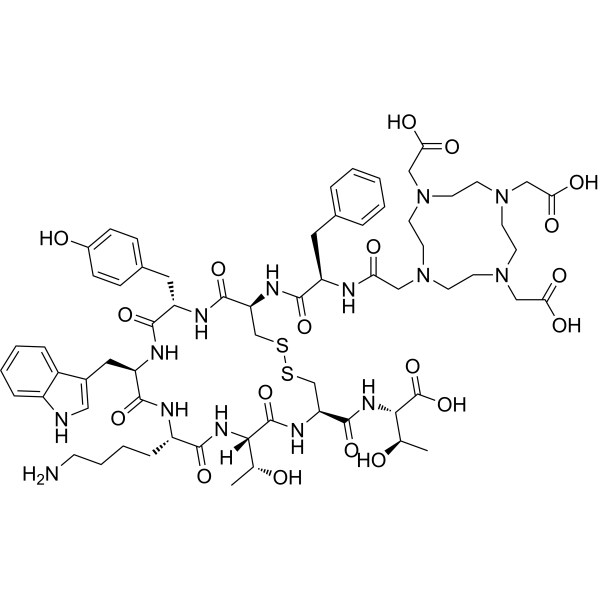 0 ImagesSynonyms: OxodotreotideDOTATATE is a DOTA-conjugated peptide. DOTATATE can be labelled with radionuclides for positron emission tomography (PET) imaging and peptide receptor radionuclide research (PRRT). DOTATATE can be used for the synthesis/research of Radionuclide-Drug Conjugates (RDCs).
-
DOTATATE acetate
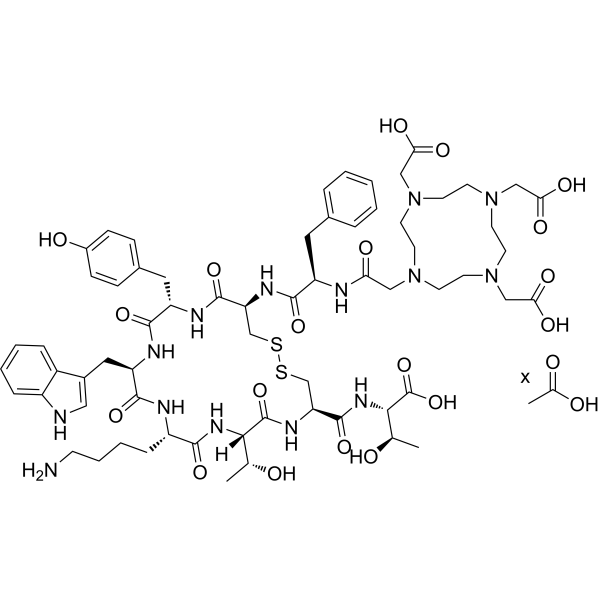 0 ImagesSynonyms: Oxodotreotide acetateDOTATATE acetate is a DOTA-conjugated peptide. DOTATATE acetate can be labelled with radionuclides for positron emission tomography (PET) imaging and peptide receptor radionuclide research (PRRT). DOTATATE (acetate) can be used for the synthesis/research of Radionuclide-Drug Conjugates (RDCs).
-
DOTA-LM3
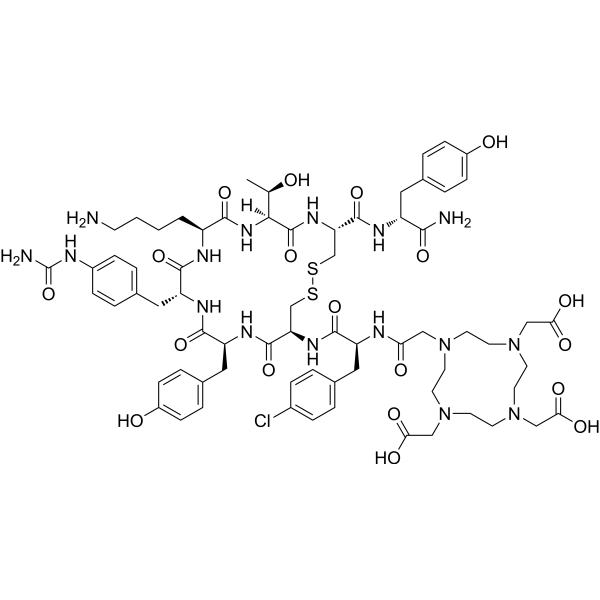 0 ImagesDOTA-LM3 is a somatostatin receptor (SSTR) antagonist. LM3 refers to p-Cl-Phe- cyclo(D-Cys-Tyr-D-4-amino-Phe(carbamoyl)-Lys-Thr-Cys)D-Tyr- NH2, as well as a somatostatin antagonist. DOTA-LM3 is often isotopically labeled for tracing tumors in vivo, such as 177Lu-DOTA-LM3 and 68 Ga-DOTA-LM3. 68 Ga-DOTA-LM3 shows favorable biodistribution, high tumor uptake, good tumor retention, and few safety concerns. 177Lu-DOTA-LM3 can be used for research in DOTATOC-negative liver metastases, such as pancreatic NET and extensive tumor thrombosis. DOTA-LM3 can be used for the synthesis/research of Radionuclide-Drug Conjugates (RDCs).
-
DOTA-JR11
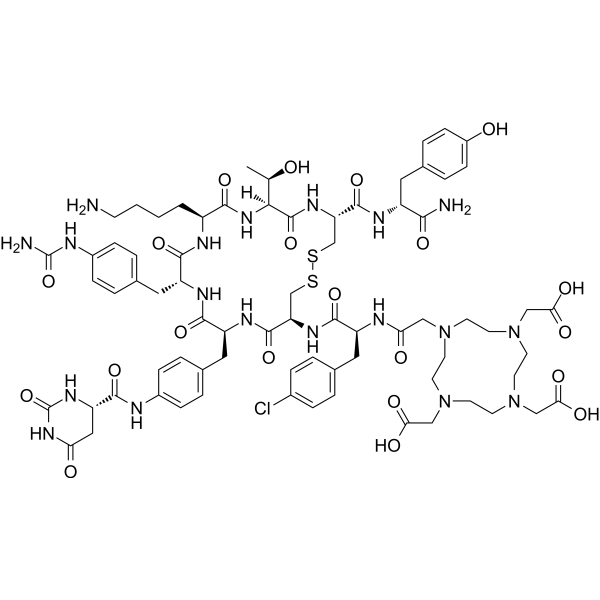 0 ImagesSynonyms: Satoreotide tetraxetanDOTA-JR11 is a somatostatin receptor 2 (SSTR2)antagonist. DOTA-JR11 can be labeled by 68Ga, used for paired imaging in neuroendocrine tumors (NETs) research. DOTA-JR11 can be used for the synthesis/research of Radionuclide-Drug Conjugates (RDCs).
-
3BP-3940
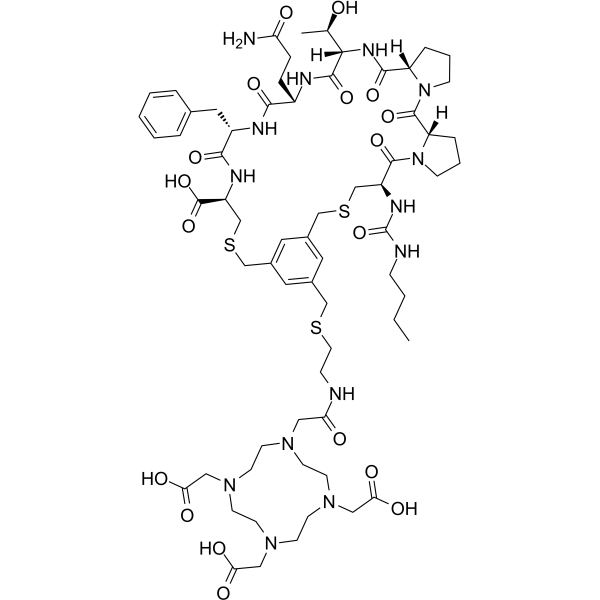 0 Images3BP-3940 is a highly potent and selective peptide inhibitor of FAP that targets cancer-associated fibroblasts (CAFs) in the tumor microenvironment. 3BP-3940 can be labeled with radionuclides (such as Ga-68) for precise tumor imaging or Lu-177 for the development of targeted anticancer technologies. 3BP-3940 accumulates in tumor lesions and can be used to diagnose and inhibit various solid cancers and CAFs-related diseases.
-
Anditixafortide
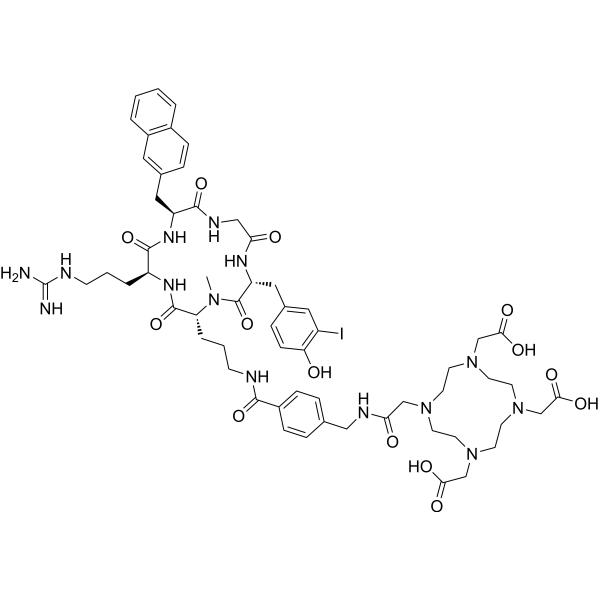 0 ImagesSynonyms: PentixatherAnditixafortide (Pentixather) is an endoradiotherapeutic vector. Anditixafortide is a CXCR4-targeting peptide derivative. Anditixafortide can be used for the synthesis/research of Radionuclide-Drug Conjugates (RDCs).
-
VCAM1 binding peptide acetate
 0 ImagesCat. No.: HY-P11088APurity: 99.76%VCAM1 binding peptide acetate is a VCAM1 binder with internalization activity. VCAM1 binding peptide acetate can be labeled with 5-FAM. VCAM1 binding peptide acetate serves as a component of biosensing systems for visualizing in vitro VCAM1 endocytic pathways. VCAM1 binding peptide acetate forms the research and development basis for MacroP and NAMP, PET radiotracers targeting VCAM1. VCAM1 binding peptide acetate is applicable to studies related to atherosclerosis.
-
PTP peptide
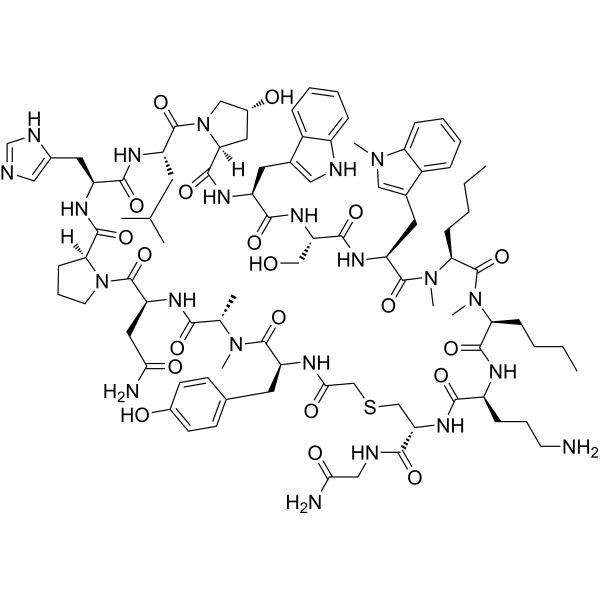
 0 ImagesCat. No.: HY-P11850CAS No.: 1192023-11-2PTP peptide is a specific Plectin-1 binder. PTP peptide can serve as a component of imaging agents; when conjugated with magnetofluorescent nanoparticles, it enables the detection of small pancreatic ductal adenocarcinomas and precancerous lesions via in vivo confocal microscopy and MRI. When conjugated with imaging agents, PTP peptide specifically targets pancreatic ductal adenocarcinoma cells, and can be used for tumor visualization and compound delivery. PTP peptide is applicable to research related to pancreatic ductal adenocarcinoma.
-
DOTA-NOC
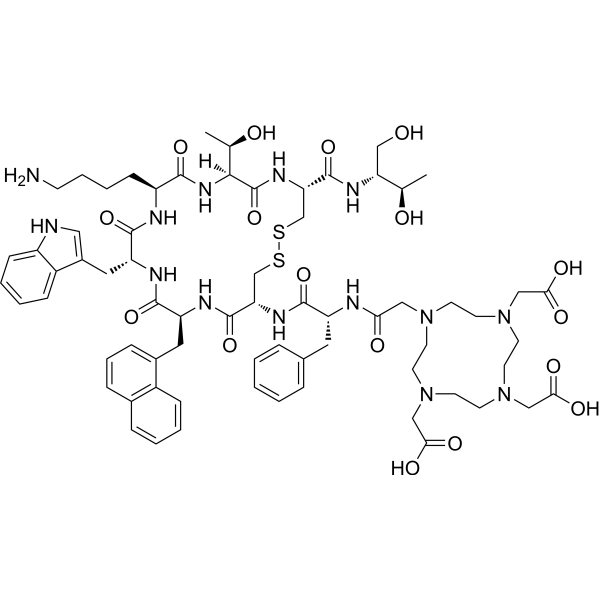 0 ImagesSynonyms: DOTA-Nal3-octreotideDOTA-NOC (DOTA-Nal3-octreotide) is a high-affinity ligand of somatostatin receptor subtypes 2, 3 and 5. DOTA-NOC can be used for labeling with various radiometals, and development of radiopeptide imaging. DOTA-NOC can be used for the synthesis/research of Radionuclide-Drug Conjugates (RDCs).
-
DOTA-Octreotide TFA
 0 ImagesCat. No.: HY-P10273APurity: 99.50%DOTA-Octreotide TFA is composed of chelator DOTA and Octreotide (HY-P0036). DOTA-Octreotide TFA is used for research of cancer through combination with radioactive elements. DOTA-Octreotide TFA can be used for the synthesis/research of Radionuclide-Drug Conjugates (RDCs).
-
DOTA.SA.FAPi TFA
 0 ImagesCat. No.: HY-D2363Purity: 99.26%DOTA.SA.FAPi TFA is a selective FAP inhibitor with an IC50 value of 0.9 nM against FAP. DOTA.SA.FAPi TFA forms stable complexes with 68Ga and serves as a PET radiotracer for preclinical imaging of FAP-expressing tumors. DOTA.SA.FAPi TFA can be used in the research of colorectal adenocarcinoma and various other cancers.
-
FAP targeting peptide for FXX489
 0 ImagesFAP targeting peptide for FXX489 is the polypeptide part of Unlabeled FXX489 (HY-P10944). Unlabeled FXX489 is a fibroblast activation protein (FAP)-targeting ligand.
-
Fmoc-D-Dap(Boc)-OH
 0 ImagesCat. No.: HY-W046355CAS No.: 198544-42-2
-
DOTA-LM3 TFA
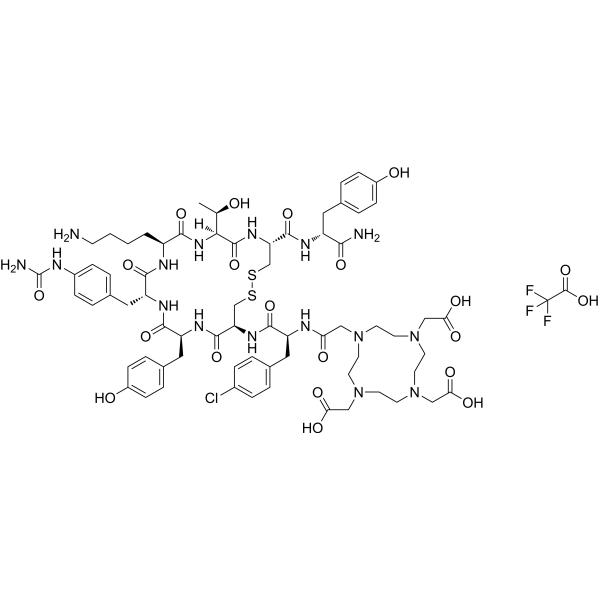 0 ImagesCat. No.: HY-P5126APurity: 99.25%DOTA-LM3 TFA is a somatostatin receptor (SSTR) antagonist. LM3 refers to p-Cl-Phe- cyclo(D-Cys-Tyr-D-4-amino-Phe(carbamoyl)-Lys-Thr-Cys)D-Tyr- NH2, as well as a somatostatin antagonist. DOTA-LM3 TFA is often isotopically labeled for tracing tumors in vivo, such as 177Lu-DOTA-LM3 TFA and 68 Ga-DOTA-LM3 TFA. 68 Ga-DOTA-LM3 TFA shows favorable biodistribution, high tumor uptake, good tumor retention, and few safety concerns. 177Lu-DOTA-LM3 TFA can be used for research in DOTATOC-negative liver metastases, such as pancreatic NET and extensive tumor thrombosis. DOTA-LM3 (TFA) can be used for the synthesis/research of Radionuclide-Drug Conjugates (RDCs).
-
ErbB-2-binding peptide-1
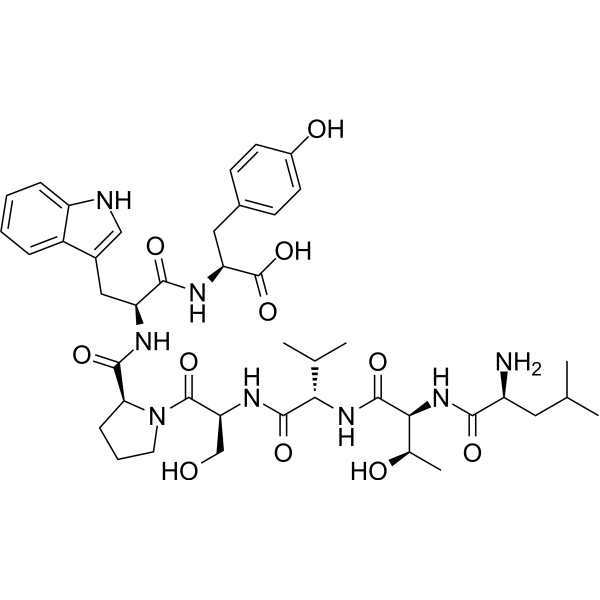 0 ImagesSynonyms: LTVSPWYErbB-2-binding peptide-1 (LTVSPWY) is a HER2 receptor-binding peptide. ErbB-2-binding peptide-1 can be conjugated with nuclear cross-linked micelles loaded with Doxorubicin (HY-15142A). ErbB-2-binding peptide-1 can also be radiolabeled to form 177Lu-DOTA-LTVSPWY. ErbB-2-binding peptide-1 is conjugated with antisense oligonucleotides. ErbB-2-binding peptide-1 can be used in research related to HER2-positive breast cancer and ovarian cancer.
-
DOTA-PSMA-EB-01
 0 ImagesCat. No.: HY-158266Synonyms: LNC1003DOTA-PSMA-EB-01 (Compound LNC1003) is a specific inhibitor of PSMA (IC50= 10.77 nM).DOTA-PSMA-EB-01 enhances the uptake and retention time of 177Lu in tumors. DOTA-PSMA-EB-01 can be used for the synthesis/research of Radionuclide-Drug Conjugates (RDCs).
-
NOTA-Pep-1L
 0 ImagesCat. No.: HY-P10292Purity: 98.60%NOTA-Pep-1L specifically targets the IL13RA2 receptor for tumor imaging. NOTA-Pep-1L can be used for the synthesis/research of Radionuclide-Drug Conjugates (RDCs).
-
Pentetreotide
 0 ImagesPentetreotide is a diethylenetriaminopentaacetic (DTPA) conjugate of Octreotide (HY-P0036). Pentetreotide is a somatostatin analog that, when labeled with 111In, can be used for nuclear medicine imaging. Somatostatin receptor scintigraphy with Pentetreotide is effective in visualizing neuroendocrine tumors, and its metastasis.
-
Tyr3-Octreotate
 0 ImagesTyr3-Octreotate is a ligand for somatostatin receptor subtype 2 (sst2), with an IC50 value of 1.3 nM against sst2 when labeled with [111In-DTPA], and an IC50 value of 1.6 nM against sst2 when labeled with [90Y-DOTA]. Radiolabeled Tyr3-Octreotate generates cell-associated radioactivity, and acts as both a tumor growth inhibitor and a tumor cytotoxic agent. When radiolabeled with 177Lu or 90Y, Tyr3-Octreotate serves as a peptide receptor radionuclide therapy (PRRT) analog. Tyr3-Octreotate can be used in studies related to pancreatic tumors.
- 1
- 2



