



SOD Activator
-
Hibiscetin
 0 Images
Hibiscetin is an orally active anti-inflammatory, antioxidant, antihyperglycemic, hypolipidemic, hepatoprotective and neuroprotective agent. Hibiscetin reduces the levels of TNF-α, IL-1β and IL-6. Hibiscetin inhibits lipid peroxidation, reduces MDA levels, and induces the activities of antioxidant enzymes CAT, GSH and SOD. Hibiscetin lowers blood glucose, reverses reduced insulin levels, regulates adipokine levels, and reduces elevated AST and ALT levels. Hibiscetin alleviates Rotenone (HY-B1756)-induced akinesia and catalepsy, normalizes neurotransmitter levels, and modulates the activities of activated caspase 3 and BDNF. Hibiscetin can be used in the research of type 2 diabetes, Parkinson's disease and Huntington's disease.
-
Bromuconazole
 0 ImagesCat. No.: HY-W715812CAS No.: 116255-48-2
Bromuconazole is a triazole fungicide with oral efficacy and blood-brain barrier permeability. Bromuconazole protects crops from various fungal contaminations. Bromuconazole exhibits cytotoxicity against a variety of cancer cells, induces G0/G1 cell cycle arrest and inhibits DNA synthesis in cancer cells, and triggers cytoskeletal structural disorder, genotoxic damage, apoptotic (apoptosis) cell death, and mitochondrial membrane depolarization. Bromuconazole activates caspase-3, induces excessive production of ROS, p53 and Bax, lipid peroxidation, increased activities of SOD and CAT, and downregulates Bcl-2. By upregulating p-ERK1/2 and p-JNK, Bromuconazole disrupts the MAPK signaling pathway, impairs the cellular stress response of human trophoblast cells and endometrial cells, and damages the implantation process. Bromuconazole is applicable to research related to glioma, colon cancer, reproductive injury (implantation dysfunction), and cardiac dysfunction.
-
Quizalofop-p-ethyl (Standard)
 0 ImagesSynonyms: (R)-Quizalofop ethyl (Standard); Quinofop-ethyl (Standard)
Quizalofop-p-ethyl (Standard) is the analytical standard of Quizalofop-p-ethyl. This product is intended for research and analytical applications.
-
Fluroxypyr-meptyl (Standard)
 0 ImagesSynonyms: Fluroxypyr-1-methylheptyl ester (Standard)
Fluroxypyr-meptyl (Standard) is the analytical standard of Fluroxypyr-meptyl. This product is intended for research and analytical applications. Fluroxypyr-meptyl (Fluroxypyr-1-methylheptyl ester), a synthetical phytohormone, is used as herbicide agent.
-
Ethylenediaminetetraacetic acid trisodium salt (Standard)
 0 ImagesSynonyms: EDTA trisodium salt (Standard); Trisodium EDTA (Standard)
Ethylenediaminetetraacetic acid (trisodium salt) (Standard) is the analytical standard of Ethylenediaminetetraacetic acid (trisodium salt). This product is intended for research and analytical applications. Ethylenediaminetetraacetic acid trisodium salt (EDTA trisodium salt; Trisodium EDTA) is a kind of metal chelating agent (binds to bivalent and trivalent metal cations, including calcium). Ethylenediaminetetraacetic acid trisodium salt has antibacterial, anti-inflammatory, antioxidant, anti-hypercalcemia and anticoagulant activities. Ethylenediaminetetraacetic acid trisodium salt decreases the metal ion-catalyzed oxidative damage to proteins, and allows maintenance of reducing environment during protein purification. Ethylenediaminetetraacetic acid trisodium salt can alleviate the liver fibrosis. Ethylenediaminetetraacetic acid can be used for coronary artery disease and neural system disease research.
-
N,N-Bis(3-aminopropyl)dodecylamine
 0 Images
N,N-Bis(3-aminopropyl)dodecylamine is a potent fungicidal agent with remarkable activity against Aspergillus niger. N,N-Bis(3-aminopropyl)dodecylamine induces oxidative stress and regulates the activities of multiple antioxidant and mitochondrial enzymes in a concentration‑ and duration‑dependent manner. N,N-Bis(3-aminopropyl)dodecylamine disrupts fungal organelles, remodels mitochondrial morphology and impairs mitochondria‑related cellular functions. N,N-Bis(3-aminopropyl)dodecylamine can be used for the research of fungicidal mechanisms and oxidative stress in Aspergillus niger.
-
Rosolic acid
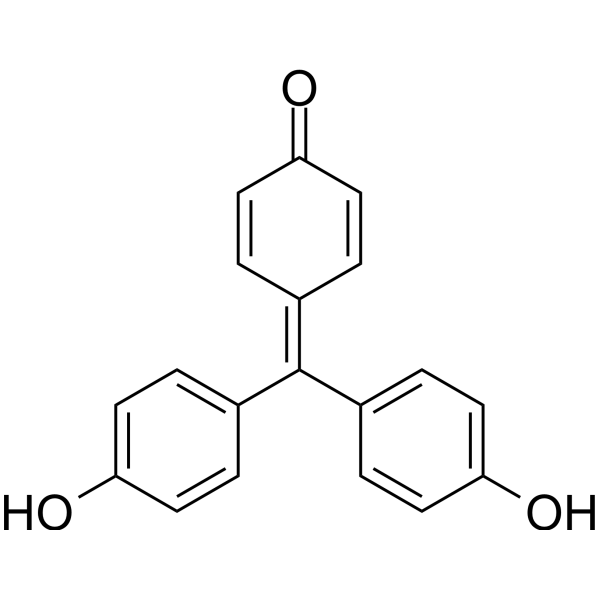 0 ImagesCat. No.: HY-W104821CAS No.: 603-45-2
Rosolic acid is a Michael acceptor molecule isolated from the rhizomes of Plantago asiatica L. Rosolic acid inhibits Keap1, promotes Nrf2 nuclear translocation, and upregulates HO-1 and NQO-1. Rosolic acid reduces ER stress markers PERK, ATF-6, GRP78, and CHOP, as well as oxidative stress, ROS production, inflammation, and apoptosis. Rosolic acid upregulates SOD, CAT, and GPx activities, induces angiogenesis and insulin secretion, and restores endothelial function and pancreatic beta cell protection under ER stress. Rosolic acid can be used in research on diabetes and endothelial dysfunction.
-
Astragaloside II (Standard)
 0 ImagesCat. No.: HY-N0433RCAS No.: 84676-89-1Synonyms: Astrasieversianin VIII (Standard)
Astragaloside II (Standard) is the analytical standard of Astragaloside II (HY-N0433). This product is intended for research and analytical applications. Astragaloside II is an orally active Cycloartane-type triterpene glycoside. Astragaloside II can be extracted from Astragalus membranaceus. Astragaloside II inhibits Autophagy, decreases pro-inflammatory cytokines (IL-6, IL-1β), HIF-α, p-p65, p-IκB and increases SOD. Astragaloside II regulates immunity and reduces inflammatory responses. Astragaloside II can be used in the research of diseases such as liver cancer, osteoporosis, immunosuppressive diseases, and ulcerative colitis.
-
Arecaidine-propargyl ester
 0 ImagesCat. No.: HY-183853CAS No.: 35516-99-5
Arecaidine-propargyl ester is a selective M2 muscarinic receptor agonist with blood-brain barrier permeability, with a pKi of 5.91 for hm1, 7.06 for hm2, 6.07 for hm3, 6.01 for hm4, and 6.03 for hm5. Arecaidine-propargyl ester stimulates central and peripheral muscarinic receptors. Arecaidine-propargyl ester increases intracellular ROS, induces DNA damage and Apoptosis, and upregulates the expression of MnSOD and SIRT1. Arecaidine-propargyl ester reduces sympathetic nerve outflow, induces dose-dependent hypotension, and triggers negative chronotropic effects at high peripheral doses. Arecaidine-propargyl ester can be used in research related to Alzheimer's disease and glioblastoma.
-
Deacetylasperulosidic Acid (Standard)
 0 ImagesCat. No.: HY-N0594RCAS No.: 14259-55-3
Deacetylasperulosidic Acid (Standard) is the analytical standard of Deacetylasperulosidic Acid. This product is intended for research and analytical applications. Deacetylasperulosidic Acid is an orally active antioxidant. Deacetylasperulosidic Acid exerts a definite in vivo antioxidant effect and alleviates oxidative stress injury by enhancing SOD activity. In atopic dermatitis models, Deacetylasperulosidic Acid corrects Th2-skewed immune imbalance and reduces allergy-related factors; in immunosuppression models, it activates cellular immunity, enhances NK cell activity and IL-2 production. Deacetylasperulosidic Acid can be used in the research of atopic dermatitis.
-
Ningnanmycin
 0 ImagesCat. No.: HY-N13047CAS No.: 156410-09-2
Ningnanmycin is a plant antiviral agent. Ningnanmycin binds to specific residues on the TMV CP disc, inhibits CP assembly, disassembles the CP disc into monomers, and disrupts the structure of the TMV CP disc to reduce pathogenicity. Ningnanmycin binds to key amino acids of PVY CP, interferes with CP-CP interactions, inhibits CP assembly and virion formation, and blocks PVY replication. Ningnanmycin induces the expression of antiviral response genes PRXIIB, PRXIIE, PUB4 and PER42, thereby activating the host defense system. Ningnanmycin can be used in studies related to Tobacco Mosaic Virus infection and Potato Virus Y infection.
-
4'-Methoxyflavonol (Standard)
 0 ImagesCat. No.: HY-111803RCAS No.: 6889-78-7
4'-Methoxyflavonol (Standard) is the analytical standard of 4'-Methoxyflavonol (HY-111803). This product is intended for research and analytical applications. 4'-Methoxyflavonol is a flavonol. 4'-Methoxyflavonol reduces androgen receptor and increases SOD. 4'-Methoxyflavonol reduces plasma glucose, cholesterol, and triglycerides. 4'-Methoxyflavonol has anti-stress and antioxidant activities. 4'-Methoxyflavonol can be used in prostate cancer research.
-
2"-O-Galloylhyperin (Standard)
 0 ImagesCat. No.: HY-N0526RCAS No.: 53209-27-1
2"-O-Galloylhyperin (Standard) is the analytical standard of 2"-O-Galloylhyperin (HY-N0526). This product is intended for research and analytical applications. 2''-O-Galloylhyperin is an active natural compound with anti‑inflammatory, antioxidant, anti‑adipogenic, antifibrotic, and cytostatic activities. 2''-O-Galloylhyperin upregulates SIRT1/Nrf2 signaling, inhibits NF-κB and MAPK (ERK1/2, p38, JNK) phosphorylation, suppresses TSHR activation, reduces ROS accumulation, and enhances SOD and GSH-Px activities. 2''-O-Galloylhyperin protects against LPS-induced tissue injury, enhances survival, and inhibits adipogenesis and fibrosis. 2"-O-Galloylhyperin can be used for the research of sepsis, acute lung injury, and thyroid eye disease.



