



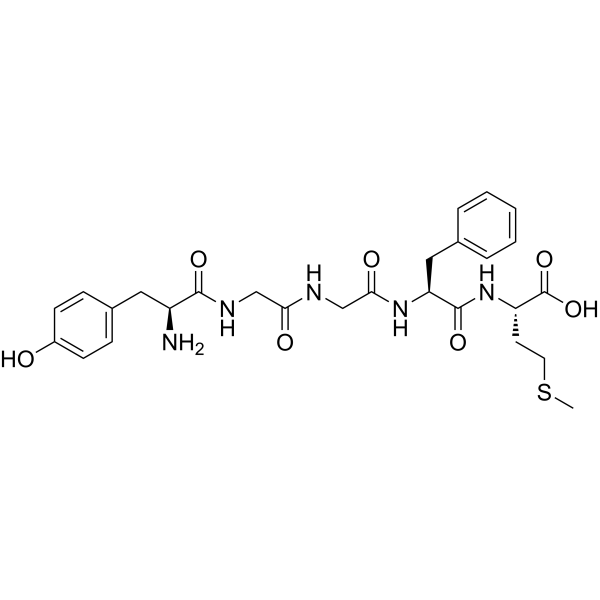
Tyr-Gly-Gly-Phe-Met-OH
Based on 4 publication(s) in Google Scholar
Tyr-Gly-Gly-Phe-Met-OH regulates human immune function and inhibits tumor growth via binding to the opioid receptor.
For research use only. We do not sell to patients.
- Purity : 99.48%
- CAS No.: 58569-55-4
- Formula: C27H35N5O7S
- Molecular Weight:573.66
-
Storage:
Sealed storage, away from moisture.
Powder -80°C, 2 years , -20°C, 1 year* In solvent : -80°C, 6 months; -20°C, 1 month (sealed storage, away from moisture)

To place orders, for customer services and technical support, please contact: MedChemExpress USA
Tel: 609-228-6898 E-mail: [email protected] [email protected]


-
 Biological Activity
-
Chemical Information
-
Solvent & Solubility
- Protocols
- Purity & Documentation
- References
-
 Help & FAQs


-
![[Leu5]-Enkephalin](https://file.medchemexpress.com/product_pic/hy-p0288.gif)
HY-P0288
[Leu5]-EnkephalinEndogenous Metabolite -
![[Leu5]-Enkephalin, amide](https://file.medchemexpress.com/product_pic/hy-p1470.gif)
HY-P1470
[Leu5]-Enkephalin, amideOpioid Receptor Agonist -

HY-P1337
Dynorphin B (1-13)Kappa Opioid Receptor Agonist -

HY-P0179
β-Casomorphin, bovineOpioid Peptide -
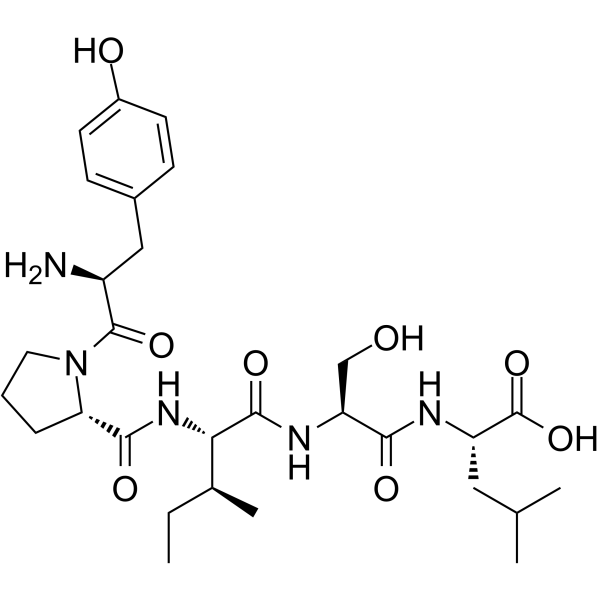
HY-P1596
Gluten Exorphin Cμ/δ Opioid Inhibitor -
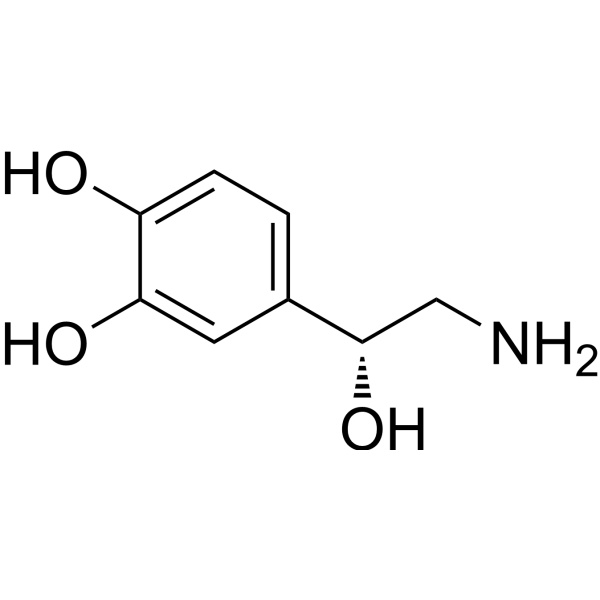
HY-13715
NorepinephrineAdrenergic Receptor Agonist -

HY-P1331
BAM-22POpioid Receptor Agonist -
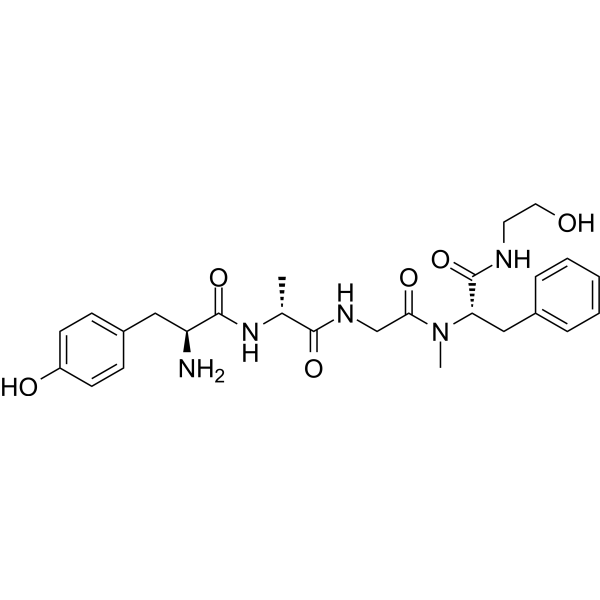
HY-P0210
DAMGOμ-OPR Agonist -
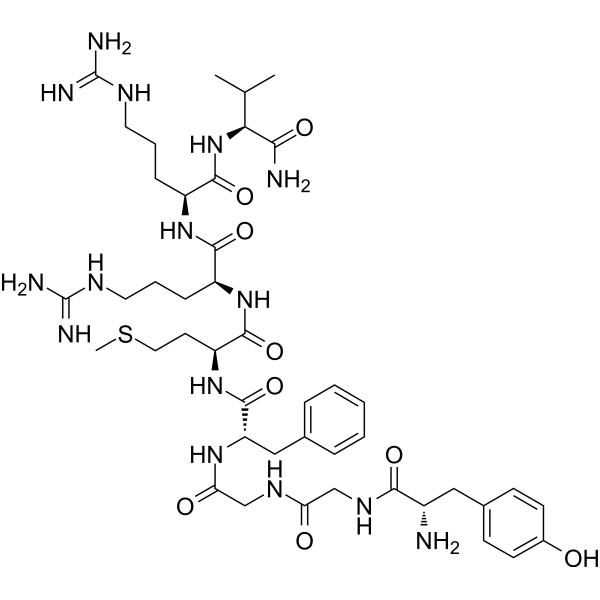
HY-P1087
AdrenorphinOpioid Receptor Agonist -
![[D-Ala2]leucine-enkephalin](https://file.medchemexpress.com/product_pic/hy-p0098.gif)
HY-P0098
[D-Ala2]leucine-enkephalinOpioid Receptor Agonist -
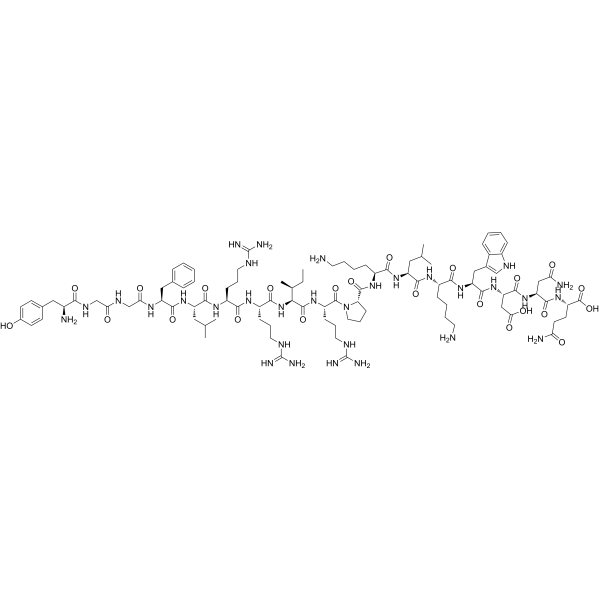
HY-P1333
Dynorphin AKOR Agonist -

HY-P0197
Neurokinin APeptide Neurotransmitter
Publications Citing Use of MedChemExpress (MCE) Tyr-Gly-Gly-Phe-Met-OH
MoreAll Opioid Receptor Isoforms
More

Biological Activity
Description
IC50 & Target
Opioid Receptor[1].
Cellular Effect
|
Cell Line

|
Type | Value | Description | References |
|---|---|---|---|---|
| HEK293 | EC50 |
1.03 nM
Compound: [Met5]-enkephalin
|
Agonist activity at human recombinant delta opioid receptor expressed in human HEK293 cells by [35S]GTPgammaS binding assay
Agonist activity at human recombinant delta opioid receptor expressed in human HEK293 cells by [35S]GTPgammaS binding assay
|
[PMID: 22197670] |
| HEK293 | EC50 |
1.03 nM
Compound: Met-enk
|
Agonist activity at human recombinant delta opioid receptor expressed in HEK293 cells by [35S]GTPgammaS binding assay
Agonist activity at human recombinant delta opioid receptor expressed in HEK293 cells by [35S]GTPgammaS binding assay
|
[PMID: 19362480] |
| HEK293 | IC50 |
13 nM
Compound: Met-Enk
|
Agonist activity at mu opioid receptor (unknown origin) expressed in HEK293 cells assessed as inhibition of forskolin-induced cAMP accumulation by bioluminescent assay
Agonist activity at mu opioid receptor (unknown origin) expressed in HEK293 cells assessed as inhibition of forskolin-induced cAMP accumulation by bioluminescent assay
|
[PMID: 26465170] |
| HEK293 | IC50 |
6.4 nM
Compound: Met-Enk
|
Agonist activity at delta receptor (unknown origin) expressed in HEK293 cells assessed as inhibition of forskolin-induced cAMP accumulation by bioluminescent assay
Agonist activity at delta receptor (unknown origin) expressed in HEK293 cells assessed as inhibition of forskolin-induced cAMP accumulation by bioluminescent assay
|
[PMID: 26465170] |
In Vitro
Methionine enkephalin (MENK), an endogenous neuropeptide has a crucial role in both neuroendocrine and immune systems. MENK is believed to have an immunoregulatory activity to have cancer biotherapy activity by binding to the opioid receptors on immune and cancer cells. MENK may also change the tumor microenvironment by binding to opioid receptor on or in cancer cells. All of these mechanisms of action have biologic significance and potential for use in cancer immunotherapy. Furthermore, they reveal a relationship between the endocrine and immune systems[1].
MedChemExpress (MCE) has not independently confirmed the accuracy of these methods. They are for reference only. Further protocols information, click here.
Clinical Trial
| NCT Number | Sponsor | Condition | Start Date |
Phase
|
|---|---|---|---|---|
| NCT01329991 | Plexxikon| | 2011-05 | PHASE1 |


Chemical Information
-
CAS No. 58569-55-4
-
Appearance Solid
-
Molecular Weight 573.66
-
Formula C27H35N5O7S
-
Color White to off-white
-
Synonyms
Met-Enkephalin; Methionine enkephalin; Metenkefalin
-
Sequence
Tyr-Gly-Gly-Phe-Met
-
Sequence Shortening
YGGFM
-
Shipping
Room temperature in continental US; may vary elsewhere.
-
Storage
Sealed storage, away from moisture
Powder -80°C 2 years -20°C 1 year * In solvent : -80°C, 6 months; -20°C, 1 month (sealed storage, away from moisture)


Publications (4)
-
Journal Impact Factor
-
Most Recent
-
Nature
2024 Jul;631(8021):686-693. PMID: 38961287 -
Proc Natl Acad Sci U S A
Methionine-specific nonreversible bioconjugation: Advancing precision protein modification. [Abstract]2026 Feb 17;123(7):e2519038123. PMID: 41665996 -
J Leukoc Biol
Anti-inflammatory and metabolic reprogramming effects of MENK produce antitumor response in CT26 tumor-bearing mice. [Abstract]2020 Jul;108(1):215-228. PMID: 31994797 -


Solvent & Solubility
In Vitro:
DMSO : ≥ 40 mg/mL (69.73 mM; Hygroscopic DMSO has a significant impact on the solubility of product, please use newly opened DMSO)
H2O : 5 mg/mL (8.72 mM; Need ultrasonic)
* "≥" means soluble, but saturation unknown.
Please refer to the solubility information to select the appropriate solvent. Once prepared, please aliquot and store the solution to prevent product inactivation from repeated freeze-thaw cycles.
Storage method and period of stock solution: -80°C, 6 months; -20°C, 1 month (sealed storage, away from moisture). When stored at -80°C, please use it within 6 months. When stored at -20°C, please use it within 1 month.
* Note: If you choose water as the stock solution, please dilute it to the working solution, then filter and sterilize it with a 0.22 μm filter before use.
Please refer to the solubility information to select the appropriate solvent. Once prepared, please aliquot and store the solution to prevent product inactivation from repeated freeze-thaw cycles.
Storage method and period of stock solution: -80°C, 6 months; -20°C, 1 month (sealed storage, away from moisture). When stored at -80°C, please use it within 6 months. When stored at -20°C, please use it within 1 month.
* Note: If you choose water as the stock solution, please dilute it to the working solution, then filter and sterilize it with a 0.22 μm filter before use.
Concentration (start) × Volume (start) = Concentration (final) × Volume (final)

Protocols
-
Patient-Derived Xenograft (PDX)
Patient-derived xenograft (PDX) models are generated by engrafting primary human tumor tissue directly into immunodeficient mice, allowing in vivo propagation of patient tumor biology without initial in vitro adaptation. These models are used to preserve key histopathological and molecular characteristics of the original tumor and enable assessment of tumor growth dynamics and therapeutic response in a living organism. The biological readout is tumor engraftment and subsequent growth in the murine host, which reflects the ability of human tumor cells to survive, vascularize, and expand in an immunocompromised microenvironment.
-
Patient-Derived Orthotopic Xenograft (PDOX)
Patient-derived orthotopic xenograft (PDOX) modeling implants fresh patient tumor tissue or patient-derived tumor cells into the anatomically corresponding organ or tissue site of immunodeficient mice, usually by surgical orthotopic implantation, to preserve patient tumor histology, local microenvironmental context, invasion, metastatic behavior, and treatment-response features better than subcutaneous implantation. PDOX readouts include tumor engraftment, orthotopic tumor growth, local invasion, metastasis, recurrence after resection, histologic similarity to the donor tumor, biomarker retention, molecular concordance, survival, and response or resistance to therapy. PDOX models are used for preclinical drug testing and individualized therapy evaluation, but engraftment success varies by tumor type and specimen quality.
-
Subcutaneous Cell-Line-Derived Xenograft
Subcutaneous cell-line-derived xenograft (CDX) models are established by implanting cultured human cancer cell lines into immunodeficient mice, where the injected cells form localized tumors that can be monitored in vivo as a measure of tumorigenic potential, growth kinetics, and treatment response. These models are widely used in oncology research because they allow reproducible tumor formation and enable comparative assessment of tumor growth between different cell lines or genetic manipulations in a controlled in vivo microenvironment. Subcutaneous implantation of cancer cells in immunodeficient mice is a standard approach for evaluating tumor growth behavior and therapeutic response across multiple cancer types, including prostate, esophageal, pancreatic, and colon cancer models.
-
Orthotopic Cell-Line Xenograft
Orthotopic cell-line xenograft models involve implantation of human cancer cell lines into the anatomically corresponding organ of immunodeficient mice to reproduce tumor growth within a native microenvironment, enabling more clinically relevant tumor behavior compared with subcutaneous models. These models are widely used because orthotopic placement better recapitulates tumor progression, including invasion and metastatic spread, which are often underrepresented in heterotopic implantation systems. Compared with conventional xenografts, orthotopic implantation is described as more technically complex but provides improved simulation of tumor-microenvironment interactions and metastatic behavior, making it particularly valuable for translational oncology research. Surgical orthotopic implantation approaches have been emphasized as enabling faithful reproduction of clinical cancer features, including metastasis and disease progression patterns that align with the tumor’s organ of origi


Purity & Documentation
-
Data Sheet (271 KB)
-
SDS (396 KB)
- English - EN (396 KB)
- Français - FR (396 KB)
- Deutsch - DE (396 KB)
- Norwegian - NO (396 KB)
- Español - ES (396 KB)
- Swedish - SV (396 KB)
- Italian - IT (396 KB)
- Korean - KR (396 KB)
- Portuguese - PT (396 KB)
-
Handling Instructions (2659 KB)
References


Complete Stock Solution Preparation Table
Please refer to the solubility information to select the appropriate solvent. Once prepared, please aliquot and store the solution to prevent product inactivation from repeated freeze-thaw cycles.
Storage method and period of stock solution: -80°C, 6 months; -20°C, 1 month (sealed storage, away from moisture). When stored at -80°C, please use it within 6 months. When stored at -20°C, please use it within 1 month.
| Optional Solvent | Concentration Solvent Mass | 1 mg | 5 mg | 10 mg | 25 mg |
|---|---|---|---|---|---|
| H2O / DMSO | 1 mM | 1.7432 mL | 8.7160 mL | 17.4319 mL | 43.5798 mL |
| 5 mM | 0.3486 mL | 1.7432 mL | 3.4864 mL | 8.7160 mL | |
| DMSO | 10 mM | 0.1743 mL | 0.8716 mL | 1.7432 mL | 4.3580 mL |
| 15 mM | 0.1162 mL | 0.5811 mL | 1.1621 mL | 2.9053 mL | |
| 20 mM | 0.0872 mL | 0.4358 mL | 0.8716 mL | 2.1790 mL | |
| 25 mM | 0.0697 mL | 0.3486 mL | 0.6973 mL | 1.7432 mL | |
| 30 mM | 0.0581 mL | 0.2905 mL | 0.5811 mL | 1.4527 mL | |
| 40 mM | 0.0436 mL | 0.2179 mL | 0.4358 mL | 1.0895 mL | |
| 50 mM | 0.0349 mL | 0.1743 mL | 0.3486 mL | 0.8716 mL | |
| 60 mM | 0.0291 mL | 0.1453 mL | 0.2905 mL | 0.7263 mL |
* Note: If you choose water as the stock solution, please dilute it to the working solution, then filter and sterilize it with a 0.22 μm filter before use.


Tyr-Gly-Gly-Phe-Met-OH Related Classifications
HY-P0073 Related Classifications
 Powered by Bioz