



Based on 1 Customer Validation
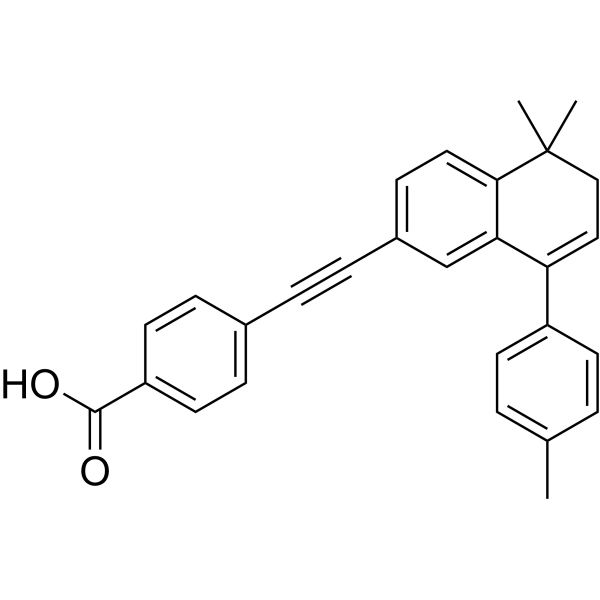
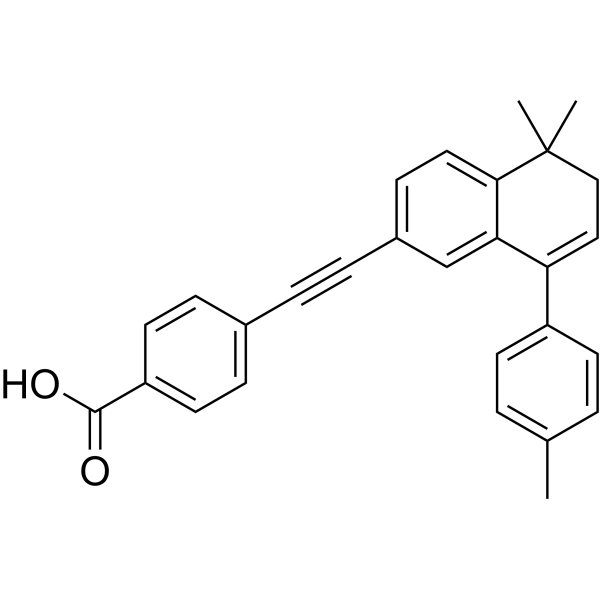
AGN 193109 (GMP) is AGN 193109 (HY-U00449) produced by using GMP guidelines. GMP small molecules works appropriately as an auxiliary reagent for cell therapy manufacture. AGN 193109 is a specific and highly effective retinoic acid receptor (RAR) antagonist. AGN 193109 (GMP) is a click chemistry reagent, it contains an Alkyne group and can undergo copper-catalyzed azide-alkyne cycloaddition (CuAAc) with molecules containing Azide groups. AGN 193109 is the antidote for retinoic acidosis, that ameliorates the skin and mucosal toxicity.
For research use only. We do not sell to patients.
- CAS No.: 171746-21-7
- Formula: C28H24O2
- Molecular Weight:392.50
-
Storage:
Please store the product under the recommended conditions in the Certificate of Analysis.

To place orders, for customer services and technical support, please contact: MedChemExpress USA
Tel: 609-228-6898 E-mail: [email protected] [email protected]


-
 Biological Activity
-
Chemical Information
- Protocols
- Purity & Documentation
- References
-
 Help & FAQs


-
HY-U00449
AGN 193109RAR Antagonist -
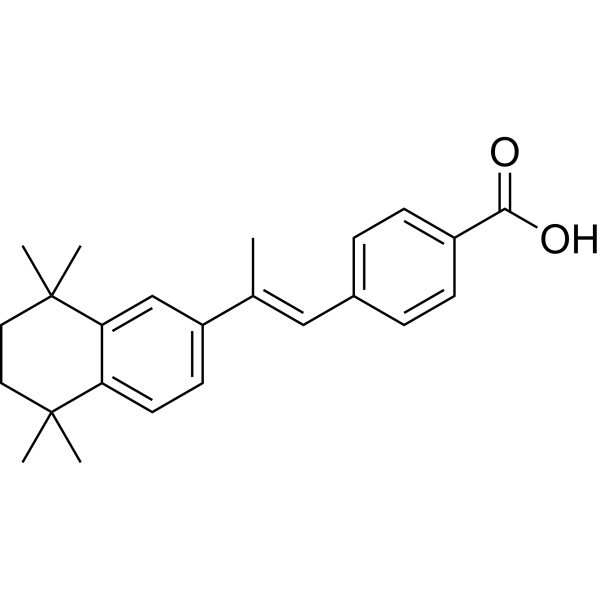
HY-15682
TTNPBApoptosis Inducer -
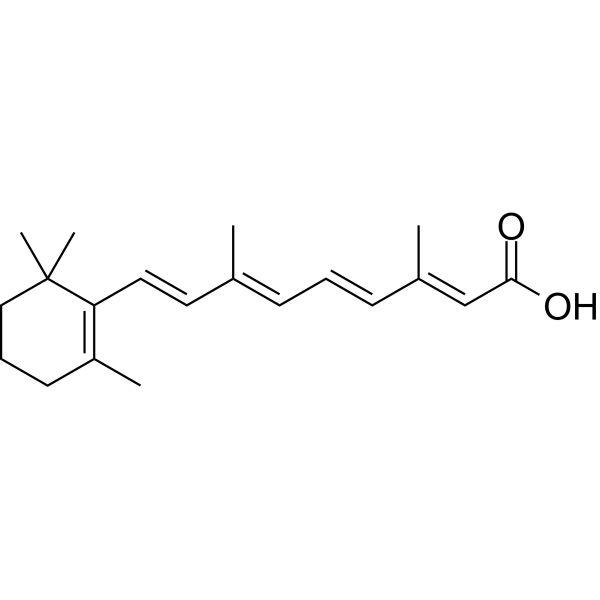
HY-14649
Retinoic acidRAR Agonist -
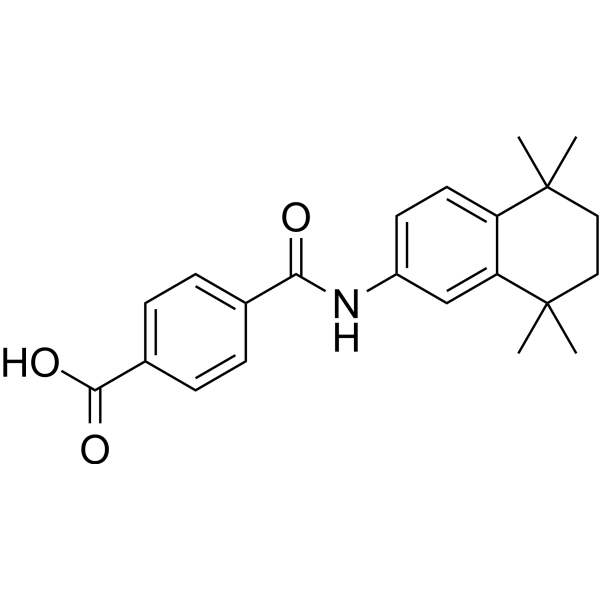
HY-14652
TamibaroteneApoptosis Inducer -
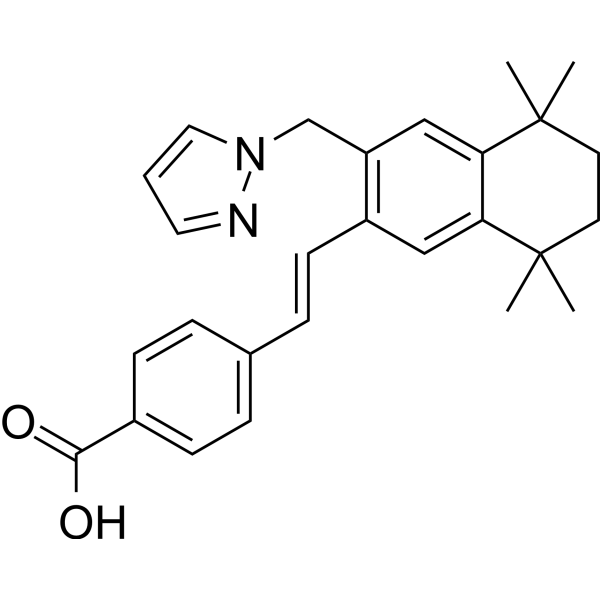
HY-14799
PalovaroteneRARγ Agonist -
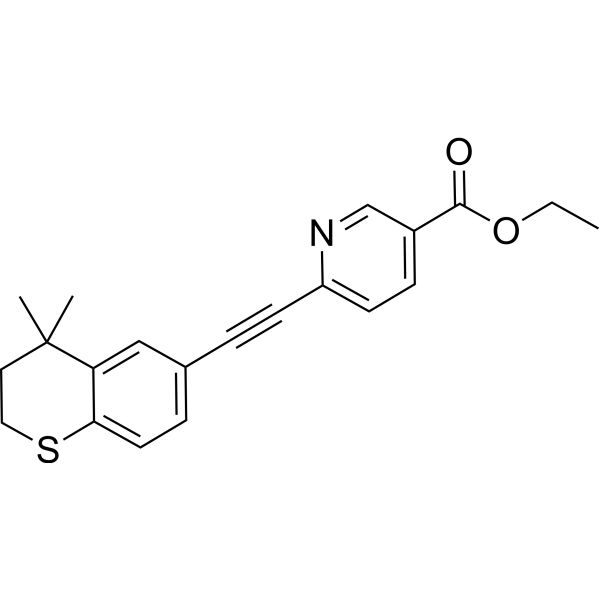
HY-15388
TazaroteneRAR Agonist -
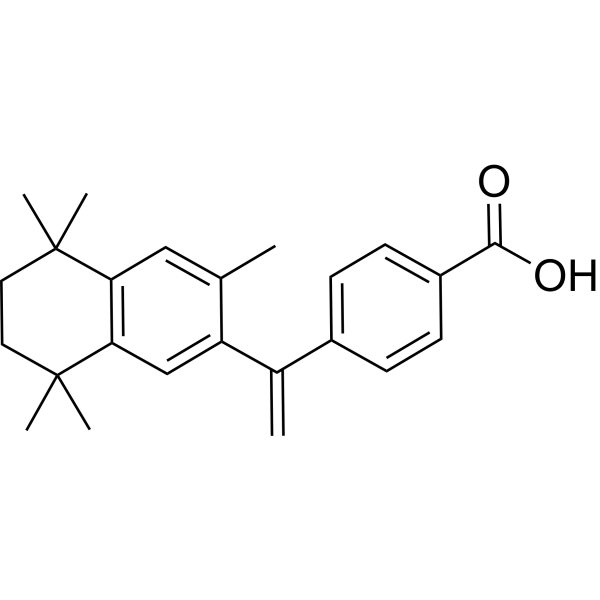
HY-14171
BexaroteneRXR Agonist -
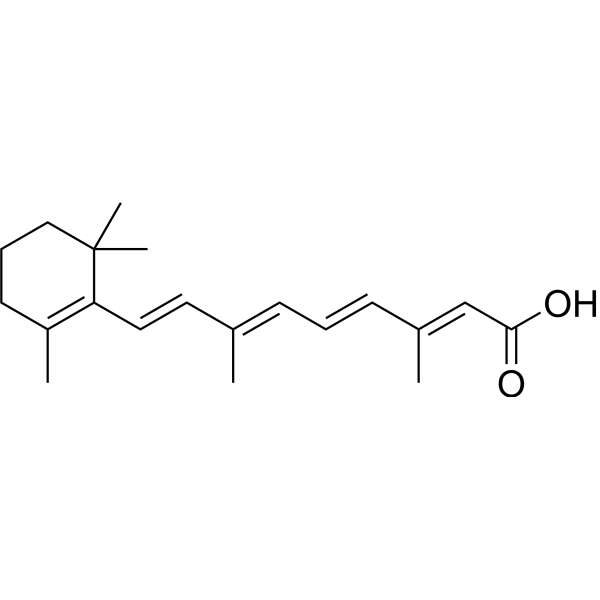
HY-14649R
Retinoic acid (Standard) -
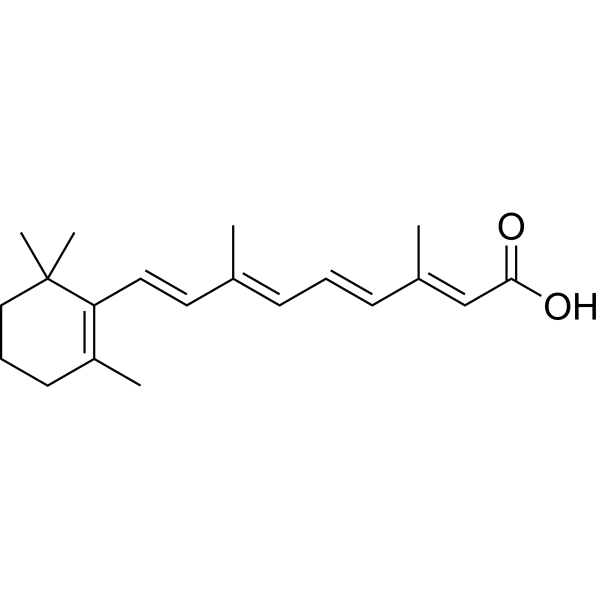
HY-14649G
Retinoic acid (GMP)RAR Agonist -
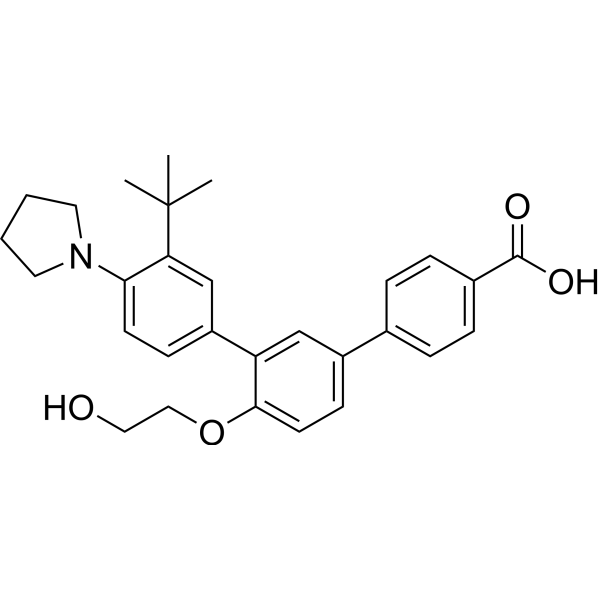
HY-100256
TrifaroteneRARγ Agonist -
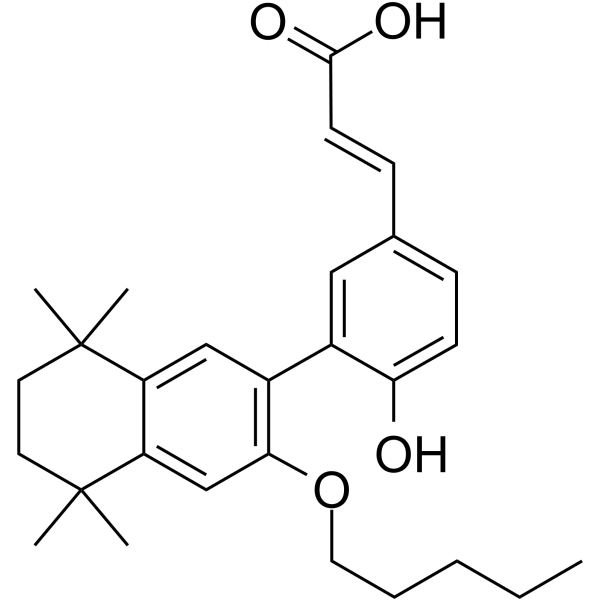
HY-107500
UVI 3003RXR Inhibitor -
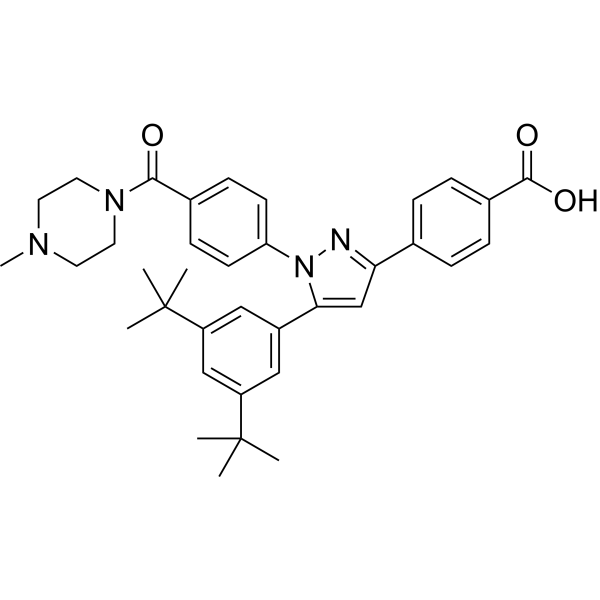
HY-107765
LY2955303RARγ Antagonist


Biological Activity
Description
In Vitro
AGN 193109 (0.1 and 1 μmol/L; 3 w) dose-dependently increases vascular smooth muscle cells (VSMCs) mineralization[1]. AGN 193109 (100?nM; 10 d) induces human pluripotent stem cells (hPSCs) differentiate into olfactory placode cells and neurons[2].
MedChemExpress (MCE) has not independently confirmed the accuracy of these methods. They are for reference only. Further protocols information, click here.


Chemical Information
-
CAS No. 171746-21-7
-
Appearance Solid
-
Molecular Weight 392.50
-
Formula C28H24O2
-
Color White to off-white
-
SMILES
O=C(O)C1=CC=C(C#CC2=CC=C3C(C)(C)CC=C(C4=CC=C(C)C=C4)C3=C2)C=C1
-
Shipping
Shipping with dry ice.
-
Storage
Please store the product under the recommended conditions in the Certificate of Analysis.

Protocols
-
EdU Incorporation Assay (Click Chemistry-Based DNA Synthesis Measurement)
The EdU incorporation assay measures DNA synthesis by adding the thymidine analog 5-ethynyl-2′-deoxyuridine to cells or tissues, where it is incorporated into newly synthesized DNA during S phase. Incorporated EdU is detected by copper-catalyzed azide-alkyne cycloaddition, in which a fluorescent azide covalently reacts with the ethynyl group on EdU, allowing S-phase cells to be detected by fluorescence microscopy, flow cytometry, or high-content imaging. EdU detection does not require DNA denaturation or anti-BrdU antibody access, which preserves sample structure and improves compatibility with immunostaining and multiparameter cytometry compared with BrdU-based detection. EdU can be cytotoxic in a cell-type- and exposure-dependent manner, so pulse duration, concentration, and continuous-labeling designs should be validated for each cell type.


Purity & Documentation
-
Data Sheet (273 KB)
-
SDS (393 KB)
- English - EN (393 KB)
- Français - FR (393 KB)
- Deutsch - DE (393 KB)
- Norwegian - NO (393 KB)
- Español - ES (393 KB)
- Swedish - SV (393 KB)
- Italian - IT (393 KB)
- Korean - KR (393 KB)
- Portuguese - PT (393 KB)
-
Handling Instructions (2659 KB)
References
[1]. Rogers MA, et al. Retinoids Repress Human Cardiovascular Cell Calcification With Evidence for Distinct Selective Retinoid Modulator Effects. Arterioscler Thromb Vasc Biol. 2020 Mar;40(3):656-669. [Content Brief]
[2]. Bricker RL, et al. A Molecular Analysis of Neural Olfactory Placode Differentiation in Human Pluripotent Stem Cells. Stem Cells Dev. 2022 Sep;31(17-18):507-520. [Content Brief]

Calculators
Concentration (start) × Volume (start) = Concentration (final) × Volume (final)


AGN 193109 (GMP) Related Classifications
HY-U00449G Related Classifications
 Powered by Bioz