



AMY-101 TFA
Based on 7 publication(s) in Google Scholar
AMY-101 TFA (Cp40 TFA), a peptidic inhibitor of the central complement component C3 (KD = 0.5 nM), inhibits naturally occurring periodontitis in non-human primates (NHPs). AMY-101 (Cp40) exhibits a favorable anti-inflammatory activity in models with COVID-19 severe pneumonia with systemic hyper inflammation.
For research use only. We do not sell to patients.
- Purity : 99.92%
- CAS No.: 1789738-04-0
- Formula: C83H117N23O18S2.xC2HF3O2
- Molecular Weight:1789.09 (free base)
-
Storage:
Sealed storage, away from moisture and light.
Powder -80°C, 2 years , -20°C, 1 year* In solvent : -80°C, 6 months; -20°C, 1 month (sealed storage, away from moisture and light)

To place orders, for customer services and technical support, please contact: MedChemExpress USA
Tel: 609-228-6898 E-mail: [email protected] [email protected]


-
 Biological Activity
-
Chemical Information
-
Solvent & Solubility
- Protocols
- Purity & Documentation
- References
-
 Help & FAQs


-
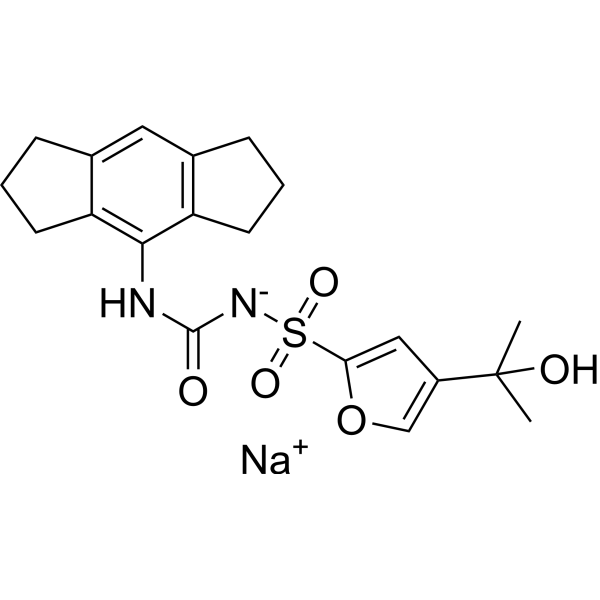
HY-12815A
MCC950 sodiumNLRP3 Inhibitor -
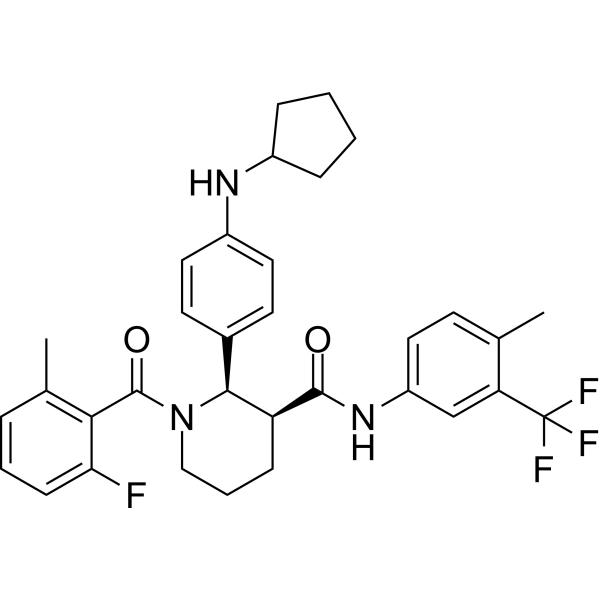
HY-17627
AvacopanC5aR Inhibitor -
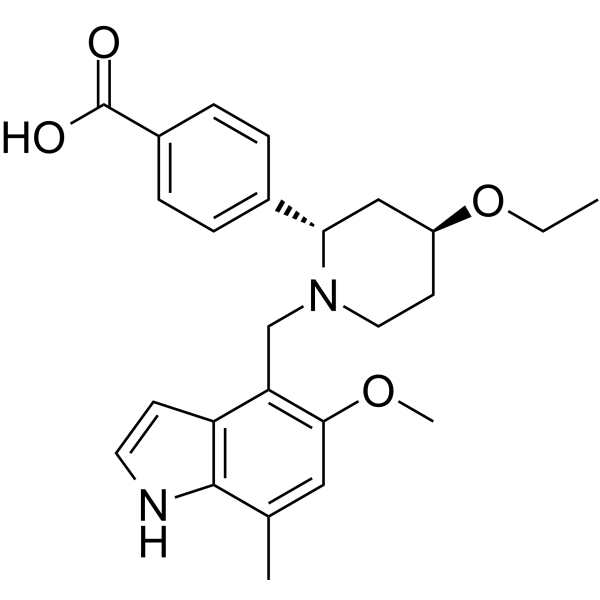
HY-127105
IptacopanFactor B Inhibitor -
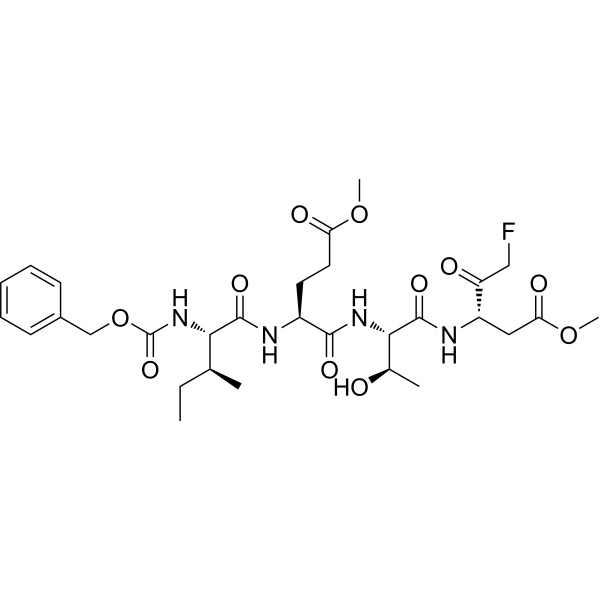
HY-101297
Z-IETD-FMKCaspase-8 Inhibitor -
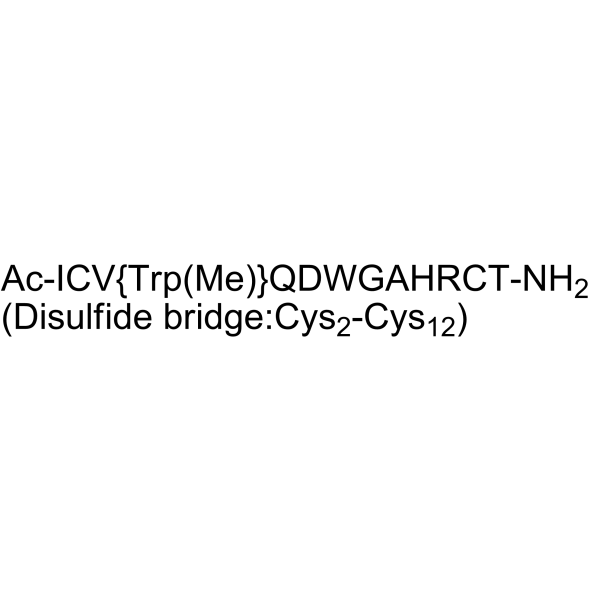
HY-P3204
POT-4C3 Receptor Inhibitor -
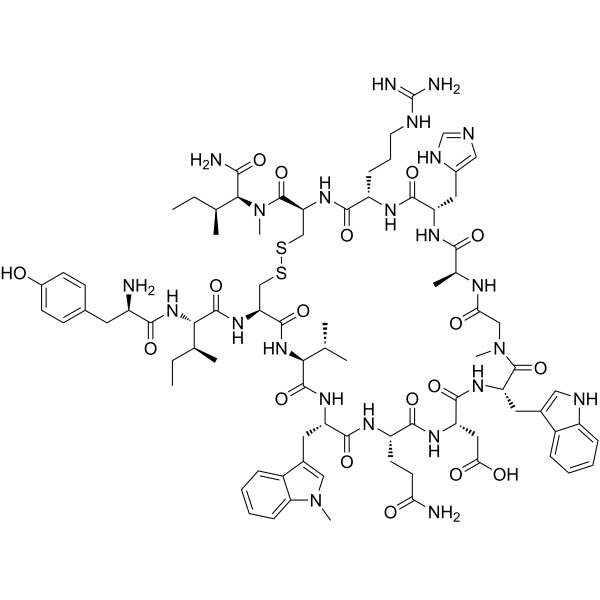
HY-P1717
AMY-101C3 Inhibitor -
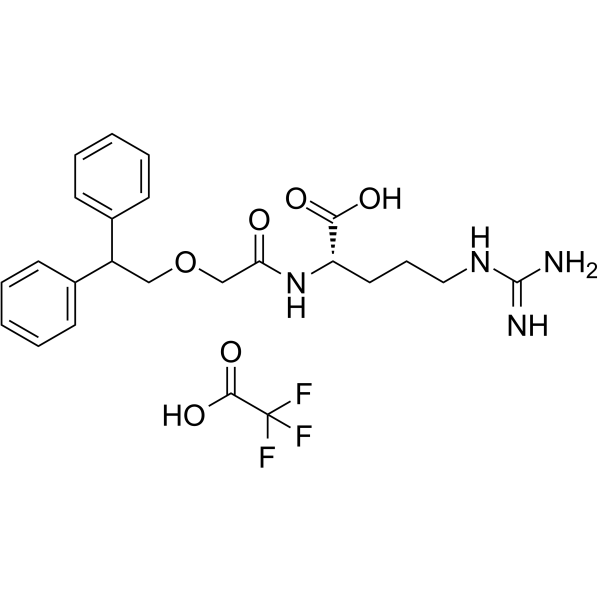
HY-101502A
SB290157 trifluoroacetateC3aR Antagonist -
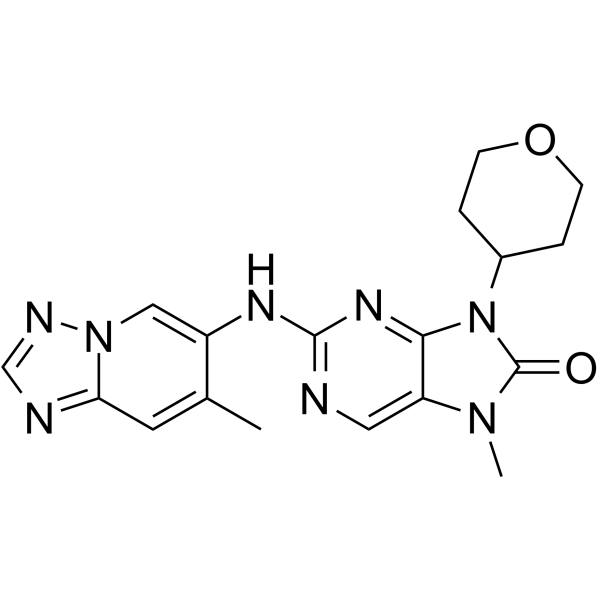
HY-111783
AZD-7648DNA-PK Inhibitor -
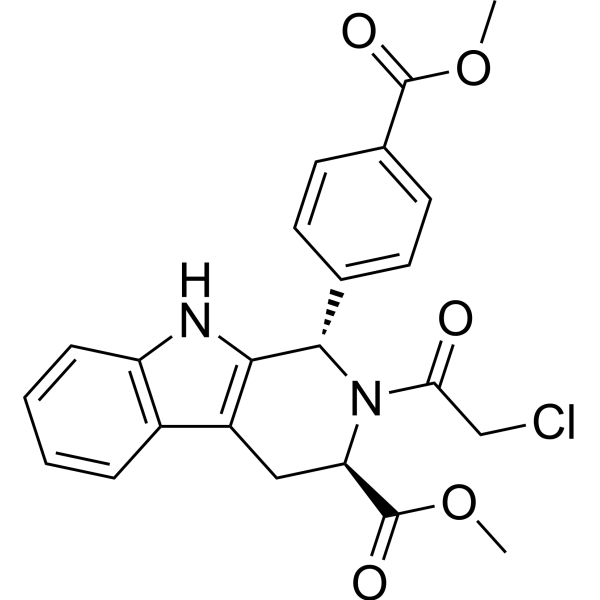
HY-100218A
RSL3GPX4 Inhibitor -
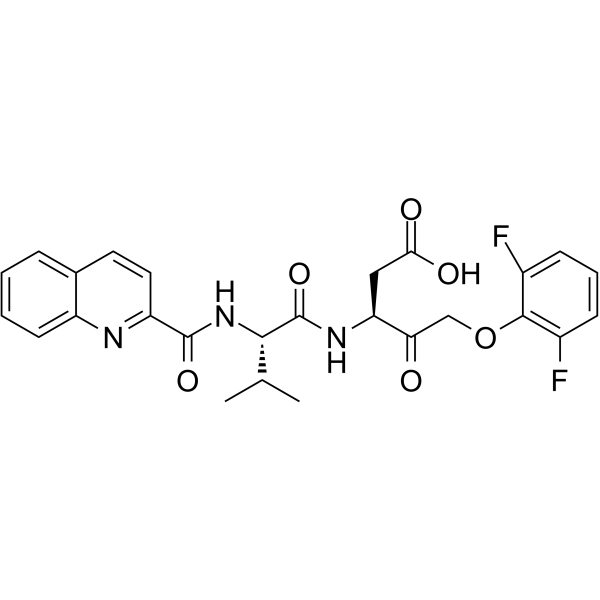
HY-12305
Q-VD-OPhPan-caspase Inhibitor -
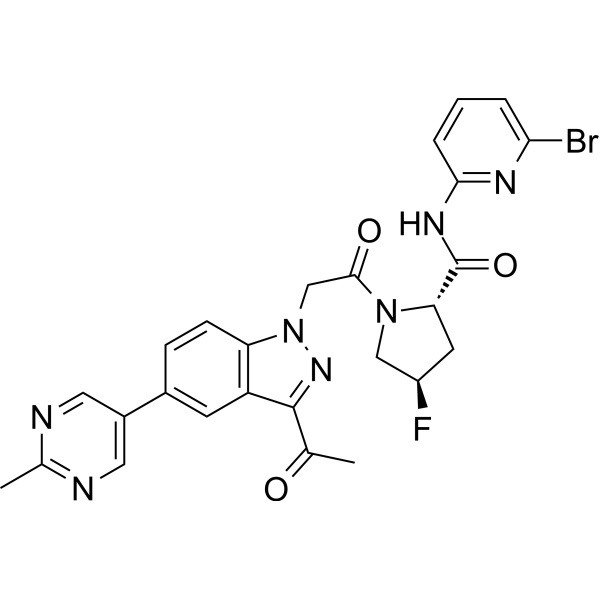
HY-117930
DanicopanFactor D Inhibitor -
HY-P1036
CompstatinPrimates’ C3 Inhibitor
Publications Citing Use of MedChemExpress (MCE) AMY-101 TFA
More

Biological Activity
Description
IC50 & Target
KD: 0.5 nM (C3)[1].
In Vivo
AMY-101 can induce a long-lasting anti-inflammatory effect[1].
AMY-101 (4 mg/kg bodyweight, subcutaneous injection. once per 24 hr for a total of 28 days) causes a significant and long-lasting reduction in PPD, an index that measures tissue destruction[1].
AMY-101 (Cp40, 1 mg/kg, sc, injection every 12 h, daily, 7 or 14 days) attenuates fibrosis and infiltration of inflammatory cells in UUO-induced renal fibrosis[3].
MedChemExpress (MCE) has not independently confirmed the accuracy of these methods. They are for reference only.
-
Animal Model:Fifteen adult male cynomolgus monkeys (Macaca fascicularis) (7-15 years old; 5.0-7.6 kg body weight)[1].
-
Dosage:0.1 mg/site; 50 μL of 2 mg/mL solution.
-
Administration:Injected locally. (Either three times per week or once a week for 6 weeks followed by a 6-week follow-up period without treatment.)
-
Result:Does not cause irritation in healthy gingiva.
-
Animal Model:UUO and sham-operated mice[3].
-
Dosage:1 mg/kg.
-
Administration:Subcutaneous injection every 12 h, daily, 7 or 14 days.
-
Result:1 mg/kg Cp40 had much less severe interstitial fibrosis than control peptide-injected mice.
Clinical Trial
| NCT Number | Sponsor | Condition | Start Date |
Phase

|
|---|---|---|---|---|
| NCT01329991 | Plexxikon| | 2011-05 | PHASE1 |


Chemical Information
-
CAS No. 1789738-04-0
-
Appearance Solid
-
Molecular Weight 1789.09 (free base)
-
Formula C83H117N23O18S2.xC2HF3O2
-
Color White to off-white
-
Synonyms
Cp40 TFA
-
Sequence
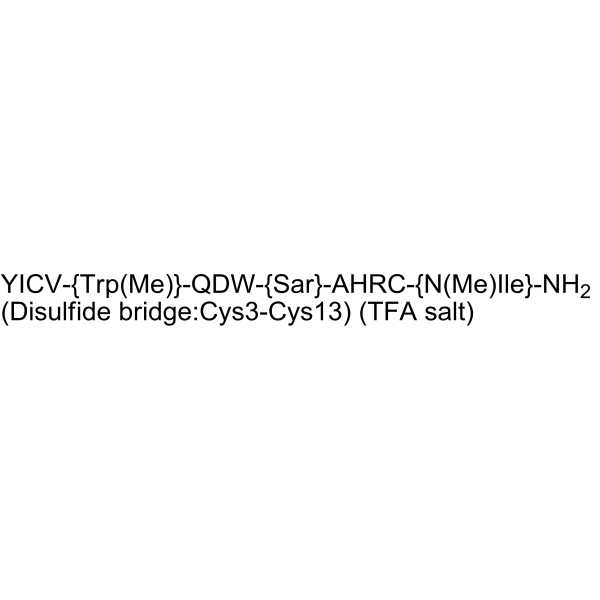
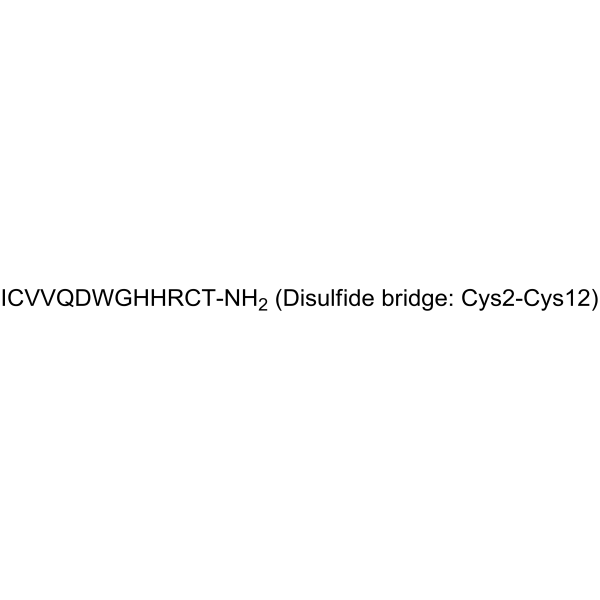
{D-Tyr}-Ile-Cys-Val-{Trp(Me)}-Gln-Asp-Trp-{Sar}-Ala-His-Arg-Cys-{N(Me)Ile}-NH2 (Disulfide bridge:Cys3-Cys13)
-
Sequence Shortening
{D-Tyr}-ICV-{Trp(Me)}-QDW-{Sar}-AHRC-{N(Me)Ile}-NH2 (Disulfide bridge:Cys3-Cys13)
-
Shipping
Room temperature in continental US; may vary elsewhere.
-
Storage
Sealed storage, away from moisture and light
Powder -80°C 2 years -20°C 1 year * In solvent : -80°C, 6 months; -20°C, 1 month (sealed storage, away from moisture and light)


Publications (7)
-
Journal Impact Factor
-
Most Recent
-
Cell
2025 May 29;188(11):3013-3029.e19. PMID: 40252640 -
Nucleic Acids Res
COVID19 Drug Repository: text-mining the literature in search of putative COVID19 therapeutics. [Abstract]2021 Jan 8;49(D1):D1113-D1121. PMID: 33166390 -
Virulence
Neutrophil extracellular trap-borne C3-driven endothelial dysfunction in Klebsiella pneumoniae liver abscess. [Abstract]2025 Dec;16(1):2580104. PMID: 41146461 -
mBio
Monoclonal IgM antibodies mediate potent complement neutralization by targeting cell-derived epitopes on enveloped viruses. [Abstract]2026 Feb 13:e0170925. PMID: 41685933 -
-
-
Sci Total Environ
Neurotoxic effects of polystyrene nanoplastics on memory and microglial activation: Insights from in vivo and in vitro studies. [Abstract]2024 May 10:924:171681. PMID: 38490422


Solvent & Solubility
In Vitro:
DMSO : ≥ 50 mg/mL
H2O : ≥ 50 mg/mL
* "≥" means soluble, but saturation unknown.

Protocols
-
Cotton Pellet Granuloma
Cotton pellet granuloma is a classical in vivo chronic inflammation model used to evaluate the anti-inflammatory potential of test substances by measuring their ability to inhibit granuloma tissue formation around an implanted foreign body (cotton pellet) in rodents. The method is based on the biological response to a sterile implanted material, which induces proliferative phase inflammation characterized by fibroblast proliferation and collagen-rich granuloma formation, and the final readout reflects the extent of chronic inflammatory tissue growth surrounding the pellet. In multiple preclinical pharmacological evaluations, inhibition of cotton pellet-induced granuloma formation has been used as an indicator of anti-inflammatory activity in both synthetic and natural product screening contexts.
-
Carrageenan-Induced Paw Edema
Carrageenan-induced paw edema is an acute inflammation model in which intraplantar injection of carrageenan induces localized inflammatory swelling characterized by vascular permeability, leukocyte infiltration, and production of inflammatory mediators such as prostaglandins and cytokines, making it widely used to evaluate anti-inflammatory agents in vivo. The resulting paw volume or thickness increase is quantified over time as a direct readout of inflammatory intensity and drug efficacy, typically reflecting cyclooxygenase-mediated prostaglandin-driven edema formation and immune cell recruitment in peripheral tissue[20].
-
Research Protocol for Inflammation-related Diseases
The NLRP3 inflammasome is a cytosolic innate immune signaling platform that integrates priming signals and danger-signal activation to promote caspase-1 activation, maturation of IL-1β and IL-18, and gasdermin D-mediated pyroptotic cell death. The core experimental logic is to determine whether inflammatory disease phenotypes are driven by increased NLRP3 expression, ASC-containing inflammasome assembly, caspase-1 cleavage, GSDMD cleavage, and extracellular release of IL-1β/IL-18 rather than by nonspecific cell injury alone. The pathway is strongly linked to inflammation-related disease phenotypes because monosodium urate crystals activate NALP3/NLRP3 inflammasome signaling in gout-like crystal inflammation, cholesterol crystals activate NLRP3 inflammasomes in atherogenesis models, and DSS-induced intestinal inflammation has been reported to involve NLRP3 inflammasome activity. However, experimental colitis studies also show context-dependent protective effects of NLRP3 inflammasome co


Purity & Documentation
-
Data Sheet (282 KB)
-
SDS (252 KB)
- English - EN (252 KB)
- Français - FR (252 KB)
- Deutsch - DE (252 KB)
- Norwegian - NO (252 KB)
- Español - ES (252 KB)
- Swedish - SV (252 KB)
- Italian - IT (252 KB)
- Korean - KR (252 KB)
- Portuguese - PT (252 KB)
-
Handling Instructions (2659 KB)
References
[1]. Kajikawa T, et al. Safety and Efficacy of the Complement Inhibitor AMY-101 in a Natural Model of Periodontitis in Non-human Primates. Mol Ther Methods Clin Dev. 2017 Aug 18;6:207-215. [Content Brief]
[2]. Mastaglio S, et al. The first case of COVID-19 treated with the complement C3 inhibitor AMY-101. Clin Immunol. 2020 Apr 29:108450. [Content Brief]
[3]. Yanyan Liu, et al. Complement C3 Produced by Macrophages Promotes Renal Fibrosis via IL-17A Secretion. Front Immunol. 2018 Oct 22;9:2385. [Content Brief]

Calculators
Concentration (start) × Volume (start) = Concentration (final) × Volume (final)


AMY-101 TFA Related Classifications
HY-P1717A Related Classifications
 Powered by Bioz