



CD9 Antibody (YA524)
(Synonyms: CD9, CD9 antigen, Cd9)
Based on 1 Customer Validation
CD9 Antibody (YA524) is a Rabbit-derived and non-conjugated IgG monoclonal antibody, targeting to CD9.
-
Host:
Rabbit
-
Isotype:
IgG
-
Application:
WB, ICC/IF, IHC-P, IP
-
Reactivity :
Human, Mouse
-
Formulation:
Supplied in 1*TBS (pH7.4), 0.05% BSA and 40% Glycerol. Preservative: 0.05% Sodium Azide.
-
Conjugation:
Non-conjugated


To place orders, for customer services and technical support, please contact: MedChemExpress USA
Tel: 609-228-6898 E-mail: [email protected] [email protected]





Applications
| Application |
WB

WB: Western Blot
|
ICC/IF
ICC/IF: Immunocytochemistry/
Immunofluorescence |
IHC-P
IHC-P: Immunohistochemistry-Paraffin
|
IP
IP: Immunoprecipitation
|
|---|---|---|---|---|
| Dilution Ratio | 1:500 | 1:50 | 1:50-1:200 | Use at an assay dependent concentration. |


Product Details
CD9 Antibody (YA524) is a Rabbit-derived and non-conjugated IgG monoclonal antibody, targeting to CD9.
-
Host Rabbit

-
Clonality Recombinant,Monoclonal

-
Species ReactivityHuman, Mouse
-
Observed Molecular WeightObserved band size: 23 kDa
Note: Due to possible protein modifications or aggregation, the molecular weight should be confirmed by actual measurement, and the predicted value is for reference only.

-
Calculated Molecular Weight Predicted band size: 25 kDa

Synthetic peptide corresponding to Human CD9 AA. range:179-228.
Endogenous
Protein A affinity purified.
Non-conjugated
Unmodified
IgG


Product Properties
-
Appearance
Solution
-
Formulation
Supplied in 1*TBS (pH7.4), 0.05% BSA and 40% Glycerol. Preservative: 0.05% Sodium Azide.
-
Concentration
Batch-dependent, Please check the COA for the concentration of each lot. Check Lot Concentration
-
Storage & Stability
Stored at -20°C for 1 year. Avoid repeated freeze / thaw cycles.
-
Shipping
Shipping with blue ice.


Verification Images
-
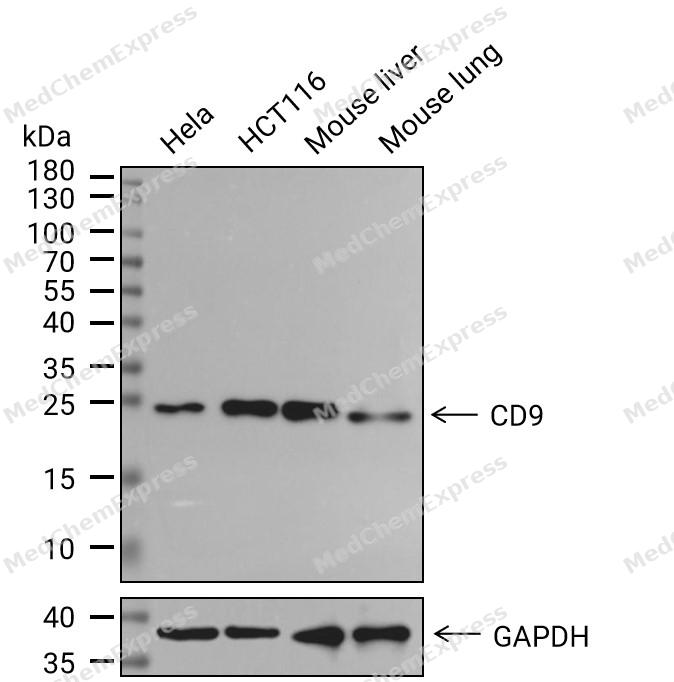 Western blot analysis of extracts from Hela(lane 1(20μg)) 、HCT116(lane 2(20μg)) 、Mouse liver(lane 3(20μg))and Mouse lung(lane 4(20μg) using CD9 Antibody(HY-P80068). Proteins were transferred to a PVDF membrane and blocked with 5%BSA in TBST for 1.5 hour at room temperature. The primary antibody ( 1/500) and Loading control antibody (GAPDH, 1/1000) was used in 5% BSA in TBST at 4℃ overnight. Goat Anti-Rabbit IgG-HRP Secondary Antibody (1/10,000) was used for 1 hour at room temperature.
 -
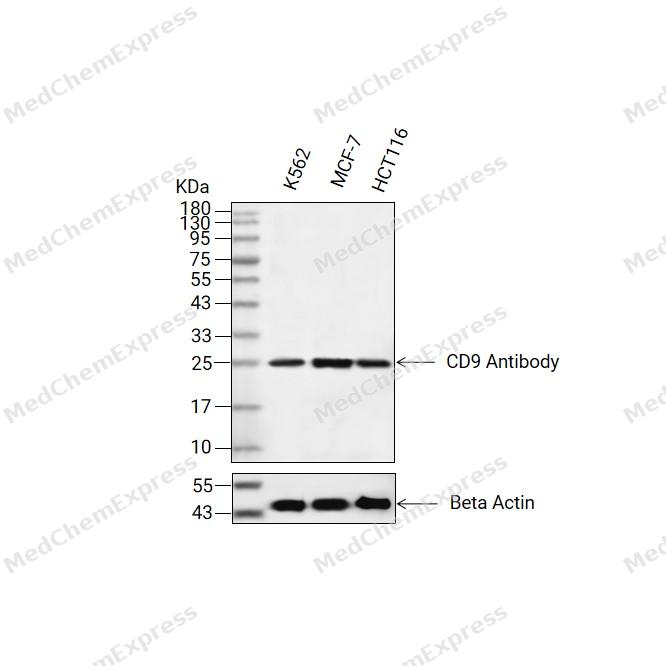 Western blot analysis of extracts from K562(lane 2(20ug) , MCF-7(lane 3(20ug) and HCT116(lane 4(20ug) using CD43 Antibody (HY-P80068) Rabbit mAb. Proteins were transferred to a PVDF membrane and blocked with 5% non-fat milk in TBST for 2 hour at room temperature. The primary antibody (1/1000) and Loading control antibody (Beta Actin, HY-P83730, 1/10000) was used in 5% non-fat milk in TBST at 4°C overnight. Goat Anti-Mouse/Rabbit IgG-HRP Secondary Antibody (1/10000) was used for 1 hour at room temperature.
 -
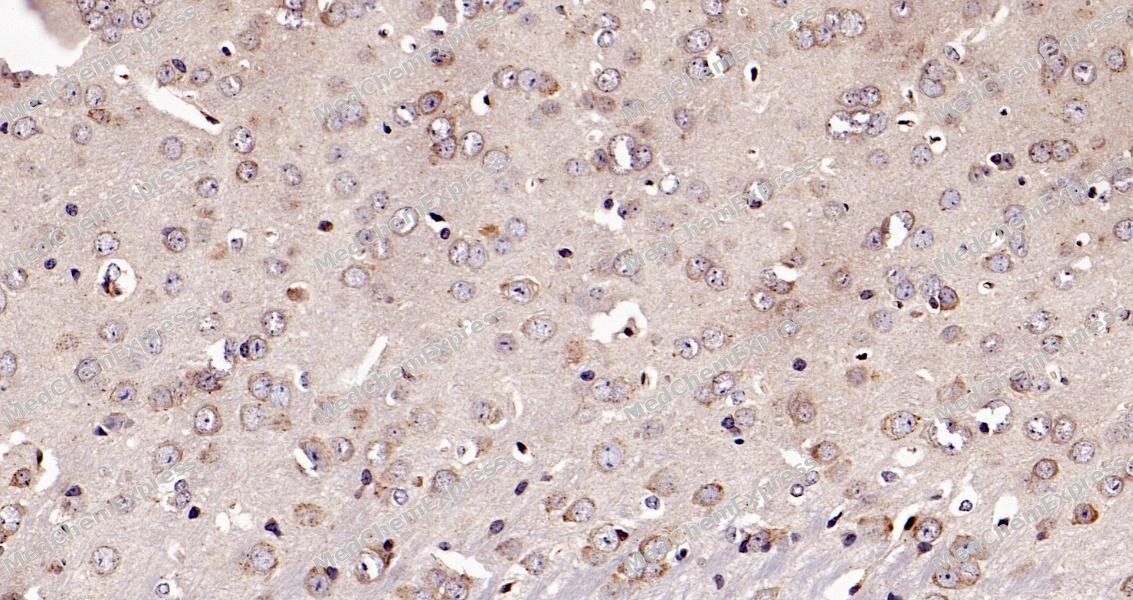 Immunohistochemical analysis of paraffin-embedded mouse brain tissue using CD9 Antibody. The section was pre-treated using heat mediated antigen retrieval with sodium citrate buffer (pH 6.0) for 8 minutes. The tissues were blocked in QuickBlock for 20 minutes at room temperature, washed with ddH2O and PBS, and then probed with the primary antibody at 1/100 dilution in 4℃ overnight. The detection was performed using an HRP conjugated compact polymer system. DAB was used as the chromogen. Tissues were counterstained with hematoxylin and mounted with DPX.
 -
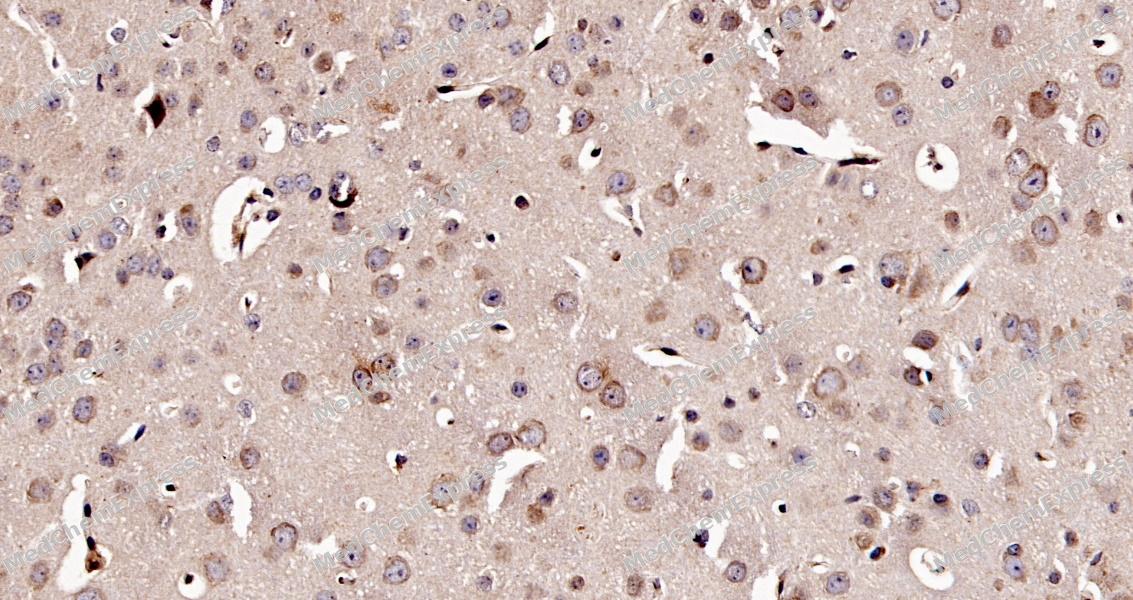 Immunohistochemical analysis of paraffin-embedded mouse brain tissue using CD9 Antibody. The section was pre-treated using heat mediated antigen retrieval with sodium citrate buffer (pH 6.0) for 8 minutes. The tissues were blocked in QuickBlock for 20 minutes at room temperature, washed with ddH2O and PBS, and then probed with the primary antibody at 1/100 dilution in 4℃ overnight. The detection was performed using an HRP conjugated compact polymer system. DAB was used as the chromogen. Tissues were counterstained with hematoxylin and mounted with DPX.
 -
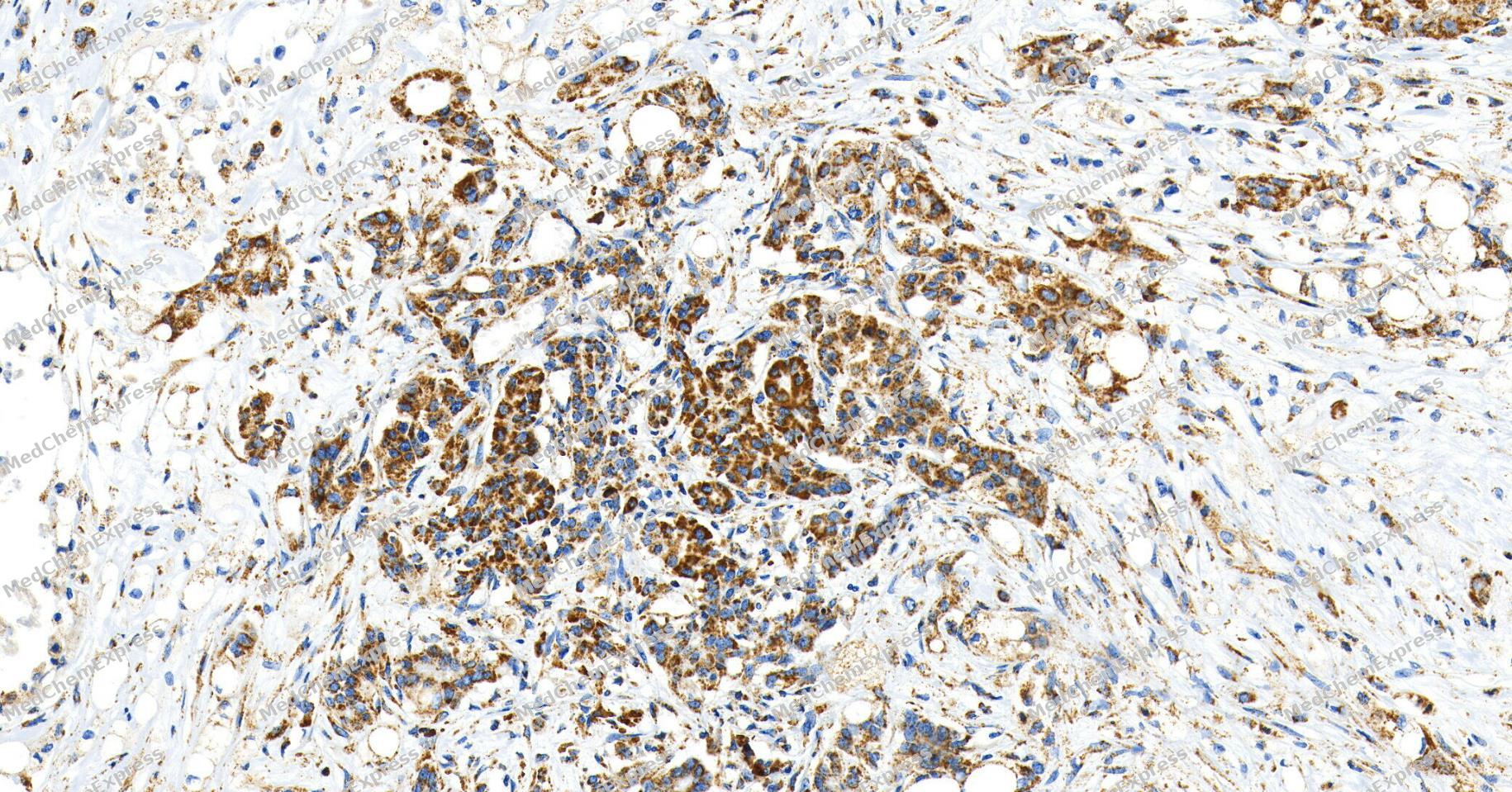 Immunohistochemical analysis of paraffin-embedded human pancreatic cancer tissue using CD9 Antibody (YA524). The section was pre-treated using heat mediated antigen retrieval with Tris/EDTA buffer (pH 9.0) for 20 minutes. The tissues were probed with the primary antibody (HY-P80068, 1/100) overnight at 4℃. The detection was performed using an HRP conjugated compact polymer system. DAB was used as the chromogen. Tissues were counterstained with hematoxylin and mounted with neutral balsam.
 -
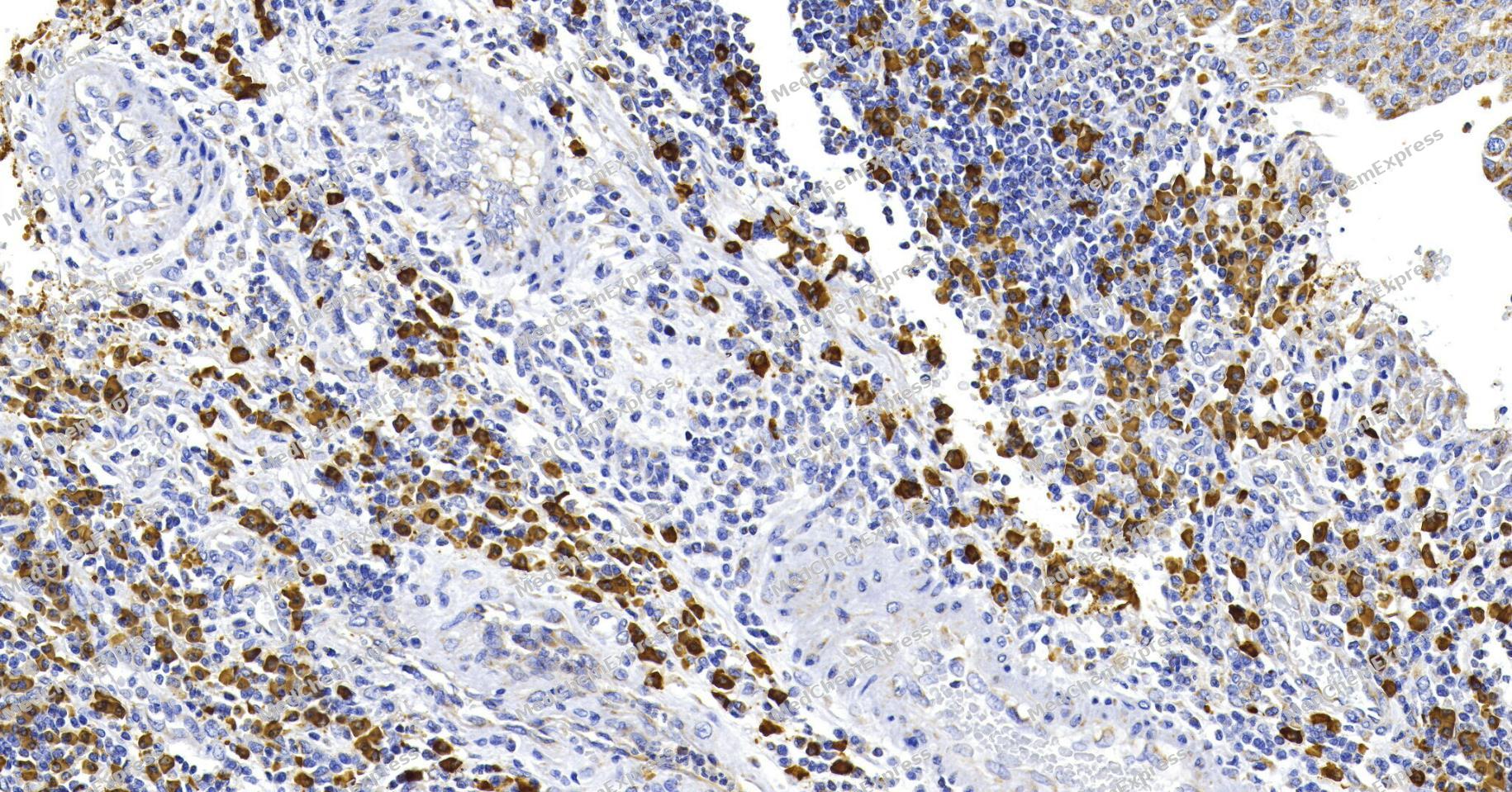 Immunohistochemical analysis of paraffin-embedded human bladder cancer tissue using CD9 Antibody (YA524). The section was pre-treated using heat mediated antigen retrieval with Tris/EDTA buffer (pH 9.0) for 20 minutes. The tissues were probed with the primary antibody (HY-P80068, 1/100) overnight at 4℃. The detection was performed using an HRP conjugated compact polymer system. DAB was used as the chromogen. Tissues were counterstained with hematoxylin and mounted with neutral balsam.
 -
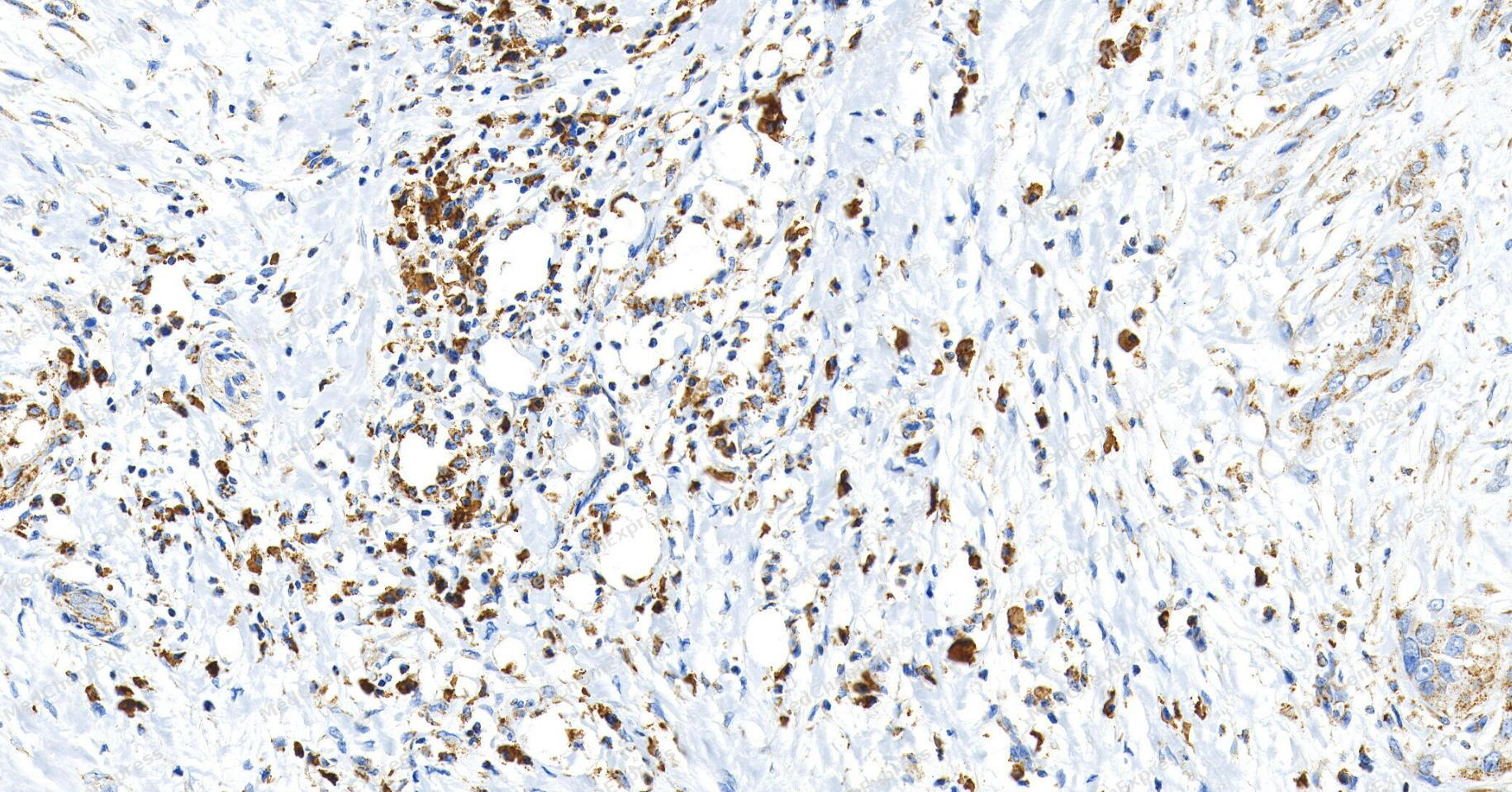 Immunohistochemical analysis of paraffin-embedded human ovarian cancer tissue using CD9 Antibody (YA524). The section was pre-treated using heat mediated antigen retrieval with Tris/EDTA buffer (pH 9.0) for 20 minutes. The tissues were probed with the primary antibody (HY-P80068, 1/100) overnight at 4℃. The detection was performed using an HRP conjugated compact polymer system. DAB was used as the chromogen. Tissues were counterstained with hematoxylin and mounted with neutral balsam.
 -
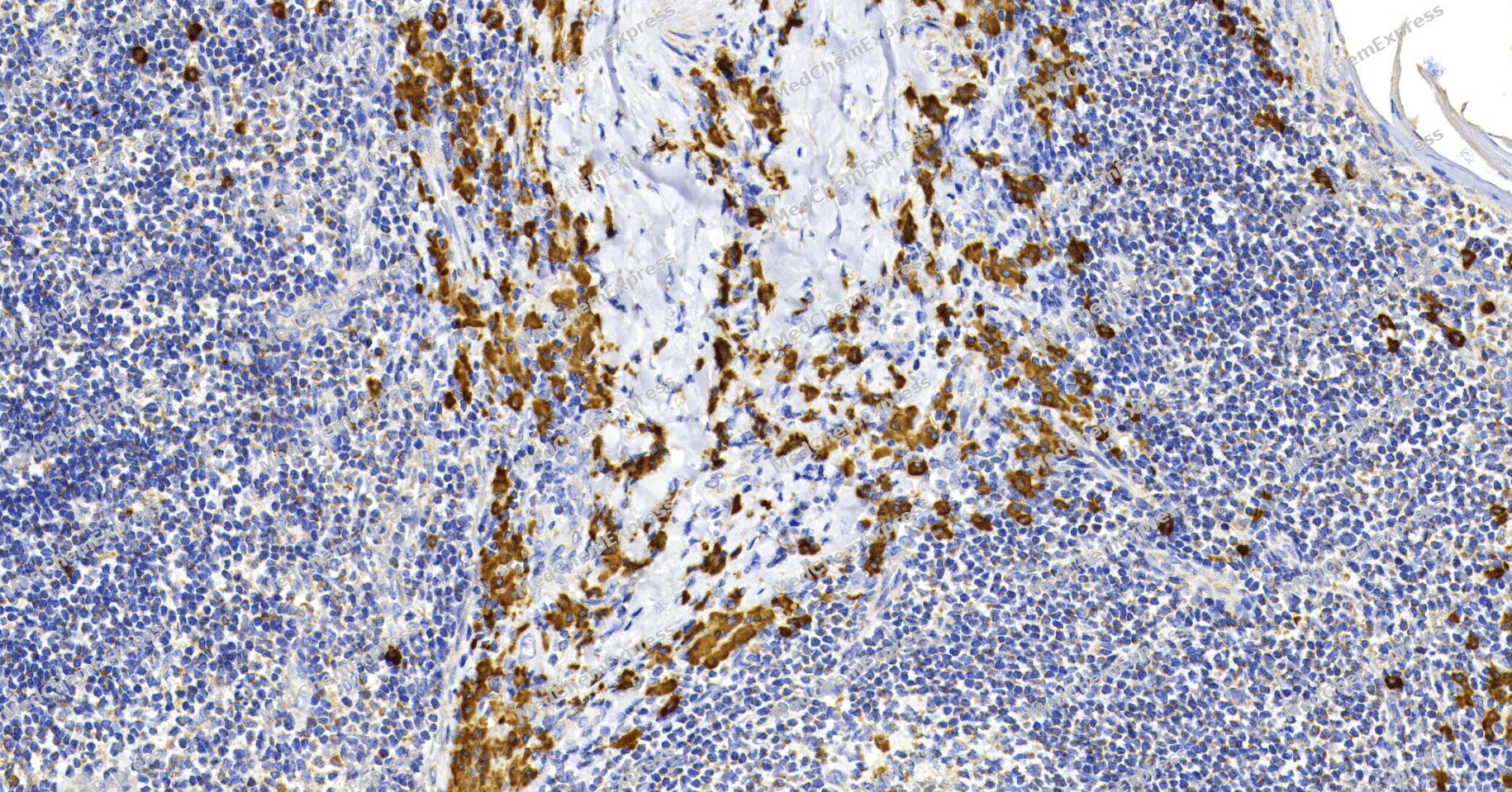 Immunohistochemical analysis of paraffin-embedded human tonsil tissue using CD9 Antibody (YA524). The section was pre-treated using heat mediated antigen retrieval with Tris/EDTA buffer (pH 9.0) for 20 minutes. The tissues were probed with the primary antibody (HY-P80068, 1/100) overnight at 4℃. The detection was performed using an HRP conjugated compact polymer system. DAB was used as the chromogen. Tissues were counterstained with hematoxylin and mounted with neutral balsam.


Background
-
Function
CD9 is an Integral membrane protein associated with integrins, which regulates different processes, such as sperm-egg fusion, platelet activation and aggregation, and cell adhesion. Present at the cell surface of oocytes and plays a key role in sperm-egg fusion, possibly by organizing multiprotein complexes and the morphology of the membrane required for the fusion. In myoblasts, associates with CD81 and PTGFRN and inhibits myotube fusion during muscle regeneration. In macrophages, associates with CD81 and beta-1 and beta-2 integrins, and prevents macrophage fusion into multinucleated giant cells specialized in ingesting complement-opsonized large particles. Also prevents the fusion between mononuclear cell progenitors into osteoclasts in charge of bone resorption. Acts as a receptor for PSG17. Involved in platelet activation and aggregation. Regulates paranodal junction formation. Involved in cell adhesion, cell motility and tumor metastasis[1][2][3][4][5].
-
Subcellular Localization
Cell membrane; Multi-pass membrane protein; Membrane; Multi-pass membrane protein; Secreted, extracellular exosome
-
Expression
Tissue_specificity:Protein levels were detected in platelets. It is expressed by various hematopoietic cells and epithelial cells. -
Isoforms & Post-Translational Modification
CD9 has an amino acid length of 228, molecular weight is 25416 Da.
Palmitoylated at a low, basal level in unstimulated platelets. The level of palmitoylation increases when platelets are activated by thrombin (in vitro). The protein exists in three forms with molecular masses between 22 and 27 kDa, and is known to carry covalently linked fatty acids. Palmitoylation by ZDHHC2 regulates CD9 expression, association with other tetraspanin family proteins and function in cell adhesion. -
Subunit
Forms both disulfide-linked homodimers and higher homooligomers as well as heterooligomers with other members of the tetraspanin family. Interacts (via the second extracellular domain) with integrin ITGAV:ITGB3. Part of integrin-tetraspanin complexes composed of CD81, beta-1 and beta-2 integrins in the membrane of monocyte/macrophages. Interacts with CD63; identified in a complex with CD63 and ITGB3. Associates with CR2/CD21 and with PTGFRN/CD9P1. Interacts directly with IGSF8. Interacts with PDPN; this interaction is homophilic and attenuates platelet aggregation and pulmonary metastasis induced by PDPN. Interacts (on T cell side) with CD81 at immunological synapses between antigen-presenting cells and T cells.
-
SwissProt ID
-
Synonyms
CD9, CD9 antigen, Cd9
-
Research Field
Immunology


Documentation
-
Data Sheet (263 KB)
-
SDS (251 KB)
- English - EN (251 KB)
- Français - FR (251 KB)
- Deutsch - DE (251 KB)
- Norwegian - NO (251 KB)
- Español - ES (251 KB)
- Swedish - SV (251 KB)
- Italian - IT (251 KB)
- Korean - KR (251 KB)
- Portuguese - PT (251 KB)
-
User Guide for Antibodies (1077 KB)
References
[1]. Higginbottom A, et al. Structural requirements for the inhibitory action of the CD9 large extracellular domain in sperm/oocyte binding and fusion. Biochem Biophys Res Commun. 2003 Nov 7;311(1):208-14. [Content Brief]
[2]. Nakazawa Y, et al. Tetraspanin family member CD9 inhibits Aggrus/podoplanin-induced platelet aggregation and suppresses pulmonary metastasis. Blood. 2008 Sep 1;112(5):1730-9. [Content Brief]
[3]. Ikeyama S, et al. Suppression of cell motility and metastasis by transfection with human motility-related protein (MRP-1/CD9) DNA. J Exp Med. 1993 May 1;177(5):1231-7. [Content Brief]
[4]. Takeda Y, et al. Tetraspanins CD9 and CD81 function to prevent the fusion of mononuclear phagocytes. J Cell Biol. 2003 Jun 9;161(5):945-56. [Content Brief]
[5]. Masellis-Smith A, et al. CD9-regulated adhesion. Anti-CD9 monoclonal antibody induce pre-B cell adhesion to bone marrow fibroblasts through de novo recognition of fibronectin. J Immunol. 1994 Mar 15;152(6):2768-77. [Content Brief]

 Powered by Bioz
