



Cdk4 Antibody (YA513)
Based on 2 publication(s) in Google Scholar
Cdk4 Antibody (YA513) is a Rabbit-derived and non-conjugated IgG monoclonal antibody, targeting to Cdk4.
-
Host:
Rabbit
-
Isotype:
IgG
-
Application:
WB, ICC/IF, IHC-P, IP
-
Reactivity :
Human, Mouse
-
Formulation:
Supplied in 1*TBS (pH7.4), 0.05% BSA and 40% Glycerol. Preservative: 0.05% Sodium Azide.
-
Conjugation:
Non-conjugated


To place orders, for customer services and technical support, please contact: MedChemExpress USA
Tel: 609-228-6898 E-mail: [email protected] [email protected]



-

HY-P80076
CDK2 Antibody (YA514) -
HY-P80098
Cyclin D1/CCND1 Antibody (YA485) -
HY-P80611
CDK1 Antibody (YA516) -
HY-P80633
Cyclin D1/CCND1 Antibody -
HY-P80079
CDK6 Antibody (YA511) -
HY-P80623
Cleaved-Caspase 3 p12 Antibody (YA499) -
HY-P80773
p21 Antibody (YA254) -
HY-P80268
PCNA Antibody (YA241) -
HY-P80632
Cyclin B1 Antibody
Publications Citing Use of MedChemExpress (MCE) Cdk4 Antibody (YA513)
More

Applications
| Application |
WB

WB: Western Blot
|
ICC/IF
ICC/IF: Immunocytochemistry/
Immunofluorescence |
IHC-P
IHC-P: Immunohistochemistry-Paraffin
|
IP
IP: Immunoprecipitation
|
|---|---|---|---|---|
| Dilution Ratio | 1:1000-1:2000 | 1:50-1:200 | 1:1000 | 1:50 |


Product Details
Cdk4 Antibody (YA513) is a Rabbit-derived and non-conjugated IgG monoclonal antibody, targeting to Cdk4.
-
Host Rabbit

-
Clonality Recombinant,Monoclonal

-
Species ReactivityHuman, Mouse
-
Observed Molecular WeightObserved band size: 30 kDa
Note: Due to possible protein modifications or aggregation, the molecular weight should be confirmed by actual measurement, and the predicted value is for reference only.

-
Calculated Molecular Weight Predicted band size: 34 kDa

Synthetic peptide corresponding to Mouse Cdk4.AA range:180-303.
Endogenous
Protein A affinity purified.
Non-conjugated
Unmodified
IgG


Product Properties
-
Appearance
Solution
-
Formulation
Supplied in 1*TBS (pH7.4), 0.05% BSA and 40% Glycerol. Preservative: 0.05% Sodium Azide.
-
Concentration
Batch-dependent, Please check the COA for the concentration of each lot. Check Lot Concentration
-
Storage & Stability
Stored at -20°C for 1 year. Avoid repeated freeze / thaw cycles.
-
Shipping
Shipping with blue ice.


Publications (2)
-
Journal Impact Factor
-
Most Recent
-
Int J Biol Macromol
C-Arg9-APCR3-VHL promotes β-catenin degradation via the VHL-mediated ubiquitin-proteasome system in APC-mutant colorectal cancer. [Abstract]2025 Aug 8;322(Pt 1):146678. PMID: 40782852 -
Neoplasia
FAM111B enhances glycolysis and promotes metastasis of prostate cancer by upregulating LDHA. [Abstract]2025 Nov:69:101227. PMID: 40975977


Verification Images
-
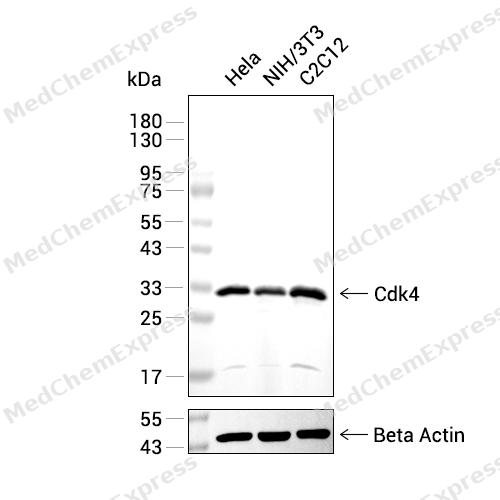 Western blot analysis of extracts from Hela (lane 2(20μg), NIH/3T3 (lane 3(20μg), C2C12 (lane 4(20μg) using Integrin alpha 5 Antibody (HY-P80077) Rabbit mAb. Proteins were transferred to a PVDF membrane and blocked with 5% BSA in TBST for 2 hour at room temperature. The primary antibody (HY-P80416, 1/1000) and Loading control antibody (Beta Actin, HY-P80438, 1/3000) was used in 5% BSA in TBST at 4°C overnight. Goat Anti-Mouse/Rabbit IgG-HRP Secondary Antibody (HY-P8004/HY-P8001, 1/10,000) was used for 1 hour at room temperature.
 -
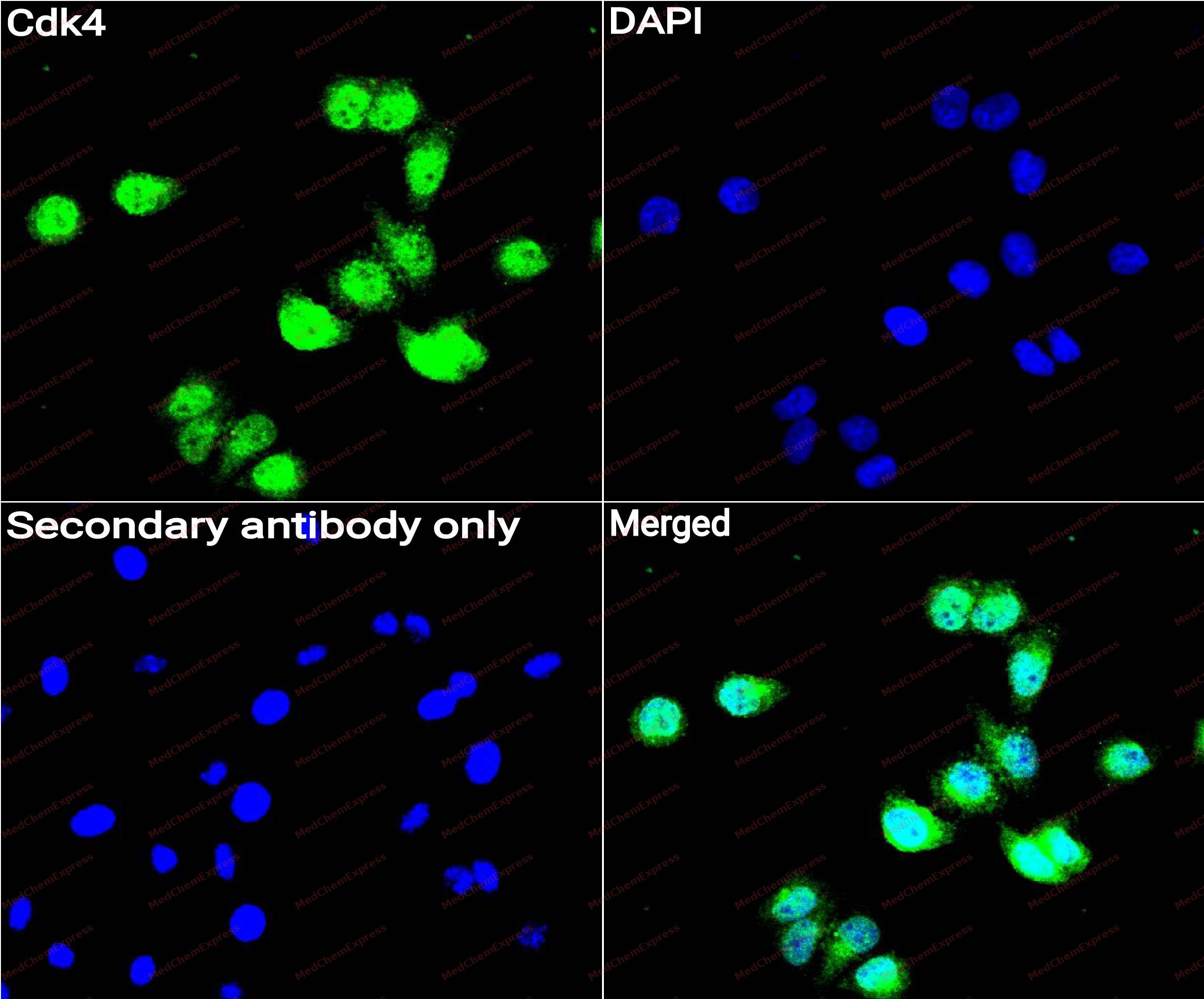 Immunocytochemistry analysis of Hela cells labeling Cdk4 with Cdk4antibody (HY-P80077) at 1/50 dilution. Cells were fixed in 4% paraformaldehyde for 15 minutes at room temperature, permeabilized with 0.1% Triton X-100 for 10 minutes at room temperature, then blocked with QuickBlock™ Blocking Buffer for Immunol Staining for 10 min at room temperature. Cells were then incubated with Cdk4 antibody (HY-P80077) at 1/50 dilution in QuickBlock™ Blocking Buffer for Immunol Staining at 4 ℃. Alexa Fluor® 488-conjugated AffiniPure Goat Anti-Rabbit IgG H&L(HY-P8002, Green) was used as the secondary antibody at 1/1,000 dilution. PBS instead of the primary antibody was used as the secondary antibody only control. The Nuclear counterstain was DAPI (Blue).
 -
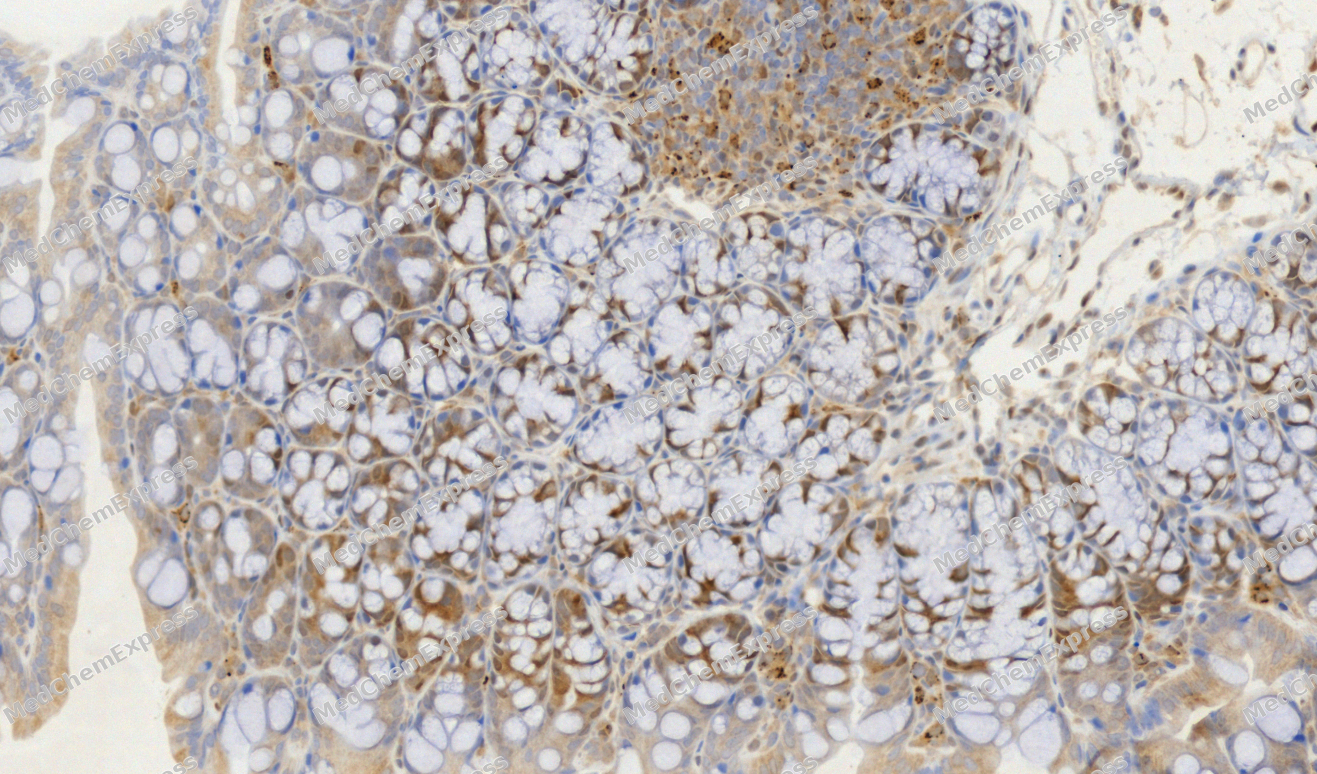 Immunohistochemical analysis of paraffin-embedded Mouse colon tissue using Cdk4 Antibody. The section was pre-treated using heat mediated antigen retrieval with Tris-EDTA buffer (pH 8.0) for 8 minutes. The tissues were blocked in QuickBlock for 20 minutes at room temperature, washed with ddH2O and PBS, and then probed with the primary antibody (HY-P80077, 1/500) in 4℃ overnight. The detection was performed using an HRP conjugated compact polymer system. DAB was used as the chromogen. Tissues were counterstained with hematoxylin and mounted with DPX.
 -
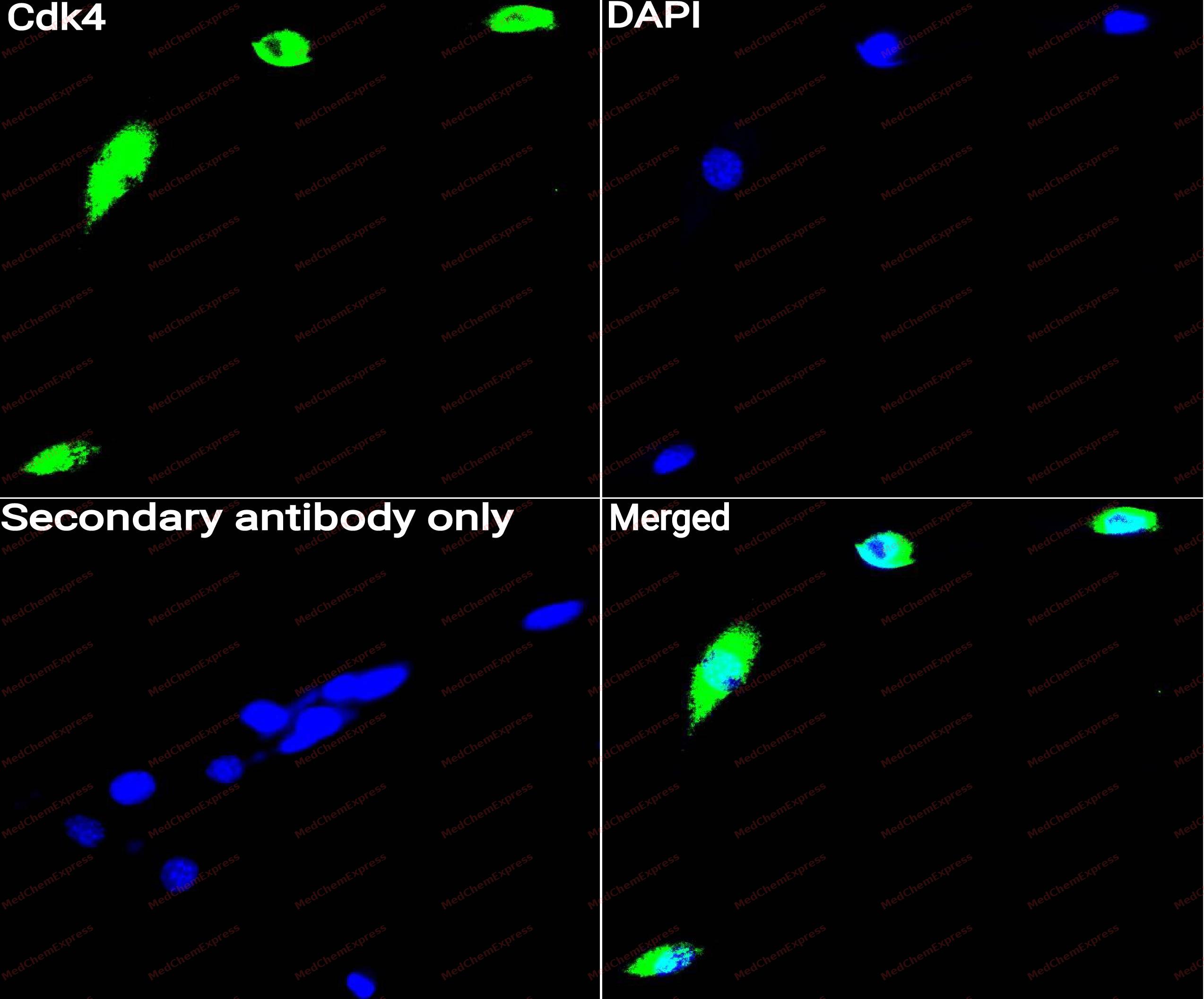 Immunocytochemistry analysis of NIH3T3 cells labeling Cdk4 with Cdk4 antibody (HY-P80077) at 1/50 dilution. Cells were fixed in 4% paraformaldehyde for 15 minutes at room temperature, permeabilized with 0.1% Triton X-100 for 10 minutes at room temperature, then blocked with QuickBlock™ Blocking Buffer for Immunol Staining for 10 min at room temperature. Cells were then incubated with Cdk4 antibody (HY-P80077) at 1/50 dilution in QuickBlock™ Blocking Buffer for Immunol Staining at 4 ℃. Alexa Fluor® 488-conjugated AffiniPure Goat Anti-Rabbit IgG H&L(HY-P8002, Green) was used as the secondary antibody at 1/1,000 dilution. PBS instead of the primary antibody was used as the secondary antibody only control. The Nuclear counterstain was DAPI (Blue).
 -
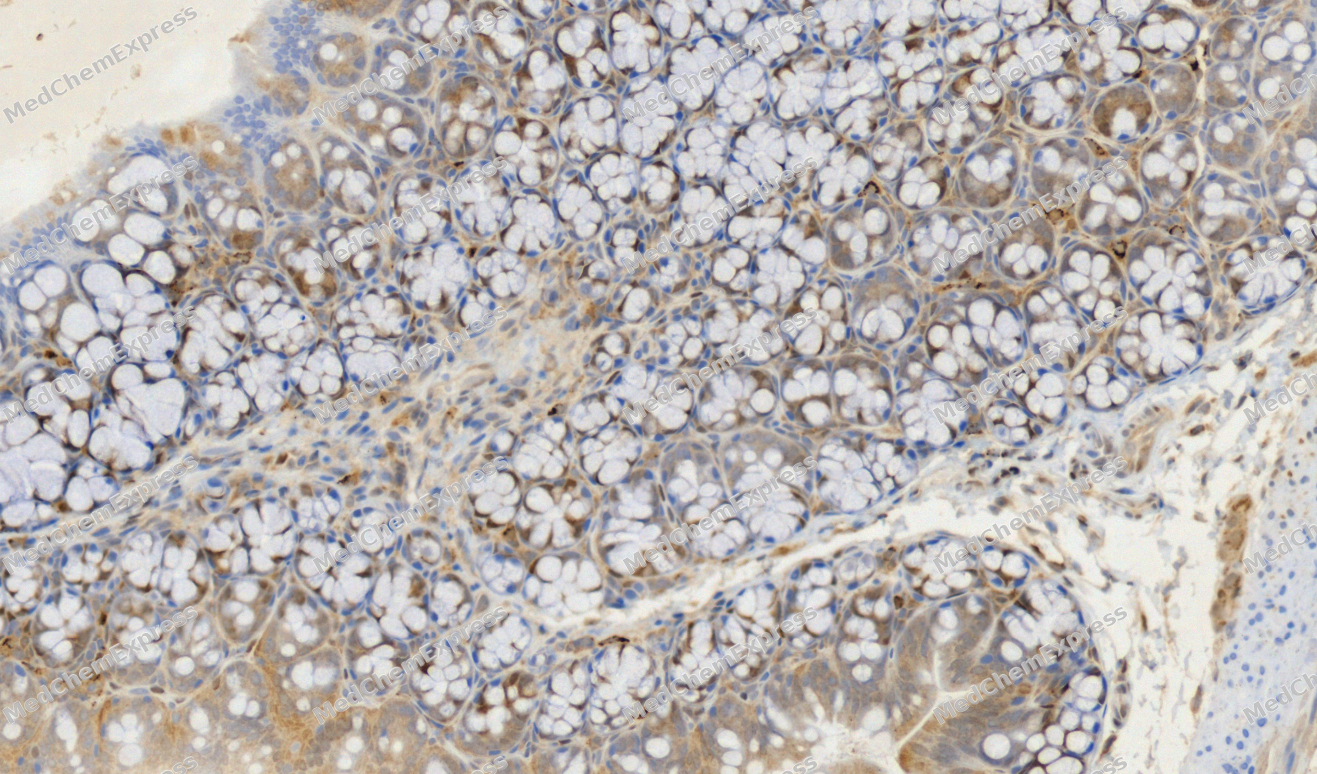 Immunohistochemical analysis of paraffin-embedded Mouse colon tissue using Cdk4 Antibody. The section was pre-treated using heat mediated antigen retrieval with Tris-EDTA buffer (pH 8.0) for 8 minutes. The tissues were blocked in QuickBlock for 20 minutes at room temperature, washed with ddH2O and PBS, and then probed with the primary antibody (HY-P80077, 1/500) in 4℃ overnight. The detection was performed using an HRP conjugated compact polymer system. DAB was used as the chromogen. Tissues were counterstained with hematoxylin and mounted with DPX.
 -
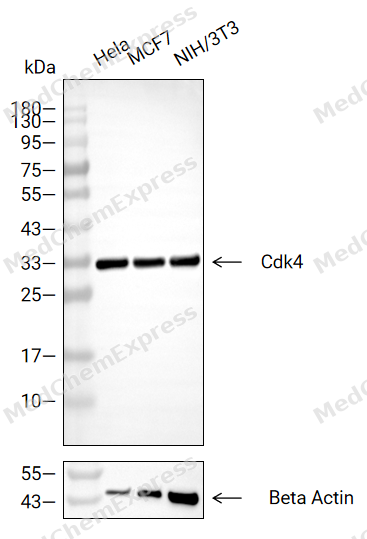 Western blot analysis of extracts from HeLa (lane 2(20μg), MCF7 (lane 3(20μg), NIH/3T3 (lane 4(20μg),using Cdk4 Antibody. Proteins were transferred to a PVDF membrane and blocked with 5% BSA in TBST for 2 hour at room temperature. The primary antibody and Loading control antibody (Beta Actin, HY-P80438, 1/3000) was used in 5% BSA in TBST at 4°C overnight. Goat Anti-Mouse/Rabbit IgG-HRP Secondary Antibody (HY-P8004/HY-P8001, 1/10,000) was used for 1 hour at room temperature.


Background
-
Function
CDK4 is a cyclin-dependent serine/threonine kinase that partners with D-type cyclins to drive G1-phase progression before DNA synthesis[1]. Mechanistically, cyclin D-CDK4/6 phosphorylates RB, weakens RB-dependent transcriptional repression, and enables late-G1 signaling toward E2F-linked S-phase entry[2]. In cancer models, disruption of the CDK-RB1-E2F pathway supports malignant proliferation, and HR^+/HER2^- breast cancer provides a clinically established setting for CDK4/6 inhibition[3]. Compared with related isoforms, CDK4 and CDK6 share cell-cycle functions, but CDK4 is described as a prominent oncogenic driver in breast cancer, whereas CDK6 has a crucial role in hematopoietic stem-cell differentiation[3][4]. For experimental and translational applications, palbociclib, ribociclib, and abemaciclib inhibit CDK4/6, reduce RB phosphorylation, induce G1 arrest, and support endocrine-therapy combinations in HR^+/HER2^- advanced breast cancer studies[3][5][6][7].
-
Subcellular Localization
Cytoplasm; Nucleus; Nucleus membrane
-
Subunit
Component of the D-CDK4 complex, composed of CDK4 and some D-type G1 cyclin (CCND1, CCND2 or CCND3). Interacts directly in the complex with CCND1, CCND2 or CCND3. Interacts with ZNF655. Forms a ternary complex, cyclin D-CDK4-CDKN1B, involved in modulating CDK4 enzymatic activity. Interacts directly with CDKN1B (phosphorylated on 'Tyr-88' and 'Tyr-89'); the interaction allows assembly of the cyclin D-CDK4 complex, Thr-172 phosphorylation, nuclear translocation and enhances the cyclin D-CDK4 complex activity. CDK4 activity is either inhibited or enhanced depending on stoichiometry of complex. The non-tyrosine-phosphorylated form of CDKN1B prevents T-loop phosphorylation of CDK4 producing inactive CDK4. Interacts (unphosphorylated form) with CDK2. Also forms ternary complexes with CDKN1A or CDKN2A. Interacts directly with CDKN1A (via its N-terminal); the interaction promotes the assembly of the cyclin D-CDK4 complex, its nuclear translocation and promotes the cyclin D-dependent enzyme activity of CDK4. Interacts with CCND1; the interaction is prevented with the binding of CCND1 to INSM1 during cell cycle progression (By similarity). Interacts with SEI1 and CCND1. Probably forms a complex composed of chaperones HSP90 and HSP70, co-chaperones CDC37, PPP5C, TSC1 and client protein TSC2, CDK4, AKT, RAF1 and NR3C1; this complex does not contain co-chaperones STIP1/HOP and PTGES3/p23 (By similarity). Interacts with CEBPA (when phosphorylated) (PubMed:15107404). Interacts with FNIP1 and FNIP2 (By similarity)
-
SwissProt ID
-
Research Field
Cell Biology
Documentation
-
Data Sheet (262 KB)
-
SDS (251 KB)
- English - EN (251 KB)
- Français - FR (251 KB)
- Deutsch - DE (251 KB)
- Norwegian - NO (251 KB)
- Español - ES (251 KB)
- Swedish - SV (251 KB)
- Italian - IT (251 KB)
- Korean - KR (251 KB)
- Portuguese - PT (251 KB)
-
User Guide for Antibodies (1077 KB)
References
[1]. Baker SJ, et al. CDK4: a master regulator of the cell cycle and its role in cancer. Genes Cancer. 2022 Aug 25;13:21-45. [Content Brief]
[2]. Harbour JW, et al. Cdk phosphorylation triggers sequential intramolecular interactions that progressively block Rb functions as cells move through G1. Cell. 1999 Sep 17;98(6):859-69. [Content Brief]
[3]. Braal CL, et al. Inhibiting CDK4/6 in Breast Cancer with Palbociclib, Ribociclib, and Abemaciclib: Similarities and Differences. Drugs. 2021 Feb;81(3):317-331. [Content Brief]
[4]. Fassl A, et al. CDK4 and CDK6 kinases: From basic science to cancer therapy. Science. 2022 Jan 14;375(6577):eabc1495. [Content Brief]
[5]. Finn RS, et al. Palbociclib and Letrozole in Advanced Breast Cancer. N Engl J Med. 2016 Nov 17;375(20):1925-1936. [Content Brief]
[6]. Hortobagyi GN, et al. Ribociclib as First-Line Therapy for HR-Positive, Advanced Breast Cancer. N Engl J Med. 2016 Nov 3;375(18):1738-1748. [Content Brief]
[7]. Goetz MP, et al. MONARCH 3: Abemaciclib As Initial Therapy for Advanced Breast Cancer. J Clin Oncol. 2017 Nov 10;35(32):3638-3646. [Content Brief]

 Powered by Bioz
