



NOX2 Antibody (YA6865)
(Synonyms: CYBB; NOX2; Cytochrome b-245 heavy chain; CGD91-phox; Cytochrome b; 558; subunit beta; Cytochrome b558 subunit beta; Heme-binding membrane glycoprotein gp91phox; NADPH oxidase 2Neutrophil cytochrome b 91 kDa polypeptide; Superoxide-generating NADPH oxidase heavy chain subunit; gp91-1; gp91-phox; p22 phagocyte B-cytochrome)Based on 1 Customer Validation
NOX2 Antibody (YA6865) is a Rabbit-derived and non-conjugated IgG monoclonal antibody, targeting to NOX2.
-
Host:
Rabbit
-
Isotype:
IgG
-
Application:
WB, IHC-P, IHC-F, ICC/IF, IP
-
Reactivity :
Human, Mouse, Rat
-
Formulation:
Supplied in PBS (pH7.4), 0.1% BSA, 40% Glycerol. Preservative: 0.05% Sodium Azide.
-
Conjugation:
Non-conjugated


To place orders, for customer services and technical support, please contact: MedChemExpress USA
Tel: 609-228-6898 E-mail: [email protected] [email protected]





Applications
| Application |
WB

WB: Western Blot
|
ICC/IF
ICC/IF: Immunocytochemistry/
Immunofluorescence |
IHC-P
IHC-P: Immunohistochemistry-Paraffin
|
IHC-F
IHC-F: Immunohistochemistry-Frozen
|
IP
IP: Immunoprecipitation
|
|---|---|---|---|---|---|
| Dilution Ratio | 1:5000 | 1:500 | 1:1000 | 1:500 | 1-2μg/sample |


Product Details
NOX2 Antibody (YA6865) is a Rabbit-derived and non-conjugated IgG monoclonal antibody, targeting to NOX2.
-
Host Rabbit

-
Clonality Monoclonal,Recombinant

-
Species ReactivityHuman, Mouse, Rat
-
Observed Molecular WeightObserved band size: 55 kDa
Note: Due to possible protein modifications or aggregation, the molecular weight should be confirmed by actual measurement, and the predicted value is for reference only.

-
Calculated Molecular Weight Predicted band size: 65 kDa

SwissProt: P04839 Human ; Q61093 Mouse ; 66021 Rat
Protein A
Non-conjugated
Unmodified
IgG


Product Properties
-
Appearance
Solution
-
Formulation
Supplied in PBS (pH7.4), 0.1% BSA, 40% Glycerol. Preservative: 0.05% Sodium Azide.
-
Concentration
Batch-dependent, Please check the COA for the concentration of each lot. Check Lot Concentration
-
Storage & Stability
Stored at -20°C for 1 year. Avoid repeated freeze / thaw cycles.
-
Shipping
Shipping with blue ice.


Verification Images
-
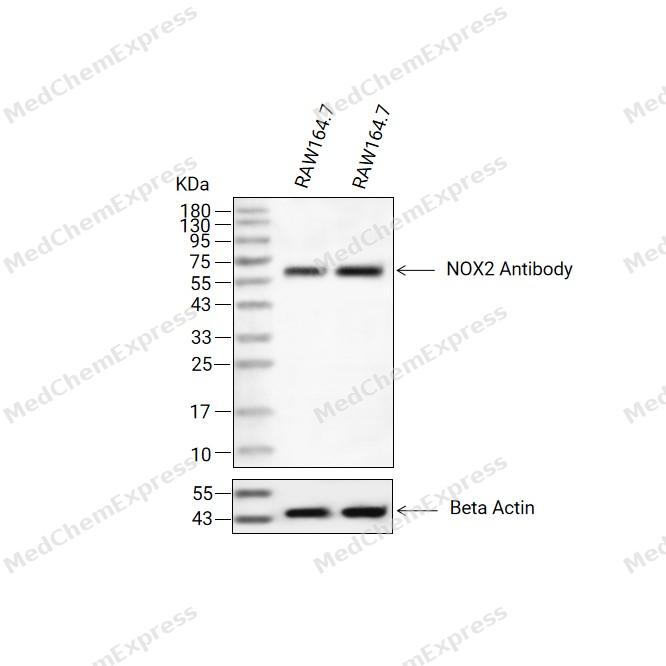 Western blot analysis of extracts from RAW164.7(lane 2(20ug) and RAW164.7(lane 3(40ug) using NOX2 Antibody (HY-P87174) Rabbit mAb. Proteins were transferred to a PVDF membrane and blocked with 5% non-fat milk in TBST for 2 hour at room temperature. The primary antibody (1/1000) and Loading control antibody (Beta Actin, HY-P83730, 1/10000) was used in 5% non-fat milk in TBST at 4°C overnight. Goat Anti-Mouse/Rabbit IgG-HRP Secondary Antibody (1/10000) was used for 1 hour at room temperature.
 -
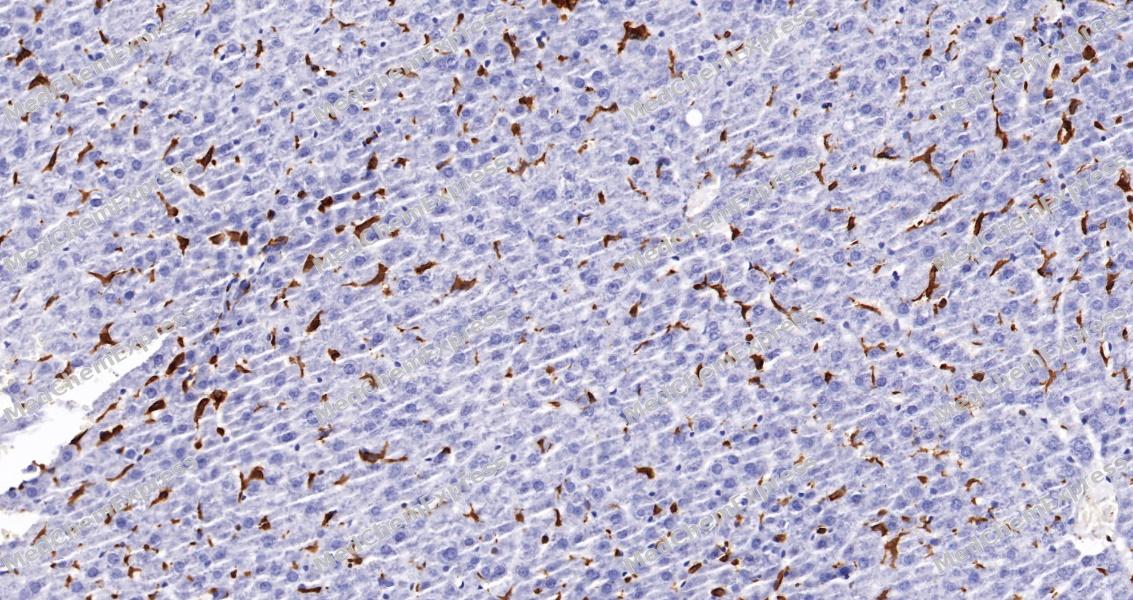 Immunohistochemical analysis of paraffin-embedded rat liver tissue using NOX2 Antibody. The section was pre-treated using heat mediated antigen retrieval with sodium citrate buffer (pH 6.0) for 8 minutes. The tissues were blocked in QuickBlock for 20 minutes at room temperature, washed with ddH2O and PBS, and then probed with the primary antibody at 1/100 dilution in 4℃ overnight. The detection was performed using an HRP conjugated compact polymer system. DAB was used as the chromogen. Tissues were counterstained with hematoxylin and mounted with DPX.
 -
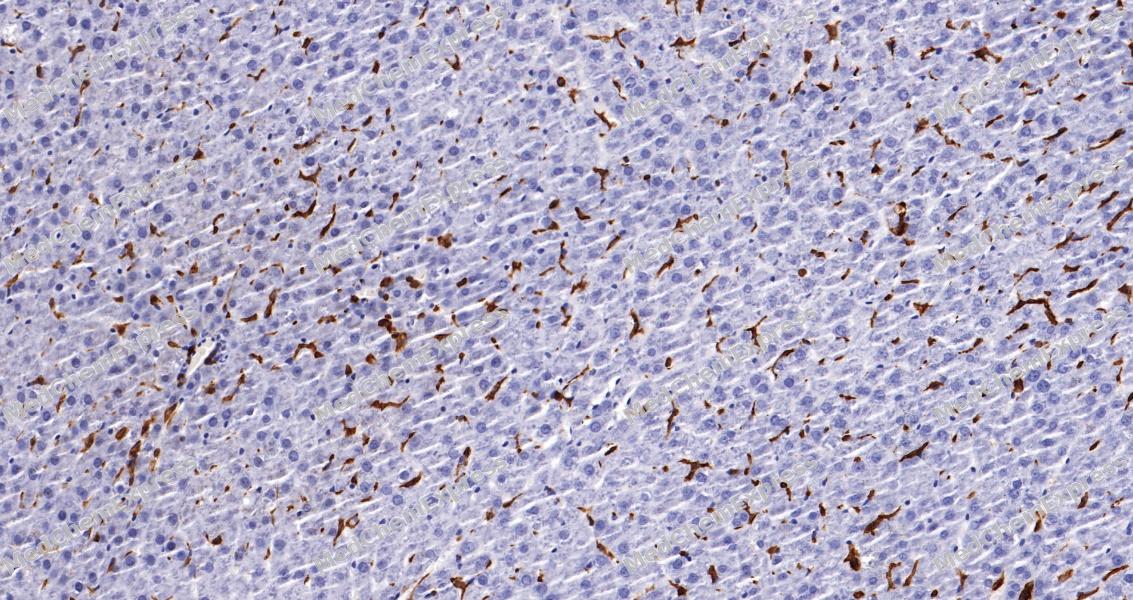 Immunohistochemical analysis of paraffin-embedded rat liver tissue using NOX2 Antibody. The section was pre-treated using heat mediated antigen retrieval with sodium citrate buffer (pH 6.0) for 8 minutes. The tissues were blocked in QuickBlock for 20 minutes at room temperature, washed with ddH2O and PBS, and then probed with the primary antibody at 1/100 dilution in 4℃ overnight. The detection was performed using an HRP conjugated compact polymer system. DAB was used as the chromogen. Tissues were counterstained with hematoxylin and mounted with DPX.
 -
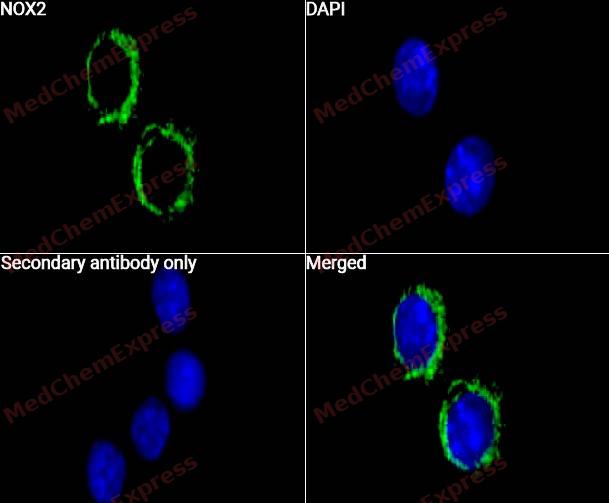 Immunocytochemistry analysis of RAW 264.7 cells labeling NOX2 with NOX2 Antibody (HY-P87174)at 1/50 dilution. Cells were fixed in 4% paraformaldehyde for 15 minutes at room temperature, permeabilized with 0.1% Triton X-100 for 10 minutes at room temperature, then blocked with QuickBlock™ Blocking Buffer for Immunol Staining for 10 min at room temperature. Cells were then incubated with NOX2 Antibody (HY-P87174) at 1/50 dilution in QuickBlock™ Blocking Buffer for Immunol Staining at 4 ℃. Alexa Fluor® 488-conjugated AffiniPure Goat Anti-Rabbit IgG H&L(HY-P8002, Green) was used as the secondary antibody at 1/1,000 dilution. PBS instead of the primary antibody was used as the secondary antibody only control. The Nuclear counterstain was DAPI (Blue).
 -
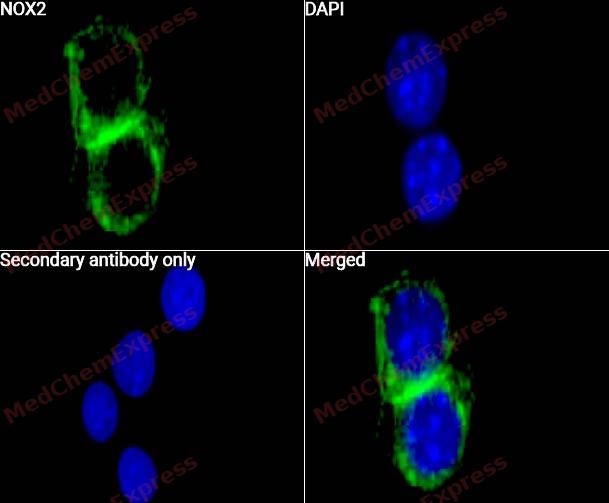 Immunocytochemistry analysis of RAW 264.7 cells labeling NOX2 with NOX2 Antibody (HY-P87174) at 1/100 dilution. Cells were fixed in 4% paraformaldehyde for 15 minutes at room temperature, permeabilized with 0.1% Triton X-100 for 10 minutes at room temperature, then blocked with QuickBlock™ Blocking Buffer for Immunol Staining for 10 min at room temperature. Cells were then incubated with NOX2 Antibody (HY-P87174) at 1/100 dilution in QuickBlock™ Blocking Buffer for Immunol Staining at 4 ℃. Alexa Fluor® 488-conjugated AffiniPure Goat Anti-Rabbit IgG H&L(HY-P8002, Green) was used as the secondary antibody at 1/1,000 dilution. PBS instead of the primary antibody was used as the secondary antibody only control. The Nuclear counterstain was DAPI (Blue).


Background
-
Function
NOX2 (NADPH oxidase 2) is a catalytic member of the NADPH oxidase family that is specialized for reactive oxygen species (ROS) generation and serves as a central component of phagocyte antimicrobial defense and redox signaling pathways[1][2]. NOX2 activation requires assembly of membrane and cytosolic regulatory subunits, enabling superoxide production at the plasma membrane or phagosomal membrane during immune responses[2]. Mechanistically, NOX2-derived ROS contribute not only to pathogen killing but also to immune regulation, antigen presentation, and maintenance of self-tolerance, linking oxidative signaling to both innate and adaptive immunity[3][4]. Dysregulated NOX2 activity has been implicated in multiple inflammatory and oxidative stress-associated disease models, while genetic deficiency of NOX2 causes chronic granulomatous disease characterized by impaired microbial killing and recurrent infections[3][5]. In disease models, NOX2-derived ROS have been associated with inflammation, fibrosis, and cardiovascular pathology, highlighting the broad biological relevance of this isoform[5][6]. Compared with related NOX isoforms, NOX2 is predominantly expressed in phagocytic cells, whereas NOX1, NOX3, NOX4, and NOX5 are primarily expressed in non-phagocytic tissues, indicating distinct physiological functions and cellular contexts[7]. For experimental applications, NOX inhibitors and NOX2-targeted inhibitory peptides such as NOX2ds-tat have been used to investigate NOX2-dependent signaling; however, limited isoform selectivity remains an important consideration when interpreting pharmacological studies[8].
-
Subcellular Localization
Cell membrane
-
Expression
Tissue_Specificity: Detected in neutrophils (at protein level) -
Isoforms & Post-Translational Modification
P04839: 570 amino acids, molecular weight 65336 Da.
-
Subunit
Component of the phagocyte NADPH oxidase core complex/cytochrome b558 complex, composed of CYBB (heavy chain (beta)) and CYBA (light chain (alpha)) (PubMed:3600769, PubMed:36241643, PubMed:36413210)
-
SwissProt ID
-
Synonyms
CYBB; NOX2; Cytochrome b-245 heavy chain; CGD91-phox; Cytochrome b; 558; subunit beta; Cytochrome b558 subunit beta; Heme-binding membrane glycoprotein gp91phox; NADPH oxidase 2Neutrophil cytochrome b 91 kDa polypeptide; Superoxide-generating NADPH oxidase heavy chain subunit; gp91-1; gp91-phox; p22 phagocyte B-cytochrome


Documentation
-
Data Sheet (259 KB)
-
SDS (252 KB)
- English - EN (252 KB)
- Français - FR (252 KB)
- Deutsch - DE (252 KB)
- Norwegian - NO (252 KB)
- Español - ES (252 KB)
- Swedish - SV (252 KB)
- Italian - IT (252 KB)
- Korean - KR (252 KB)
- Portuguese - PT (252 KB)
-
User Guide for Antibodies (1077 KB)
References
[1]. Cipriano A, et al. NADPH Oxidases: From Molecular Mechanisms to Current Inhibitors. J Med Chem. 2023 Sep 14;66(17):11632-11655. [Content Brief]
[2]. Paclet MH, et al. Regulation of Neutrophil NADPH Oxidase, NOX2: A Crucial Effector in Neutrophil Phenotype and Function. Front Cell Dev Biol. 2022 Jul 14;10:945749. [Content Brief]
[3]. Altenhöfer S, et al. Evolution of NADPH Oxidase Inhibitors: Selectivity and Mechanisms for Target Engagement. Antioxid Redox Signal. 2015 Aug 10;23(5):406-27. [Content Brief]

 Powered by Bioz
