2438 Results for "

decrease

" in MedChemExpress (MCE) Product Catalog:
Products (2438)

2438 Results for "decrease" in MCE Product Catalog:

Art. -Nr.: HY-N1428CA
CAS. Nr.: 3522-50-7
Ferric citrate, suitable for cell culture is a natural preservative and food tartness enhancer. Ferric citrate, suitable for cell culture induces apoptosis and cell cycle arrest at G2/M phase and S phase in HaCaT cells. Ferric citrate, suitable for cell culture causes oxidative damage of the liver by means of the decrease of antioxidative enzyme activities. Ferric citrate, suitable for cell culture is also an acidulant, emulsifier, sequestrant and buffering agent widely used across many industries .
loading...
    loading...
Art. -Nr.: HY-N5092
CAS. Nr.: 2445-83-2
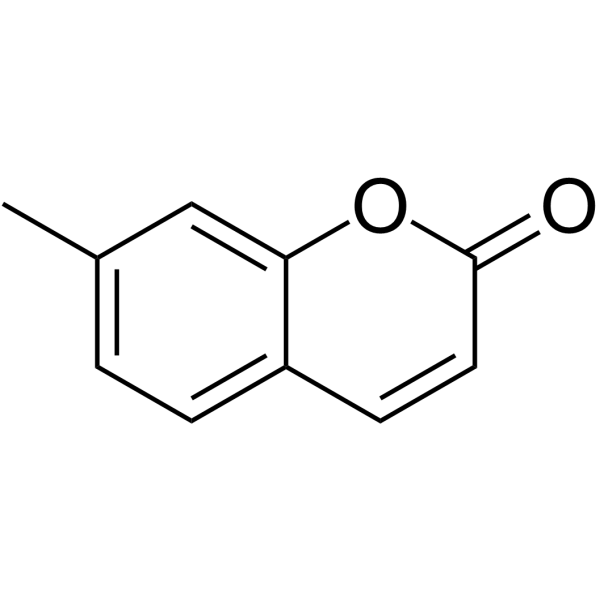
7-Methylcoumarin is a coumarin derivative with potent hepatoprotective and antioxidant properties. 7-Methylcoumarin is a mechanism-based inhibitor for CYP2A6. 7-Methylcoumarin significantly decreases alanine aminotransferase (ALT), aspartate aminotransferase (AST), and serum bilirubin (TB) in rats with CCl4-induced liver damage, whilst restoring total protein (TP) and albumin (TA) levels in serum as well as preventing oxidative stress. 7-Methylcoumarin can decline mitotic activity of A. sativum promeristem .
loading...
    loading...
Art. -Nr.: HY-N7118R
CAS. Nr.: 58207-19-5
Forschungsgebiete:  

Infection Cancer

Clindamycin (hydrochloride monohydrate) (Standard) is the analytical standard of Clindamycin (hydrochloride monohydrate). This product is intended for research and analytical applications. Clindamycin hydrochloride monohydrate is an oral protein synthesis inhibitory agent that has the ability to suppress the expression of virulence factors in Staphylococcus aureus at sub-inhibitory concentrations (sub-MICs). Clindamycin hydrochloride monohydrate resistance results from enzymatic methylation of the antibiotic binding site in the 50S ribosomal subunit (23S rRNA). Clindamycin hydrochloride monohydrate decreases the production of Panton-Valentine leucocidin (PVL), toxic-shock-staphylococcal toxin (TSST-1) or alpha-haemolysin (Hla) .
loading...
    loading...
Art. -Nr.: HY-P10332
Target:  

Inhibitory Antibodies

Forschungsgebiete:  

Others

WL 47 dimer (ligand 1) is a caveolin-1 (CAV-1) ligand with high affinity, selectivity and oligomer dissociation activity. WL 47 dimer simultaneously occupies two binding sites of CAV-1, inducing the dissociation of oligomers. WL 47 dimer has 7500-fold improved affinity compared to its T20 parent ligand and an 80% decrease in sequence length. WL 47 dimer can be used to permit targeted study of CAV-1 function .
loading...
    loading...
Art. -Nr.: HY-P11321
Synonyms: acyl-GIP
Target:  

GLP Receptor

Forschungsgebiete:  

Metabolic Disease

IUB0271 (acyl-GIP) is a glucose-dependent insulinotropic polypeptide receptor (GIPR) agonist with blood-brain barrier permeability. IUB0271 activates the GIPR signaling pathway, inhibits food intake and weight gain, and induces cFos neuron activation in the area postrema. IUB0271 enhances lipid clearance and induces systemic fatty acid oxidation. IUB0271 improves dyslipidemia, reduces atherosclerotic plaque formation and decreases adipocyte volume. IUB0271 can be used in studies related to obesity, dyslipidemia and atherosclerosis .
loading...
    loading...
Art. -Nr.: HY-P11321A
Synonyms: acyl-GIP hydrochloride
Target:  

GLP Receptor

Forschungsgebiete:  

Metabolic Disease

IUB0271 hydrochloride (acyl-GIP hydrochloride) is a glucose-dependent insulinotropic polypeptide receptor (GIPR) agonist with blood-brain barrier permeability. IUB0271 hydrochloride activates the GIPR signaling pathway, inhibits food intake and weight gain, and induces cFos neuron activation in the area postrema. IUB0271 hydrochloride enhances lipid clearance and induces systemic fatty acid oxidation. IUB0271 hydrochloride improves dyslipidemia, reduces atherosclerotic plaque formation and decreases adipocyte volume. IUB0271 hydrochloride can be used in studies related to obesity, dyslipidemia and atherosclerosis .
loading...
    loading...
Art. -Nr.: HY-P2446
CAS. Nr.: 83539-08-6
Synonyms: APTAA-LHRH
Target:  

GnRH Receptor

Forschungsgebiete:  

Endocrinology

ORG 30276 (APTAA-LHRH) is a potent GnRH antagonist that effectively reduces serum LH and FSH levels in male rats. ORG 30276 significantly decreases unoccupied pituitary GnRH receptors, leading to suppressed gonadotropin secretion. ORG 30276 treatment results in a considerable reduction in mRNA levels of gonadotropin beta-subunits in the pituitary gland. ORG 30276's effects on gonadotropin dynamics can be selectively reversed by the replacement of specific sex steroids, with androgens being particularly effective for the FSH beta-subunit mRNA levels.
loading...
    loading...
Art. -Nr.: HY-P2483
CAS. Nr.: 148796-86-5
Target:  

Proteasome Bacterial

Forschungsgebiete:  

Infection Inflammation/Immunology Cancer

Octaarginine is a cell-penetrating peptide and proteasome inhibitor. Octaarginine exhibits mixed-type inhibition against 20S proteasome chymotrypsin-like, caspase-like, and trypsin-like activities, and inhibits 26S proteasome activity with decreased efficiency. Octaarginine induces ubiquitin-conjugated protein accumulation, mediates HSPG-dependent cellular internalization via macropinocytosis, enhances liposomal cargo uptake and gene delivery. Octaarginine can be used for the research of cervix carcinoma, collagen antibody-induced arthritis, and bacterial infections .
loading...
    loading...
Art. -Nr.: HY-P2483B
Target:  

Bacterial Proteasome

Forschungsgebiete:  

Infection Inflammation/Immunology Cancer

Octaarginine acetate is a cell-penetrating peptide and proteasome inhibitor. Octaarginine acetate exhibits mixed-type inhibition against 20S proteasome chymotrypsin-like, caspase-like, and trypsin-like activities, and inhibits 26S proteasome activity with decreased efficiency. Octaarginine acetate induces ubiquitin-conjugated protein accumulation, mediates HSPG-dependent cellular internalization via macropinocytosis, enhances liposomal cargo uptake and gene delivery. Octaarginine acetate can be used for the research of cervix carcinoma, collagen antibody-induced arthritis, and bacterial infections .
loading...
    loading...
Art. -Nr.: HY-P2657
CAS. Nr.: 138067-14-8
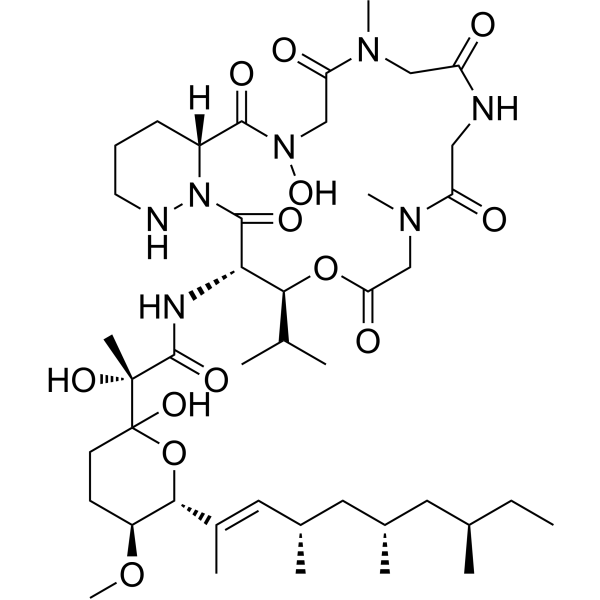
Verucopeptin is a potent HIF-1 (IC50=0.22 μM) inhibitor and decreases the expression of HIF-1 target genes and HIF-1α protein levels. Verucopeptin strongly inhibits v-ATPase activity by directly targeting the v-ATPase ATP6V1G subunit but not ATP1V1B2 or ATP6V1D. Verucopeptin exhibits antitumor activity against multidrug resistance (MDR) cancers and can be used for cancer research.
loading...
    loading...
Art. -Nr.: HY-P2840
CAS. Nr.: 9025-70-1
Target:  

Glycosidase

Forschungsgebiete:  

Metabolic Disease

Dextranase, Trichoderma reesei belongs to glycoside hydrolase family 49. It catalyzes the hydrolysis of α-1,6-glycosidic linkages in dextran via a single-displacement reaction, ultimately releasing shorter isomaltooligosaccharides. Dextranase, Trichoderma reesei reduces the molecular size of dextran, inhibits the formation of insoluble dextran and dental plaque, and decreases the viscosity of dextran-contaminated sugar juice. Dextranase, Trichoderma reesei can be used in relevant research in fields such as chemical production, including beer manufacturing, feed additives, and toothpaste formulations .
loading...
    loading...
Art. -Nr.: HY-P2840A
Target:  

Glycosidase

Forschungsgebiete:  

Metabolic Disease

Dextranase, Penicillium sp. belongs to glycoside hydrolase family 49. It catalyzes the hydrolysis of α-1,6-glycosidic linkages in dextran via a single-displacement reaction, ultimately releasing shorter isomaltooligosaccharides. Dextranase, Penicillium sp. reduces the molecular size of dextran, inhibits the formation of insoluble dextran and dental plaque, and decreases the viscosity of dextran-contaminated sugar juice. Dextranase, Penicillium sp. can be used in relevant research in fields such as chemical production, including beer manufacturing, feed additives, and toothpaste formulations .
loading...
    loading...
Art. -Nr.: HY-P3419A
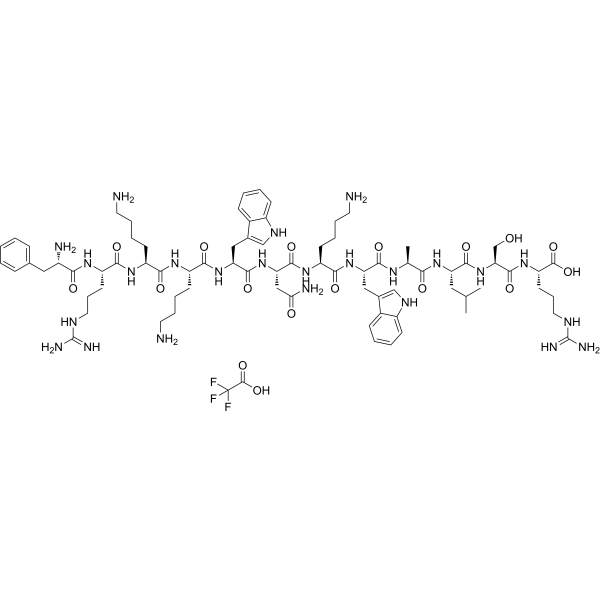
PAMP-12 (unmodified) TFA is an endogenous peptide and is a MrgX2 agonist. PAMP-12 (unmodified) TFA can reduce cAMP accumulation, increase Ca 2+ levels, enhance beta-arrestin recruitment, decrease IP-1, and increases phosphoERK. PAMP-12 (unmodified) TFA can elicit hypotension through inhibiting catecholamine secretion from sympathetic nerve endings and adrenal chromaffin cells. PAMP-12 (unmodified) TFA can be used for the research of hypotension and ulcerative colitis .
loading...
    loading...
Art. -Nr.: HY-P4683
CAS. Nr.: 129520-65-6
Target:  

Vasopressin Receptor

Forschungsgebiete:  

Cardiovascular Disease

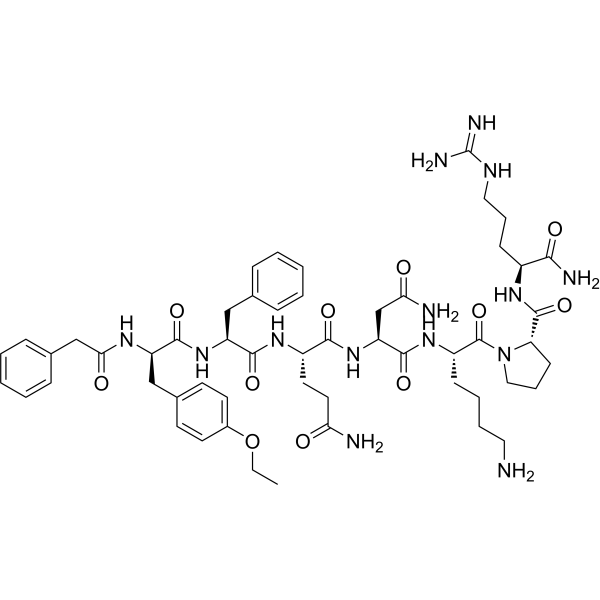
(Phenylac1,D-Tyr(Et)2,Lys6,Arg8,des-Gly9)-Vasopressin is a potent vasopressin V1 receptor (VP V1R) antagonist. (Phenylac1,D-Tyr(Et)2,Lys6,Arg8,des-Gly9)-Vasopressin significantly decreases the mean arterial pressure (MAP) in rats .
loading...
    loading...
Art. -Nr.: HY-P4683A
Target:  

Vasopressin Receptor

Forschungsgebiete:  

Cardiovascular Disease

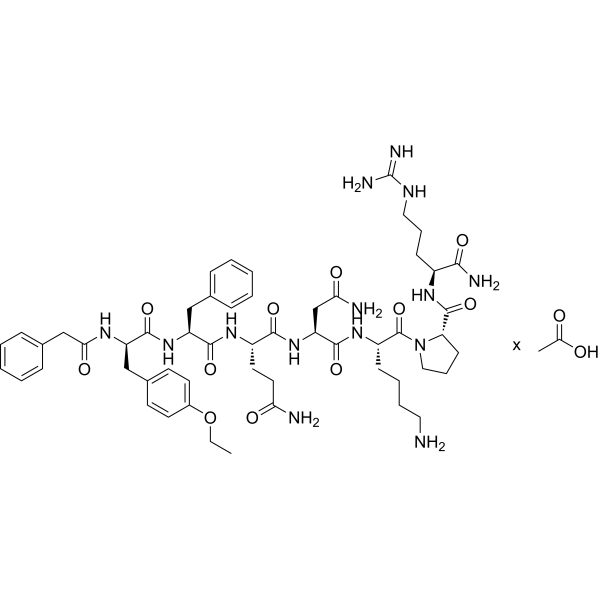
(Phenylac1,D-Tyr(Et)2,Lys6,Arg8,des-Gly9)-Vasopressin is a potent vasopressin V1 receptor (VP V1R) antagonist. (Phenylac1,D-Tyr(Et)2,Lys6,Arg8,des-Gly9)-Vasopressin significantly decreases the mean arterial pressure (MAP) in rats .
loading...
    loading...
Art. -Nr.: HY-P5272
CAS. Nr.: 112844-49-2
Target:  

Bacterial

Forschungsgebiete:  

Inflammation/Immunology

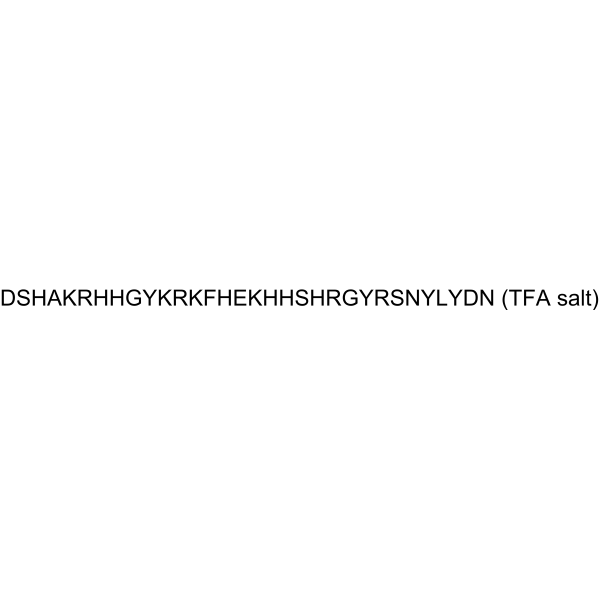
Histatin-3 TFA, a 32 amino acid peptide, possesses powerful antimicrobial properties. Histatin-3 TFA behaves as a substrate for proprotein convertase 1 (PC1), being cleaved by this endoprotease primarily at a site carboxy terminal to the single Arg25 residue (HRGYR decrease SN). Histatin-3 TFA is a moderately potent, reversible and competitive inhibitor of the furin-mediated cleavage of the pentapeptide pGlu-Arg-Thr-Lys-Arg-MCA fluorogenic substrate, with an estimated inhibition constant Ki of 1.98 μM .
loading...
    loading...
Art. -Nr.: HY-P5484
CAS. Nr.: 1629248-30-1
Target:  

Bacterial

Forschungsgebiete:  

Others

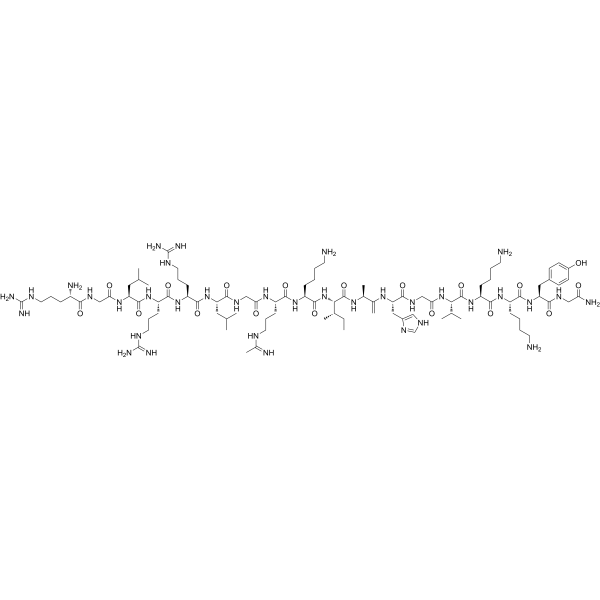
SMAP-18 is a biological active peptide. (SMAP-18 is a 18-amino acid residue peptide amide which is a truncated form of SMAP-29. Sheep myeloid antimicrobial peptide-29 (SMAP-29) displays extremely high antimicrobial activity against Pseudomonas strains, other Gram-negative bacteria, and multidrug-resistant pathogens. SMAP-18 displays much higher cell selectivity as compared to parental SMAP-29 because of its decreased hemolytic activity and retained antimicrobial activity.)
loading...
    loading...
Art. -Nr.: HY-P99149

Target:  

TNF Receptor

Forschungsgebiete:  

Inflammation/Immunology Cancer

Anti-Mouse TNFR2 Antibody (TR75-54.7) is an anti-mouse TNFR2 IgG monoclonal antibody. Anti-Mouse TNFR2 Antibody (TR75-54.7) can reduce white blood cell count (WBC) and decrease the expression of some pro-inflammatory cytokines such as CCL2 and CXCL5. Anti-Mouse TNFR2 Antibody (TR75-54.7) can be used for researches on inflammation conditions and cancer such as breast cancer .
loading...
    loading...
Art. -Nr.: HY-P991517
BI-836858 is a fully human anti-CD33 monoclonal antibody. BI-836858 blocks CD33-mediated inhibitory signaling pathways in MDS bone marrow cells and reduces the expression of IL-10 and TGFβ. BI-836858 decreases the secretion of immunosuppressive cytokines and reactive oxygen species (ROS)-induced genomic instability, restoring bone marrow hematopoietic function. BI-836858 can be used for research on myelodysplastic syndromes (MDS) and AML .
loading...
    loading...
Art. -Nr.: HY-W127841
CAS. Nr.: 121633-50-9
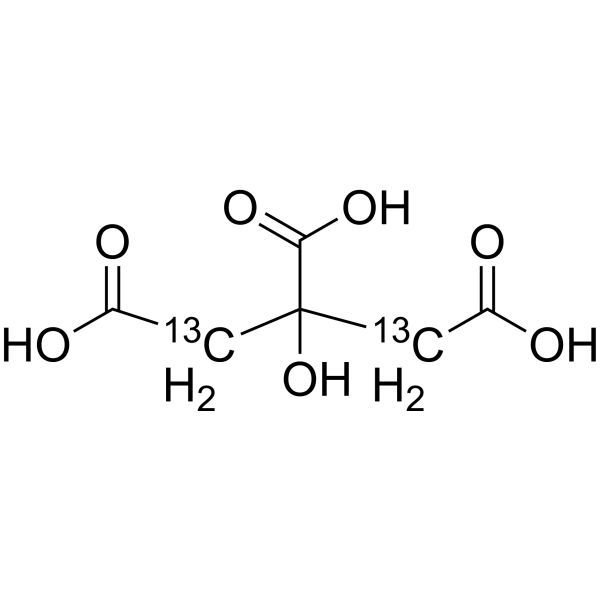
Citric acid-2,4- 13C2 is the 13C-labeled Citric acid (HY-N1428). Citric acid is a natural preservative and food tartness enhancer. Citric acid induces apoptosis and cell cycle arrest at G2/M phase and S phase in HaCaT cells. Citric acid cause oxidative damage of the liver by means of the decrease of antioxidative enzyme activities. Citric acid is also an acidulant, emulsifier, sequestrant and buffering agent widely used across many industries .
loading...
    loading...

