



Tesnatilimab

Based on 1 Customer Validation
Tesnatilimab (JNJ-64304500) is a human IgG4 monoclonal antibody targeting NKG2D, with a KD value of 9.2 pM. Tesnatilimab blocks the binding of ligands to the NKG2D receptor, thereby inhibiting downstream proinflammatory cytokine, cytotoxic mediator signaling pathways and proinflammatory immune responses. Tesnatilimab is applicable to research related to Crohn's disease.
For research use only. We do not sell to patients.
- Purity : 99.80%
- CAS No.: 2242758-08-1
- Molecular Weight:143.9 kDa
-
Storage:
Please store the product under the recommended conditions in the Certificate of Analysis.


To place orders, for customer services and technical support, please contact: MedChemExpress USA
Tel: 609-228-6898 E-mail: [email protected] [email protected]


-
 Biological Activity
-
Chemical Information
- Protocols
- Purity & Documentation
- References
-
 Help & FAQs





Biological Activity
Description
Isotype
Human IgG4 kappa
Recommend Isotype Controls
Species Reactivity
Human
IC50 & Target
NKG2D/CD314
In Vitro
Tesnatilimab (2 weeks) maintains nearly complete NKG2D receptor occupancy (≥ 95%) on CD8+ T cells and NK cells in peripheral blood[1].
MedChemExpress (MCE) has not independently confirmed the accuracy of these methods. They are for reference only. Further protocols information, click here.
Gene ID
Accession
Conjugated
Unconjugated
Reconsititution
The product can be reconstituted/diluted with sterile PBS or saline.
Format
-
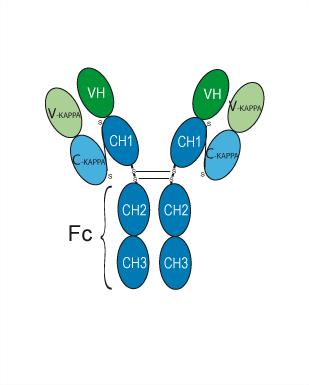
Human IgG4 kappa
Application
ELISA, FACS, Functional assay
Verified Bioactivity
-
 Flow Cytometry analysis of Ramos cells labelling CD314 (red) with Tesnatilimab (HY-P99389). Cells were fixed with 4% paraformaldehyde and permeabilised with 90% methanol. Then cells were stained with the primary antibody at 1/200 dilution for an hour at 4℃. Goat Anti-Human IgG H&L (AF488) (HY-P83776) was used as the secondary antibody at 1/1,000 dilution for 30 minutes at 4℃. Human IgG4 kappa (HY-P99003, blue) was used as the isotype control, cells without incubation with primary antibody were used as the unlabeled control (black).
 -
 Immobilized NKG2D/CD314 Protein, Human can bind Tesnatilimab. The EC50 for this effect is 16.41 ng/mL.


Chemical Information
-
CAS No. 2242758-08-1
-
Appearance Liquid
-
Molecular Weight 143.9 kDa
-
Color Colorless to light yellow
-
SMILES
[Tesnatilimab]
-
Synonyms
JNJ-64304500; IPH-2301; NN-8555
-
Shipping
Shipping with dry ice.
-
Formulation
Please refer to the lot-specific COA for specific buffer information.
-
Storage
Please store the product under the recommended conditions in the Certificate of Analysis.

Protocols
-
Research Protocol for Inflammation-related Diseases
The NLRP3 inflammasome is a cytosolic innate immune signaling platform that integrates priming signals and danger-signal activation to promote caspase-1 activation, maturation of IL-1β and IL-18, and gasdermin D-mediated pyroptotic cell death. The core experimental logic is to determine whether inflammatory disease phenotypes are driven by increased NLRP3 expression, ASC-containing inflammasome assembly, caspase-1 cleavage, GSDMD cleavage, and extracellular release of IL-1β/IL-18 rather than by nonspecific cell injury alone. The pathway is strongly linked to inflammation-related disease phenotypes because monosodium urate crystals activate NALP3/NLRP3 inflammasome signaling in gout-like crystal inflammation, cholesterol crystals activate NLRP3 inflammasomes in atherogenesis models, and DSS-induced intestinal inflammation has been reported to involve NLRP3 inflammasome activity. However, experimental colitis studies also show context-dependent protective effects of NLRP3 inflammasome co
-
Cell Viability Determination by MTT Colorimetric Assay
The following protocol uses the MTT colorimetric assay as a classic literature-established method for assessing cell viability/metabolic activity in cultured mammalian cells. MTT[3-(4,5-dimethylthiazol-2-yl)-2,5-diphenyltetrazolium bromide] is reduced by metabolically active cells to a colored formazan product; the amount of formazan is quantified spectrophotometrically and provides an indirect measure of metabolically active viable cells. Importantly, MTT reduction reflects cellular oxidoreductase/metabolic activity rather than an absolute direct count of living cells, so changes in cellular metabolism can alter the signal independently of cell number.


Purity & Documentation
-
Data Sheet (257 KB)
-
SDS (252 KB)
- English - EN (252 KB)
- Français - FR (252 KB)
- Deutsch - DE (252 KB)
- Norwegian - NO (252 KB)
- Español - ES (252 KB)
- Swedish - SV (252 KB)
- Italian - IT (252 KB)
- Korean - KR (252 KB)
- Portuguese - PT (252 KB)
-
Inhibitory Antibodies User Guide (603 KB)
References
[1]. Zhou J, et al. Model-Based Investigation of Inadequate Efficacy of Tesnatilimab, an Anti-Natural Killer Group 2 Member D Monoclonal Antibody, in Moderately to Severely Active Crohn Disease. J Clin Pharmacol. 2023;63(8):928-942. [Content Brief]
[2]. Allez M, et al. A Phase 2b, Randomised, Double-blind, Placebo-controlled, Parallel-arm, Multicenter Study Evaluating the Safety and Efficacy of Tesnatilimab in Patients with Moderately to Severely Active Crohn's Disease. J Crohns Colitis. 2023;17(8):1235-1251. [Content Brief]

Calculators
Concentration (start) × Volume (start) = Concentration (final) × Volume (final)


Tesnatilimab Related Classifications
HY-P99389 Related Classifications
 Powered by Bioz
Keywords
- Tesnatilimab
- 2242758-08-1
- JNJ-64304500
- IPH-2301
- NN-8555
- JNJ64304500
- JNJ 64304500
- IPH2301
- IPH 2301
- IPH-2301
- NN8555
- NN 8555
- NN-8555
- C-type Lectin-like Receptors (CTLRs)
- natural killer group 2 member D
- cytotoxic mediator signaling
- clinical remission
- NKG2D receptor
- endoscopic response
- proinflammatory cytokine
- proinflammatory immune responses
- Crohn disease
- MICB single nucleotide polymorphism
- Crohn's Disease Activity Index
- Inhibitor
- inhibitor
- inhibit