



Azelastine hydrochloride (Standard)
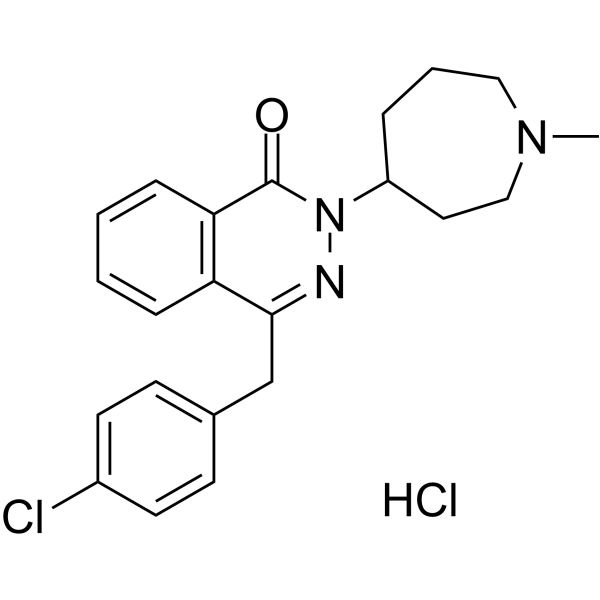
Azelastine (hydrochloride) (Standard) is the analytical standard of Azelastine (hydrochloride). This product is intended for research and analytical applications. Azelastine hydrochloridem, an antihistamine, is a potent and selective histamine 1 (H1) antagonist. Azelastine hydrochloride can be used for the research of allergic rhinitis, asthma, diabetic hyperlipidemic and SARS-CoV-2.
For research use only. We do not sell to patients.
- Purity: 95%
- CAS No.: 79307-93-0
- Formula: C22H25Cl2N3O
- Molecular Weight:418.36
-
Storage:
Please store the product under the recommended conditions in the Certificate of Analysis.


To place orders, for customer services and technical support, please contact: MedChemExpress USA
Tel: 609-228-6898 E-mail: [email protected] [email protected]


-
 Product Information
-
Chemical Information
- Purity & Documentation
-
 Help & FAQs


-
HY-B0462
Azelastine hydrochloride -
HY-B0539
Desloratadine -
HY-17043
Loratadine -
HY-B0781
Promethazine hydrochloride -

HY-17043R
Loratadine (Standard) -
HY-17042A
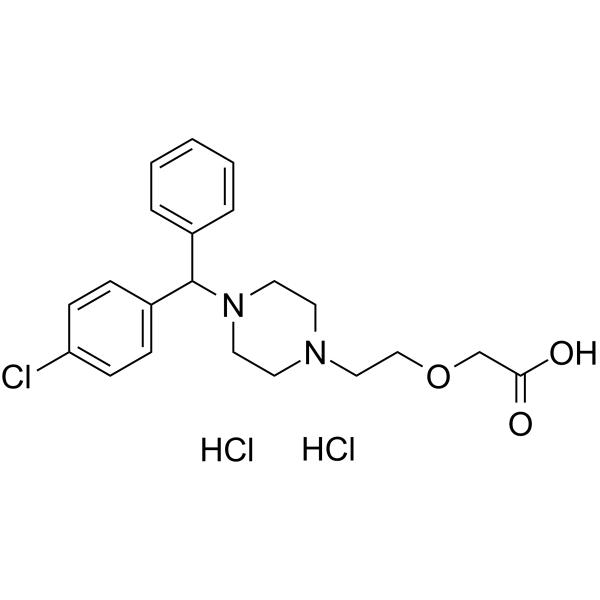
Cetirizine dihydrochloride -
HY-B0298A
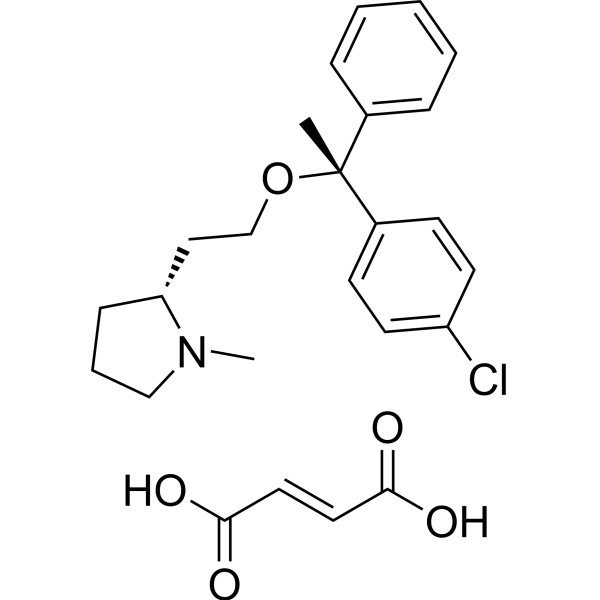
Clemastine fumarate -
HY-B0538A
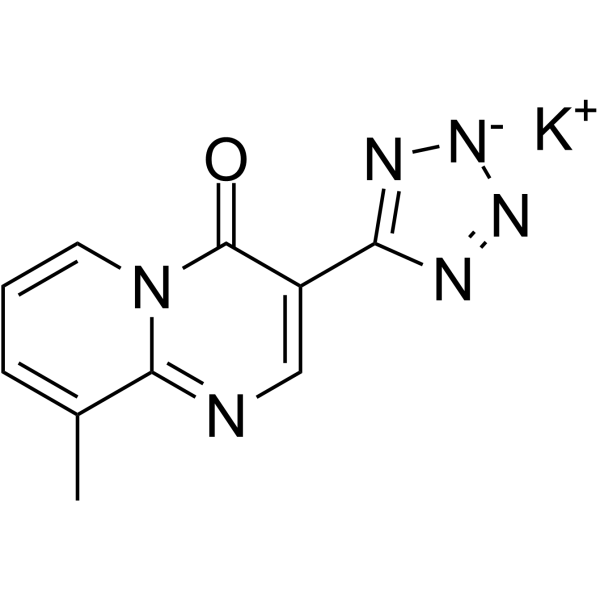
Pemirolast potassium -
HY-12752A
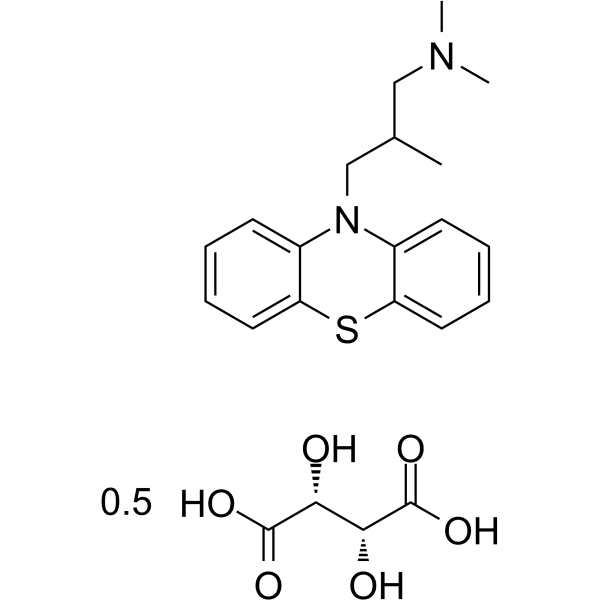
Alimemazine hemitartrate -
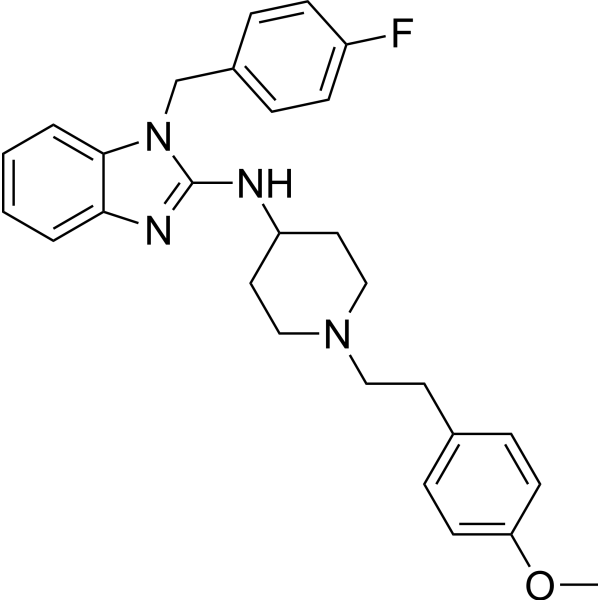
HY-12532
Astemizole -
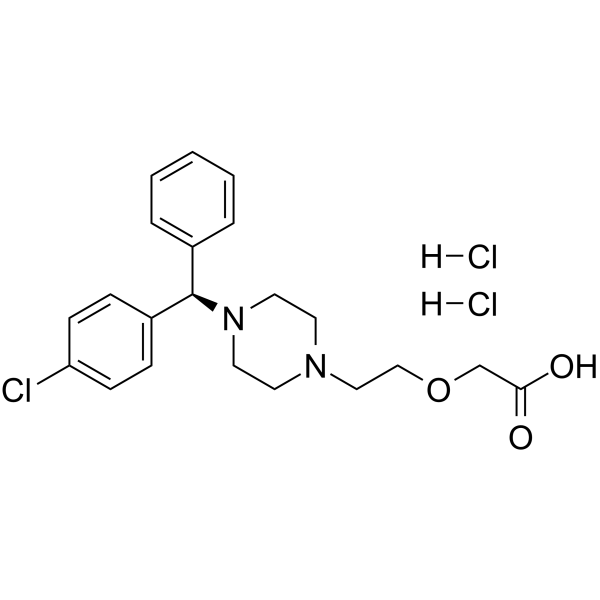
HY-W010841
Levocetirizine dihydrochloride -
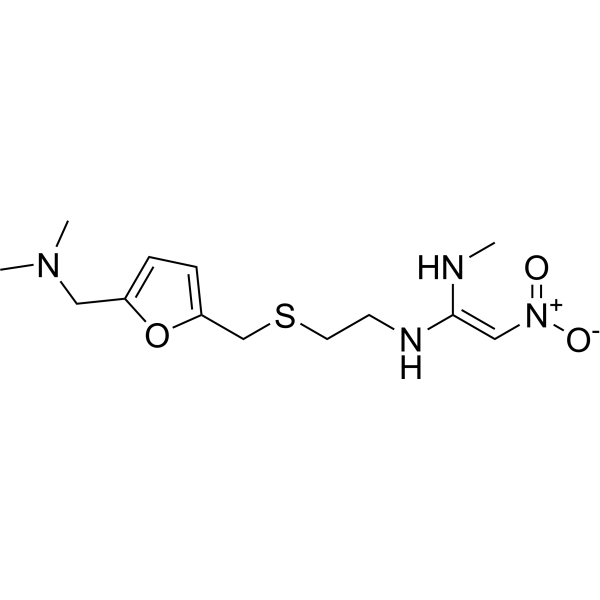
HY-B0693
Ranitidine


Product Information
Information
Application
The compound is the grade of analytical standard, which is the reference standard supplied assay. It is commonly used in qualitative, quantitative and methodological research experiments in HPLC, GC and MS.


Chemical Information
-
CAS No. 79307-93-0
-
Molecular Weight 418.36
-
Formula C22H25Cl2N3O
-
SMILES
O=C1N(C2CCN(C)CCC2)N=C(CC3=CC=C(Cl)C=C3)C4=C1C=CC=C4.Cl
-
Shipping
Room temperature in continental US; may vary elsewhere.
-
Storage
Please store the product under the recommended conditions in the Certificate of Analysis.


Purity & Documentation
References
[1]. Craig La Force. Review of the pharmacology, clinical efficacy, and safety of azelastine hydrochloridel. Expert Rev Clin Immunol. 2005 Jul;1(2):191-201. [Content Brief]
[2]. Mohamed M Elseweidy, et al. Azelastine a potent antihistamine agent, as hypolipidemic and modulator for aortic calcification in diabetic hyperlipidemic rats model. Arch Physiol Biochem. 2020 Jul 2;1-8. [Content Brief]
[3]. Carlos D. Zappia, et al. Azelastine potentiates antiasthmatic dexamethasone effect on a murine asthma model. Pharmacol Res Perspect. 2019 Dec; 7(6): e00531. [Content Brief]
[4]. Li Yang, et al. Identification of SARS-CoV-2 entry inhibitors among already approved drugs. Acta Pharmacol Sin. 2020 Oct 28 : 1–7. [Content Brief]
[5]. Shao-Cheng Liu, et al. Effect of budesonide and azelastine on histamine signaling regulation in human nasal epithelial cells. Eur Arch Otorhinolaryngol. 2017 Feb;274(2):845-853. [Content Brief]

Calculators
Concentration (start) × Volume (start) = Concentration (final) × Volume (final)


Azelastine hydrochloride (Standard) Related Classifications
HY-B0462R Related Classifications
 Powered by Bioz