



BIIL-260 hydrochloride
Based on 1 publication(s) in Google Scholar
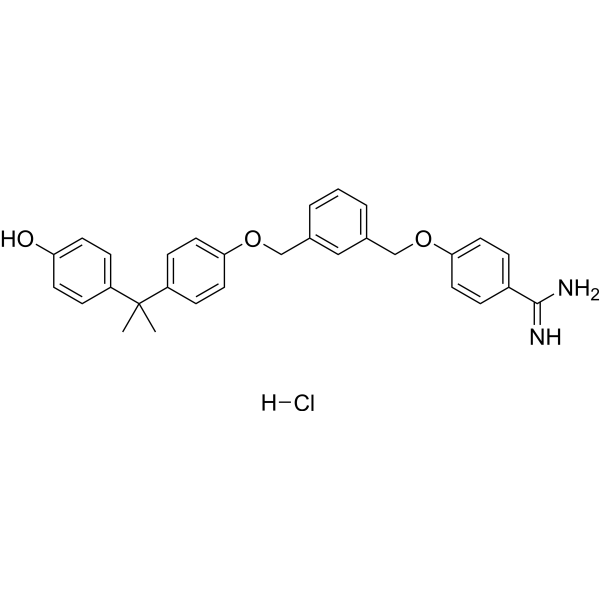
BIIL-260 hydrochloride is a potent and long-acting orally active leukotriene B(4) receptor LTB4 antagonist, with anti-inflammatory activity. BIIL-260 hydrochloride interacts with the LTB4 receptor in a saturable, reversible, and competitive manner, has high affinity to the LTB4 receptor on isolated human neutrophil cell membranes with Ki values of 1.7 nM.
For research use only. We do not sell to patients.
- Purity : 99.44%
- CAS No.: 192581-24-1
- Formula: C30H31ClN2O3
- Molecular Weight:503.03
-
Storage:
4°C, sealed storage, away from moisture
* In solvent : -80°C, 6 months; -20°C, 1 month (sealed storage, away from moisture)

To place orders, for customer services and technical support, please contact: MedChemExpress USA
Tel: 609-228-6898 E-mail: [email protected] [email protected]


-
 Biological Activity
-
Chemical Information
-
Solvent & Solubility
- Protocols
- Purity & Documentation
- References
-
 Help & FAQs


-
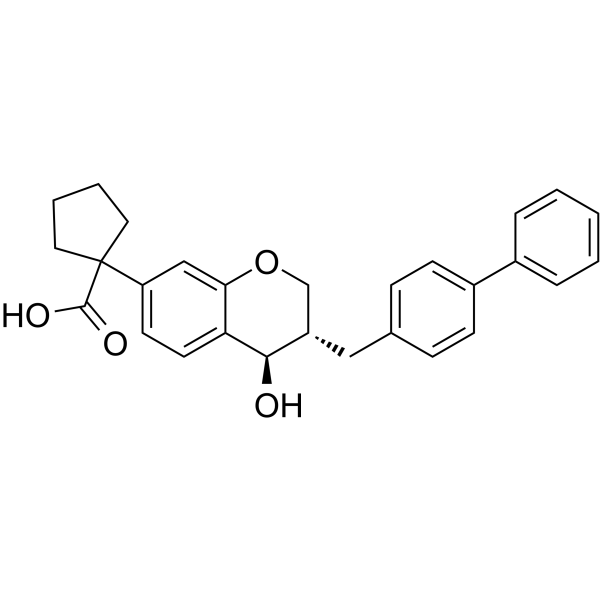
HY-19193
CP-105696LTB4 Receptor Antagonist -
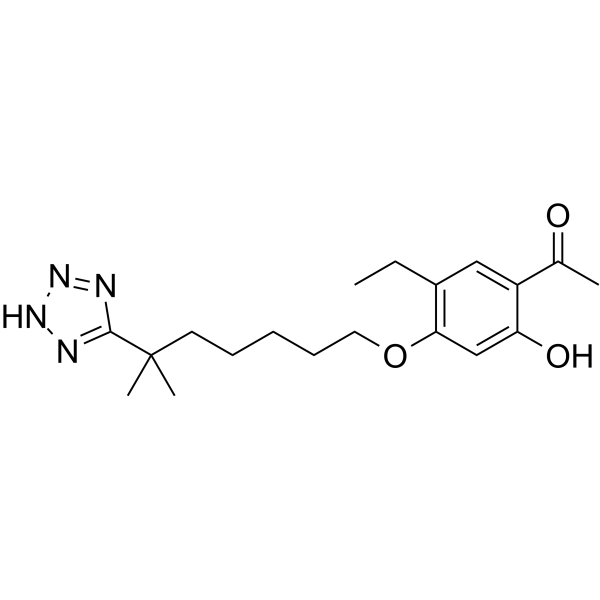
HY-15744
LY255283LTB4 Receptor Antagonist -
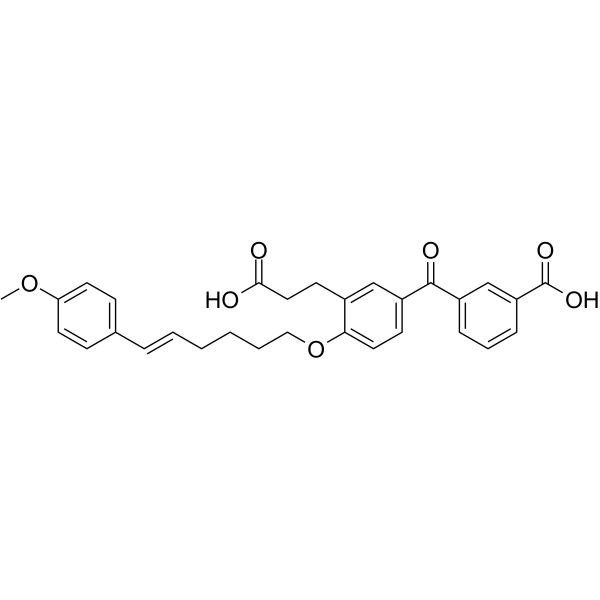
HY-112737
LY223982Leukotriene B4R Inhbitor -
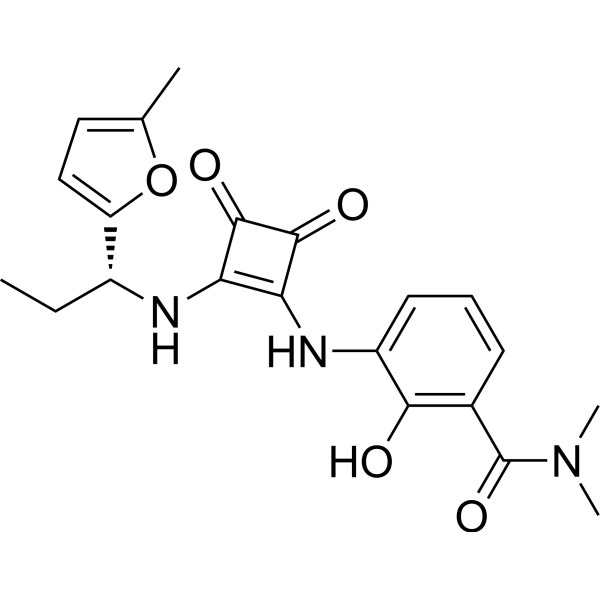
HY-10198
NavarixinCXCR1/2 Antagonist -
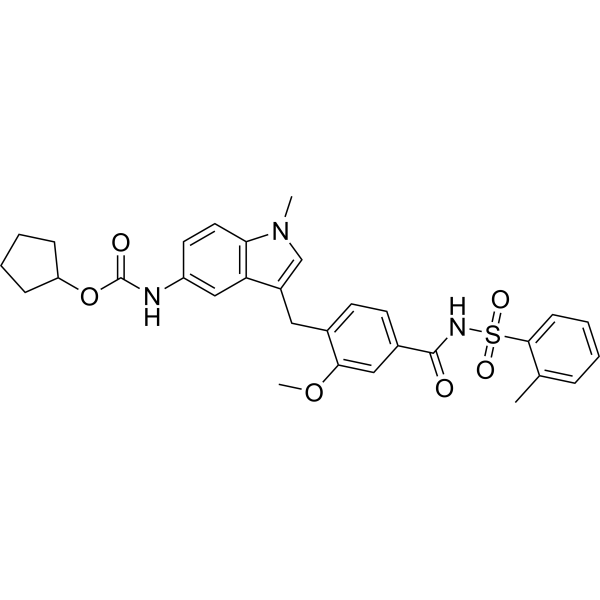
HY-17492
ZafirlukastLeukotriene Receptor Antagonist -
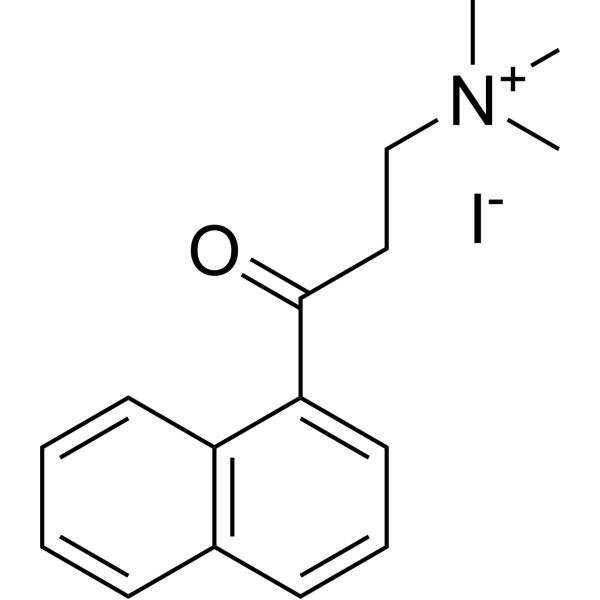
HY-138097
α-NETAChA Inhibitor -
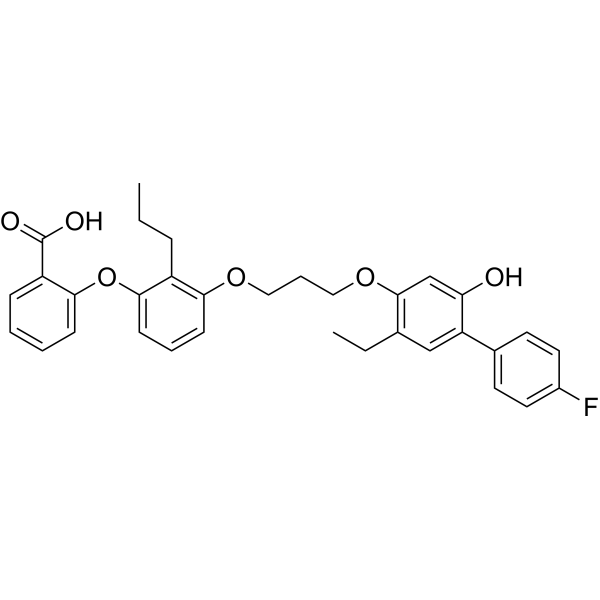
HY-13628
EtalocibLTB4 Receptor Antagonist -

HY-17492R
Zafirlukast (Standard)Leukotriene Receptor Antagonist -
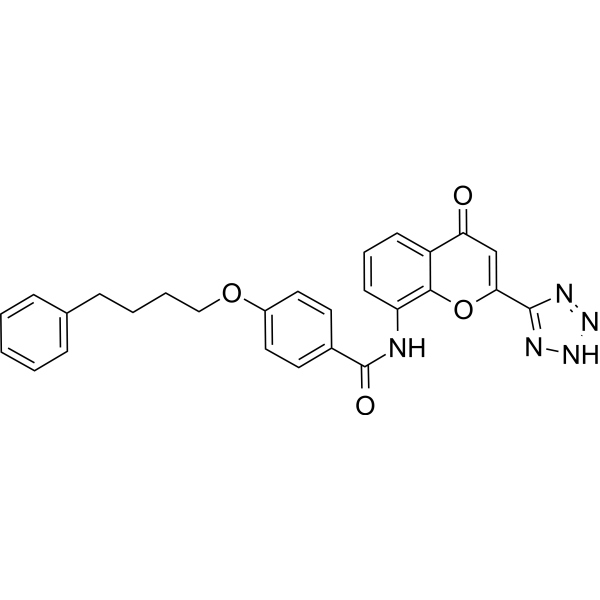
HY-B0290
PranlukastEndogenous Metabolite -
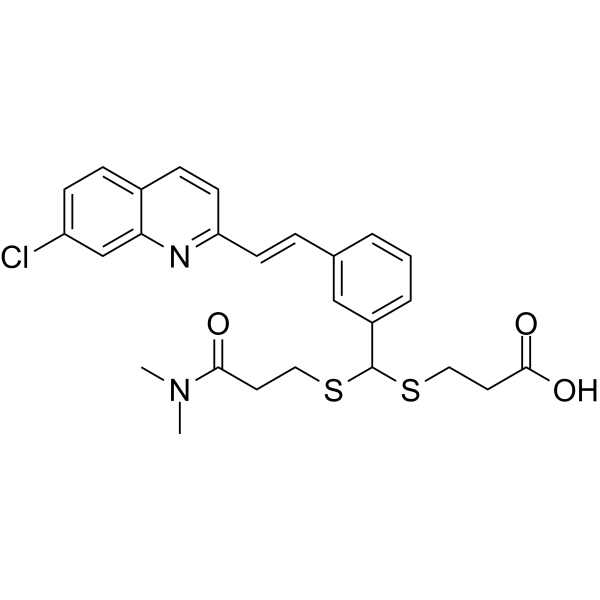
HY-19989
MK-571ABCC1/MRP4 Inhibitor -
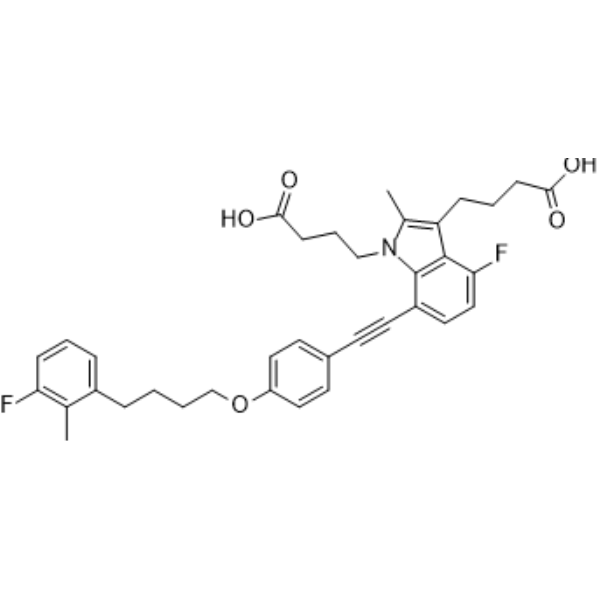
HY-16780
GemilukastCysLT1/CysLT2 Inhibitor -
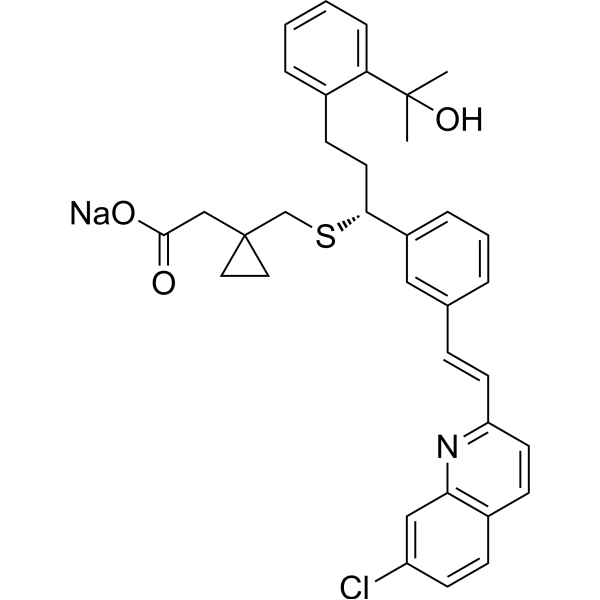
HY-13315
Montelukast sodiumCysltr1 Antagonist
Publications Citing Use of MedChemExpress (MCE) BIIL-260 hydrochloride
MoreAll Leukotriene Receptor Isoforms
More

Biological Activity
Description
IC50 & Target
|
LTB4 1.7 nM (Ki) |
In Vitro
BIIL-260 hydrochloride potently inhibits LTB4-induced intracellular Ca2+ release in human neutrophils with IC50 value of 0.82 nM
MedChemExpress (MCE) has not independently confirmed the accuracy of these methods. They are for reference only. Further protocols information, click here.


Chemical Information
-
CAS No. 192581-24-1
-
Appearance Solid
-
Molecular Weight 503.03
-
Formula C30H31ClN2O3
-
Color White to off-white
-
SMILES
N=C(C1=CC=C(OCC2=CC=CC(COC3=CC=C(C(C)(C4=CC=C(O)C=C4)C)C=C3)=C2)C=C1)N.[H]Cl
-
Shipping
Room temperature in continental US; may vary elsewhere.
-
Storage
4°C, sealed storage, away from moisture
* In solvent : -80°C, 6 months; -20°C, 1 month (sealed storage, away from moisture)


Publications (1)
-
Journal Impact Factor
-
Most Recent
-
J Leukoc Biol
Caging giants: Characterizing the molecular mechanisms of neutrophil swarming against Candida albicans hyphae. [Abstract]2025 Jul 9;117(7):qiaf082. PMID: 40476443


Solvent & Solubility
In Vitro:
DMSO : 125 mg/mL (248.49 mM; Need ultrasonic; Hygroscopic DMSO has a significant impact on the solubility of product, please use newly opened DMSO)
Please refer to the solubility information to select the appropriate solvent. Once prepared, please aliquot and store the solution to prevent product inactivation from repeated freeze-thaw cycles.
Storage method and period of stock solution: -80°C, 6 months; -20°C, 1 month (sealed storage, away from moisture). When stored at -80°C, please use it within 6 months. When stored at -20°C, please use it within 1 month.
Please refer to the solubility information to select the appropriate solvent. Once prepared, please aliquot and store the solution to prevent product inactivation from repeated freeze-thaw cycles.
Storage method and period of stock solution: -80°C, 6 months; -20°C, 1 month (sealed storage, away from moisture). When stored at -80°C, please use it within 6 months. When stored at -20°C, please use it within 1 month.
Concentration (start) × Volume (start) = Concentration (final) × Volume (final)

Protocols
-
Cotton Pellet Granuloma
Cotton pellet granuloma is a classical in vivo chronic inflammation model used to evaluate the anti-inflammatory potential of test substances by measuring their ability to inhibit granuloma tissue formation around an implanted foreign body (cotton pellet) in rodents. The method is based on the biological response to a sterile implanted material, which induces proliferative phase inflammation characterized by fibroblast proliferation and collagen-rich granuloma formation, and the final readout reflects the extent of chronic inflammatory tissue growth surrounding the pellet. In multiple preclinical pharmacological evaluations, inhibition of cotton pellet-induced granuloma formation has been used as an indicator of anti-inflammatory activity in both synthetic and natural product screening contexts.
-
Carrageenan-Induced Paw Edema
Carrageenan-induced paw edema is an acute inflammation model in which intraplantar injection of carrageenan induces localized inflammatory swelling characterized by vascular permeability, leukocyte infiltration, and production of inflammatory mediators such as prostaglandins and cytokines, making it widely used to evaluate anti-inflammatory agents in vivo. The resulting paw volume or thickness increase is quantified over time as a direct readout of inflammatory intensity and drug efficacy, typically reflecting cyclooxygenase-mediated prostaglandin-driven edema formation and immune cell recruitment in peripheral tissue[20].
-
Research Protocol for Inflammation-related Diseases
The NLRP3 inflammasome is a cytosolic innate immune signaling platform that integrates priming signals and danger-signal activation to promote caspase-1 activation, maturation of IL-1β and IL-18, and gasdermin D-mediated pyroptotic cell death. The core experimental logic is to determine whether inflammatory disease phenotypes are driven by increased NLRP3 expression, ASC-containing inflammasome assembly, caspase-1 cleavage, GSDMD cleavage, and extracellular release of IL-1β/IL-18 rather than by nonspecific cell injury alone. The pathway is strongly linked to inflammation-related disease phenotypes because monosodium urate crystals activate NALP3/NLRP3 inflammasome signaling in gout-like crystal inflammation, cholesterol crystals activate NLRP3 inflammasomes in atherogenesis models, and DSS-induced intestinal inflammation has been reported to involve NLRP3 inflammasome activity. However, experimental colitis studies also show context-dependent protective effects of NLRP3 inflammasome co


Purity & Documentation
-
Data Sheet (269 KB)
-
SDS (252 KB)
- English - EN (252 KB)
- Français - FR (252 KB)
- Deutsch - DE (252 KB)
- Norwegian - NO (252 KB)
- Español - ES (252 KB)
- Swedish - SV (252 KB)
- Italian - IT (252 KB)
- Korean - KR (252 KB)
- Portuguese - PT (252 KB)
-
Handling Instructions (2659 KB)
References


Complete Stock Solution Preparation Table
Please refer to the solubility information to select the appropriate solvent. Once prepared, please aliquot and store the solution to prevent product inactivation from repeated freeze-thaw cycles.
Storage method and period of stock solution: -80°C, 6 months; -20°C, 1 month (sealed storage, away from moisture). When stored at -80°C, please use it within 6 months. When stored at -20°C, please use it within 1 month.
| Optional Solvent | Concentration Solvent Mass | 1 mg | 5 mg | 10 mg | 25 mg |
|---|---|---|---|---|---|
| DMSO | 1 mM | 1.9880 mL | 9.9398 mL | 19.8795 mL | 49.6988 mL |
| 5 mM | 0.3976 mL | 1.9880 mL | 3.9759 mL | 9.9398 mL | |
| 10 mM | 0.1988 mL | 0.9940 mL | 1.9880 mL | 4.9699 mL | |
| 15 mM | 0.1325 mL | 0.6627 mL | 1.3253 mL | 3.3133 mL | |
| 20 mM | 0.0994 mL | 0.4970 mL | 0.9940 mL | 2.4849 mL | |
| 25 mM | 0.0795 mL | 0.3976 mL | 0.7952 mL | 1.9880 mL | |
| 30 mM | 0.0663 mL | 0.3313 mL | 0.6627 mL | 1.6566 mL | |
| 40 mM | 0.0497 mL | 0.2485 mL | 0.4970 mL | 1.2425 mL | |
| 50 mM | 0.0398 mL | 0.1988 mL | 0.3976 mL | 0.9940 mL | |
| 60 mM | 0.0331 mL | 0.1657 mL | 0.3313 mL | 0.8283 mL | |
| 80 mM | 0.0248 mL | 0.1242 mL | 0.2485 mL | 0.6212 mL | |
| 100 mM | 0.0199 mL | 0.0994 mL | 0.1988 mL | 0.4970 mL |


BIIL-260 hydrochloride Related Classifications
HY-114641A Related Classifications
 Powered by Bioz