



BM213
Based on 3 publication(s) in Google Scholar
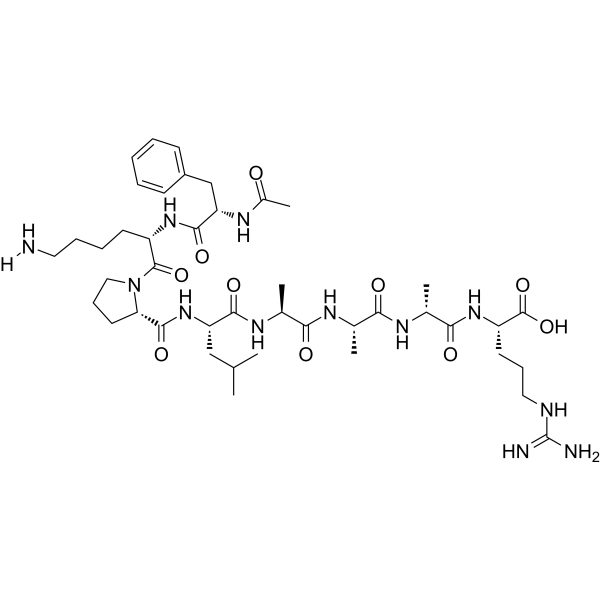
BM213 is a selective C5aR agonist, with an EC50 of 59 nM. BM213 specifically activates the C5a-C5aR1 axis, which in turn promotes neutrophil extracellular trap (NET) formation and exacerbates inflammatory responses. BM213 significantly induces ventricular dilationin, promotes myocardial ROS production, and induces cardiomyocyte apoptosis in rats. BM213 can be used for the study of myocardial ischemia/reperfusion (I/R) injury.
For research use only. We do not sell to patients.
- Purity : 99.62%
- CAS No.: 2891606-02-1
- Formula: C43H70N12O10
- Molecular Weight:915.09
-
Storage:
-20°C, protect from light, stored under nitrogen
* In solvent : -80°C, 6 months; -20°C, 1 month (protect from light, stored under nitrogen)

To place orders, for customer services and technical support, please contact: MedChemExpress USA
Tel: 609-228-6898 E-mail: [email protected] [email protected]


-
 Biological Activity
-
Chemical Information
-
Solvent & Solubility
- Protocols
- Purity & Documentation
- References
-
 Help & FAQs


Publications Citing Use of MedChemExpress (MCE) BM213
More

Biological Activity
Description
IC50 & Target
[1]|
C5aR 59 nM (EC50) |
In Vivo
MedChemExpress (MCE) has not independently confirmed the accuracy of these methods. They are for reference only.
-
Animal Model:Male Sprague-Dawley (SD) rats (200±20 g)[1]
-
Dosage:1 mg/kg
-
Administration:i.p., once daily in the evening, 3 days
-
Result:Induced significant ventricular dilation.
Elevated serum levels of CK-MB, cTnT and IL-1β.
Up-regulated plasma concentrations of C5a, C5b-9, CCL3, CXCL1 and NETs.
Increased myocardial mRNA expression of C5ar1, Mpo and Ne.
Enhanced myocardial protein levels of C5aR1, MPO, NE and CitH3.
Promoted myocardial ROS production.
Induced cardiomyocyte apoptosis.


Chemical Information
-
CAS No. 2891606-02-1
-
Appearance Solid
-
Molecular Weight 915.09
-
Formula C43H70N12O10
-
Color White to off-white
-
Sequence
Ac-Phe-Lys-Pro-Leu-Ala-Ala-Ala-Arg
-
Sequence Shortening
Ac-FKPLAAAR
-
Shipping
Room temperature in continental US; may vary elsewhere.
-
Storage
-20°C, protect from light, stored under nitrogen
* In solvent : -80°C, 6 months; -20°C, 1 month (protect from light, stored under nitrogen)


Publications (3)
-
Journal Impact Factor
-
Most Recent
-
Eur J Pharmacol
Ursolic acid ameliorates doxorubicin-induced cardiotoxicity by inhibiting DRP1-mediated excessive mitochondrial fission and oxidative stress. [Abstract]2026 Jan 20:1012:178482. PMID: 41412262 -
J Neurochem
Complement C3a and C5a Receptors Are Presented in Mouse Sciatic and Human Sural Nerves and Selectively Modulate the Neuronal Function of Large-Caliber Fibers in Mice. [Abstract]2025 Jun;169(6):e70129. PMID: 40539483 -
Med Microbiol Immunol
Exploration of compounds to inhibit the Panton-Valentine leukocidin of Staphylococcus aureus. [Abstract]2024 Sep 19;213(1):19. PMID: 39297970


Solvent & Solubility
In Vitro:
H2O : 50 mg/mL (54.64 mM; Need ultrasonic)
Please refer to the solubility information to select the appropriate solvent. Once prepared, please aliquot and store the solution to prevent product inactivation from repeated freeze-thaw cycles.
Storage method and period of stock solution: -80°C, 6 months; -20°C, 1 month (protect from light, stored under nitrogen). When stored at -80°C, please use it within 6 months. When stored at -20°C, please use it within 1 month.
* Note: If you choose water as the stock solution, please dilute it to the working solution, then filter and sterilize it with a 0.22 μm filter before use.
Please refer to the solubility information to select the appropriate solvent. Once prepared, please aliquot and store the solution to prevent product inactivation from repeated freeze-thaw cycles.
Storage method and period of stock solution: -80°C, 6 months; -20°C, 1 month (protect from light, stored under nitrogen). When stored at -80°C, please use it within 6 months. When stored at -20°C, please use it within 1 month.
* Note: If you choose water as the stock solution, please dilute it to the working solution, then filter and sterilize it with a 0.22 μm filter before use.
Concentration (start) × Volume (start) = Concentration (final) × Volume (final)
In Vivo:
For the following dissolution methods, please prepare the working solution directly:
It is recommended to prepare fresh solutions and use them promptly within a short period of time.
The percentages shown for the solvents indicate their volumetric ratio in the final prepared solution. If precipitation or phase separation occurs during preparation, heat and/or sonication can be used to aid dissolution.
Add each solvent one by one: PBS
Solubility: 100 mg/mL (109.28 mM); Clear solution; Need ultrasonic

Protocols
-
Apoptosis
Apoptosis, also called programmed cell death, is generally characterized by distinct morphological characteristics.
-
TUNEL staining for apoptotic DNA fragmentation
TUNEL staining detects DNA strand breaks by using terminal deoxynucleotidyl transferase to add labeled nucleotides to exposed 3′-OH DNA termini, generating either microscopic staining in fixed cells or tissue sections, or fluorescence/cytometric signal in cell suspensions. TUNEL positivity reflects DNA fragmentation but should not be interpreted alone as definitive apoptosis, because TUNEL can also label necrotic, autolytic, mechanically damaged, or DNA-repair-associated DNA breaks.
-
Annexin V plus membrane-impermeant dye apoptosis staining
Annexin V-based apoptosis assays rely on the detection of phosphatidylserine (PS) externalization from the inner leaflet of the plasma membrane to the outer leaflet, an early biochemical hallmark of apoptosis. Fluorescently labeled Annexin V binds PS in a calcium-dependent manner, enabling identification of early apoptotic cells by flow cytometry or fluorescence microscopy. When combined with a membrane-impermeant DNA-binding dye (e. g. , propidium iodide), this approach allows discrimination between viable (Annexin V−/dye−), early apoptotic (Annexin V+/dye−), and late apoptotic or necrotic (Annexin V+/dye+) cell populations by assessing membrane integrity and PS exposure.
-
ROS/oxidative-stress fluorescent staining
ROS/oxidative-stress fluorescent staining uses cell-permeant fluorogenic probes that become fluorescent after oxidation inside cells or tissues; commonly used examples include DCFH-DA/DCFDA for broad cellular oxidant detection, DHE for superoxide-related signal detection, MitoSOX for mitochondrial superoxide-related signal detection, and CellROX probes for oxidative-stress-associated fluorescence readouts. The assay detects probe oxidation rather than a single ROS species unless the probe and analysis method have been chemically validated for that species. DCFH-DA enters cells, is deacetylated by intracellular esterases to DCFH, and produces fluorescent DCF after oxidation, so the readout is used as an operational measure of total cellular oxidative stress rather than a species-specific ROS measurement. DHE and MitoSOX can report superoxide-related oxidation, but red fluorescence alone can include non-specific ethidium-like oxidation products; HPLC or optimized spectral approaches are
-
Apoptosis Solutions
Apoptosis is a regulated, generally non-lytic cell-death pathway that removes unwanted, damaged, infected, or abnormal cells through coordinated morphological changes, caspase activation, DNA fragmentation, and membrane remodeling. The intrinsic apoptosis pathway is controlled mainly by mitochondrial outer membrane permeabilization, BCL-2 family proteins, cytochrome c release, apoptosome formation, caspase-9 activation, and downstream executioner caspase-3/7 activation. The extrinsic apoptosis pathway is initiated by death receptors such as Fas, TNFR, and TRAIL receptors, which recruit adaptor proteins and activate caspase-8 before engaging executioner caspases or mitochondrial amplification through BID cleavage. Apoptosis is linked to many phenotypes, including cancer cell killing, tissue homeostasis, immune regulation, neurodegeneration, infection response, and treatment-induced cytotoxicity; unresolved questions include how apoptosis interacts with necroptosis, pyroptosis, ferroptos


Purity & Documentation
-
Data Sheet (277 KB)
-
SDS (252 KB)
- English - EN (252 KB)
- Français - FR (252 KB)
- Deutsch - DE (252 KB)
- Norwegian - NO (252 KB)
- Español - ES (252 KB)
- Swedish - SV (252 KB)
- Italian - IT (252 KB)
- Korean - KR (252 KB)
- Portuguese - PT (252 KB)
-
Handling Instructions (2659 KB)
References
[1]. Zhang M, et al. 13-methylpalmatine alleviates myocardial ischemia/reperfusion injury by potentially targeting the C5a-C5aR1 axis to inhibit neutrophil extracellular trap formation. Redox Biol. 2025 Aug 5;86:103802. [Content Brief]
[2]. Gorman DM, et al. Development of Potent and Selective Agonists for Complement C5a Receptor 1 with In Vivo Activity. J Med Chem. 2021 Nov 25;64(22):16598-16608. [Content Brief]


Complete Stock Solution Preparation Table
Please refer to the solubility information to select the appropriate solvent. Once prepared, please aliquot and store the solution to prevent product inactivation from repeated freeze-thaw cycles.
Storage method and period of stock solution: -80°C, 6 months; -20°C, 1 month (protect from light, stored under nitrogen). When stored at -80°C, please use it within 6 months. When stored at -20°C, please use it within 1 month.
| Optional Solvent | Concentration Solvent Mass | 1 mg | 5 mg | 10 mg | 25 mg |
|---|---|---|---|---|---|
| H2O | 1 mM | 1.0928 mL | 5.4639 mL | 10.9279 mL | 27.3197 mL |
| 5 mM | 0.2186 mL | 1.0928 mL | 2.1856 mL | 5.4639 mL | |
| 10 mM | 0.1093 mL | 0.5464 mL | 1.0928 mL | 2.7320 mL | |
| 15 mM | 0.0729 mL | 0.3643 mL | 0.7285 mL | 1.8213 mL | |
| 20 mM | 0.0546 mL | 0.2732 mL | 0.5464 mL | 1.3660 mL | |
| 25 mM | 0.0437 mL | 0.2186 mL | 0.4371 mL | 1.0928 mL | |
| 30 mM | 0.0364 mL | 0.1821 mL | 0.3643 mL | 0.9107 mL | |
| 40 mM | 0.0273 mL | 0.1366 mL | 0.2732 mL | 0.6830 mL | |
| 50 mM | 0.0219 mL | 0.1093 mL | 0.2186 mL | 0.5464 mL |
* Note: If you choose water as the stock solution, please dilute it to the working solution, then filter and sterilize it with a 0.22 μm filter before use.


BM213 Related Classifications
HY-145237 Related Classifications
 Powered by Bioz