



TPC2-A1-N
Based on 10 publication(s) in Google Scholar
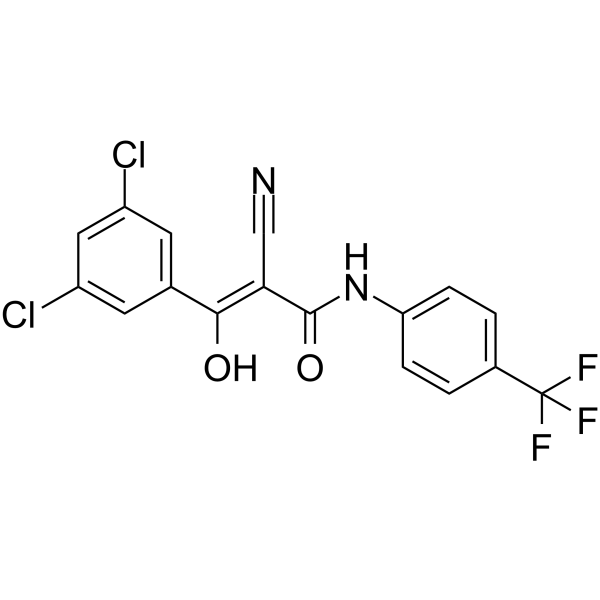
TPC2-A1-N is a powerful and Ca2+-permeable agonist of two pore channel 2 (TPC2), which plays its role by mimicking the physiological actions of NAADP. TPC2-A1-P reproducibly evokes significant Ca2+ responses from TPC2 (EC50=7.8 μM), and the effect can be blocked by several TPC blockers. TPC2-A1-N can be used to probe different functions of TPC2 channels in intact cells.
For research use only. We do not sell to patients.
- Purity : 99.86%
- CAS No.: 136186-07-7
- Formula: C17H9Cl2F3N2O2
- Molecular Weight:401.17
-
Storage:Powder -20°C, 3 years , 4°C, 2 years ; In solvent -80°C, 2 years , -20°C, 1 year

To place orders, for customer services and technical support, please contact: MedChemExpress USA
Tel: 609-228-6898 E-mail: [email protected] [email protected]


-
 Biological Activity
-
Chemical Information
-
Solvent & Solubility
- Protocols
- Purity & Documentation
- References
-
 Help & FAQs


-
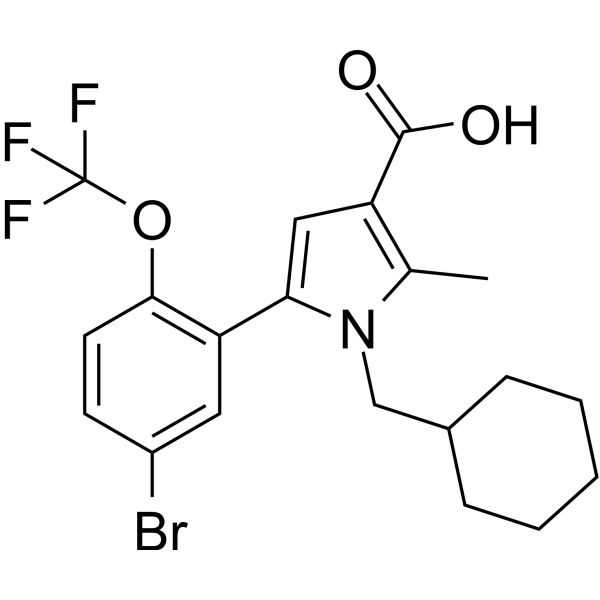
HY-131615
TPC2-A1-PTPC2 Agonist -
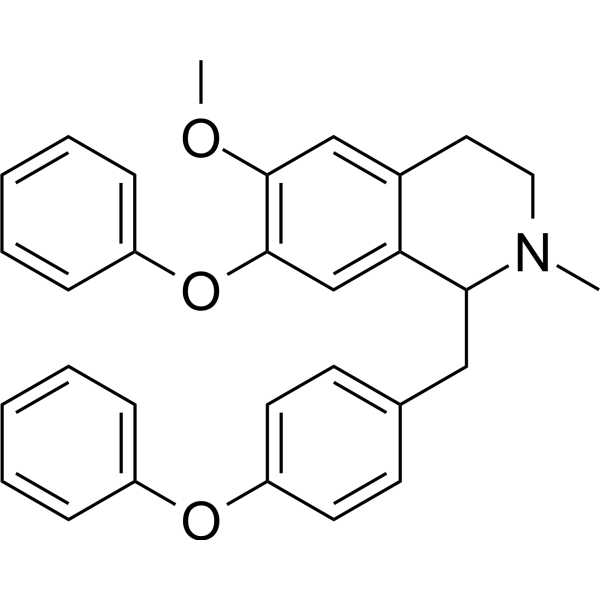
HY-148816
SG-094TPC2 Inhibitor -
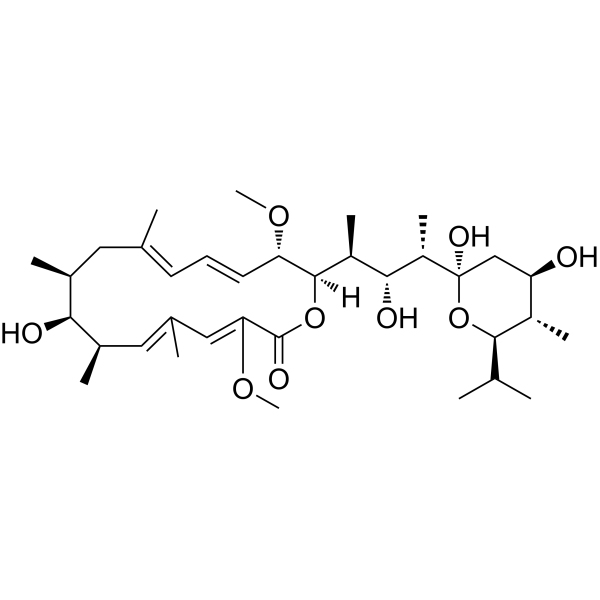
HY-100558
Bafilomycin A1V-ATPase Inhibitor -
HY-12041
SP600125JNK Inhibitor -
HY-N0230
β-AlanineEndogenous Metabolite -
HY-10999
TrametinibMEK Inhibitor -
HY-Y0873
PEG300Neutral Polymer -

HY-Y1888
Corn oil -
HY-13764
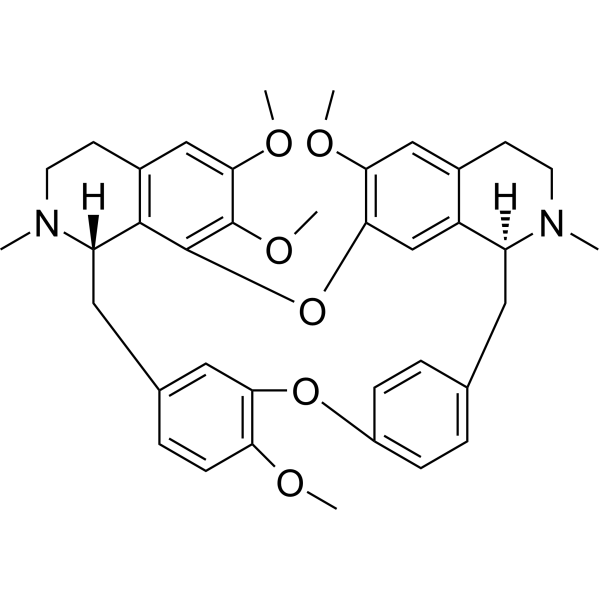
TetrandrineCalcium Channel Inhibitor -
HY-108462
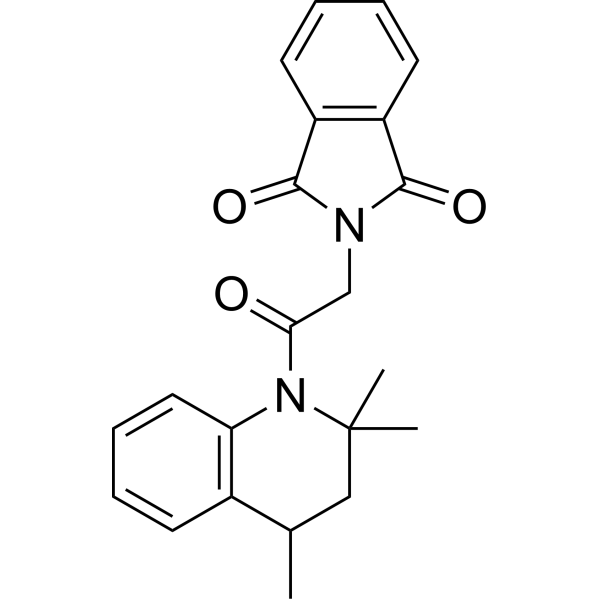
ML-SA1TRPML Agonist -
HY-139426
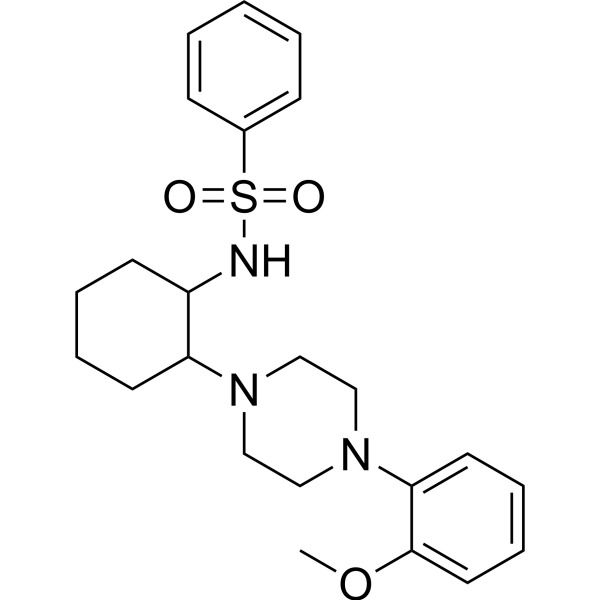
ML-SI3TRPML Modulator -
HY-50673
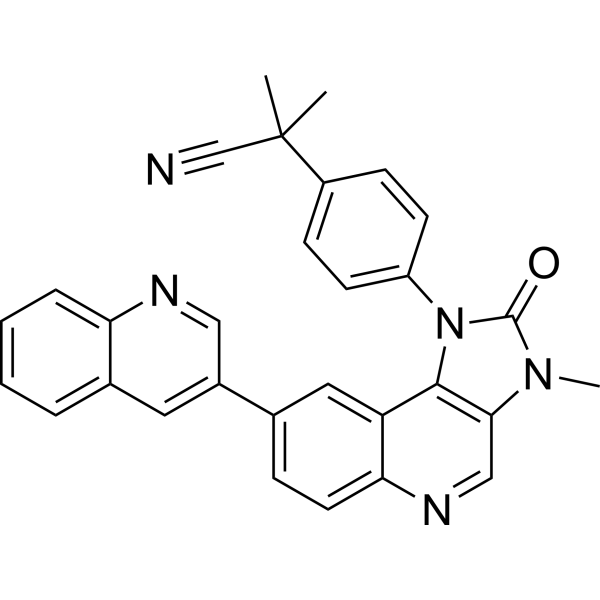
DactolisibPI3K/mTOR Inhibitor
Publications Citing Use of MedChemExpress (MCE) TPC2-A1-N
More- Nat Commun. 2022 Aug 2;13(1):4481. [Abstract]
- Neuron. 2026 Feb 18;114(4):699-723.e11. [Abstract]
- J Clin Invest. 2024 Apr 1;134(7):e169428. [Abstract]
- Acta Pharmacol Sin. 2025 Jul;46(7):2056-2072. [Abstract]
- Biochem Pharmacol. 2025 Aug 10;242(Pt 2):117219. [Abstract]
- bioRxiv. 2026 Jun 18:2026.06.16.731945. [Abstract]
- bioRxiv. 2026 Apr 15.
- University of Valladolid. 2025.
- University of Leeds. 2025.
- University of Milan. 2023 Mar 30.
All Calcium Channel Isoforms
More

Biological Activity
Description
IC50 & Target
EC50: 10.5 μM (Ca2+ current response from TPC2)[1]
In Vitro
Two-pore channels (TPC1-3) are ancient members of the voltage-gated ion channel superfamily. TPCs are expressed throughout the endo-lysosomal system and regulates the trafficking of various cargoes. TPC2 can mediate different physiological and possibly pathophysiological effects depending on how it is activated. The ion selectivity of TPC2 is not fixed but rather agonist-dependent. TPC2 is a unique example of an ion channel that conducts different ions in response to different activating ligands.TPC2-A1-N (10 μM) reproducibly evokes Ca2+ signals, and TPC2-A1-N response reachs its plateau faster than TPC2-A1-P. The EC50 in full concentration-effect relationships for the plateau response is 7.8 μM for TPC2-A1-N in a cell line stably expressing TPC2L11A/L12A.TPC2-A1-N (10 μM) evokes Ca2+ influx through the TPC2 pore evokes Ca2+ signals in cells expressing TPC2L11A/L12A but not TPC2L11A/L12A/L265P. Additionally, the responses to TPC2-A1-N can be selectively blocked by the identified TPC2 blockers Tetrandrine (HY-13764, Tet), Raloxifene (HY-13738, Ral), and Fluphenazine (HY-A0081, Flu) by removal of extracellular Ca2+[1].In endo-lysosomal patch-clamp experiments, TPC2-A1-N (30 μM) elicits currents using Na+ as the major permeantion, in vacuolin-enlarged endo-lysosomes isolated from isolated from HEK293 cells transiently expressing human TPC2 (hTPC2) but not in cells expressing TPC1[1].In endo-lysosomal patch-clamp experiments, TPC2-A1-N (30 μM) induces larger currents in endo-lysosomes isolated from cells expressing a gain-of-function variant of TPC2 (TPC2M484L) compared to the wild-type isoform, and exhibits an EC50 value of 0.6 μM for TPC2-A1-N[1].
MedChemExpress (MCE) has not independently confirmed the accuracy of these methods. They are for reference only.


Chemical Information
-
CAS No. 136186-07-7
-
Appearance Solid
-
Molecular Weight 401.17
-
Formula C17H9Cl2F3N2O2
-
Color White to off-white
-
SMILES
O=C(NC1=CC=C(C(F)(F)F)C=C1)/C(C#N)=C(C2=CC(Cl)=CC(Cl)=C2)\O
-
Shipping
Room temperature in continental US; may vary elsewhere.
-
Storage
Powder -20°C 3 years 4°C 2 years In solvent -80°C 2 years -20°C 1 year


Publications (10)
-
Journal Impact Factor
-
Most Recent
-
Nat Commun
2022 Aug 2;13(1):4481. PMID: 35918320 -
Neuron
2026 Feb 18;114(4):699-723.e11. PMID: 41483808 -
J Clin Invest
OCaR1 endows exocytic vesicles with autoregulatory competence by preventing uncontrolled Ca2+ release, exocytosis, and pancreatic tissue damage. [Abstract]2024 Apr 1;134(7):e169428. PMID: 38557489 -
Acta Pharmacol Sin
Tetrandrine augments melanoma cell immunogenicity via dual inhibition of autophagic flux and proteasomal activity enhancing MHC-I presentation. [Abstract]2025 Jul;46(7):2056-2072. PMID: 40016522 -
Biochem Pharmacol
Lysosomal TPC2 channel as a new target of chlorpromazine and clomipramine to induce protective autophagy in L-BMAA-induced neurodegeneration. [Abstract]2025 Aug 10;242(Pt 2):117219. PMID: 40796055 -
bioRxiv
2026 Jun 18:2026.06.16.731945. PMID: 42367851 -
-
-
-


Solvent & Solubility
In Vitro:
DMSO : 250 mg/mL (623.18 mM; Need ultrasonic; Hygroscopic DMSO has a significant impact on the solubility of product, please use newly opened DMSO)
Please refer to the solubility information to select the appropriate solvent. Once prepared, please aliquot and store the solution to prevent product inactivation from repeated freeze-thaw cycles.
Storage method and period of stock solution: -80°C, 2 years; -20°C, 1 year. When stored at -80°C, please use it within 2 years. When stored at -20°C, please use it within 1 year.
Please refer to the solubility information to select the appropriate solvent. Once prepared, please aliquot and store the solution to prevent product inactivation from repeated freeze-thaw cycles.
Storage method and period of stock solution: -80°C, 2 years; -20°C, 1 year. When stored at -80°C, please use it within 2 years. When stored at -20°C, please use it within 1 year.
Concentration (start) × Volume (start) = Concentration (final) × Volume (final)
In Vivo:
Select the appropriate dissolution method based on your experimental animal and administration route.
- For the following dissolution methods, please ensure to first prepare a clear stock solution using an In Vitro approach and then sequentially add co-solvents:
- To ensure reliable experimental results, the clarified stock solution can be appropriately stored based on storage conditions. As for the working solution for In Vivo experiments, it is recommended to prepare freshly and use it on the same day.
- The percentages shown for the solvents indicate their volumetric ratio in the final prepared solution. If precipitation or phase separation occurs during preparation, heat and/or sonication can be used to aid dissolution.
Add each solvent one by one: 10% DMSO 40% PEG300 5% Tween-80 45% Saline
Solubility: ≥ 2.08 mg/mL (5.18 mM); Clear solution
This protocol yields a clear solution of ≥ 2.08 mg/mL (saturation unknown).
Taking 1 mL working solution as an example, add 100 μL DMSO stock solution (20.8 mg/mL) to 400 μL PEG300, and mix evenly; then add 50 μL Tween-80 and mix evenly; then add 450 μL Saline to adjust the volume to 1 mL.
Preparation of Saline: Dissolve 0.9 g sodium chloride in ddH₂O and dilute to 100 mL to obtain a clear Saline solution.
Add each solvent one by one: 10% DMSO 90% (20% SBE-β-CD in Saline)
Solubility: ≥ 2.08 mg/mL (5.18 mM); Clear solution
This protocol yields a clear solution of ≥ 2.08 mg/mL (saturation unknown).
Taking 1 mL working solution as an example, add 100 μL DMSO stock solution (20.8 mg/mL) to 900 μL 20% SBE-β-CD in Saline, and mix evenly.
Preparation of 20% SBE-β-CD in Saline (4°C, storage for one week): 2 g SBE-β-CD powder is dissolved in 10 mL Saline, completely dissolve until clear.
In Vivo Dissolution Calculator
Please enter the basic information of animal experiments:
-
-
-
-
Recommended: Prepare an additional quantity of animals to account for potential losses during experiments.
Please enter your animal formula composition:
-
%DMSO +
Recommended: Keep the proportion of DMSO in working solution below 2% if your animal is weak.
-
%+
-
+%Tween-80 + +
-
%Saline +
The co-solvents required include: DMSO, . All of co-solvents are available by MedChemExpress (MCE). , Tween 80. All of co-solvents are available by MedChemExpress (MCE).
Working solution concentration: 0.22 mg/mL
Method for preparing stock solution: mg drug dissolved in μL DMSO. Stock solution concentration: mg/mL.
1. Take μL DMSO stock solution;
2. Add μL .
μL , mix evenly;
3. Then add μL Tween 80, mix evenly;
4. Then add μL
Please ensure that the stock solution in the first step is dissolved to a clear state, and add co-solvents in sequence. You can use ultrasonic heating (ultrasonic cleaner, recommended frequency 20-40 kHz), vortexing, etc. to assist dissolution.


Purity & Documentation
-
Data Sheet (274 KB)
-
SDS (252 KB)
- English - EN (252 KB)
- Français - FR (252 KB)
- Deutsch - DE (252 KB)
- Norwegian - NO (252 KB)
- Español - ES (252 KB)
- Swedish - SV (252 KB)
- Italian - IT (252 KB)
- Korean - KR (252 KB)
- Portuguese - PT (252 KB)
-
Handling Instructions (2659 KB)
References
[1]. Susanne Gerndt, et al. Agonist-mediated switching of ion selectivity in TPC2 differentially promotes lysosomal function. Elife [Content Brief]
[2]. Xuhui Jin, et al. Targeting Two-Pore Channels: Current Progress and Future Challenges. Trends Pharmacol Sci. 2020 Aug;41(8):582-594. [Content Brief]


Complete Stock Solution Preparation Table
Please refer to the solubility information to select the appropriate solvent. Once prepared, please aliquot and store the solution to prevent product inactivation from repeated freeze-thaw cycles.
Storage method and period of stock solution: -80°C, 2 years; -20°C, 1 year. When stored at -80°C, please use it within 2 years. When stored at -20°C, please use it within 1 year.
| Optional Solvent | Concentration Solvent Mass | 1 mg | 5 mg | 10 mg | 25 mg |
|---|---|---|---|---|---|
| DMSO | 1 mM | 2.4927 mL | 12.4635 mL | 24.9271 mL | 62.3177 mL |
| 5 mM | 0.4985 mL | 2.4927 mL | 4.9854 mL | 12.4635 mL | |
| 10 mM | 0.2493 mL | 1.2464 mL | 2.4927 mL | 6.2318 mL | |
| 15 mM | 0.1662 mL | 0.8309 mL | 1.6618 mL | 4.1545 mL | |
| 20 mM | 0.1246 mL | 0.6232 mL | 1.2464 mL | 3.1159 mL | |
| 25 mM | 0.0997 mL | 0.4985 mL | 0.9971 mL | 2.4927 mL | |
| 30 mM | 0.0831 mL | 0.4155 mL | 0.8309 mL | 2.0773 mL | |
| 40 mM | 0.0623 mL | 0.3116 mL | 0.6232 mL | 1.5579 mL | |
| 50 mM | 0.0499 mL | 0.2493 mL | 0.4985 mL | 1.2464 mL | |
| 60 mM | 0.0415 mL | 0.2077 mL | 0.4155 mL | 1.0386 mL | |
| 80 mM | 0.0312 mL | 0.1558 mL | 0.3116 mL | 0.7790 mL | |
| 100 mM | 0.0249 mL | 0.1246 mL | 0.2493 mL | 0.6232 mL |


TPC2-A1-N Related Classifications
HY-131614 Related Classifications
 Powered by Bioz