



GSK3179106
Based on 5 publication(s) in Google Scholar
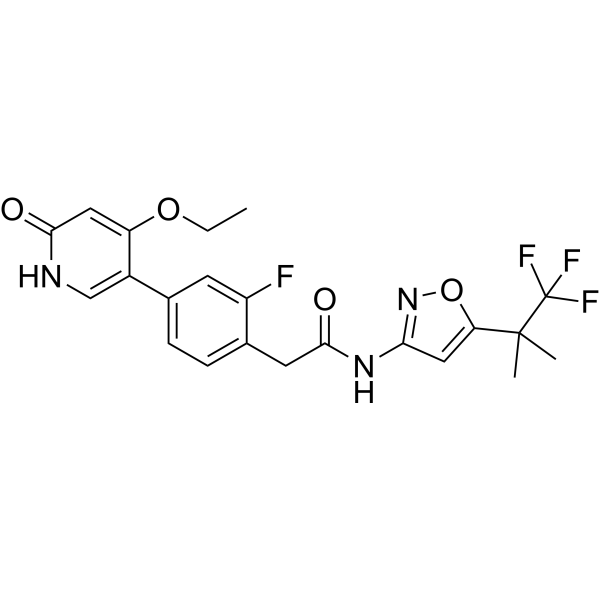
GSK3179106 is an orally active and selective RET kinase inhibitor with IC50s of 0.4 nM, 0.2 nM for human RET and rat RET, respectively. GSK3179106 has the potential for irritable bowel syndrome (IBS) through the attenuation of post-inflammatory and stress-induced visceral hypersensitivity.
Nos produits utilisent uniquement pour la recherche. Nous ne vendons pas aux patients.
- Pureté : 99.81%
- CAS No.: 1627856-64-7
- Formule: C22H21F4N3O4
- Masse moléculaire:467.41
-
Stockage:Powder -20°C, 3 years , 4°C, 2 years ; In solvent -80°C, 2 years , -20°C, 1 year

To place orders, for customer services and technical support, please contact: MedChemExpress USA
Tel: 609-228-6898 E-mail: [email protected] [email protected]


-
 Activité biologique
-
Chemical Information
-
Solvant et solubilité
- Pureté et documentation
- Références
-
 Help & FAQs


-
HY-114370
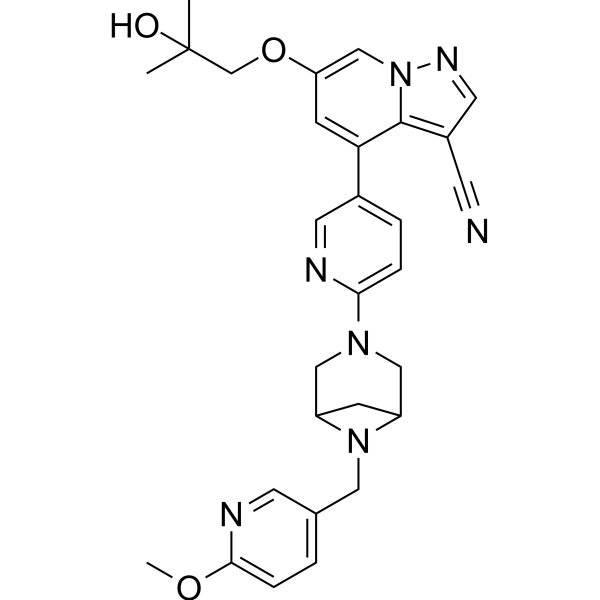
SelpercatinibRET Kinase Inhibitor -
HY-112301
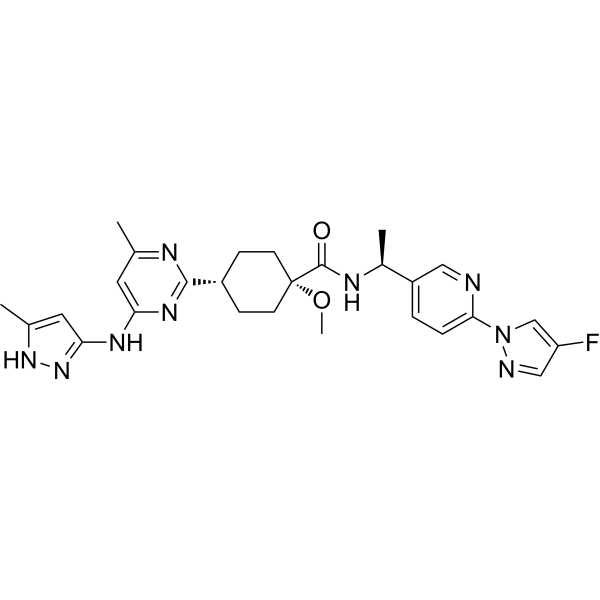
PralsetinibRET Inhibitor -
HY-136175
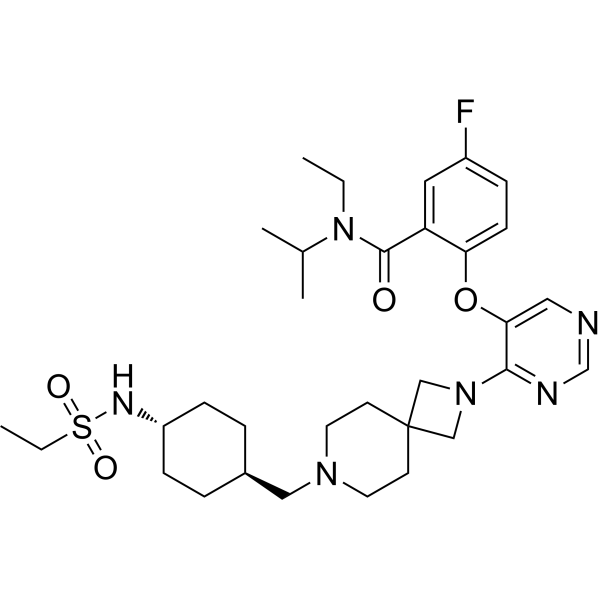
RevumenibMenin-MLL Inhibitor -
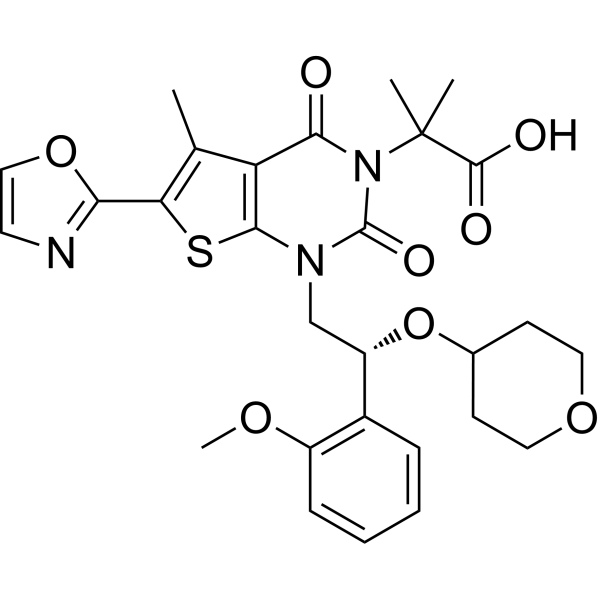
HY-16901
FirsocostatACC Inhibitor -
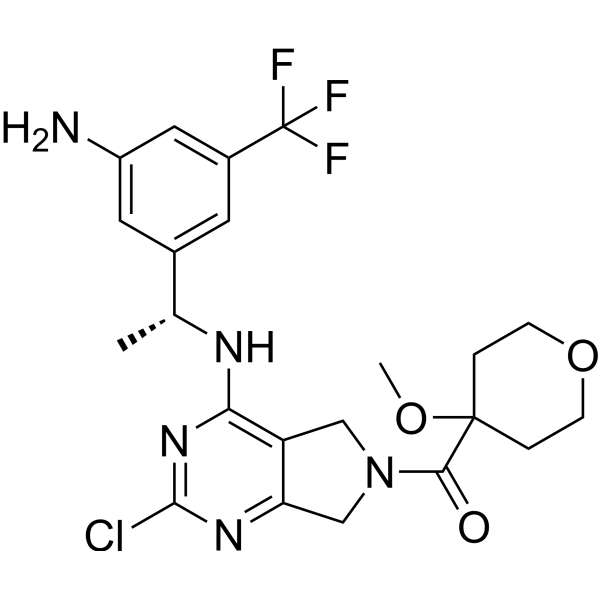
HY-134885
RMC-0331SOS1 Inhibitor -
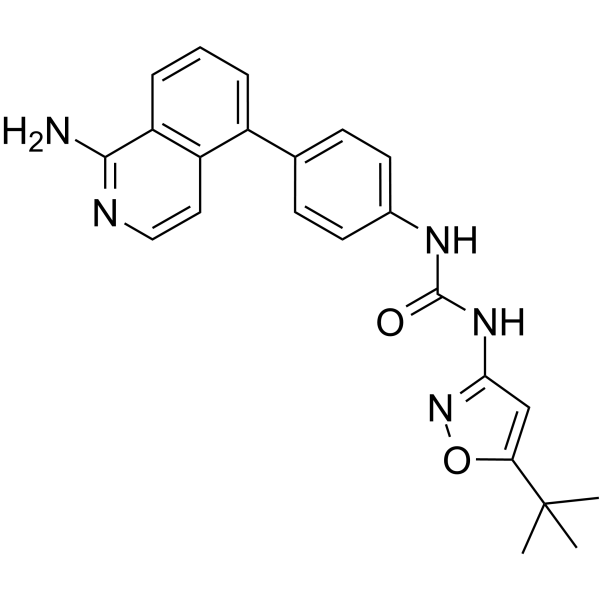
HY-18901
RIPK1-IN-4RIP1 Kinease Inhibtior -
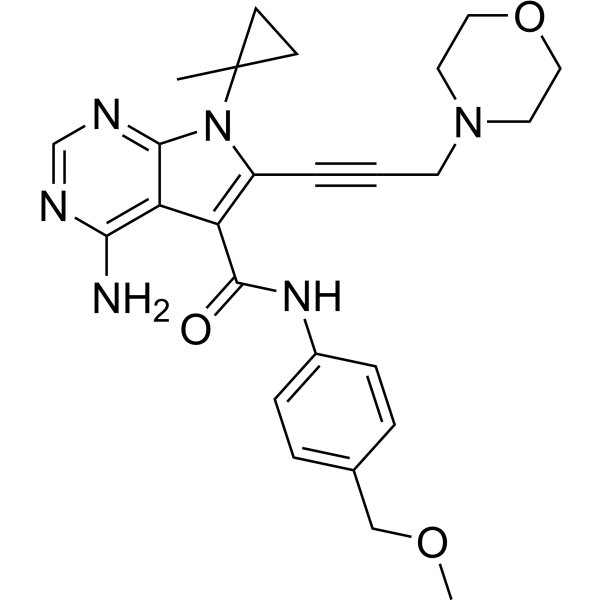
HY-132846
VepafestinibRET Inhibitor -
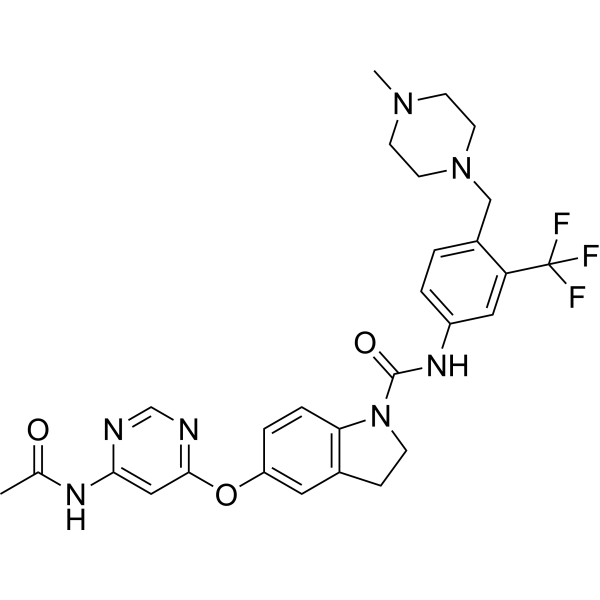
HY-18840
BBT594RET Inhibitor -

HY-100459R
GSK3179106 (Standard)RET Kinase Inhibitor -
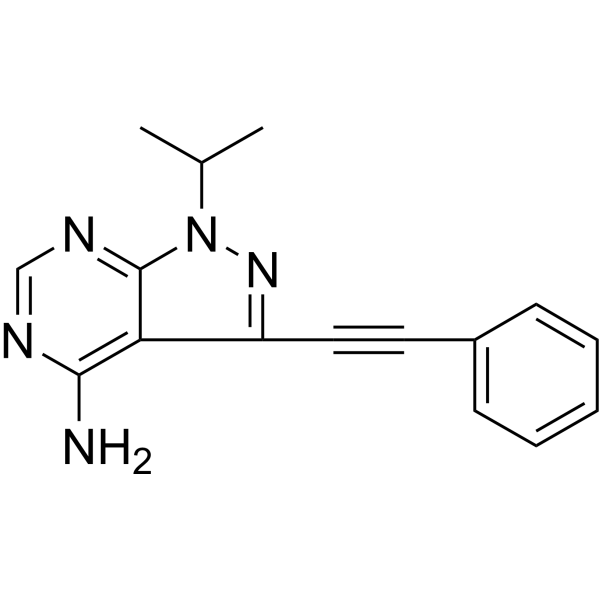
HY-110193
SPP-86RET Inhibitor -
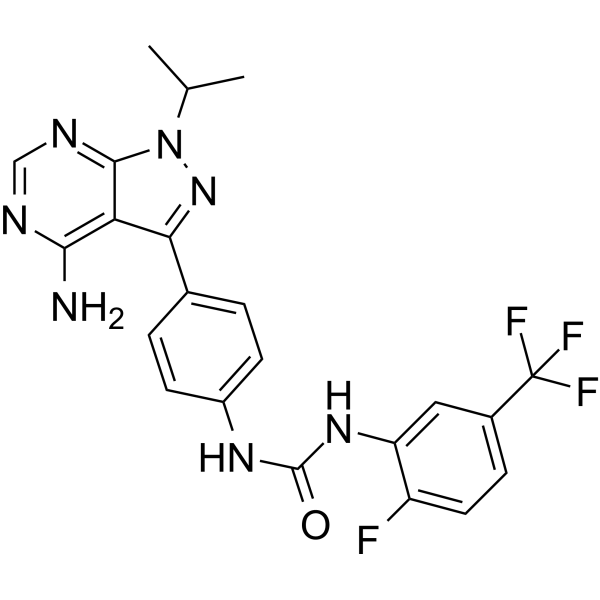
HY-101963
AD80Multikinase Inhibitor -
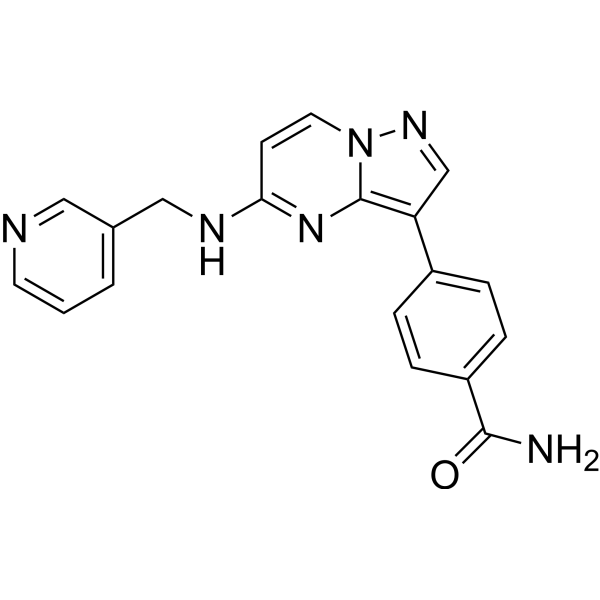
HY-136534
RET V804M-IN-1RET Inhibitor
Publications Citing Use of MedChemExpress (MCE) GSK3179106
More

Activité biologique
Description
IC50 & Target
IC50: 0.4 nM (human RET), 0.2 nM (rat RET)[1]
Cellular Effect
|
Cell Line

|
Type | Value | Description | References |
|---|---|---|---|---|
| TT | IC50 |
≤100 nM
Compound: 30
|
Inhibition of human RET kinase in TT cells by TRET Kinase cell-based mechanistic assay
Inhibition of human RET kinase in TT cells by TRET Kinase cell-based mechanistic assay
|
[PMID: 25589919] |
| TT | IC50 |
≤100 nM
Compound: 30
|
Inhibition of RET kinase-mediated proliferative activity against human TT cells by cell-based proliferation assay
Inhibition of RET kinase-mediated proliferative activity against human TT cells by cell-based proliferation assay
|
[PMID: 25589919] |
In Vitro
GSK3179106 (10 nM-100 μM; 8 days for TT cells, 3 days for SK-N-AS and A549 cells) inhibits the proliferation of the RET-dependent TT cell line with a mean IC50 value of 25.5 nM however has no effect on the proliferation of the RET-independent SK-NAS and A549 cell lines (mean IC50>10 μM and IC30>17 μM, respectively)[1].
GSK3179106 inhibits RET phosphorylation in SK-N-AS cells and TT cells with mean IC50s of 4.6 nM and 11.1 nM, respectively[1].
MedChemExpress (MCE) has not independently confirmed the accuracy of these methods. They are for reference only. .
-
Cell Line:TT, SK-N-AS and A549 cells
-
Concentration:10 nM-100 µM
-
Incubation Time:8 days for TT cells, 3 days for SK-N-AS and A549 cells
-
Result:Inhibited the proliferation of TT cell line with a mean IC50 value of 25.5 nM however had no effect on the proliferation of the SK-NAS and A549 cell lines (mean IC50>10 µM and IC30>17 µM, respectively).
In Vivo
MedChemExpress (MCE) has not independently confirmed the accuracy of these methods. They are for reference only.
-
Animal Model:Seventy male Sprague Dawley rats (225-250 g, ~7-8 weeks old); Fifty male Fischer 344 rats (225-250 g, ~10-12 weeks old); Sprague Dawley female rats[1]
-
Dosage:3 and 10 mg/kg
-
Administration:Oral gavage ; administered BID at 8:00 and 16:00 for 3.5 days
-
Result:Reduced the visceral motor response.
Led to a 34-43% inhibition in VMR to colorectal distension (CRD) at 10 mg/kg.
Essai clinique
| NCT Number | Sponsor | Condition | Start Date |
Phase
|
|---|---|---|---|---|
| NCT01329991 | Plexxikon| | 2011-05 | PHASE1 |


Chemical Information
-
CAS No. 1627856-64-7
-
Appearance Solid
-
Masse moléculaire 467.41
-
Formule C22H21F4N3O4
-
Color White to off-white
-
SMILES
O=C(NC1=NOC(C(C)(C)C(F)(F)F)=C1)CC2=CC=C(C(C(OCC)=C3)=CNC3=O)C=C2F
-
Livraison
Room temperature in continental US; may vary elsewhere.
-
Stockage
Powder -20°C 3 years 4°C 2 years In solvent -80°C 2 years -20°C 1 year


Publications (5)
-
Journal Impact Factor
-
Most Recent
-
Cell Metab
Cancer cells co-opt nociceptive nerves to thrive in nutrient-poor environments and upon nutrient-starvation therapies. [Abstract]2022 Dec 6;34(12):1999-2017.e10. PMID: 36395769 -
Cell Prolif
2020 Oct;53(10):e12889. PMID: 32808420 -
Front Pharmacol
Glial cell line-derived neurotrophic factor inhibits mast-cell-like RBL-2H3 cells activation via Ca2+-mediated degranulation and Ca2+/CaMKⅡ/JNK pathway. [Abstract]2025 Nov 18:16:1697815. PMID: 41341025 -
Mol Cell Neurosci
GDNF requires HIF-1α and RET activation for suppression of programmed cell death of enteric neurons by metabolic challenge. [Abstract]2021 Sep:115:103655. PMID: 34273501 -
Exp Eye Res
FK962 protects retinal ganglion cell under hypoxia/reoxygenation: Possible involvement of glial cell line-derived neurotrophic factor signaling pathway. [Abstract]2024 Nov:248:110099. PMID: 39284507


Solvant et solubilité
In Vitro:
DMSO : ≥ 100 mg/mL (213.94 mM; Hygroscopic DMSO has a significant impact on the solubility of product, please use newly opened DMSO)
* "≥" means soluble, but saturation unknown.
Please refer to the solubility information to select the appropriate solvent. Once prepared, please aliquot and store the solution to prevent product inactivation from repeated freeze-thaw cycles.
Storage method and period of stock solution: -80°C, 2 years; -20°C, 1 year. When stored at -80°C, please use it within 2 years. When stored at -20°C, please use it within 1 year.
Please refer to the solubility information to select the appropriate solvent. Once prepared, please aliquot and store the solution to prevent product inactivation from repeated freeze-thaw cycles.
Storage method and period of stock solution: -80°C, 2 years; -20°C, 1 year. When stored at -80°C, please use it within 2 years. When stored at -20°C, please use it within 1 year.
Concentration (start) × Volume (start) = Concentration (final) × Volume (final)
In Vivo:
Select the appropriate dissolution method based on your experimental animal and administration route.
- For the following dissolution methods, please ensure to first prepare a clear stock solution using an In Vitro approach and then sequentially add co-solvents:
- To ensure reliable experimental results, the clarified stock solution can be appropriately stored based on storage conditions. As for the working solution for In Vivo experiments, it is recommended to prepare freshly and use it on the same day.
- The percentages shown for the solvents indicate their volumetric ratio in the final prepared solution. If precipitation or phase separation occurs during preparation, heat and/or sonication can be used to aid dissolution.
Add each solvent one by one: 10% DMSO 40% PEG300 5% Tween-80 45% Saline
Solubility: ≥ 2.5 mg/mL (5.35 mM); Clear solution
This protocol yields a clear solution of ≥ 2.5 mg/mL (saturation unknown).
Taking 1 mL working solution as an example, add 100 μL DMSO stock solution (25.0 mg/mL) to 400 μL PEG300, and mix evenly; then add 50 μL Tween-80 and mix evenly; then add 450 μL Saline to adjust the volume to 1 mL.
Preparation of Saline: Dissolve 0.9 g sodium chloride in ddH₂O and dilute to 100 mL to obtain a clear Saline solution.
Add each solvent one by one: 10% DMSO 90% (20% SBE-β-CD in Saline)
Solubility: ≥ 2.5 mg/mL (5.35 mM); Clear solution
This protocol yields a clear solution of ≥ 2.5 mg/mL (saturation unknown).
Taking 1 mL working solution as an example, add 100 μL DMSO stock solution (25.0 mg/mL) to 900 μL 20% SBE-β-CD in Saline, and mix evenly.
Preparation of 20% SBE-β-CD in Saline (4°C, storage for one week): 2 g SBE-β-CD powder is dissolved in 10 mL Saline, completely dissolve until clear.
In Vivo Dissolution Calculator
Please enter the basic information of animal experiments:
-
-
-
-
Recommended: Prepare an additional quantity of animals to account for potential losses during experiments.
Please enter your animal formula composition:
-
%DMSO +
Recommended: Keep the proportion of DMSO in working solution below 2% if your animal is weak.
-
%+
-
+%Tween-80 + +
-
%Saline +
The co-solvents required include: DMSO, . All of co-solvents are available by MedChemExpress (MCE). , Tween 80. All of co-solvents are available by MedChemExpress (MCE).
Working solution concentration: 0.22 mg/mL
Method for preparing stock solution: mg drug dissolved in μL DMSO. Stock solution concentration: mg/mL.
1. Take μL DMSO stock solution;
2. Add μL .
μL , mix evenly;
3. Then add μL Tween 80, mix evenly;
4. Then add μL
Please ensure that the stock solution in the first step is dissolved to a clear state, and add co-solvents in sequence. You can use ultrasonic heating (ultrasonic cleaner, recommended frequency 20-40 kHz), vortexing, etc. to assist dissolution.


Pureté et documentation
-
Fiche technique (277 KB)
-
SDS (418 KB)
- English - EN (418 KB)
- Français - FR (418 KB)
- Deutsch - DE (418 KB)
- Norwegian - NO (418 KB)
- Español - ES (418 KB)
- Swedish - SV (418 KB)
- Italian - IT (418 KB)
- Korean - KR (418 KB)
- Portuguese - PT (418 KB)
-
Instruction de manipulation (2659 KB)
Références
[1]. Russell JP, et al. Exploring the Potential of RET Kinase Inhibition for Irritable Bowel Syndrome: A Preclinical Investigation in Rodent Models of Colonic Hypersensitivity. J Pharmacol Exp Ther. 2019 Feb;368(2):299-307. [Content Brief]
[2]. Russell JP, et al. Enteric RET inhibition attenuates gastrointestinal secretion and motility via cholinergic signaling in rat colonic mucosal preparations. Neurogastroenterol Motil. 2019 Apr;31(4):e13479. [Content Brief]


Complete Stock Solution Preparation Table
Please refer to the solubility information to select the appropriate solvent. Once prepared, please aliquot and store the solution to prevent product inactivation from repeated freeze-thaw cycles.
Storage method and period of stock solution: -80°C, 2 years; -20°C, 1 year. When stored at -80°C, please use it within 2 years. When stored at -20°C, please use it within 1 year.
| Optional Solvent | Concentration Solvent Mass | 1 mg | 5 mg | 10 mg | 25 mg |
|---|---|---|---|---|---|
| DMSO | 1 mM | 2.1394 mL | 10.6972 mL | 21.3945 mL | 53.4862 mL |
| 5 mM | 0.4279 mL | 2.1394 mL | 4.2789 mL | 10.6972 mL | |
| 10 mM | 0.2139 mL | 1.0697 mL | 2.1394 mL | 5.3486 mL | |
| 15 mM | 0.1426 mL | 0.7131 mL | 1.4263 mL | 3.5657 mL | |
| 20 mM | 0.1070 mL | 0.5349 mL | 1.0697 mL | 2.6743 mL | |
| 25 mM | 0.0856 mL | 0.4279 mL | 0.8558 mL | 2.1394 mL | |
| 30 mM | 0.0713 mL | 0.3566 mL | 0.7131 mL | 1.7829 mL | |
| 40 mM | 0.0535 mL | 0.2674 mL | 0.5349 mL | 1.3372 mL | |
| 50 mM | 0.0428 mL | 0.2139 mL | 0.4279 mL | 1.0697 mL | |
| 60 mM | 0.0357 mL | 0.1783 mL | 0.3566 mL | 0.8914 mL | |
| 80 mM | 0.0267 mL | 0.1337 mL | 0.2674 mL | 0.6686 mL | |
| 100 mM | 0.0214 mL | 0.1070 mL | 0.2139 mL | 0.5349 mL |


GSK3179106 Related Classifications
HY-100459 Related Classifications
 Powered by Bioz