



HAEGT

Based on 1 Customer Validation
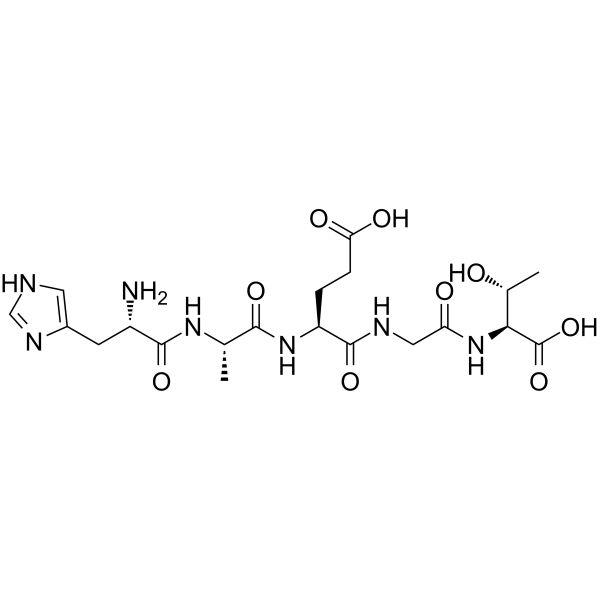
HAEGT is the first N-terminal 1-5 residues of glucagon like peptide-1 (GLP-1) peptide, and the sequence is His-Ala-Glu-Gly-Thr. HAEGT acts as a competitive substrate for probing prime substrate binding sites of human dipeptidyl peptidase-IV (DPP-IV) 1, in which the N-terminal His-Ala is catalyzed cleavage by DPP-IV. HAEGT can be used in the research of diabetes, obesity.
Nos produits utilisent uniquement pour la recherche. Nous ne vendons pas aux patients.
- Pureté : 98.86%
- CAS No.: 852155-81-8
- Formule: C20H31N7O9
- Masse moléculaire:513.50
-
Stockage:
Sealed storage, away from moisture and light.
Powder -80°C, 2 years , -20°C, 1 year* In solvent : -80°C, 6 months; -20°C, 1 month (sealed storage, away from moisture and light)

To place orders, for customer services and technical support, please contact: MedChemExpress USA
Tel: 609-228-6898 E-mail: [email protected] [email protected]


-
 Activité biologique
-
Chemical Information
-
Solvant et solubilité
- Protocole
- Pureté et documentation
- Références
-
 Help & FAQs


-
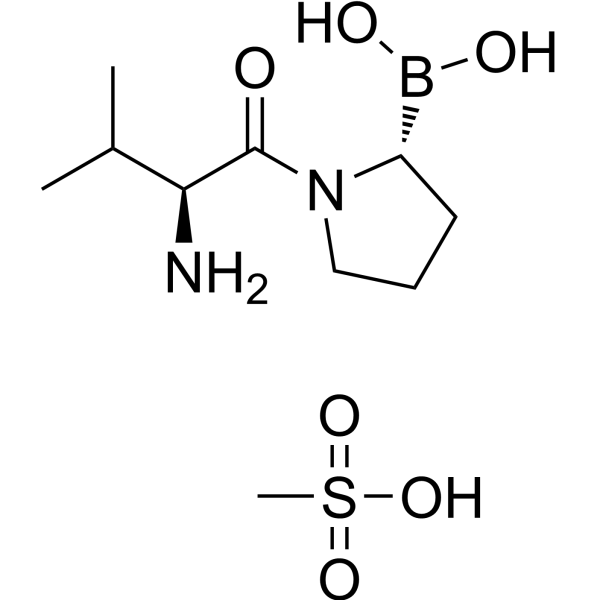
HY-13233A
Talabostat mesylateDipeptidyl Peptidase Inhibitor -
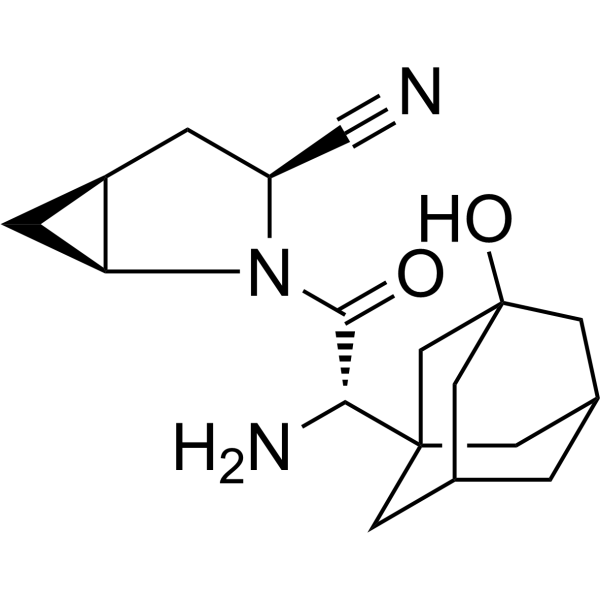
HY-10285
SaxagliptinDPP-4 Inhibitor -
HY-119244
Gly-Pro-pNA hydrochlorideChromogenic Peptide Substrate -
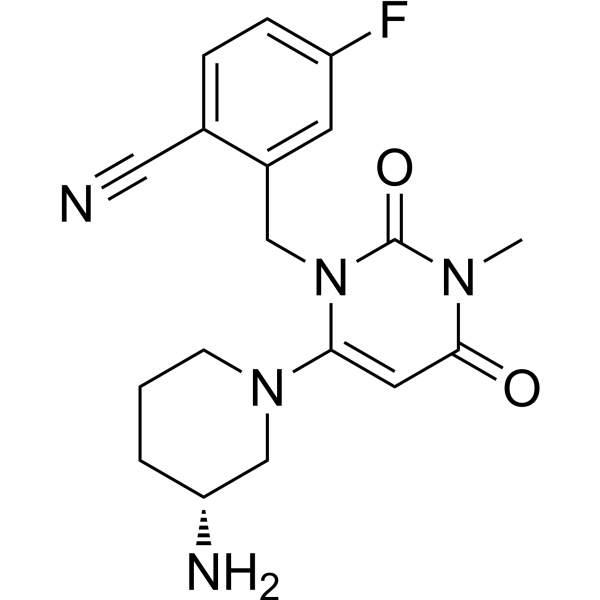
HY-15408
TrelagliptinDPP-4 Inhibitor -
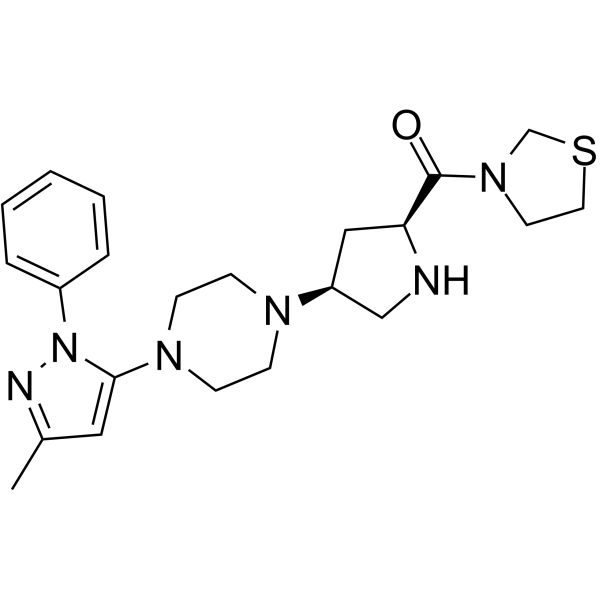
HY-14806
TeneligliptinDPP-4 Inhibitor -
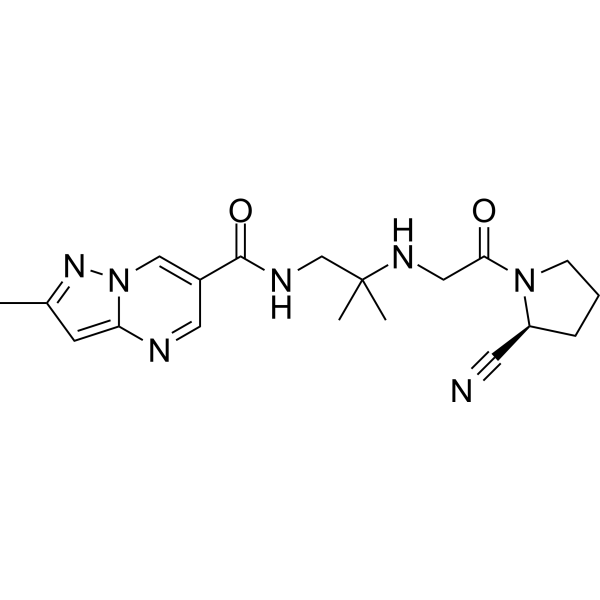
HY-14877
AnagliptinDPP-4 Inhibitor -
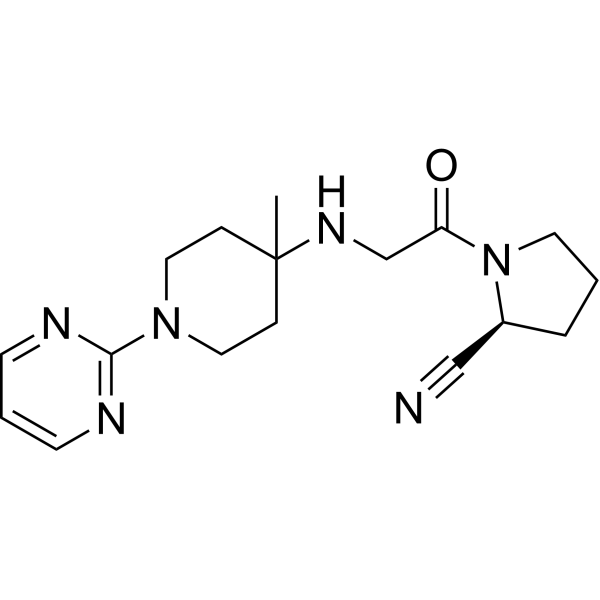
HY-103433
K579DPPIV Inhibitor -
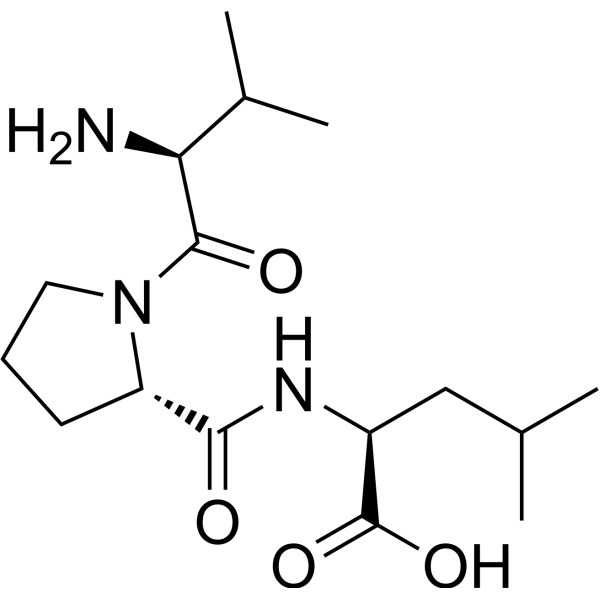
HY-111173
Diprotin BDPP IV Inhibitor -
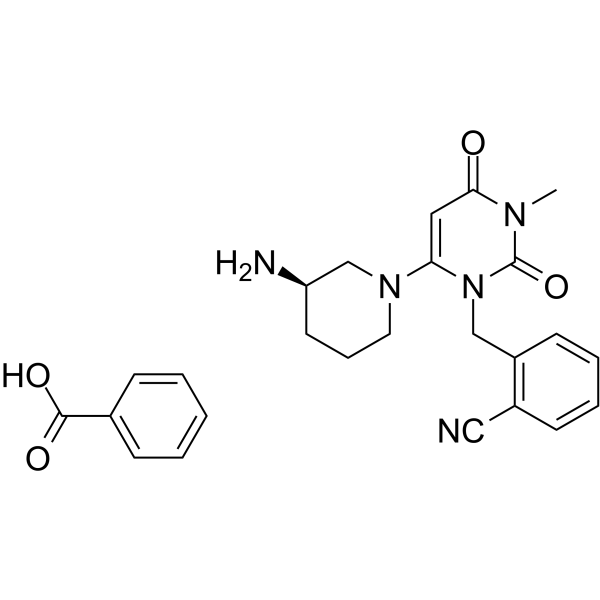
HY-A0023
Alogliptin BenzoateDPP-4 Inhibitor -
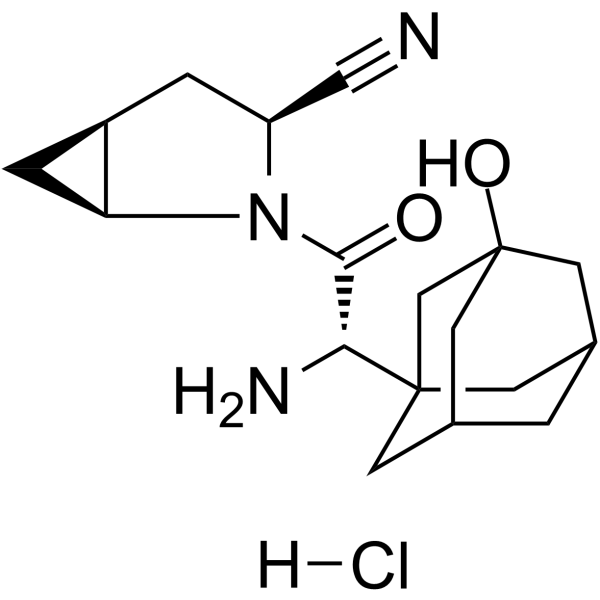
HY-16448
Saxagliptin hydrochlorideDPP-4 Inhibitor -
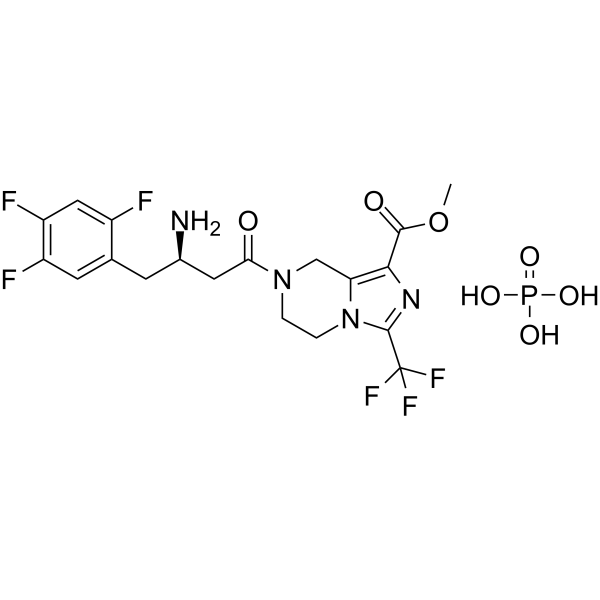
HY-112668
Retagliptin phosphateDPP-4 Inhibitor -
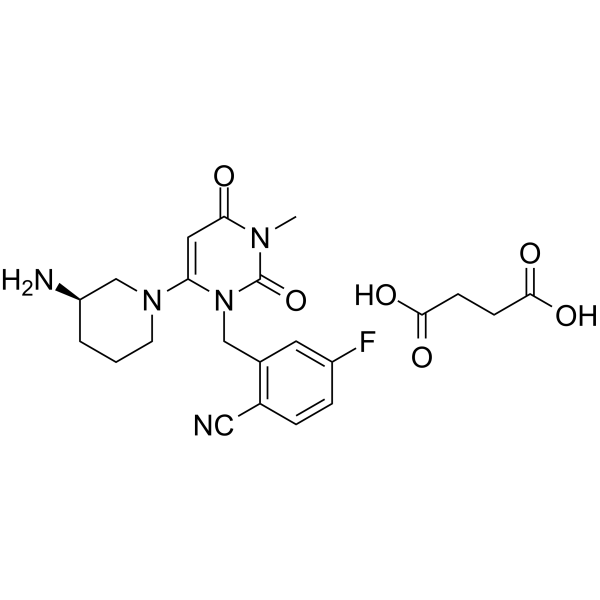
HY-15408A
Trelagliptin succinateDPP-4 Inhibitor


Activité biologique
Description
IC50 & Target
[1]|
DPP-4 |
In Vitro
HAEGT (0-500 μM) is a competitive substrate for probing prime substrate binding sites of human dipeptidyl peptidase-IV (DPP-IV)[1].
HAEGT can be catalyzed cleavage by DPP-IV with a km value of 38 μM, Kcat value of 3.1 S-1[1].
MedChemExpress (MCE) has not independently confirmed the accuracy of these methods. They are for reference only.


Chemical Information
-
CAS No. 852155-81-8
-
Appearance Solid
-
Masse moléculaire 513.50
-
Formule C20H31N7O9
-
Color White to off-white
-
Sequence
His-Ala-Glu-Gly-Thr
-
Sequence Shortening
HAEGT
-
Livraison
Room temperature in continental US; may vary elsewhere.
-
Stockage
Sealed storage, away from moisture and light
Powder -80°C 2 years -20°C 1 year * In solvent : -80°C, 6 months; -20°C, 1 month (sealed storage, away from moisture and light)


Solvant et solubilité
In Vitro
H2O
Peptide Solubility and Storage Guidelines:
1. Calculate the length of the peptide.
2. Calculate the overall charge of the entire peptide according to the following table:
| Contents | Assign value | |
|---|---|---|
| Acidic amino acid | Asp (D), Glu (E), and the C-terminal -COOH. | -1 |
| Basic amino acid | Arg (R), Lys (K), His (H), and the N-terminal -NH2 | +1 |
| Neutral amino acid | Gly (G), Ala (A), Leu (L), Ile (I), Val (V), Cys (C), Met (M), Thr (T), Ser (S), Phe (F), Tyr (Y), Trp (W), Pro (P), Asn (N), Gln (Q) | 0 |
3. Recommended solution:
| Overall charge of peptide | Details |
|---|---|
| Negative (<0) |
1. Try to dissolve the peptide in water first. 2. If water fails, add NH4OH (<50 μL). 3. If the peptide still does not dissolve, add DMSO (50-100 μL) to solubilize the peptide. |
| Positive (>0) |
1. Try to dissolve the peptide in water first. 2. If water fails, try dissolving the peptide in a 10%-30% acetic acid solution. 3. If the peptide still does not dissolve, try dissolving the peptide in a small amount of DMSO. |
| Zero (=0) |
1. Try to dissolve the peptide in organic solvent (acetonitrile, methanol, etc.) first. 2. For very hydrophobic peptides, try dissolving the peptide in a small amount of DMSO, and then dilute the solution with water to the desired concentration. |


Pureté et documentation
-
Fiche technique (267 KB)
-
SDS (252 KB)
- English - EN (252 KB)
- Français - FR (252 KB)
- Deutsch - DE (252 KB)
- Norwegian - NO (252 KB)
- Español - ES (252 KB)
- Swedish - SV (252 KB)
- Italian - IT (252 KB)
- Korean - KR (252 KB)
- Portuguese - PT (252 KB)
-
Instruction de manipulation (2659 KB)
Références

Calculators
Concentration (start) × Volume (start) = Concentration (final) × Volume (final)


HAEGT Related Classifications
HY-P1230 Related Classifications
 Powered by Bioz