19 Results for "

microtubule depolymerization activity

" in MedChemExpress (MCE) Product Catalog:
Products (19)

19 Results for "microtubule depolymerization activity" in MCE Product Catalog:

183
183 Publications Verification
Cat. No.: HY-B0011
CAS No.: 114977-28-5
Synonyms: RP-56976
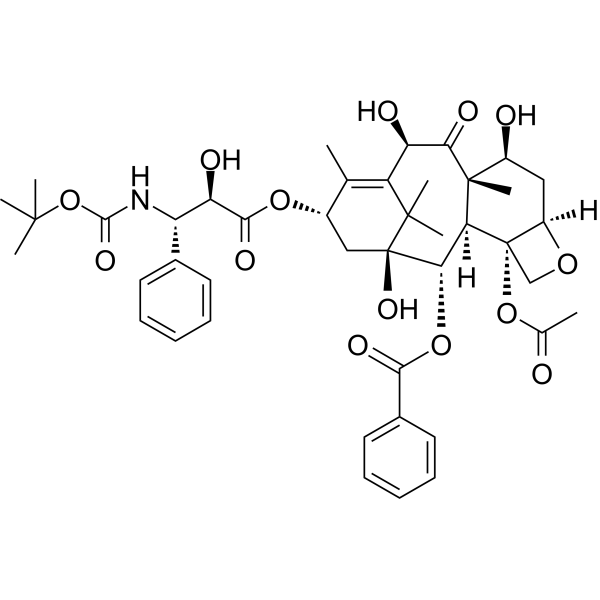
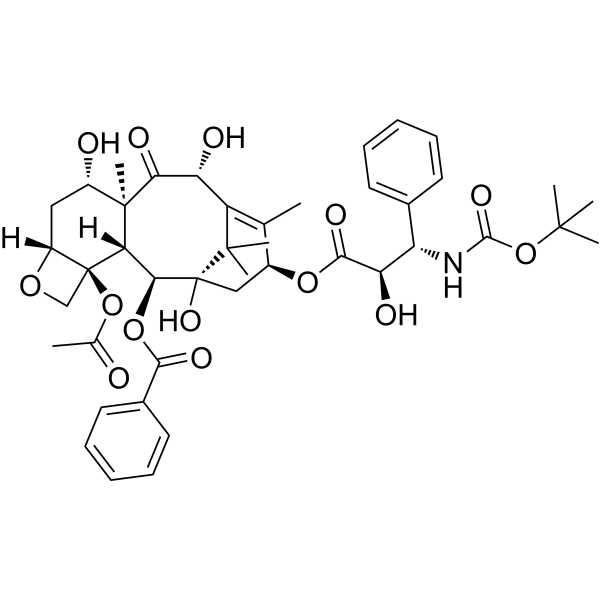
Docetaxel (RP-56976) is an orally active tubulin stabilizer with antitumor activity. Docetaxel is a P-glycoprotein substrate and is metabolized by CYP3A to inactive products. Docetaxel binds tubulin, promotes tubulin polymerization, and inhibits microtubule depolymerization. Docetaxel induces aberrant mitosis followed by necrotic-like cell death at low concentrations, and induces G2/M mitotic arrest and drives apoptosis at high concentrations. Docetaxel induces renal injury/renal alterations, sex-dependent granule toxicity/uptake, low cardiac delivery, and decreased hepatic SOD/increased catalase/hepatotoxicity. Docetaxel can be used in cancer-related research .
loading...
    loading...
183
183 Publications Verification
Cat. No.: HY-B0011A
CAS No.: 148408-66-6
Synonyms: RP-56976 Trihydrate
Domaines de recherche:  

Cancer

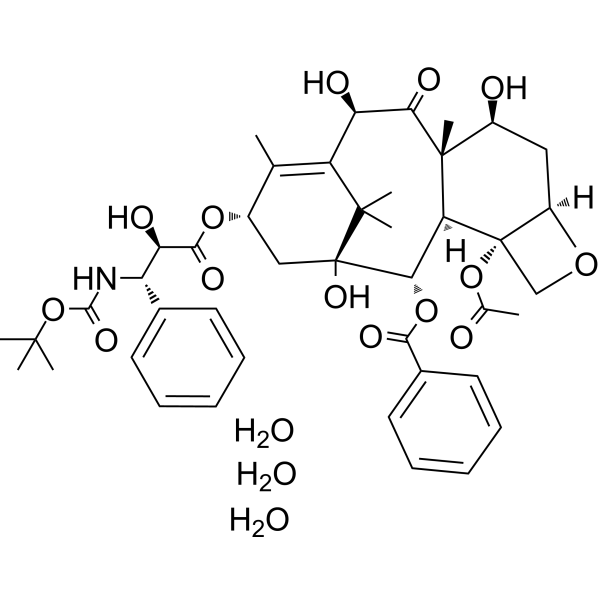
Docetaxel Trihydrate (RP-56976 Trihydrate) is an orally active tubulin stabilizer with antitumor activity. Docetaxel Trihydrate is a P-glycoprotein substrate and is metabolized by CYP3A to inactive products. Docetaxel Trihydrate binds tubulin, promotes tubulin polymerization, and inhibits microtubule depolymerization. Docetaxel Trihydrate induces aberrant mitosis followed by necrotic-like cell death at low concentrations, and induces G2/M mitotic arrest and drives apoptosis at high concentrations. Docetaxel Trihydrate induces renal injury/renal alterations, sex-dependent granule toxicity/uptake, low cardiac delivery, and decreased hepatic SOD/increased catalase/hepatotoxicity. Docetaxel Trihydrate can be used in cancer-related research .
loading...
    loading...
4
4 Cited Publications
Cat. No.: HY-N0227
CAS No.: 105454-04-4
Synonyms: 7-epi-Paclitaxel
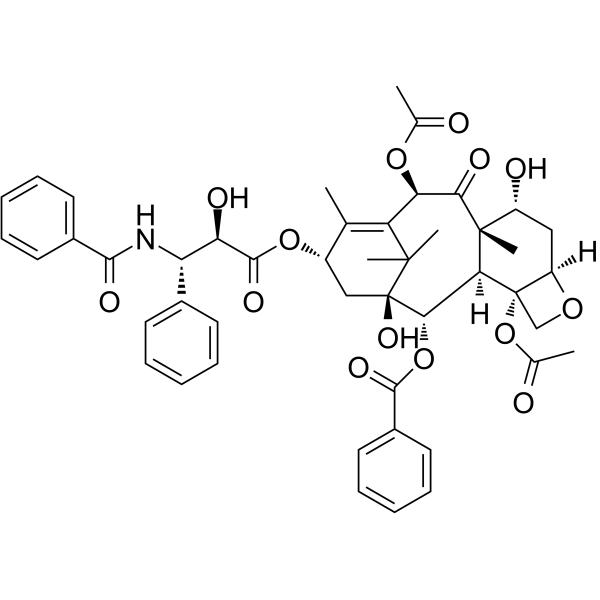
7-epi-Taxol is an active metabolite of taxol, with activity comparable to that of taxol against cell replication, promoting microtubule bundle formation and against microtubule depolymerization.
loading...
    loading...
1
1 Cited Publications
Cat. No.: HY-16191
CAS No.: 1233948-35-0
Domaines de recherche:  

Cancer

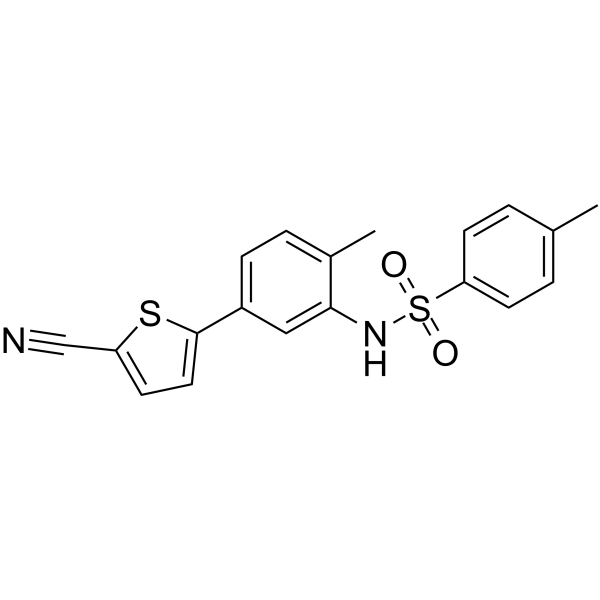
ELR510444 is an orally active tubulin inhibitor with an IC50 of 10 μM. ELR510444 binds to the colchicine-binding site on β-tubulin, inhibits tubulin assembly, depolymerizes microtubules and blocks HIF activity. ELR510444 induces cellular microtubule loss, abnormal mitotic spindle, mitotic arrest, apoptosis, morphological changes in tumor endothelial cells, and inhibits cancer cell proliferation, angiogenesis and tumor growth. ELR510444 can be used in research related to various cancers such as renal cell carcinoma .
loading...
    loading...
Cat. No.: HY-B0011S
CAS No.: 940867-25-4
Synonyms: RP-56976-d9
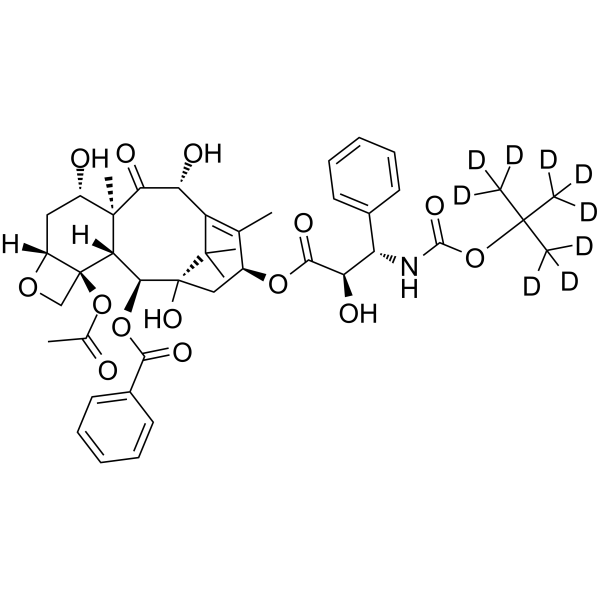
Docetaxel-d9 (RP-56976-d9) is the deuterated-labeled Docetaxel (HY-B0011). Docetaxel (RP-56976) is an orally active tubulin stabilizer with antitumor activity. Docetaxel is a P-glycoprotein substrate and is metabolized by CYP3A to inactive products. Docetaxel binds tubulin, promotes tubulin polymerization, and inhibits microtubule depolymerization. Docetaxel induces aberrant mitosis followed by necrotic-like cell death at low concentrations, and induces G2/M mitotic arrest and drives apoptosis at high concentrations. Docetaxel induces renal injury/renal alterations, sex-dependent granule toxicity/uptake, low cardiac delivery, and decreased hepatic SOD/increased catalase/hepatotoxicity. Docetaxel can be used in cancer-related research .
loading...
    loading...
Cat. No.: HY-N10093
CAS No.: 69618-96-8
Synonyms: Chamaejasmin
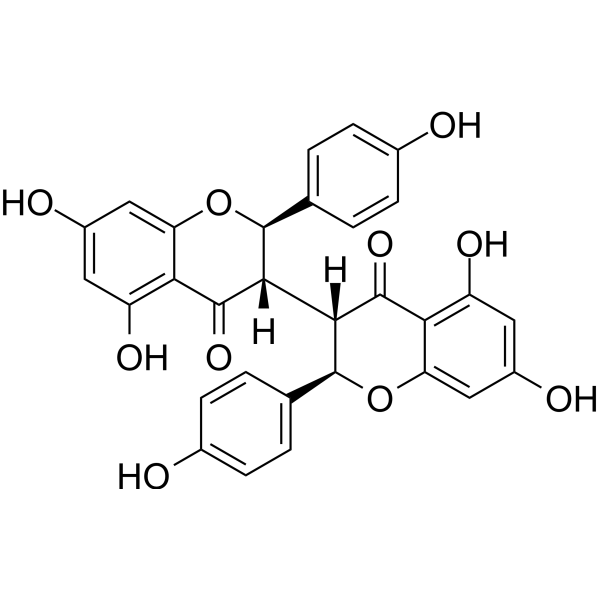
Chamaejasmine (Chamaejasmin) is a natural biflavonoid found in the roots of Stellera chamaejasme, exhibiting antitumor activity. Chamaejasmine inhibits Bcl-2, upregulates Bax, and induces cleavage of caspase-9/-3 and PARP. Chamaejasmine induces ROS production, Δψm loss, cytochrome c release, G2/M arrest, apoptosis, and autophagy. Chamaejasmine induces apoptosis and autophagy through activation of AMPK and inhibition of mTOR, and inhibits microtubule depolymerization by binding to β-tubulin. Chamaejasmine inhibits IL-4, IgE, β-hexosaminidase, and mast cell infiltration, and improves skin barrier function in AD models. Chamaejasmine exhibits cytotoxicity against various cancer cells. Chamaejasmine can be used in research related to various cancers such as lung adenocarcinoma and osteosarcoma, as well as atopic dermatitis .
loading...
    loading...
Cat. No.: HY-B0011R
CAS No.: 114977-28-5
Synonyms: RP-56976 (Standard)
Docetaxel (Standard) (RP-56976 (Standard)) is the analytical standard of Docetaxel (HY-B0011). This product is intended for research and analytical applications. Docetaxel (RP-56976) is an orally active tubulin stabilizer with antitumor activity. Docetaxel is a P-glycoprotein substrate and is metabolized by CYP3A to inactive products. Docetaxel binds tubulin, promotes tubulin polymerization, and inhibits microtubule depolymerization. Docetaxel induces aberrant mitosis followed by necrotic-like cell death at low concentrations, and induces G2/M mitotic arrest and drives apoptosis at high concentrations. Docetaxel induces renal injury/renal alterations, sex-dependent granule toxicity/uptake, low cardiac delivery, and decreased hepatic SOD/increased catalase/hepatotoxicity. Docetaxel can be used in cancer-related research .
loading...
    loading...
Cat. No.: HY-148128
CAS No.: 1802498-63-0
Pureté:  98.53%
Domaines de recherche:  

Cancer

TAM470 is a novel cytolysin, inhibiting tubulin polymerization and microtubule depolymerization. TAM470 can be used in the synthesis of OMTX705 as payload molecule, OMTX705 is a novel FAP-targeting antibody-drug conjugates (ADCs) with antitumor activity .
loading...
    loading...
Cat. No.: HY-W008581
CAS No.: 1035-77-4
Synonyms: 3-O-Methyl estradiol; 17β-Estradiol 3-methyl ether; 3-Methoxyestradiol
Estradiol 3-methyl ether (EDME) is a highly selective TRPML1 ion channel antagonist and microtubule (microtubule) depolymerizing agent, with IC50 values of 0.22 μM and 3.8 μM against TRPML1 and TRPML2, respectively; it shows no activity against TRPML3. Estradiol 3-methyl ether induces the disruption of cytoplasmic microtubule networks in mammalian cells, with an EC50 of 9 μM. Independent of estrogen receptors, Estradiol 3-methyl ether blocks autophagy (autophagy), TFEB nuclear translocation, and inhibits the migration and invasion of triple-negative breast cancer cells by suppressing TRPML1. Estradiol 3-methyl ether is applicable for relevant research on triple-negative breast cancer .
loading...
    loading...
Cat. No.: HY-W653942
Synonyms: RP-56976-d5
Docetaxel-d5 (RP-56976-d5) is the deuterated-labeled Docetaxel (HY-B0011). Docetaxel (RP-56976) is an orally active tubulin stabilizer with antitumor activity. Docetaxel is a P-glycoprotein substrate and is metabolized by CYP3A to inactive products. Docetaxel binds tubulin, promotes tubulin polymerization, and inhibits microtubule depolymerization. Docetaxel induces aberrant mitosis followed by necrotic-like cell death at low concentrations, and induces G2/M mitotic arrest and drives apoptosis at high concentrations. Docetaxel induces renal injury/renal alterations, sex-dependent granule toxicity/uptake, low cardiac delivery, and decreased hepatic SOD/increased catalase/hepatotoxicity. Docetaxel can be used in cancer-related research .
loading...
    loading...
Cat. No.: HY-157800
CAS No.: 1983180-82-0
Pureté:  99.70%
Synonyms: TRX-E-009-1
Domaines de recherche:  

Cancer

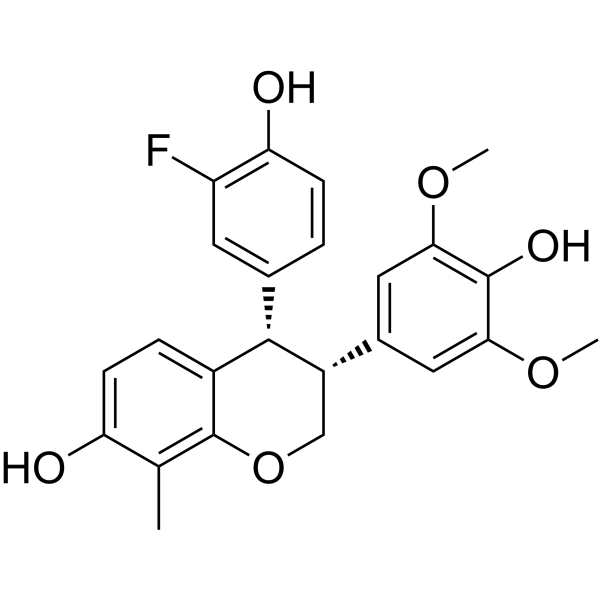
Trilexium (TRX-E-009-1) is a third-generation of benzopyran structurally related to TRX-E-002-1 (HY-114250). Trilexium increases p21 protein expression and induces apoptosis. Trilexium depolymerizes microtubules. Trilexium shows broad anti-cancer activity .
loading...
    loading...
Cat. No.: HY-B0011AS
Synonyms: RP-56976-d5 trihydrate
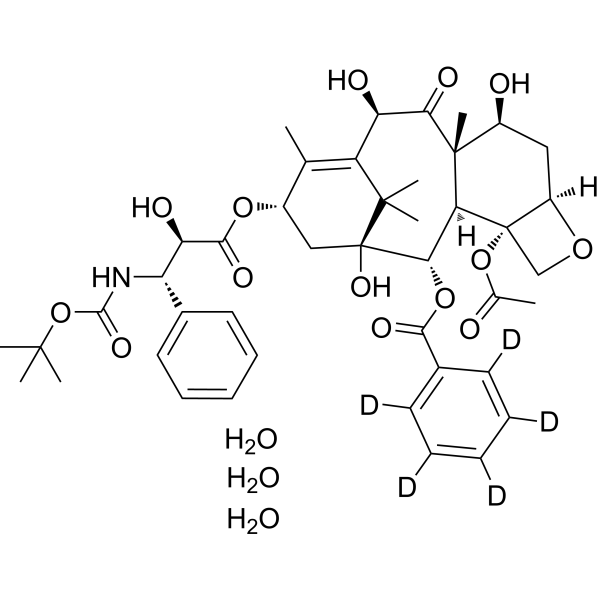
Docetaxel-d5 trihydrate (RP-56976-d5 trihydrate) is the deuterated-labeled Docetaxel trihydrate (HY-B0011A). Docetaxel Trihydrate (RP-56976 Trihydrate) is an orally active tubulin stabilizer with antitumor activity. Docetaxel Trihydrate is a P-glycoprotein substrate and is metabolized by CYP3A to inactive products. Docetaxel Trihydrate binds tubulin, promotes tubulin polymerization, and inhibits microtubule depolymerization. Docetaxel Trihydrate induces aberrant mitosis followed by necrotic-like cell death at low concentrations, and induces G2/M mitotic arrest and drives apoptosis at high concentrations. Docetaxel Trihydrate induces renal injury/renal alterations, sex-dependent granule toxicity/uptake, low cardiac delivery, and decreased hepatic SOD/increased catalase/hepatotoxicity. Docetaxel Trihydrate can be used in cancer-related research .
loading...
    loading...
Cat. No.: HY-135746R
CAS No.: 220246-81-1
7-epi-Taxol (Standard) is the analytical standard of 7-epi-Taxol. This product is intended for research and analytical applications. 7-epi-Taxol is an active metabolite of taxol, with activity comparable to that of taxol against cell replication, promoting microtubule bundle formation and against microtubule depolymerization.
loading...
    loading...
Cat. No.: HY-N0227R
CAS No.: 105454-04-4
Synonyms: 7-epi-Paclitaxel (Standard)
7-epi-Taxol (Standard) is the analytical standard of 7-epi-Taxol. This product is intended for research and analytical applications. 7-epi-Taxol is an active metabolite of taxol, with activity comparable to that of taxol against cell replication, promoting microtubule bundle formation and against microtubule depolymerization.
loading...
    loading...
Cat. No.: HY-400684
Target:  

Bacterial

Domaines de recherche:  

Cancer

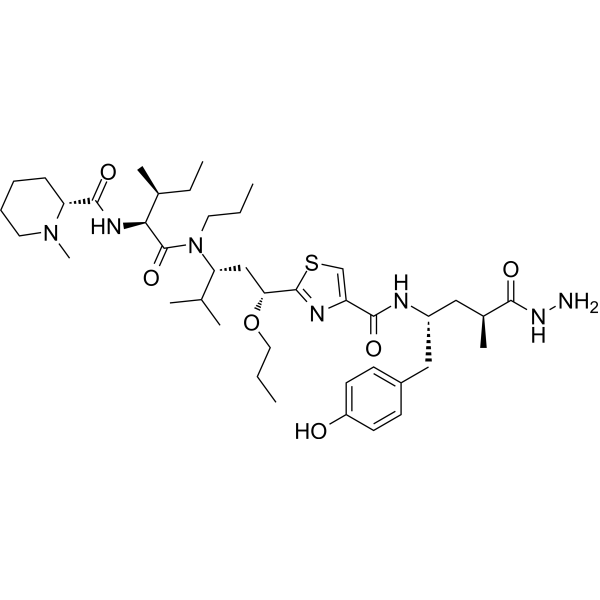
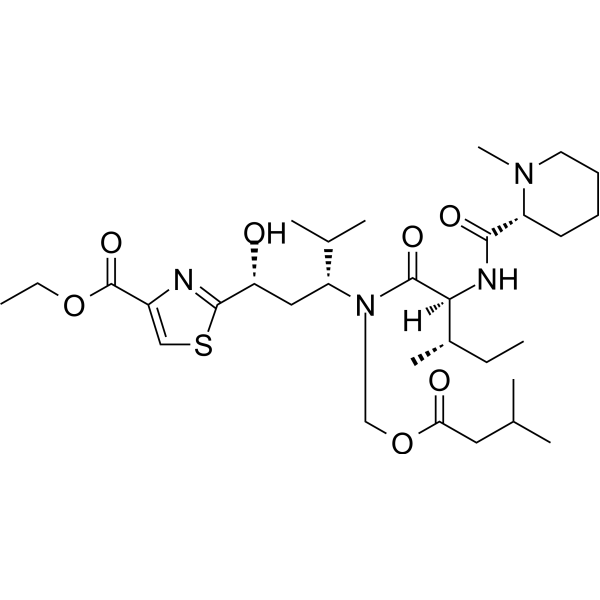
Tubulysin A intermediate-1 is an intermediate in the synthesis of the cytotoxic peptide Tubulysin A (HY-15995). Tubulysin A (TubA) is an antibiotic, anti-microtubule toxins, and apoptosis inducer isolated from myxobacteria. Tubulysin A has anti-angiogenic, anti-microtubule, anti-mitotic, and anti-proliferative activities. Tubulysin A arrests cells in the G2/M phase, effectively inhibits tubulin polymerization, and induces depolymerization of detached microtubules. Tubulysin A acts as an ADC cytotoxin (ADC Cytotoxin) to synthesize ADC .
loading...
    loading...
Cat. No.: HY-B0011AR
CAS No.: 148408-66-6
Synonyms: RP-56976 Trihydrate (Standard)
Docetaxel Trihydrate (Standard) (RP-56976 Trihydrate (Standard)) is the analytical standard of Docetaxel Trihydrate (HY-B0011A). This product is intended for research and analytical applications. Docetaxel Trihydrate (RP-56976 Trihydrate) is an orally active tubulin stabilizer with antitumor activity. Docetaxel Trihydrate is a P-glycoprotein substrate and is metabolized by CYP3A to inactive products. Docetaxel Trihydrate binds tubulin, promotes tubulin polymerization, and inhibits microtubule depolymerization. Docetaxel Trihydrate induces aberrant mitosis followed by necrotic-like cell death at low concentrations, and induces G2/M mitotic arrest and drives apoptosis at high concentrations. Docetaxel Trihydrate induces renal injury/renal alterations, sex-dependent granule toxicity/uptake, low cardiac delivery, and decreased hepatic SOD/increased catalase/hepatotoxicity. Docetaxel Trihydrate can be used in cancer-related research .
loading...
    loading...
Cat. No.: HY-N16438
CAS No.: 64925-81-1
Phomopsin B (Compound 3), a hexapeptide, is a Microtubule depolymerizer. Phomopsin B can be isolated from the fungus Phomopsis Leptostromiformis. Phomopsin B has an antimitotic activity. Phomopsin B can be used for cancers research .
loading...
    loading...
Cat. No.: HY-177898
CAS No.: 1620225-37-7
Target:  

Kinesin

Domaines de recherche:  

Cancer

DHTP is a kinesin-13 family of microtubule depolymerases selective allosteric inhibitor that inhibits kinesin-13 ATPase activity and microtubule depolymerization activity. DHTP inhibits Kif2a and MCAK with IC50 values of 1.2 μM and 4.6 μM, respectively, and does not inhibit other kinesin families. DHTP modulates microtubule dynamics in cells, leading to less dynamic microtubules. DHTP links kinesin-13 overexpression to cancer and Paclitaxel (HY-B0015) resistance. DHTP can be used for the research of cancer .
loading...
    loading...
Cat. No.: HY-138008
CAS No.: 1415262-07-5
Domaines de recherche:  

Cancer

WX-132-18B is a tubulin inhibitor with an IC50 of 0.45-0.99 nM. WX-132-18B selectively binds to the colchicine-binding site on tubulin, reduces microtubule content via depolymerization, and inhibits tubulin polymerization. WX-132-18B induces tumor cell cycle arrest, apoptosis and changes in nuclear membrane permeability, and decreases mitochondrial membrane potential. WX-132-18B exhibits antiproliferative activity against endothelial cells and human tumor cells, and inhibits the proliferation and growth of xenograft tumors in mice. WX-132-18B can be used in research related to sarcoma, non-small cell lung cancer, gastric cancer and breast cancer .
loading...
    loading...
  • 1

