



VBIT-12
Based on 9 publication(s) in Google Scholar
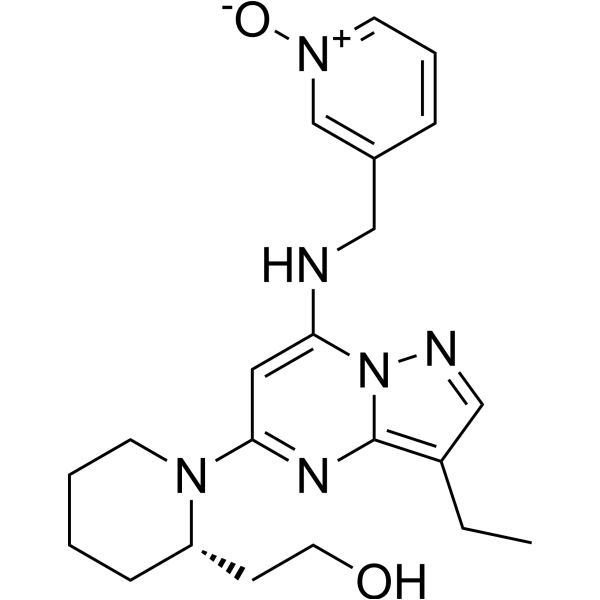
VBIT-12 is a potent VDAC1 inhibitor. VBIT-12 directly interacts with VDAC1 and prevents VDAC1 oligomerization, and thus inhibits apoptotic action of VDAC1.
Nos produits utilisent uniquement pour la recherche. Nous ne vendons pas aux patients.
- Pureté : 98.87%
- CAS No.: 2089227-65-4
- Formule: C25H27N3O3
- Masse moléculaire:417.50
-
Stockage:
-20°C, protect from light
* In solvent : -80°C, 6 months; -20°C, 1 month (protect from light)


To place orders, for customer services and technical support, please contact: MedChemExpress USA
Tel: 609-228-6898 E-mail: [email protected] [email protected]


-
 Activité biologique
-
Chemical Information
-
Solvant et solubilité
- Protocole
- Pureté et documentation
- Références
-
 Help & FAQs


-
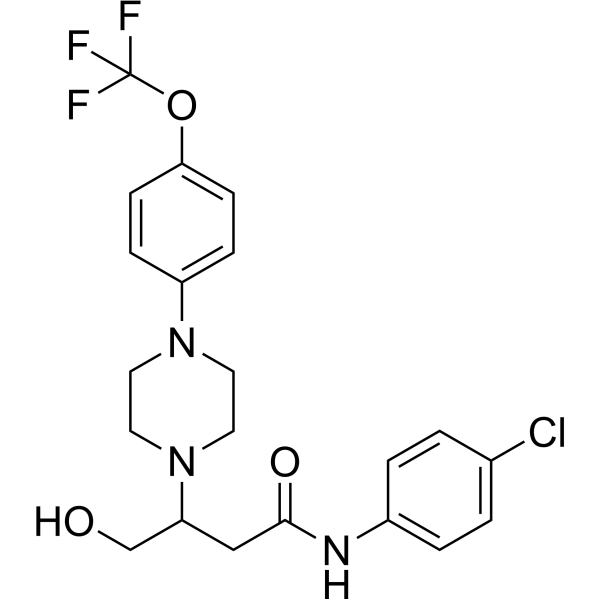
HY-129122
VBIT-4VDAC1 Inhibitor -
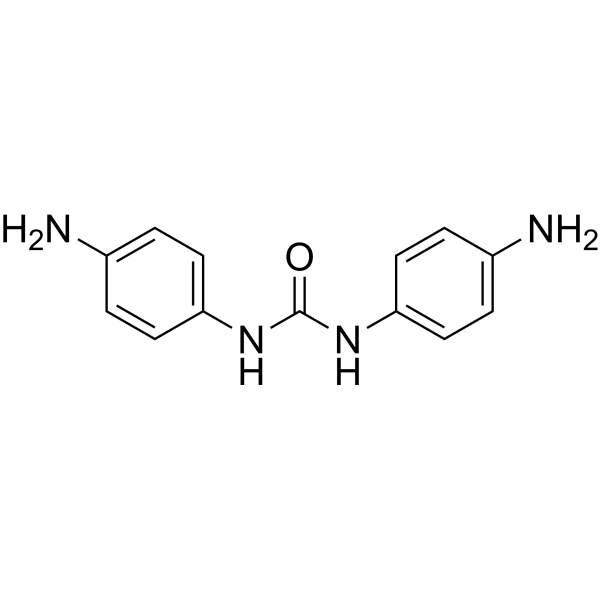
HY-108937
NSC 15364VDAC1 Oligomerization Inhibitor -
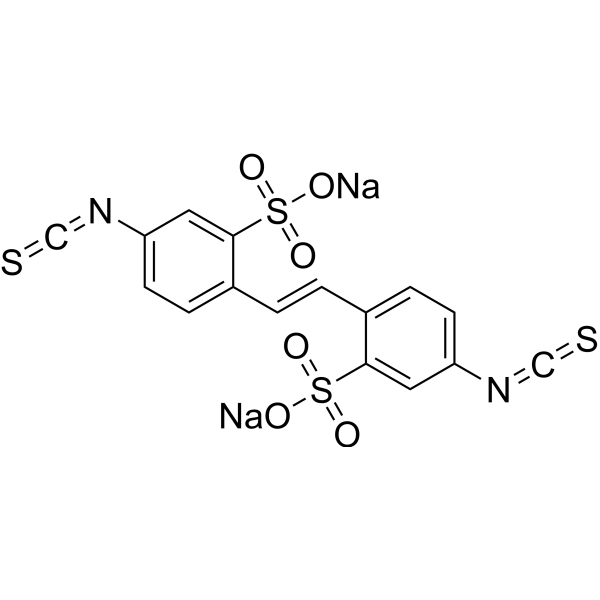
HY-D0086
DIDS sodium saltVDAC Inhibitor -
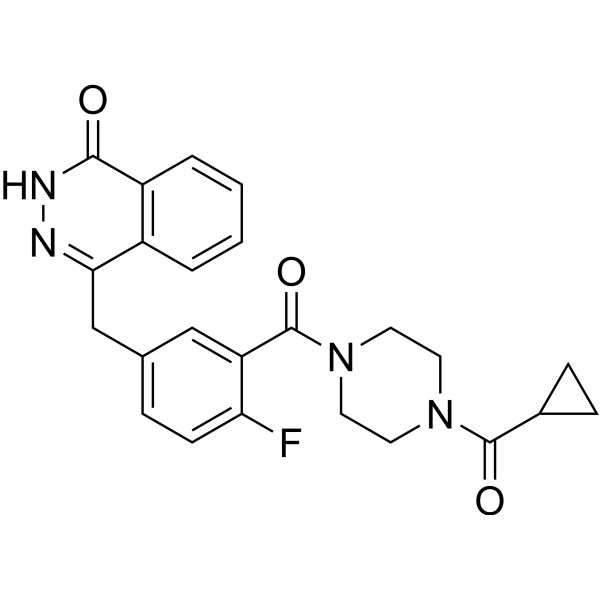
HY-10162
OlaparibPARP Inhibitor -
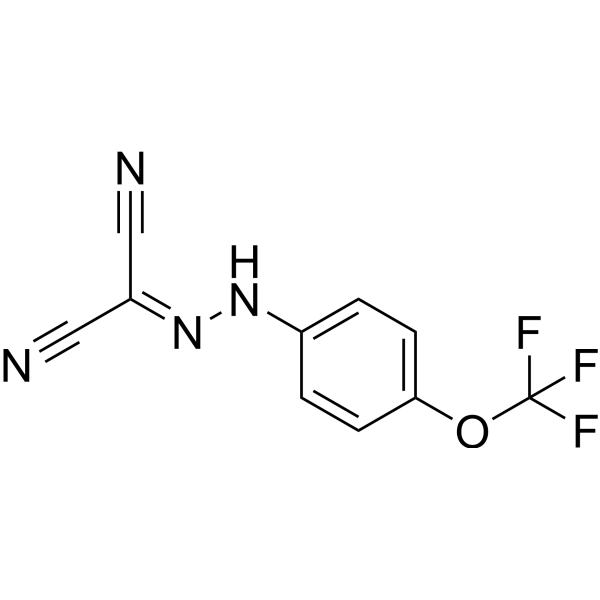
HY-100410
FCCPOXPHOS Uncoupler -
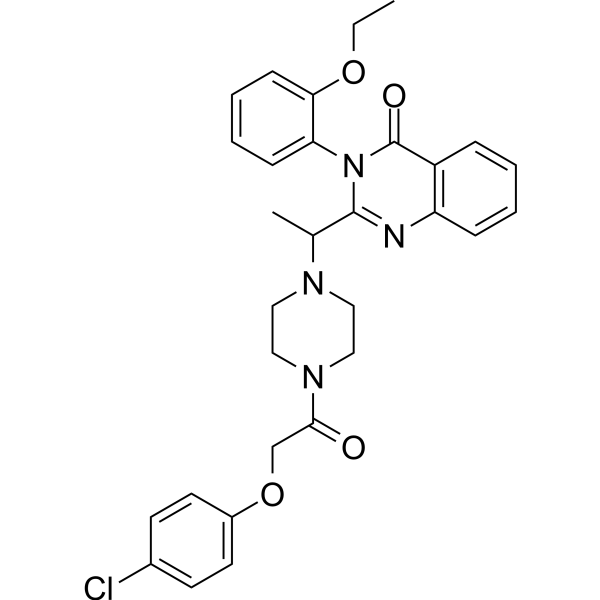
HY-15763
ErastinFerroptosis Inducer -
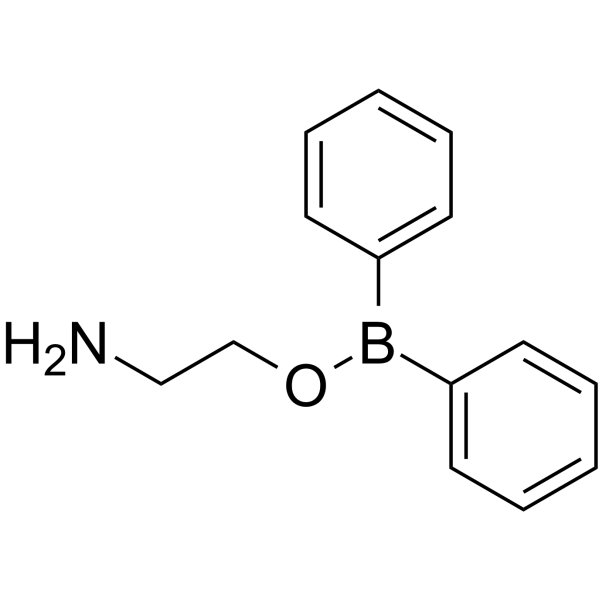
HY-W009724
2-Aminoethyl diphenylborinateIP3R Inhibitor -
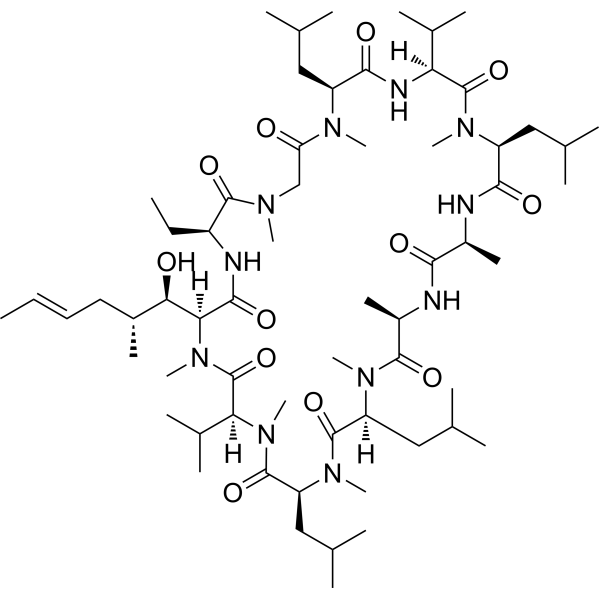
HY-B0579
Cyclosporin ACalcineurin Inhibitor -
HY-10492
DinaciclibCDK2/5/9 Inhibitor -

HY-108937R
NSC 15364 (Standard)Reference Standard
Publications Citing Use of MedChemExpress (MCE) VBIT-12
More- Adv Sci (Weinh). 2026 Jul 2:e76060.
- Sci Adv. 2025 Apr 4;11(14):eadr6415. [Abstract]
- Phytomedicine. 2026 Jun 17:159:158455. [Abstract]
- Free Radic Biol Med. 2026 Apr:247:71-94. [Abstract]
- Free Radic Biol Med. 2025 Oct 25.
- Environ Pollut. 2022 Feb 15;295:118720. [Abstract]
- J Ethnopharmacol. 2025 Sep 3:120526. [Abstract]
- Cell Biol Toxicol. 2022 Feb;38(1):87-110. [Abstract]
- Discov Oncol. 2025 Nov 19;16(1):2129. [Abstract]
 Customer Validation & Images

-
Others
-
WB
-
IF
-
Cell Proliferation/Viability Assay
-
IP


Activité biologique
Description
IC50 & Target
|
VDAC1 |
In Vitro
VBIT-12 inhibits VDAC1 oligomerization, hexokinase (HK) detachment and apoptotic cell death[1].
MedChemExpress (MCE) has not independently confirmed the accuracy of these methods. They are for reference only.


Chemical Information
-
CAS No. 2089227-65-4
-
Appearance Solid
-
Masse moléculaire 417.50
-
Formule C25H27N3O3
-
Color White to off-white
-
SMILES
O=C(O)CNC(C1(NC2=CC=CC=C2)CCN(CC3=C4C=CC=CC4=CC=C3)CC1)=O
-
Livraison
Room temperature in continental US; may vary elsewhere.
-
Stockage
-20°C, protect from light
* In solvent : -80°C, 6 months; -20°C, 1 month (protect from light)


Publications (9)
-
Journal Impact Factor
-
Most Recent
-
-
Sci Adv
2025 Apr 4;11(14):eadr6415. PMID: 40184468
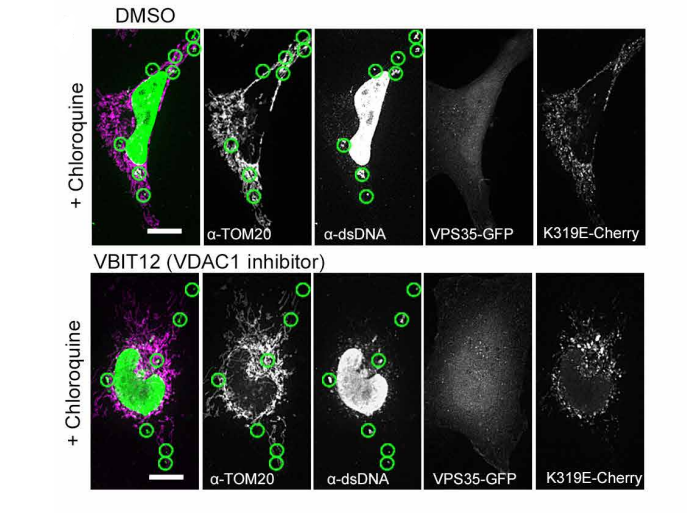
VBIT-12 purchased from MedChemExpress. Usage Cited in: Sci Adv. 2025 Apr 4;11(14):eadr6415. [Abstract]
The role of mitochondrial membrane pores in mtDNA release was analyzed. Under specified conditions, 24 hours after transfection, cells were treated for 4 hours with 10 μM chloroquine, 25 μM VBIT-12 (to inhibit VDAC1), or 100 μM V5 peptide (to inhibit BAX oligomerization).
-
Phytomedicine
Delphinidin targets voltage-dependent anion channel 1 to inhibit ferroptosis and protect against retinal photochemical damage. [Abstract]2026 Jun 17:159:158455. PMID: 42335641 -
Free Radic Biol Med
PGAM1-dependent VDAC1 oligomerization disrupts mitochondrial quality control to drive doxorubicin cardiotoxicity via the cGAS-STING-ferroptosis axis. [Abstract]2026 Apr:247:71-94. PMID: 41651300 -
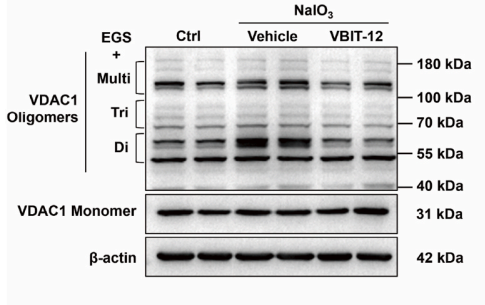
VBIT-12 purchased from MedChemExpress. Usage Cited in: Free Radic Biol Med. 2025 Oct 25.
Inhibition of VDAC1 oligomerization maintained RPE function in vitro. ARPE-19 cells were pretreated with 10 μM VBIT-12 for 2 h, followed by exposure to 10 mM NaIO3 for 24 h. Western blots of EGS-treated VDAC1 monomers and oligomers were obtained from ARPE-19 cells in the control group, NaIO3-induced group, and NaIO3 and VBIT-12 pretreated groups.
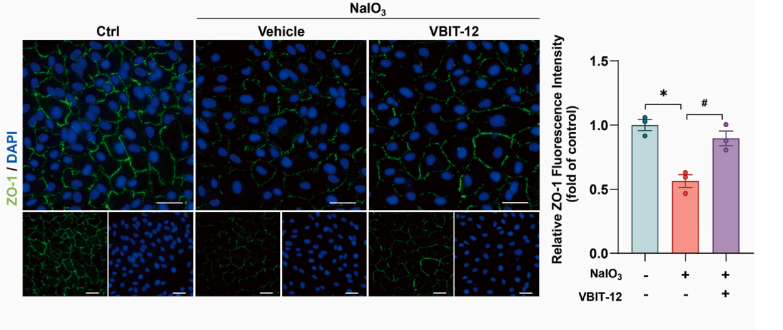
VBIT-12 purchased from MedChemExpress. Usage Cited in: Free Radic Biol Med. 2025 Oct 25.
Inhibition of VDAC1 oligomerization maintained RPE function in vitro. ARPE-19 cells were pretreated with 10 μM VBIT-12 for 2 h, followed by exposure to 10 mM NaIO3 for 24 h. Representative immunofluorescence images of ZO-1 from each group are shown. Cell nuclei were counterstained with DAPI. The figure shows the quantitative analysis results of ZO-1 fluorescence intensity.
VBIT-12 purchased from MedChemExpress. Usage Cited in: Free Radic Biol Med. 2025 Oct 25.
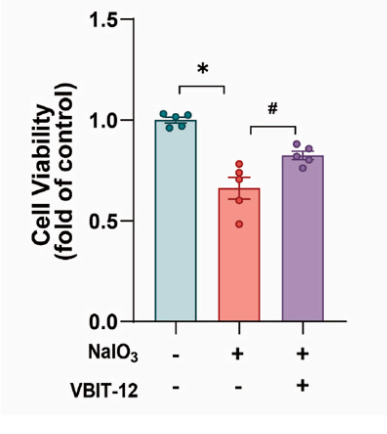
Inhibition of VDAC1 oligomerization maintained RPE function in vitro. ARPE-19 cells were pretreated with 10 μM VBIT-12 for 2 hours, followed by exposure to 10 mM NaIO3 for 24 hours. Cell viability was assessed using the CCK-8 assay in each group.
VBIT-12 purchased from MedChemExpress. Usage Cited in: Free Radic Biol Med. 2025 Oct 25.
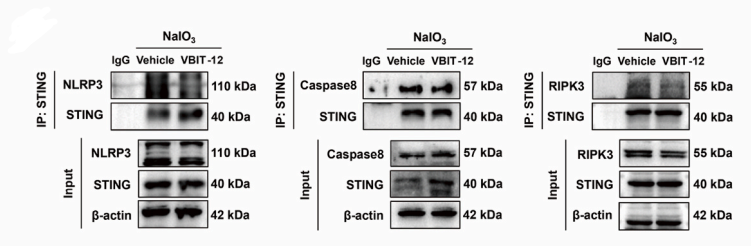
Co-IP assay demonstrating the physical association of STING with major PANoptosome components (NLRP3, Caspase-8, and RIPK3) in NaIO3-induced ARPE-19 cells with or without VBIT-12 intervention.
-
Environ Pollut
Targeting mitochondrial permeability transition pore ameliorates PM2.5-induced mitochondrial dysfunction in airway epithelial cells. [Abstract]2022 Feb 15;295:118720. PMID: 34953947 -
J Ethnopharmacol
Liquiritigenin alleviates inflammation and mitochondrial dysfunction in acute pancreatitis via ERβ-VDAC1 signaling. [Abstract]2025 Sep 3:120526. PMID: 40912483 -
Cell Biol Toxicol
LvHemB1, a novel cationic antimicrobial peptide derived from the hemocyanin of Litopenaeus vannamei, induces cancer cell death by targeting mitochondrial voltage-dependent anion channel 1. [Abstract]2022 Feb;38(1):87-110. PMID: 33630204 -
Discov Oncol
VDAC1 as prognostic marker and therapeutic target in lung adenocarcinoma: a study integrating bioinformatics and experimental validation. [Abstract]2025 Nov 19;16(1):2129. PMID: 41258557


Solvant et solubilité
In Vitro:
DMSO : 250 mg/mL (598.80 mM; Need ultrasonic; Hygroscopic DMSO has a significant impact on the solubility of product, please use newly opened DMSO)
Please refer to the solubility information to select the appropriate solvent. Once prepared, please aliquot and store the solution to prevent product inactivation from repeated freeze-thaw cycles.
Storage method and period of stock solution: -80°C, 6 months; -20°C, 1 month (protect from light). When stored at -80°C, please use it within 6 months. When stored at -20°C, please use it within 1 month.
Please refer to the solubility information to select the appropriate solvent. Once prepared, please aliquot and store the solution to prevent product inactivation from repeated freeze-thaw cycles.
Storage method and period of stock solution: -80°C, 6 months; -20°C, 1 month (protect from light). When stored at -80°C, please use it within 6 months. When stored at -20°C, please use it within 1 month.
Concentration (start) × Volume (start) = Concentration (final) × Volume (final)
In Vivo:
Select the appropriate dissolution method based on your experimental animal and administration route.
- For the following dissolution methods, please ensure to first prepare a clear stock solution using an In Vitro approach and then sequentially add co-solvents:
- To ensure reliable experimental results, the clarified stock solution can be appropriately stored based on storage conditions. As for the working solution for In Vivo experiments, it is recommended to prepare freshly and use it on the same day.
- The percentages shown for the solvents indicate their volumetric ratio in the final prepared solution. If precipitation or phase separation occurs during preparation, heat and/or sonication can be used to aid dissolution.
Add each solvent one by one: 10% DMSO 40% PEG300 5% Tween-80 45% Saline
Solubility: ≥ 2.08 mg/mL (4.98 mM); Clear solution
This protocol yields a clear solution of ≥ 2.08 mg/mL (saturation unknown).
Taking 1 mL working solution as an example, add 100 μL DMSO stock solution (20.8 mg/mL) to 400 μL PEG300, and mix evenly; then add 50 μL Tween-80 and mix evenly; then add 450 μL Saline to adjust the volume to 1 mL.
Preparation of Saline: Dissolve 0.9 g sodium chloride in ddH₂O and dilute to 100 mL to obtain a clear Saline solution.
Add each solvent one by one: 10% DMSO 90% (20% SBE-β-CD in Saline)
Solubility: ≥ 2.08 mg/mL (4.98 mM); Clear solution
This protocol yields a clear solution of ≥ 2.08 mg/mL (saturation unknown).
Taking 1 mL working solution as an example, add 100 μL DMSO stock solution (20.8 mg/mL) to 900 μL 20% SBE-β-CD in Saline, and mix evenly.
Preparation of 20% SBE-β-CD in Saline (4°C, storage for one week): 2 g SBE-β-CD powder is dissolved in 10 mL Saline, completely dissolve until clear.
In Vivo Dissolution Calculator
Please enter the basic information of animal experiments:
-
-
-
-
Recommended: Prepare an additional quantity of animals to account for potential losses during experiments.
Please enter your animal formula composition:
-
%DMSO +
Recommended: Keep the proportion of DMSO in working solution below 2% if your animal is weak.
-
%+
-
+%Tween-80 + +
-
%Saline +
The co-solvents required include: DMSO, . All of co-solvents are available by MedChemExpress (MCE). , Tween 80. All of co-solvents are available by MedChemExpress (MCE).
Working solution concentration: 0.22 mg/mL
Method for preparing stock solution: mg drug dissolved in μL DMSO. Stock solution concentration: mg/mL. * In solvent : -80°C, 6 months; -20°C, 1 month (protect from light)
1. Take μL DMSO stock solution;
2. Add μL .
μL , mix evenly;
3. Then add μL Tween 80, mix evenly;
4. Then add μL
Please ensure that the stock solution in the first step is dissolved to a clear state, and add co-solvents in sequence. You can use ultrasonic heating (ultrasonic cleaner, recommended frequency 20-40 kHz), vortexing, etc. to assist dissolution.


Pureté et documentation
-
Fiche technique (276 KB)
-
SDS (537 KB)
- English - EN (537 KB)
- Français - FR (537 KB)
- Deutsch - DE (537 KB)
- Norwegian - NO (537 KB)
- Español - ES (537 KB)
- Swedish - SV (537 KB)
- Italian - IT (537 KB)
- Korean - KR (537 KB)
- Portuguese - PT (537 KB)
-
Instruction de manipulation (2659 KB)
Références


Complete Stock Solution Preparation Table
Please refer to the solubility information to select the appropriate solvent. Once prepared, please aliquot and store the solution to prevent product inactivation from repeated freeze-thaw cycles.
Storage method and period of stock solution: -80°C, 6 months; -20°C, 1 month (protect from light). When stored at -80°C, please use it within 6 months. When stored at -20°C, please use it within 1 month.
| Optional Solvent | Concentration Solvent Mass | 1 mg | 5 mg | 10 mg | 25 mg |
|---|---|---|---|---|---|
| DMSO | 1 mM | 2.3952 mL | 11.9760 mL | 23.9521 mL | 59.8802 mL |
| 5 mM | 0.4790 mL | 2.3952 mL | 4.7904 mL | 11.9760 mL | |
| 10 mM | 0.2395 mL | 1.1976 mL | 2.3952 mL | 5.9880 mL | |
| 15 mM | 0.1597 mL | 0.7984 mL | 1.5968 mL | 3.9920 mL | |
| 20 mM | 0.1198 mL | 0.5988 mL | 1.1976 mL | 2.9940 mL | |
| 25 mM | 0.0958 mL | 0.4790 mL | 0.9581 mL | 2.3952 mL | |
| 30 mM | 0.0798 mL | 0.3992 mL | 0.7984 mL | 1.9960 mL | |
| 40 mM | 0.0599 mL | 0.2994 mL | 0.5988 mL | 1.4970 mL | |
| 50 mM | 0.0479 mL | 0.2395 mL | 0.4790 mL | 1.1976 mL | |
| 60 mM | 0.0399 mL | 0.1996 mL | 0.3992 mL | 0.9980 mL | |
| 80 mM | 0.0299 mL | 0.1497 mL | 0.2994 mL | 0.7485 mL | |
| 100 mM | 0.0240 mL | 0.1198 mL | 0.2395 mL | 0.5988 mL |


VBIT-12 Related Classifications
HY-135885 Related Classifications
 Powered by Bioz