



125628-97-9
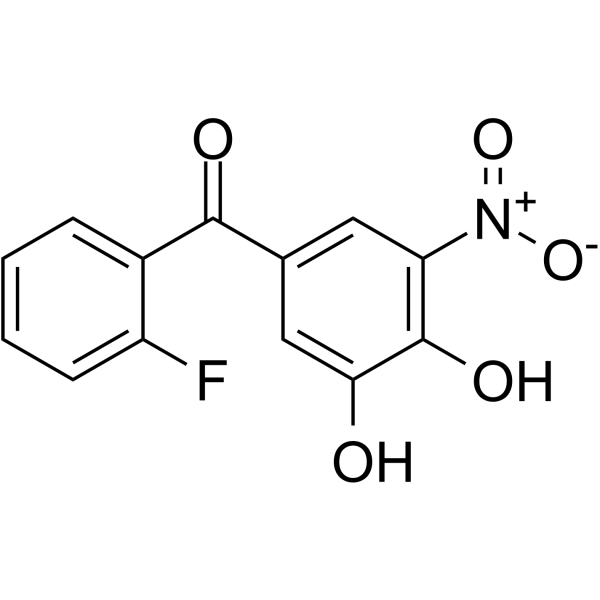
Chemical Structure
Ro 41-0960
- CAS 番号: 125628-97-9
- Formula:C13H8FNO5
- Molecular Weight:277.20
IUPAC Name: (3,4-dihydroxy-5-nitrophenyl)(2-fluorophenyl)methanone
InChIKey: RQPAUNZYTYHKHA-UHFFFAOYSA-N
SMILES: O=C(C1=CC([N+]([O-])=O)=C(C(O)=C1)O)C2=CC=CC=C2F
Biological Activity: Ro 41-0960 is a CNS-penetrant, orally active catechol-O-methyl transferase (COMT) inhibitor. Ro 41-0960 reduces dopamine catabolism, increases striatal dopamine and DOPAC levels, decreases striatal HVA levels, induces apoptosis, inhibits proliferation and extracellular matrix formation in uterine fibroid cells. Ro 41-0960 arrests or shrinks uterine fibroid lesions in rats. Ro 41-0960 can be used for the research of Parkinson’s disease, uterine leiomyomas, and breast cancer[1][2][3][4][5].
| 製品番号 | 製品名 | 純度 | 製品説明 | Pricing | |||||||||||||||||||
|---|---|---|---|---|---|---|---|---|---|---|---|---|---|---|---|---|---|---|---|---|---|---|---|
|
|
Ro 41-0960 | 98.22% | Ro 41-0960 is a CNS-penetrant, orally active catechol-O-methyl transferase (COMT) inhibitor. Ro 41-0960 reduces dopamine catabolism, increases striatal dopamine and DOPAC levels, decreases striatal HVA levels, induces apoptosis, inhibits proliferation and extracellular matrix formation in uterine fibroid cells. Ro 41-0960 arrests or shrinks uterine fibroid lesions in rats. Ro 41-0960 can be used for the research of Parkinson’s disease, uterine leiomyomas, and breast cancer. | ||||||||||||||||||||
|
loading...
/
|
|||||||||||||||||||||||
-
Similarity Score 0.80
 HY-17406RTolcapone (Standard)
-
Similarity Score 0.74
 HY-106405RNebicapone (Standard)
-
Similarity Score 0.71
 HY-W1040762-Amino-2'-fluoro-5-nitrobenzophenone
-
Similarity Score 0.71
 HY-100642R3-O-Methyltolcapone (Standard)
-
Similarity Score 0.69
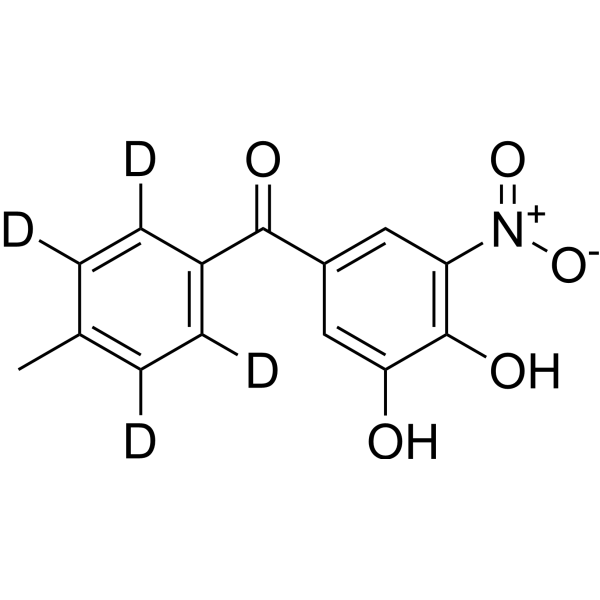 HY-17406S1Tolcapone-d4
-
Similarity Score 0.66
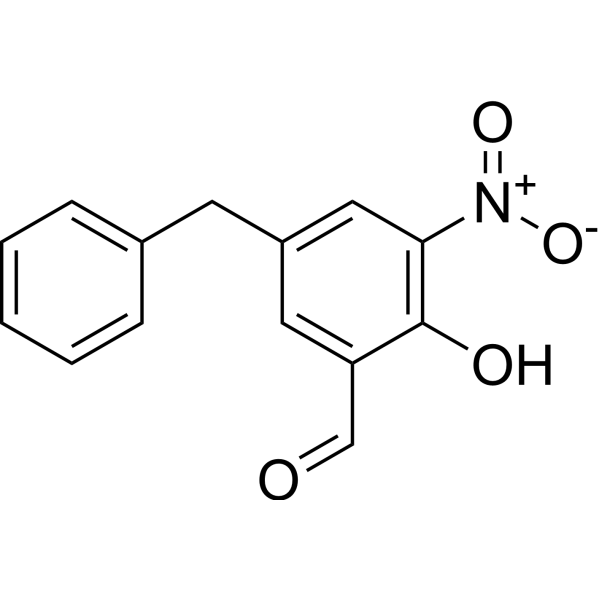 HY-124817Col003
-
Similarity Score 0.65
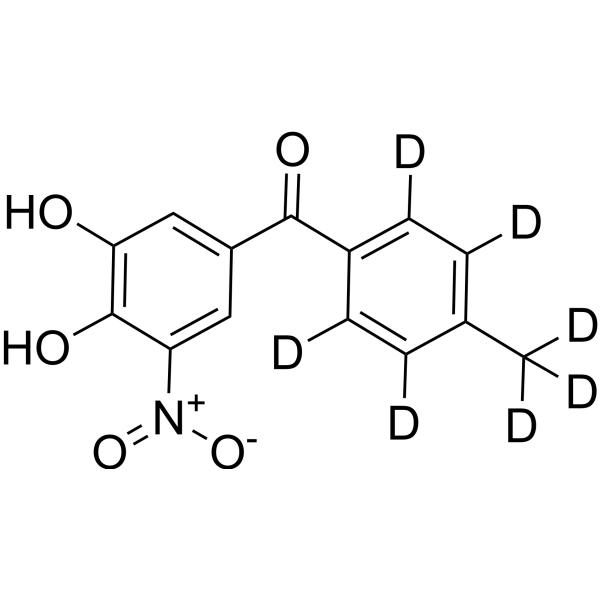 HY-17406STolcapone-d7
-
Similarity Score 0.64
 HY-B21202-Amino-5-nitrobenzophenone
-
Similarity Score 0.63
 HY-153410Antifungal agent 49
-

Explore the MedChemAI to find more analogs


References
-
[1]. Elena Gallardo, et al. The effect of hydroxytyrosol and its nitroderivatives on catechol-O-methyl transferase activity in rat
striatal tissue. RSC Adv., 2014, 4, 61086. - [2]. Hassan MH, et al. Towards non-surgical therapy for uterine fibroids: catechol-O-methyl transferase inhibitor shrinks uterine fibroid lesions in the Eker rat model. Hum Reprod. 2011;26(11):3008-3018. [Content Brief]
- [3]. Aguayo-Ortiz R, et al. A multiscale approach for bridging the gap between potency, efficacy, and safety of small molecules directed at membrane proteins. Sci Rep. 2021 Aug 16;11(1):16580. [Content Brief]
- [4]. Miller JW, et al. Effect of L-Dopa and the catechol-O-methyltransferase inhibitor Ro 41-0960 on sulfur amino acid metabolites in rats. Clin Neuropharmacol. 1997 Feb;20(1):55-66. [Content Brief]
- [5]. van Duursen MB, et al. Phytochemicals inhibit catechol-O-methyltransferase activity in cytosolic fractions from healthy human mammary tissues: implications for catechol estrogen-induced DNA damage. Toxicol Sci. 2004;81(2):316-324. [Content Brief]



