



1402703-29-0
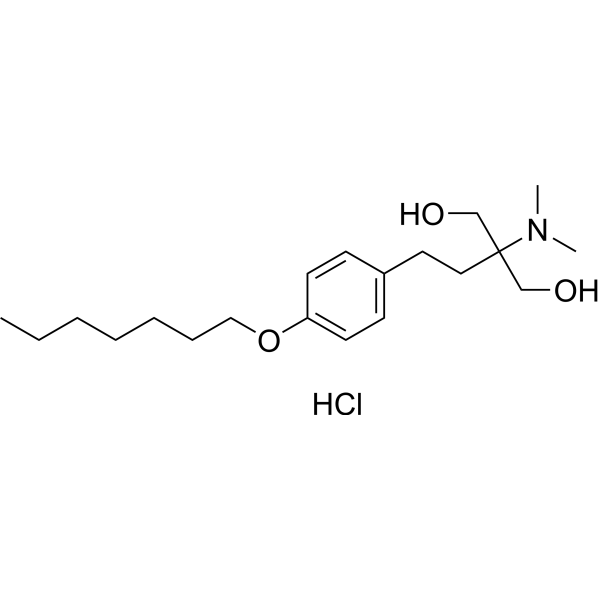
1402703-29-0
Chemical Structure
ST1074
- CAS No.: 1402703-29-0
- Formula:C20H36ClNO3
- Molecular Weight:373.96
IUPAC Name: 2-(dimethylamino)-2-(4-(heptyloxy)phenethyl)propane-1,3-diol hydrochloride
InChIKey: ZWQRAOLRTJCDIU-UHFFFAOYSA-N
SMILES: OCC(CO)(CCC1=CC=C(C=C1)OCCCCCCC)N(C)C.Cl
Biological Activity: ST1074 is a ceramide synthase inhibitor targeting CerS2 and CerS4. ST1074 has human IC50 values of 28.7 μM and 21.4 μM for CerS2 and CerS4, respectively, and reduces the synthesis of specific ceramide products. ST1074 induces apoptosis and decreases cell viability. SST1074 can be used for research on cancer and melanoma[1][2][3][4].
| Cat. No. | Product Name | Purity | Description | Pricing | |||||||||||||||||||
|---|---|---|---|---|---|---|---|---|---|---|---|---|---|---|---|---|---|---|---|---|---|---|---|
|
|
ST1074 | 99.41% | ST1074 is a ceramide synthase inhibitor targeting CerS2 and CerS4. ST1074 has human IC50 values of 28.7 μM and 21.4 μM for CerS2 and CerS4, respectively, and reduces the synthesis of specific ceramide products. ST1074 induces apoptosis and decreases cell viability. SST1074 can be used for research on cancer and melanoma. | ||||||||||||||||||||
|
loading...
/
|
|||||||||||||||||||||||
Structural Analogs
-
Similarity Score 0.79
 HY-124863A(R)-AAL
-
Similarity Score 0.79
 HY-168471AAL-149
-
Similarity Score 0.72
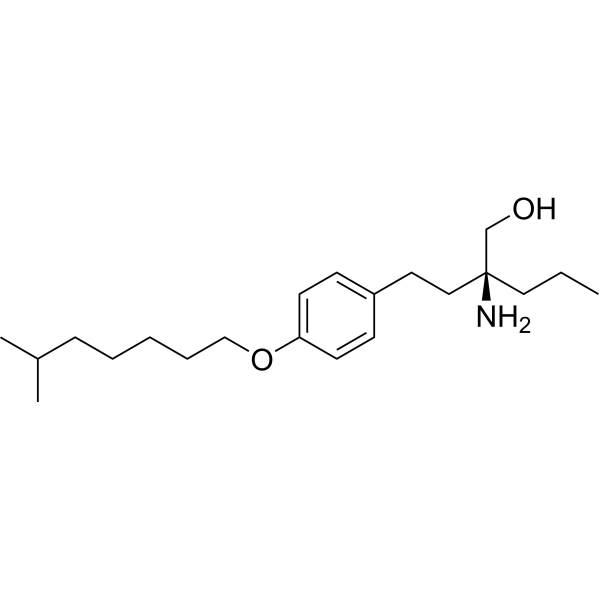 HY-117720OSU-2S
-
Similarity Score 0.69
 HY-W7782604-Nonyl phenol monoethoxylate-13C6
-
Similarity Score 0.68
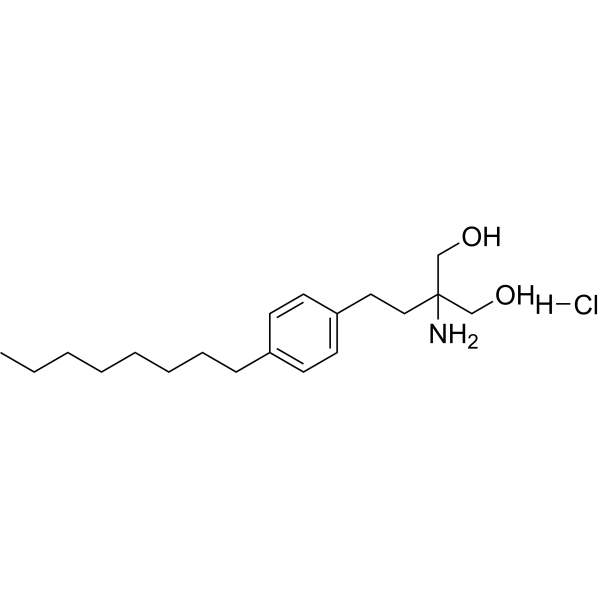 HY-12005RFingolimod hydrochloride (Standard)
-
Similarity Score 0.67
 HY-W7782594-Nonyl phenol diethoxylate-13C6
-
Similarity Score 0.67
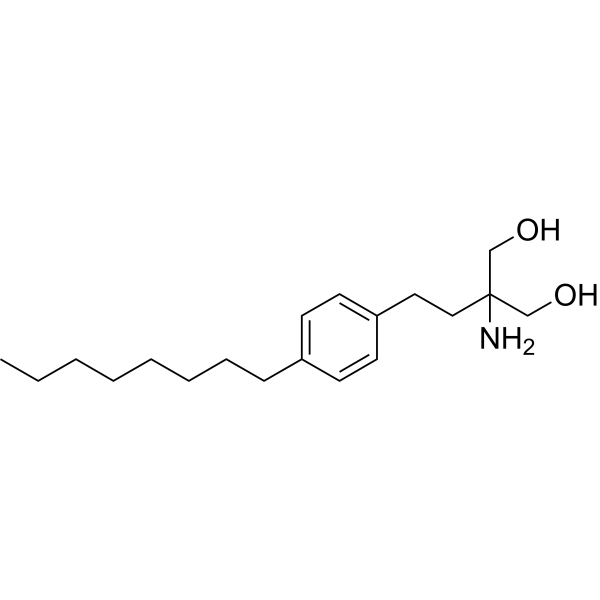 HY-11063Fingolimod
-
Similarity Score 0.66
 HY-123439FTY720-C2
-
Similarity Score 0.65
 HY-12897(R)-FTY720-OMe
-

Explore the MedChemAI to find more analogs


References
- [1]. Schiffmann S, et al. Inhibitors of specific ceramide synthases. Biochimie. 2012 Feb;94(2):558-65. [Content Brief]
- [2]. Jain V, et al. Targeting UGCG Overcomes Resistance to Lysosomal Autophagy Inhibition. Cancer discovery. 2023 Feb 06;13(2):454-473. [Content Brief]
- [3]. Morris AP, et al. Trans-ethnic kidney function association study reveals putative causal genes and effects on kidney-specific disease aetiologies. Nature communications. 2019 Jan 03;10(1):29.
- [4]. García Álvarez L, et al. A novel field-based approach to validate the use of network models for disease spread between dairy herds. Epidemiology and infection. 2011 Dec;139(12):1863-74.



