



162852-62-2

Chemical Structure
Z-VAD
- CAS No.: 162852-62-2
- Formula:C20H27N3O8
- Molecular Weight:437.44
InChIKey: ZEQLKYSQIAZNOS-NOLJZWGESA-N
SMILES: OC(C[C@@H](C(O)=O)NC([C@H](C)NC([C@H](C(C)C)NC(OCC1=CC=CC=C1)=O)=O)=O)=O
Biological Activity: Z-VAD is an irreversible, broad-spectrum pan-caspase inhibitor that can inhibit a variety of caspases including caspase-3, -6, -7, -8, -9, etc. (with a weaker inhibitory effect on caspase-2). Z-VAD can block apoptosis signaling pathways, induce autophagy and necrosis in tumor cells, and has anti-angiogenic activity. Z-VAD can enhance the sensitivity of breast cancer and lung cancer cells to radiotherapy in vitro and in vivo, and prolong the growth delay of tumor xenograft models. Z-VAD is well tolerated and is mainly used in research related to cancer radiosensitization and cell death pathway regulation[1].
| Cat. No. | Product Name | Purity | Description | Pricing | |||||||||||||||||||
|---|---|---|---|---|---|---|---|---|---|---|---|---|---|---|---|---|---|---|---|---|---|---|---|
|
|
Z-VAD | 99.93% | Z-VAD is an irreversible, broad-spectrum pan-caspase inhibitor that can inhibit a variety of caspases including caspase-3, -6, -7, -8, -9, etc. (with a weaker inhibitory effect on caspase-2). Z-VAD can block apoptosis signaling pathways, induce autophagy and necrosis in tumor cells, and has anti-angiogenic activity. Z-VAD can enhance the sensitivity of breast cancer and lung cancer cells to radiotherapy in vitro and in vivo, and prolong the growth delay of tumor xenograft models. Z-VAD is well tolerated and is mainly used in research related to cancer radiosensitization and cell death pathway regulation. | ||||||||||||||||||||
|
loading...
/
|
|||||||||||||||||||||||
|
|
Z-VAD (Standard) | ≥98% | Z-VAD (Standard) is the analytical standard of Z-VAD (HY-164388). This product is intended for research and analytical applications. Z-VAD is an irreversible, broad-spectrum pan-caspase inhibitor that can inhibit a variety of caspases including caspase-3, -6, -7, -8, -9, etc. (with a weaker inhibitory effect on caspase-2). Z-VAD can block apoptosis signaling pathways, induce autophagy and necrosis in tumor cells, and has anti-angiogenic activity. Z-VAD can enhance the sensitivity of breast cancer and lung cancer cells to radiotherapy in vitro and in vivo, and prolong the growth delay of tumor xenograft models. Z-VAD is well tolerated and is mainly used in research related to cancer radiosensitization and cell death pathway regulation. | ||||||||||||||||||||
|
loading...
/
|
|||||||||||||||||||||||
-
Similarity Score 0.87
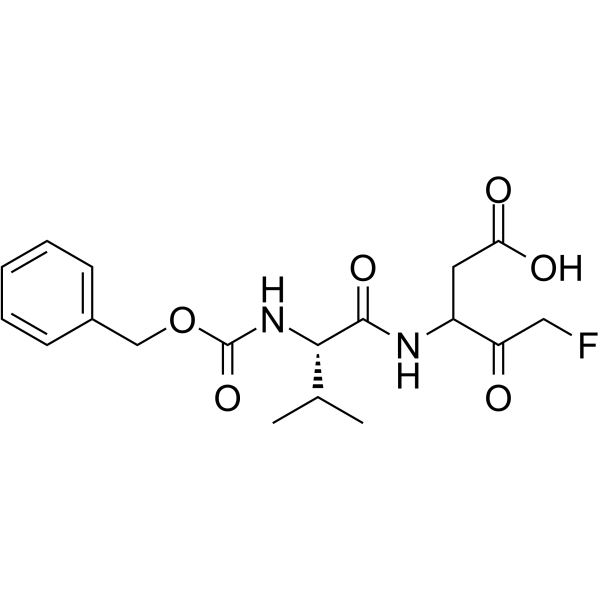
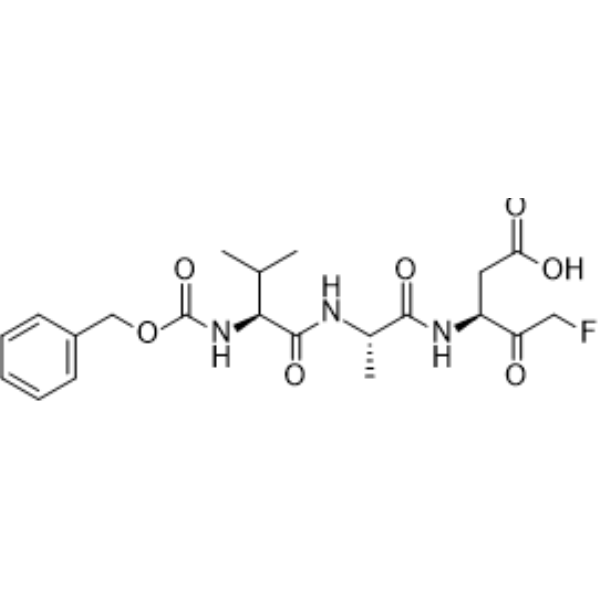 HY-16658BZ-VAD-FMK
-
Similarity Score 0.87
 HY-16658CZ-VA-DL-D-FMK
-
Similarity Score 0.87
 HY-17678Z-VAD-CHO
-
Similarity Score 0.80
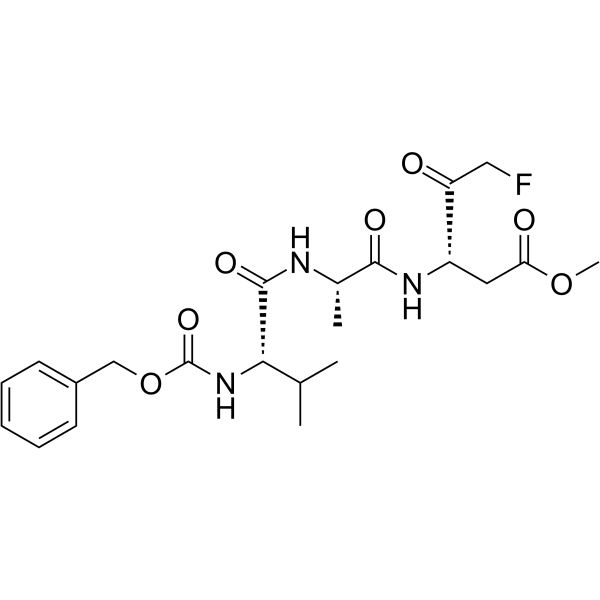 HY-16658Z-VAD(OMe)-FMK
-
Similarity Score 0.80
 HY-P0110(Iso)-Z-VAD(OMe)-FMK
-
Similarity Score 0.78
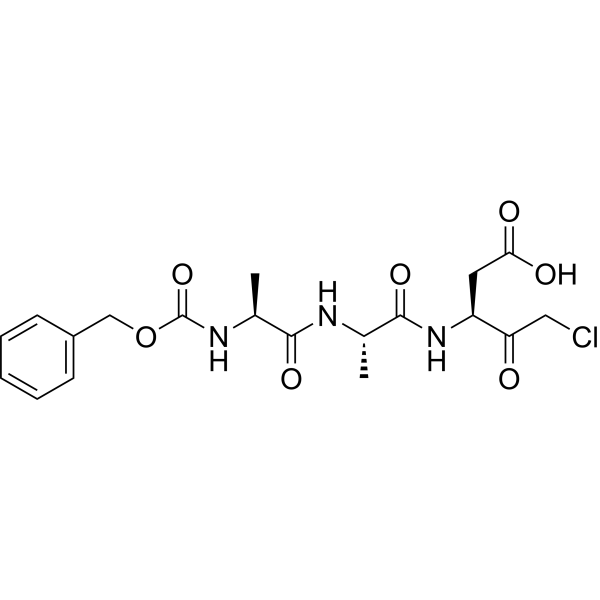 HY-P10004Z-Ala-Ala-Asp-CMK
-
Similarity Score 0.78
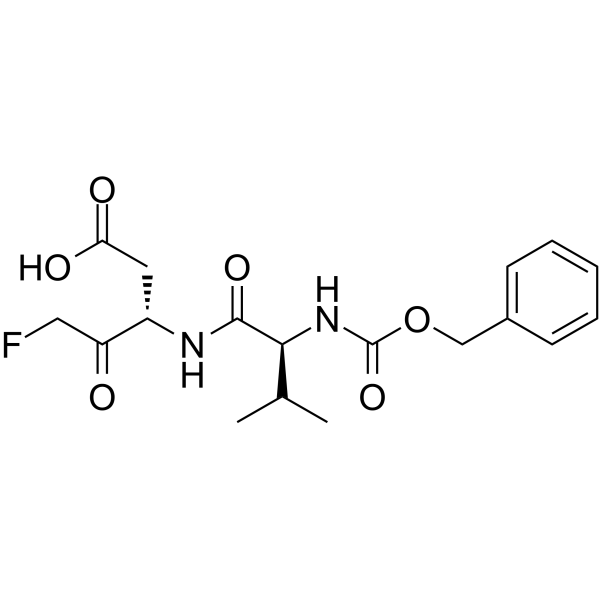 HY-10397EP1013
-
Similarity Score 0.78
 HY-10397AMX1013
-
Similarity Score 0.77
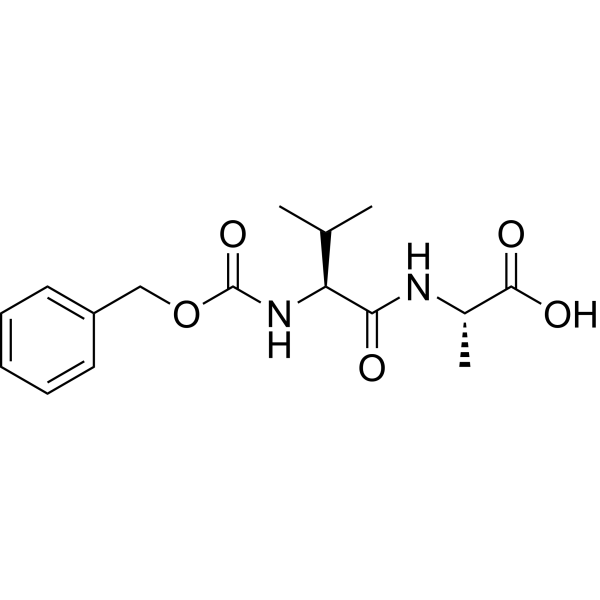 HY-42709Z-Val-Ala-OH
-

Explore the MedChemAI to find more analogs




