



CCPA hemihydrate
Based on 2 publication(s) in Google Scholar
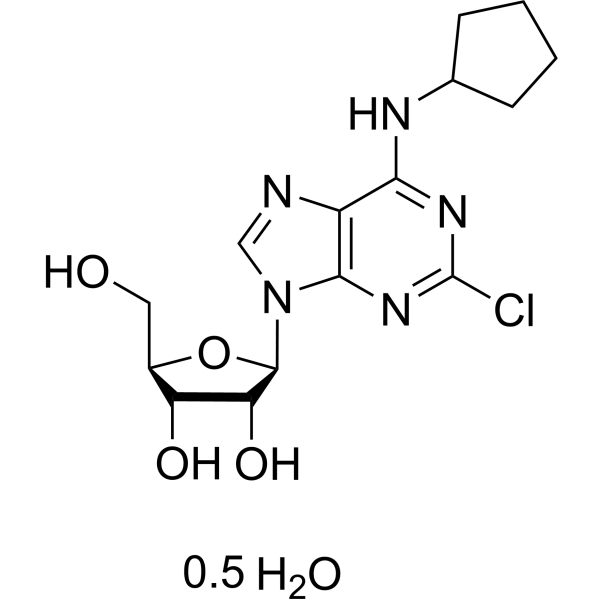
CCPA (2-Chloro-N6-cyclopentyladenosine) hemihydrate a highly selective A1 adenosine receptors agonist with a Ki of 0.4 nM. CCPA hemihydrate inhibits adenylate cyclase with an IC50 of 33 nM. CCPA hemihydrate exhibits anti-seizure and cardiacprotective activity. CCPA hemihydrate can be used for the research of seizure and myocardial infarction.
For research use only. We do not sell to patients.
- CAS No.: 1217443-91-8
- Formula: C15H20ClN5O4.1/2H2O
- Molecular Weight:378.81
-
Storage:
Please store the product under the recommended conditions in the Certificate of Analysis.

To place orders, for customer services and technical support, please contact: MedChemExpress USA
Tel: 609-228-6898 E-mail: [email protected] [email protected]


-
 Biological Activity
-
Chemical Information
- Protocols
- Purity & Documentation
- References
-
 Help & FAQs


-
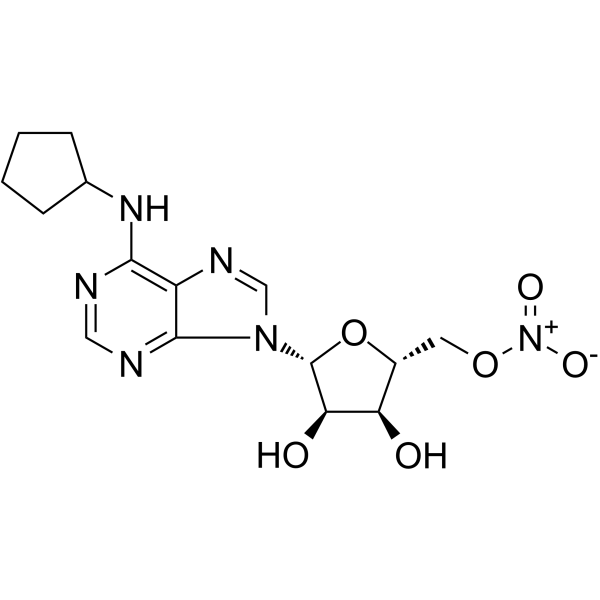
HY-106007
TrabodenosonAdenosine A1 Receptor Agonist -

HY-121389
HexadecanamideAnti-inflammatory Agent -
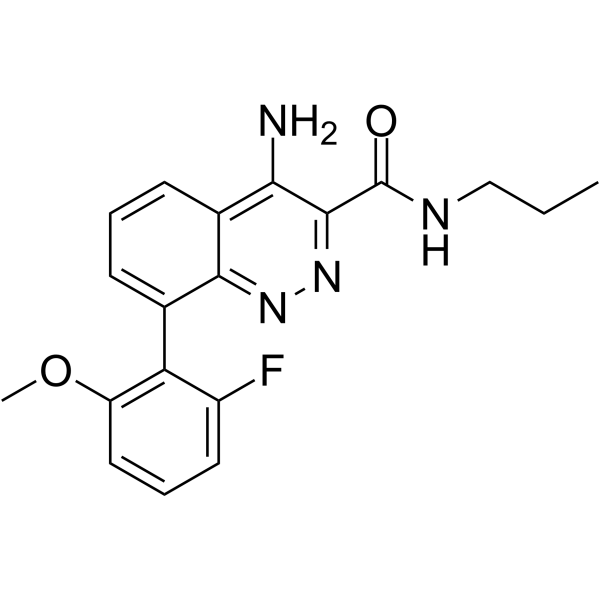
HY-111052
AZD7325GABAA Receptor Modulator -
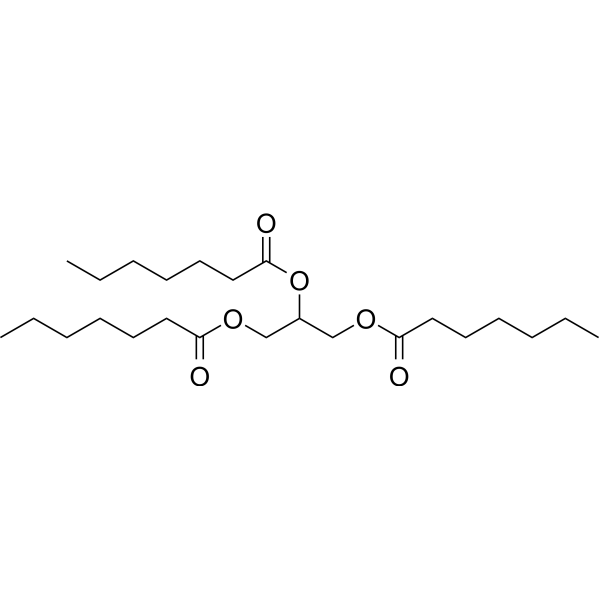
HY-W013136
TriheptanoinNutritional Supplement/Anaplerotic Agent -
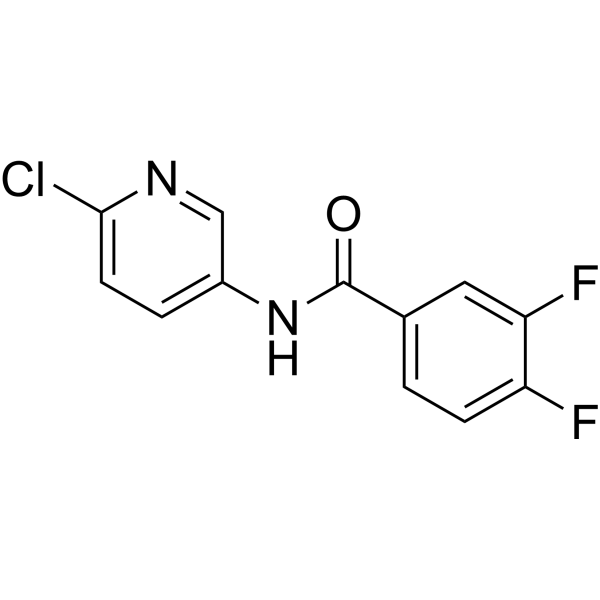
HY-122114
ICA-27243KCNQ2/Q3 Opener -
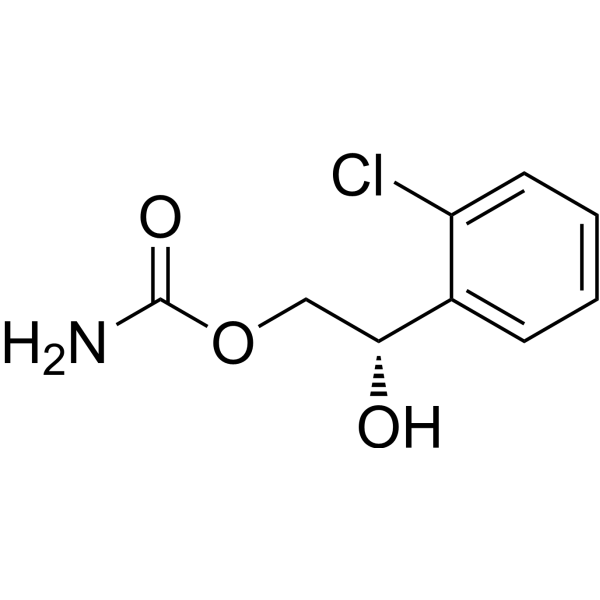
HY-14948
CarisbamateNeuromodulator -
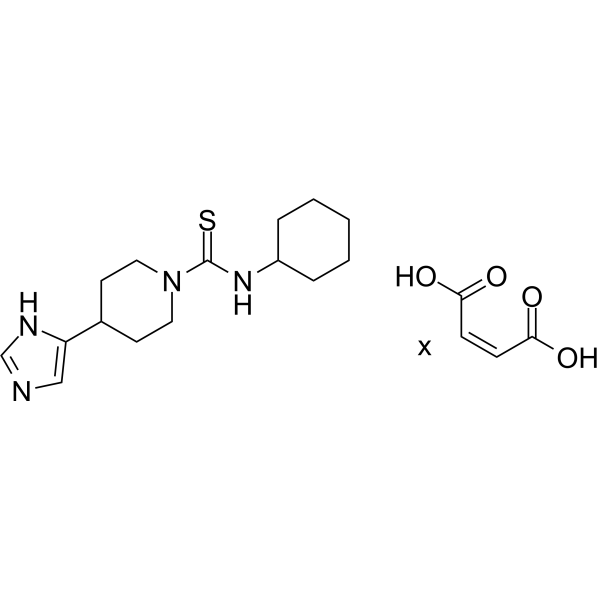
HY-12206A
Thioperamide maleateH3 Antagonist -
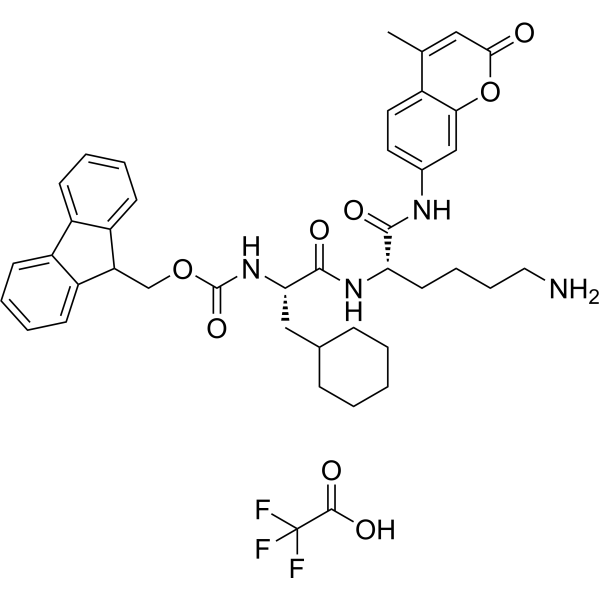
HY-103536A
Galnon TFAGalanin Receptor Agonist -

HY-121389R
Hexadecanamide (Standard)Anti-inflammatory Agent -
HY-123671
CYM2503GalR2 Modulator -

HY-W704772
S-Methyl-D-penicillamine -

HY-W013136R
Triheptanoin (Standard)Nutritional Supplement/Anaplerotic Agent
Publications Citing Use of MedChemExpress (MCE) CCPA hemihydrate
MoreAll Adenosine Receptor Isoforms
More

Biological Activity
Description
In Vitro
CCPA hemihydrate potently binds to rat brain membrane A1 adenosine receptors with a Ki of 0.4 nM, demonstrating high A1 selectivity (Ki of 3900 nM for A2)[1].
CCPA hemihydrate acts as a full A1 adenosine receptor agonist to inhibit rat fat cell membrane adenylate cyclase with an IC50 of 33 nM, and shows an IC50 of 3500 nM for A2[1].
MedChemExpress (MCE) has not independently confirmed the accuracy of these methods. They are for reference only. Further protocols information, click here.
In Vivo
CCPA (0.125 mg/kg; i.v.; 30 min before induction) hemihydrate reduces infarct size in a rabbit model of coronary artery occlusion-induced myocardial infarction[3].
MedChemExpress (MCE) has not independently confirmed the accuracy of these methods. They are for reference only.


Chemical Information
-
CAS No. 1217443-91-8
-
Molecular Weight 378.81
-
Formula C15H20ClN5O4.1/2H2O
-
SMILES
ClC(N=C1NC2CCCC2)=NC3=C1N=CN3[C@H]4[C@H](O)[C@H](O)[C@@H](CO)O4.O.[0.5]
-
Synonyms
2-Chloro-N6-cyclopentyladenosine hemihydrate
-
Shipping
Room temperature in continental US; may vary elsewhere.
-
Storage
Please store the product under the recommended conditions in the Certificate of Analysis.


Publications (2)
-
Journal Impact Factor
-
Most Recent
-
Br J Pharmacol
An adenosinergic positive feedback loop extends pharmacological cardioprotection duration. [Abstract]2024 Dec;181(23):4920-4936. PMID: 39256947 -
bioRxiv
Molecular cloning of a novel, nervous system-specific RGS6 isoform lacking canonical G protein regulatory effects and with dominant negative actions. [Abstract]2026 May 12:2026.05.08.723811. PMID: 42182468

Protocols
-
Cell Cytotoxicity Assay
Cytotoxicity assays are usually based on the assessment of cell membrane damage, which can also be indirectly detected by measuring cell viability. Detection methods include MTT assay, CKK-8 assay, LDH assay and ATP assay, etc.
-
Research Protocol for Cardiovascular Diseases
Cardiovascular disease can be modeled as maladaptive cardiac remodeling, where ischemic injury or pressure overload activates inflammatory signaling, fibroblast activation, extracellular-matrix deposition, cardiomyocyte hypertrophy, vascular remodeling, and progressive ventricular dysfunction. The TGF-β/SMAD axis is a central profibrotic pathway after myocardial injury and pressure overload, while innate immune and cytokine pathways regulate leukocyte recruitment, scar formation, and adverse remodeling. Key unresolved questions include which inflammatory signals are reparative versus harmful, when fibrosis is protective versus maladaptive, and whether pathway inhibition improves function without weakening necessary infarct healing or compensatory remodeling.


Purity & Documentation
References
[1]. Czuczwar S J. 2-Chloro-N 6-cyclopentyladenosine enhances the anticonvulsant action of carbamazepine in the mouse maximal electroshock-induced seizure model A[J]. Pharmacological reports, 2005, 57(787): 787-794. [Content Brief]
[2]. Tsuchida A, et al. Pretreatment with the adenosine A1 selective agonist, 2-chloro-N6-cyclopentyladenosine (CCPA), causes a sustained limitation of infarct size in rabbits[J]. Cardiovascular research, 1993, 27(4): 652-656. [Content Brief]
[3]. Lohse MJ, et al. 2-Chloro-N6-cyclopentyladenosine: a highly selective agonist at A1 adenosine receptors. Naunyn Schmiedebergs Arch Pharmacol. 1988;337(6):687-689. [Content Brief]

Calculators
Concentration (start) × Volume (start) = Concentration (final) × Volume (final)


CCPA hemihydrate Related Classifications
HY-103185A Related Classifications
 Powered by Bioz