



CH 275
Based on 1 publication(s) in Google Scholar
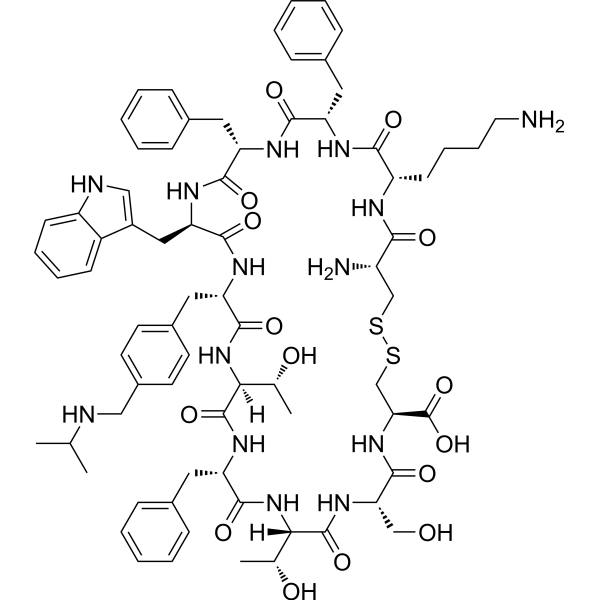
CH 275 is a peptidic somatostatin analog that acts as an agonist of SST1 (IC50 = 30.9 nM, Ki = 52 nM). The IC50 values of CH 275 for sst3, sst4, sst2, and sst5 are 345 nM, >1 μM, >10 μM, and >10 μM, respectively. CH 275 binds to SSTR1 via the IAmp9-Asp137 ion pair interaction and the hydrophobic interaction between the isopropyl group of IAmp9 and Leu107, and reduces the extracellular acidification rate. CH 275 induces weak sst1 internalization, exerts immunosuppressive effects on macrophages, and decreases macrophage viability, MCP-1 expression/secretion, and IL-8 secretion, but does not alter proMMP-9 secretion or IL-8 mRNA levels. CH 275 reduces hippocampal β-amyloid levels and alleviates plaque pathology without inducing hippocampal microglial activation. CH 275 is used in research on Alzheimer's disease, Parkinson's disease, and depression.
For research use only. We do not sell to patients.
- Purity : 99.52%
- CAS No.: 174688-78-9
- Formula: C74H96N14O15S2
- Molecular Weight:1485.77
-
Storage:
Sealed storage, away from moisture and light.
Powder -80°C, 2 years , -20°C, 1 year* In solvent : -80°C, 6 months; -20°C, 1 month (sealed storage, away from moisture and light)

To place orders, for customer services and technical support, please contact: MedChemExpress USA
Tel: 609-228-6898 E-mail: [email protected] [email protected]


-
 Biological Activity
-
Chemical Information
-
Solvent & Solubility
- Protocols
- Purity & Documentation
- References
-
 Help & FAQs


-
HY-105172
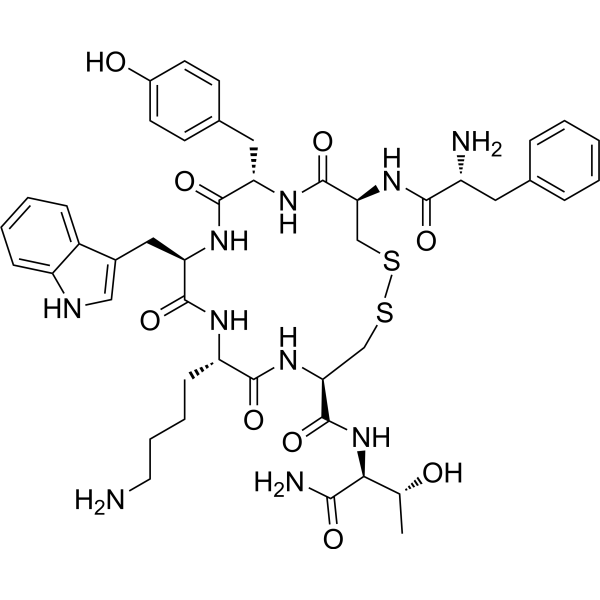
TT-232SSTR1/SSTR4 Agonist -
HY-P1201
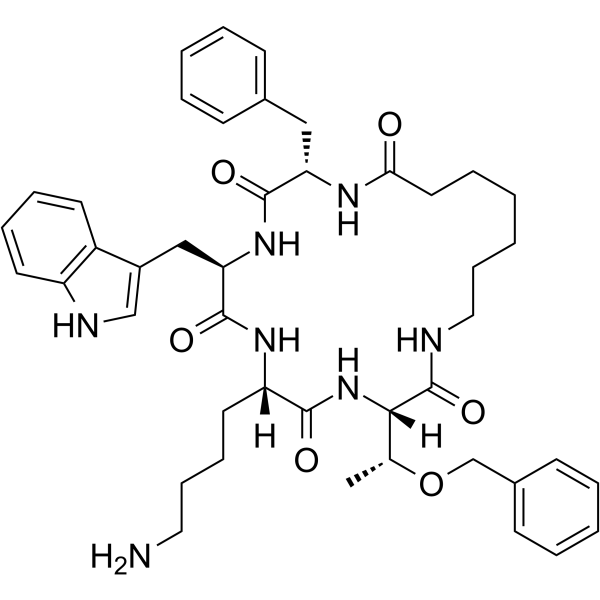
CyclosomatostatinSomatostatin Receptor Antagonist -

HY-P3954
Somatostatin-28 (sheep, human rat mouse)SSTR5 Inhibitor -
HY-P1203
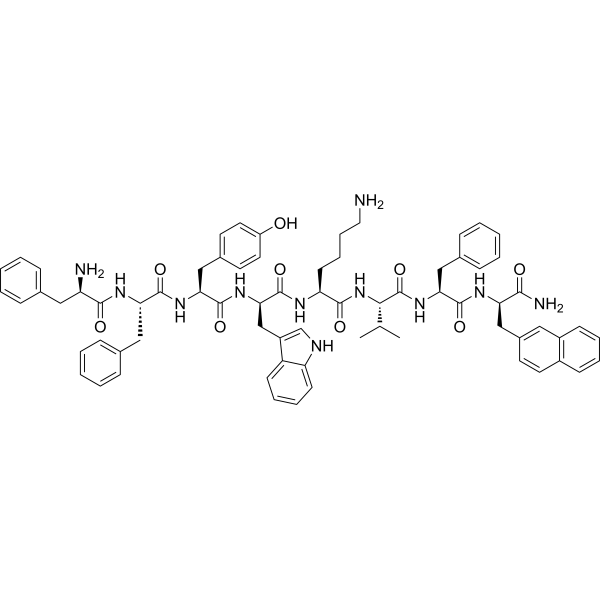
BIM-23056Somatostatin Receptor Antagonist -
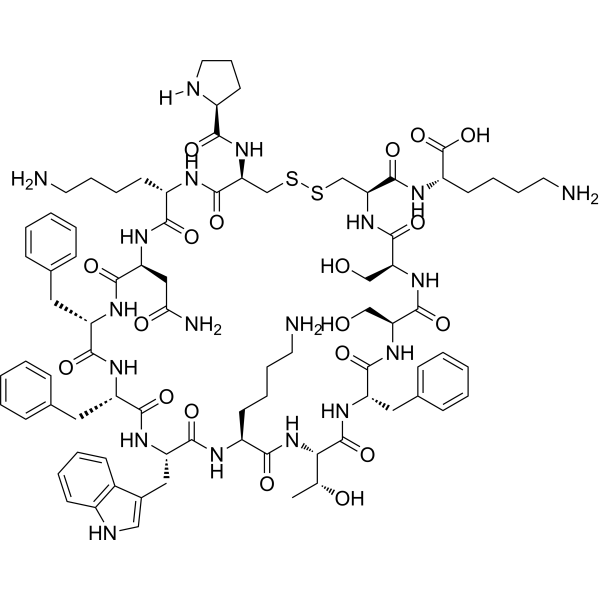
HY-P1212
Cortistatin 14 (mouse, rat)Neuropeptide -
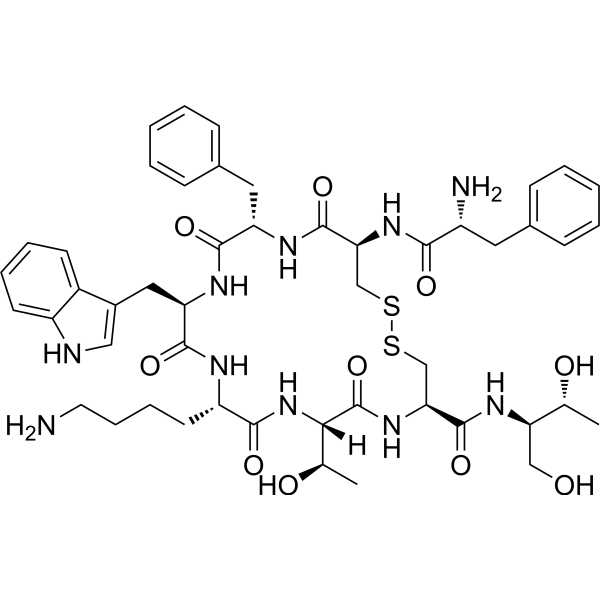
HY-P0036
OctreotideSomatostatin Receptor Agonist -
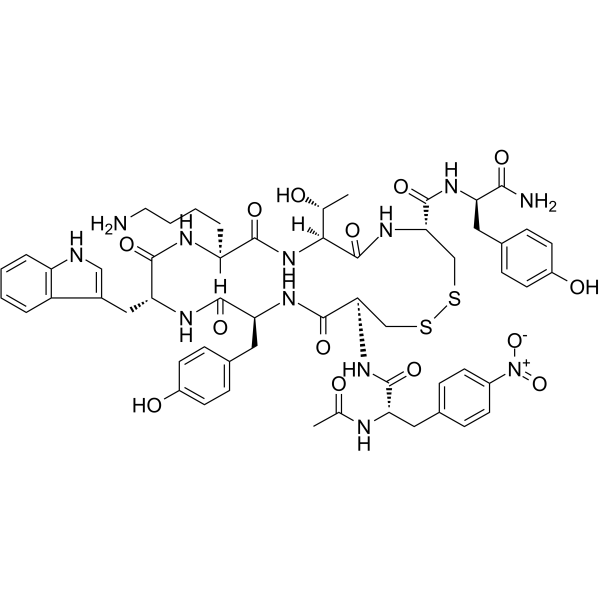
HY-P1202
CYN 154806Somatostatin SST2 Receptor Antagonist -
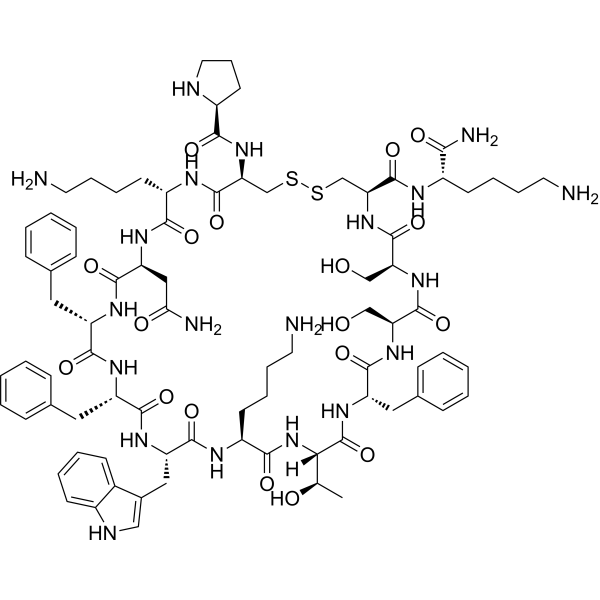
HY-P1932
Cortistatin-14Somatostatin Receptor Inhibitor -
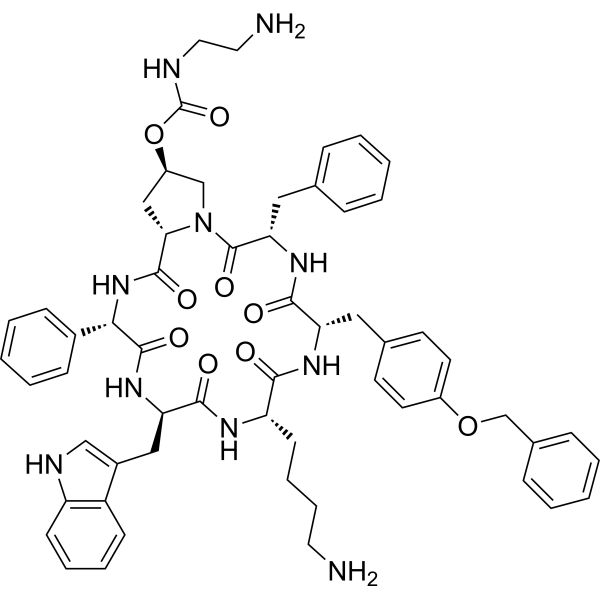
HY-16381
PasireotideSomatostatin Agonist -
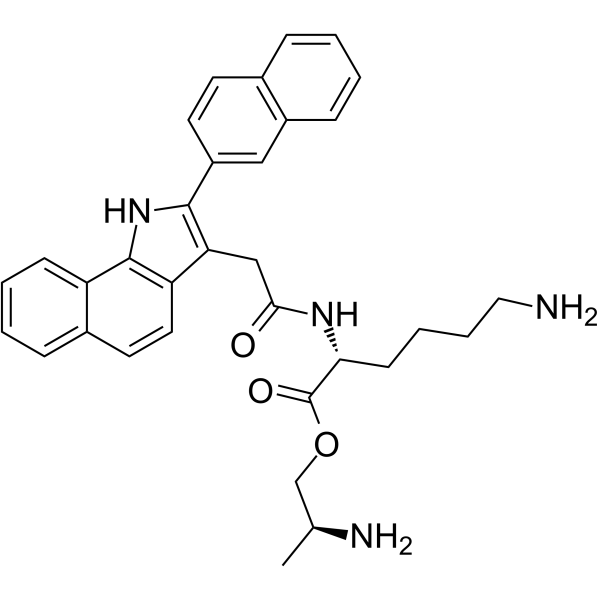
HY-108498
L-817818Somatostatin Receptor Agonist -
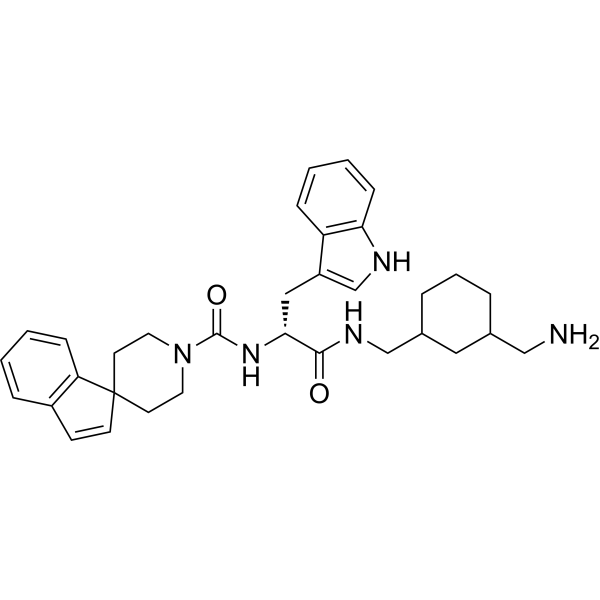
HY-108501
(1R,1'S,3'R/1R,1'R,3'S)-L-054,264sst2 Agonist -
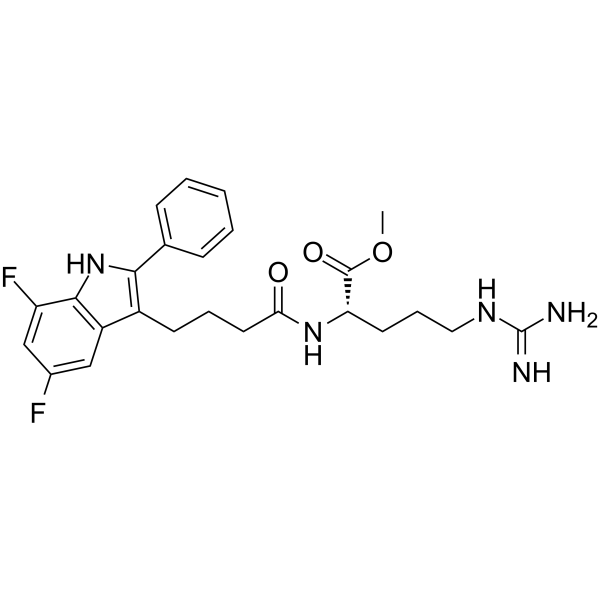
HY-108497
L-803087sst4 Receptor Agonist
Publications Citing Use of MedChemExpress (MCE) CH 275
More

Biological Activity
Description
IC50 & Target
[1]|
SSTR1 |
In Vitro
CH 275 (1 μM; 24 h) potently reduces viability of LPS-activated human macrophages differentiated from PBMC-derived monocytes by 78% via an sst1-mediated mechanism[1].
CH 275 (1 μM; 24 h) induces weak internalization of sst1 receptors in LPS-activated human macrophages differentiated from PBMC-derived monocytes after 24 h of treatment[1].
CH-275 (1 μM; 24 h) does not affect proMMP-9 secretion from LPS-activated human macrophages differentiated from PBMC-derived monocytes[1].
CH 275 (1 μM; 24 h) decreases both MCP-1 mRNA expression and secreted MCP-1 protein in LPS-activated human macrophages differentiated from PBMC-derived monocytes[1].
CH 275 (1 μM; 24 h) reduces IL-8 secretion without affecting IL-8 mRNA levels in LPS-activated human macrophages differentiated from PBMC-derived monocytes[1].
MedChemExpress (MCE) has not independently confirmed the accuracy of these methods. They are for reference only. Further protocols information, click here.
-
Cell Line:LPS-activated human macrophages differentiated from PBMC-derived monocytes
-
Concentration:1 μM
-
Incubation Time:24 h
-
Result:Decreased basal absorbance (a measure of viable cell number/metabolic activity) by 78%.
Showed viability-reducing effect that was completely reversed by co-application of the sst1-selective antagonist SRA-880.
-
Cell Line:LPS-activated human macrophages differentiated from PBMC-derived monocytes
-
Concentration:1 μM
-
Incubation Time:24 h
-
Result:Induced weak punctate sst1 immunoreactivity inside cells in addition to surface-localized receptor, indicating a weak level of sst1 receptor internalization.
In Vivo
MedChemExpress (MCE) has not independently confirmed the accuracy of these methods. They are for reference only.
-
Animal Model:C57BL/6 (AppNL-G-F knock-in; 2 months of age at start of administration)[4]
-
Dosage:56 µM (infusate concentration); 2 µM (measured total hippocampal concentration); 100 nM (targeted interstitial fluid concentration)
-
Administration:i.c.v. (brain infusion cannula connected to osmotic pump); continuous; 4 months; flow rate 0.11 µl/h
-
Result:Robustly increased neprilysin expression in the ipsilateral hippocampus compared to the contralateral side.
Reduced Aβ levels on the ipsilateral side.
Showed a trend toward improved memory performance in the Y-maze.
Significantly reduced anxiety level in the open field test.
Showed no significant difference in microglial activation compared to PBS-injected mice in either the ipsilateral or contralateral hippocampus via Iba1 staining.
Caused no toxic side effects.


Chemical Information
-
CAS No. 174688-78-9
-
Appearance Solid
-
Molecular Weight 1485.77
-
Formula C74H96N14O15S2
-
Color White to off-white
-
Sequence
Cys-Lys-Phe-Phe-{d-Trp}-Phe-Thr-Phe-Thr-Ser-Cys (Modifications: Cyclic Cys1-Cys11, X=4-[[(1-methylethyl)amino]methyl]-Phe)
-
Sequence Shortening
CKFF-{d-Trp}-XTFTSC (Modifications: Cyclic Cys1-Cys11, X=4-[[(1-methylethyl)amino]methyl]-Phe)
-
Shipping
Room temperature in continental US; may vary elsewhere.
-
Storage
Sealed storage, away from moisture and light
Powder -80°C 2 years -20°C 1 year * In solvent : -80°C, 6 months; -20°C, 1 month (sealed storage, away from moisture and light)


Publications (1)
-
Journal Impact Factor
-
Most Recent


Solvent & Solubility
In Vitro:
DMSO : 100 mg/mL (67.31 mM; Need ultrasonic; Hygroscopic DMSO has a significant impact on the solubility of product, please use newly opened DMSO)
H2O : 50 mg/mL (33.65 mM; Need ultrasonic)
Please refer to the solubility information to select the appropriate solvent. Once prepared, please aliquot and store the solution to prevent product inactivation from repeated freeze-thaw cycles.
Storage method and period of stock solution: -80°C, 6 months; -20°C, 1 month (sealed storage, away from moisture and light). When stored at -80°C, please use it within 6 months. When stored at -20°C, please use it within 1 month.
* Note: If you choose water as the stock solution, please dilute it to the working solution, then filter and sterilize it with a 0.22 μm filter before use.
Please refer to the solubility information to select the appropriate solvent. Once prepared, please aliquot and store the solution to prevent product inactivation from repeated freeze-thaw cycles.
Storage method and period of stock solution: -80°C, 6 months; -20°C, 1 month (sealed storage, away from moisture and light). When stored at -80°C, please use it within 6 months. When stored at -20°C, please use it within 1 month.
* Note: If you choose water as the stock solution, please dilute it to the working solution, then filter and sterilize it with a 0.22 μm filter before use.
Concentration (start) × Volume (start) = Concentration (final) × Volume (final)

Protocols
-
RNA extraction experimental
By lysing cells, releasing RNA, and removing impurities such as proteins and DNA, high-purity RNA products are finally obtained. The commonly used traditional method is the guanidine isothiocyanate/phenol/chloroform method (Trizol), which is suitable for a variety of animal materials including animal tissues, microorganisms, cultured cells, etc., and most plant materials.
-
Cell Cytotoxicity Assay
Cytotoxicity assays are usually based on the assessment of cell membrane damage, which can also be indirectly detected by measuring cell viability. Detection methods include MTT assay, CKK-8 assay, LDH assay and ATP assay, etc.
-
Human pluripotent stem cell midbrain dopaminergic neuron differentiation
Human pluripotent stem cells are directed toward midbrain dopaminergic neurons by first inducing a neural floor-plate-like progenitor state, then patterning cells with ventralizing SHH signaling and midbrain/WNT-FGF cues, and finally maturing progenitors into neurons expressing dopaminergic markers such as TH, NURR1/NR4A2, PITX3, DAT/SLC6A3, VMAT2/SLC18A2, GIRK2/KCNJ6, FOXA2, LMX1A, and EN1. The main readouts are loss of pluripotency, acquisition of FOXA2+/LMX1A+ midbrain floor-plate progenitors, emergence of βIII-tubulin+/MAP2+ neurons, and production of TH+ dopaminergic neurons with molecular, dopamine-release, and electrophysiological features of midbrain dopaminergic identity.
-
Protocol for Hematoxylin-Eosin (H&E) Staining
Hematoxylin-eosin staining is a routine histological method that stains nuclei mainly blue-purple with hemalum and stains cytoplasm, extracellular matrix, and many stromal components pink with eosin, allowing tissue architecture, cell morphology, necrosis, inflammation, fibrosis, tumor growth pattern, and treatment-associated injury to be evaluated by light microscopy. In cancer cells, primary neurons, mouse tumor models, intestinal organoids, inflammatory macrophage preparations, and drug-screening tissues, H&E is a morphology assay rather than a molecular assay; it should be interpreted with complementary molecular or immunostaining assays when the biological question concerns specific proteins, RNA levels, ferroptosis, mitophagy, or immune phenotypes.
-
Amyloid: Congo Red Amyloid Staining
Congo red amyloid staining is a histochemical method used to detect extracellular amyloid deposits in tissue sections based on the affinity of Congo red dye for β-pleated sheet-rich protein aggregates. When bound to amyloid, Congo red produces characteristic apple-green birefringence under polarized light microscopy, which is widely regarded as a diagnostic feature of amyloid deposition in histopathology. The diagnostic principle relies on the combination of dye binding (congophilia) and optical anisotropy under polarized illumination, which distinguishes amyloid from most non-amyloid eosinophilic extracellular deposits in routine histological evaluation. Amyloid identification by Congo red staining remains a cornerstone in diagnostic pathology despite the availability of adjunct methods such as immunohistochemistry and mass spectrometry, particularly because of its ability to localize deposits directly within tissue architecture. The specificity of Congo red-positive deposits is incre
-
Cell Viability Determination by MTT Colorimetric Assay
The following protocol uses the MTT colorimetric assay as a classic literature-established method for assessing cell viability/metabolic activity in cultured mammalian cells. MTT[3-(4,5-dimethylthiazol-2-yl)-2,5-diphenyltetrazolium bromide] is reduced by metabolically active cells to a colored formazan product; the amount of formazan is quantified spectrophotometrically and provides an indirect measure of metabolically active viable cells. Importantly, MTT reduction reflects cellular oxidoreductase/metabolic activity rather than an absolute direct count of living cells, so changes in cellular metabolism can alter the signal independently of cell number.
-
Alzheimer’s Disease Modeling
Alzheimer’s Disease (AD) is a neurodegenerative disorder characterized by a progressive decline in cognitive functions and loss of specific types of neurons and synapses. Alzheimer's symptoms can be simulated in mice by injecting drugs (such as Aβ) or genetically modified.


Purity & Documentation
-
Data Sheet (294 KB)
-
SDS (254 KB)
- English - EN (254 KB)
- Français - FR (254 KB)
- Deutsch - DE (254 KB)
- Norwegian - NO (254 KB)
- Español - ES (254 KB)
- Swedish - SV (254 KB)
- Italian - IT (254 KB)
- Korean - KR (254 KB)
- Portuguese - PT (254 KB)
-
Handling Instructions (2659 KB)
References
[2]. Chen L, et al. Structural basis for the binding specificity of a SSTR1-selective analog of somatostatin. Biochemical and biophysical research communications. 1999 May 19;258(3):689-94. [Content Brief]
[5]. Rivier JE, et al. Potent somatostatin undecapeptide agonists selective for somatostatin receptor 1 (sst1). J Med Chem. 2001 Jun 21;44(13):2238-46. [Content Brief]


Complete Stock Solution Preparation Table
Please refer to the solubility information to select the appropriate solvent. Once prepared, please aliquot and store the solution to prevent product inactivation from repeated freeze-thaw cycles.
Storage method and period of stock solution: -80°C, 6 months; -20°C, 1 month (sealed storage, away from moisture and light). When stored at -80°C, please use it within 6 months. When stored at -20°C, please use it within 1 month.
| Optional Solvent | Concentration Solvent Mass | 1 mg | 5 mg | 10 mg | 25 mg |
|---|---|---|---|---|---|
| H2O / DMSO | 1 mM | 0.6731 mL | 3.3653 mL | 6.7305 mL | 16.8263 mL |
| 5 mM | 0.1346 mL | 0.6731 mL | 1.3461 mL | 3.3653 mL | |
| 10 mM | 0.0673 mL | 0.3365 mL | 0.6731 mL | 1.6826 mL | |
| 15 mM | 0.0449 mL | 0.2244 mL | 0.4487 mL | 1.1218 mL | |
| 20 mM | 0.0337 mL | 0.1683 mL | 0.3365 mL | 0.8413 mL | |
| 25 mM | 0.0269 mL | 0.1346 mL | 0.2692 mL | 0.6731 mL | |
| 30 mM | 0.0224 mL | 0.1122 mL | 0.2244 mL | 0.5609 mL | |
| DMSO | 40 mM | 0.0168 mL | 0.0841 mL | 0.1683 mL | 0.4207 mL |
| 50 mM | 0.0135 mL | 0.0673 mL | 0.1346 mL | 0.3365 mL | |
| 60 mM | 0.0112 mL | 0.0561 mL | 0.1122 mL | 0.2804 mL |
* Note: If you choose water as the stock solution, please dilute it to the working solution, then filter and sterilize it with a 0.22 μm filter before use.


CH 275 Related Classifications
HY-P1206 Related Classifications
 Powered by Bioz