



BAPTA (Standard)
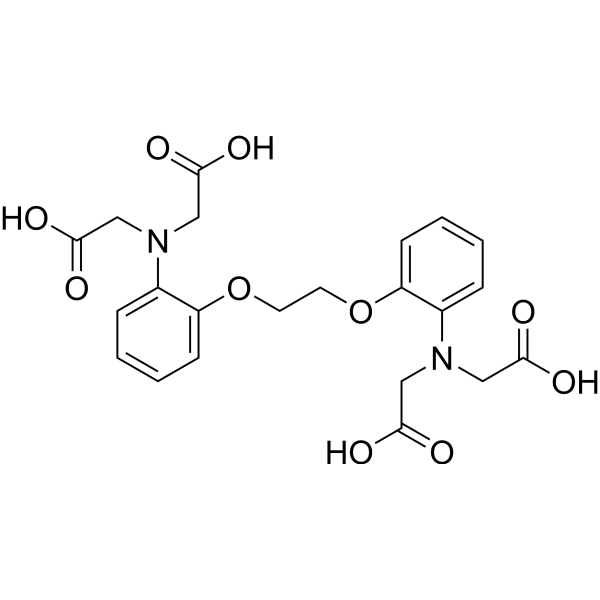
BAPTA (Standard) is the analytical standard of BAPTA. This product is intended for research and analytical applications. BBAPTA is a selective and cell-impermeant chelator for calcium. BAPTA, as calcium indicator, has high selectivity against magnesium and calcium. BAPTA is widely used as an intracellular buffer for investigating the effects of Ca2+ release from intracellular stores or influx via Ca2+-permeable channels in the plasma membrane. BAPTA can also inhibit phospholipase C activity independently of their role as Ca2+ chelators.
Nur für Forschungszwecke. Wir verkaufen nicht an Patienten.
- Reinheit : 95%
- CAS. Nr.: 85233-19-8
- Formel: C22H24N2O10
- Molecular Weight:476.43
-
Speicherung:
Please store the product under the recommended conditions in the Certificate of Analysis.


To place orders, for customer services and technical support, please contact: MedChemExpress USA
Tel: 609-228-6898 E-mail: [email protected] [email protected]


-
 Product Information
-
Chemical Information
- Reinheit & Dokumentation
-
 Help & FAQs


-
HY-100168
BAPTACalcium Chelator -
HY-19363
GW4869N-SMase Inhibitor -
HY-100168A
BAPTA tetrasodiumCalciumChelator -
HY-13402
VarespladibsPLA2 Inhibitor -
HY-N0134
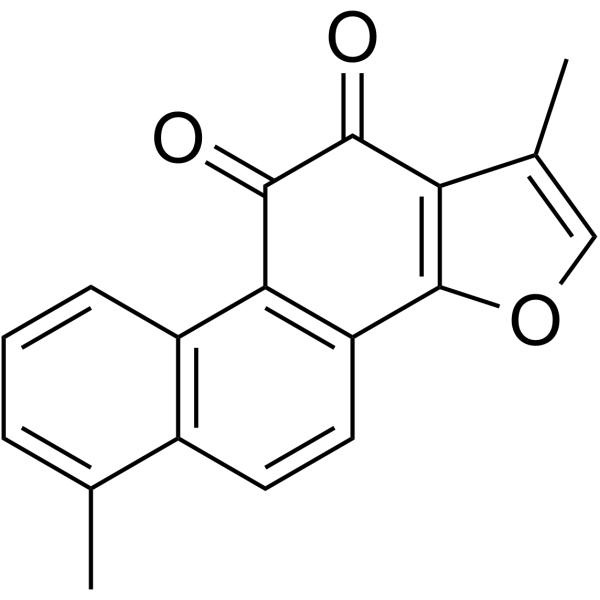
Tanshinone IPhospholipase Inhibitor -
HY-A0057
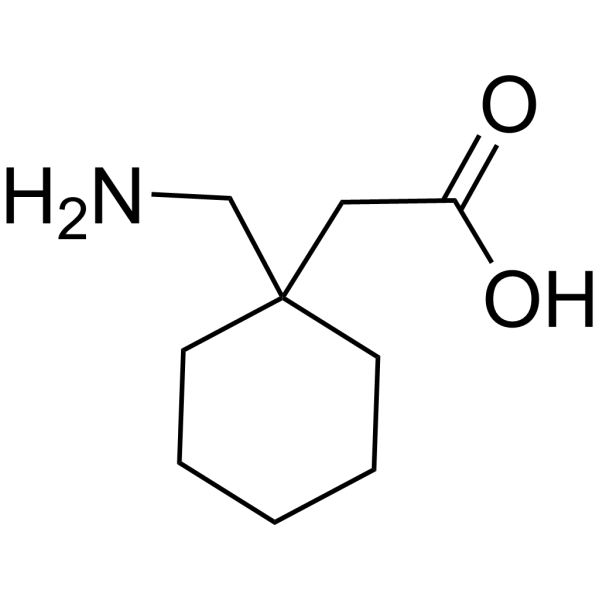
GabapentinCalcium Channel Blocker. -
HY-100736
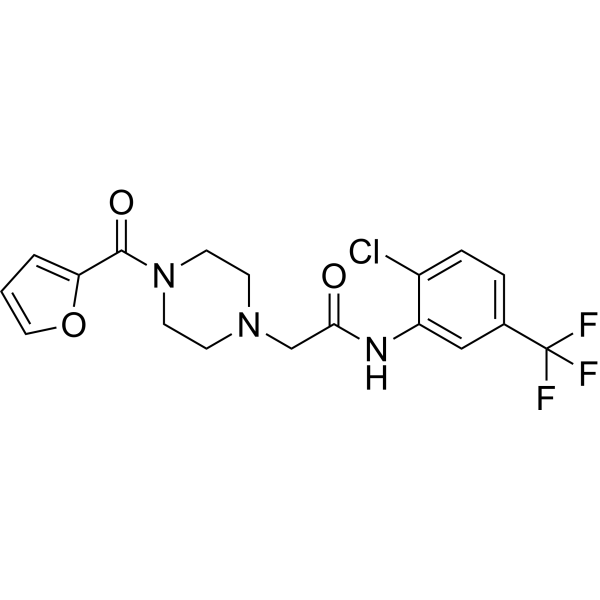
ML348APT1/LYPLA1 Inhibitor -
HY-D0861
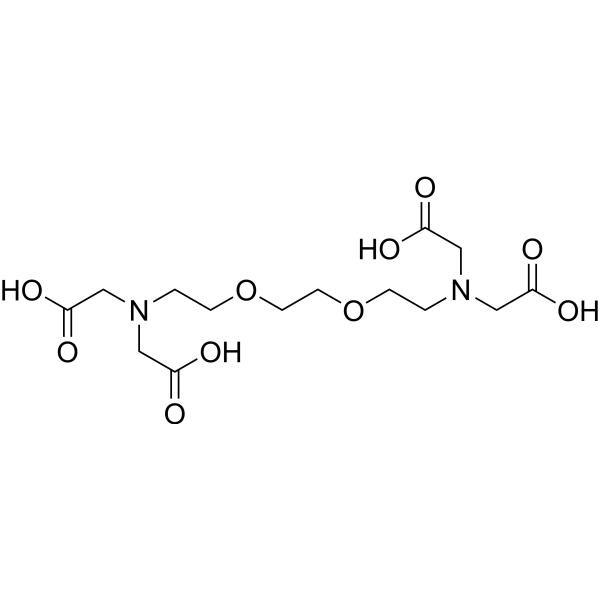
EGTACalcium Ion Chelator -
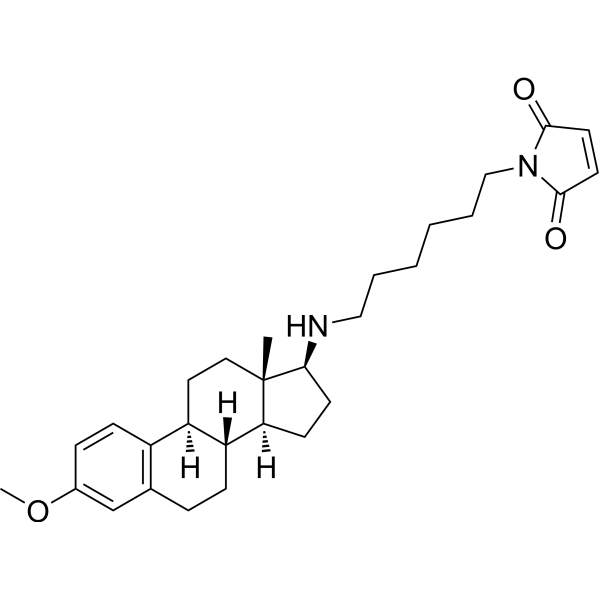
HY-13419
U-73122Phospholipase C Inhibitor -
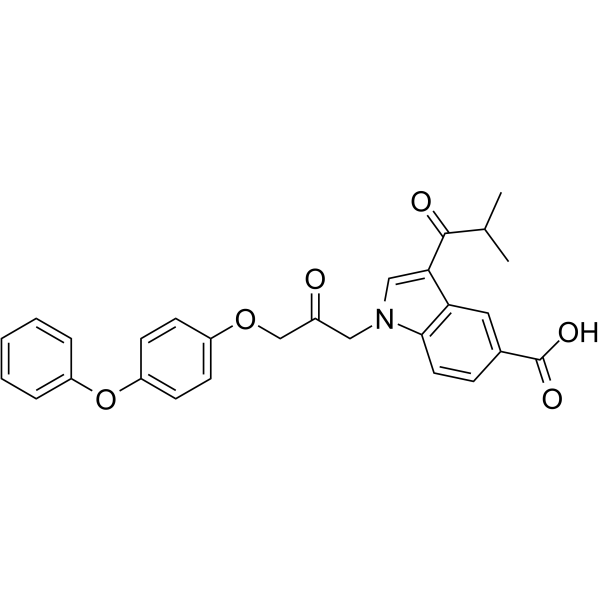
HY-10801
CAY10650cPLA2α Inhibitor -
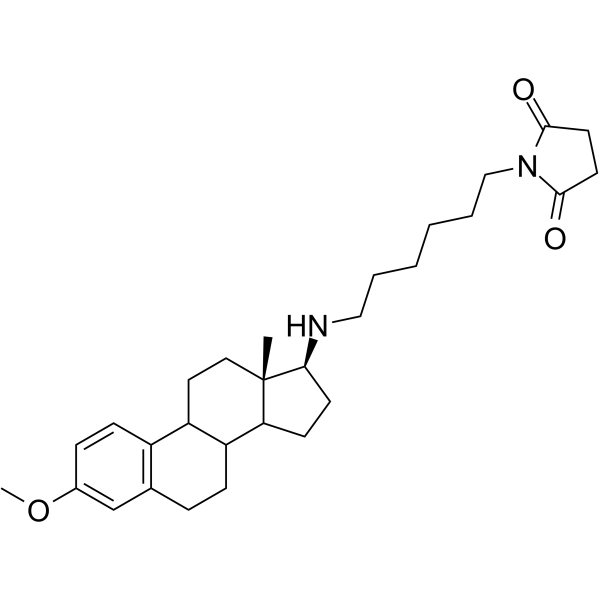
HY-108630
U-73343U-73122 Negative Control


Product Information
Information
Anwendung
The compound is the grade of analytical standard, which is the reference standard supplied assay. It is commonly used in qualitative, quantitative and methodological research experiments in HPLC, GC and MS.


Chemical Information
-
CAS. Nr. 85233-19-8
-
Molecular Weight 476.43
-
Formel C22H24N2O10
-
SMILES
O=C(O)CN(C1=CC=CC=C1OCCOC2=CC=CC=C2N(CC(O)=O)CC(O)=O)CC(O)=O
-
Versand
Room temperature in continental US; may vary elsewhere.
-
Speicherung
Please store the product under the recommended conditions in the Certificate of Analysis.


Reinheit & Dokumentation
Verweise
[1]. R Y Tsien, et al. New calcium indicators and buffers with high selectivity against magnesium and protons: design, synthesis, and properties of prototype structures. Biochemistry. 1980 May 27;19(11):2396-404. [Content Brief]
[2]. Roger C Hardie, et al. Inhibition of phospholipase C activity in Drosophila photoreceptors by 1,2-bis(2-aminophenoxy)ethane N,N,N',N'-tetraacetic acid (BAPTA) and di-bromo BAPTA. Cell Calcium. 2005 Dec;38(6):547-56. [Content Brief]
[3]. M B Collatz, et al. Intracellular calcium chelator BAPTA protects cells against toxic calcium overload but also alters physiological calcium responses. Cell Calcium [Content Brief]

Calculators
Konzentration (Stammlösung) × Volumen (Stammlösung) = Konzentration (Ziellösung) × Volumen (Ziellösung)


BAPTA (Standard) Related Classifications
HY-100168R Related Classifications
 Powered by Bioz