



Tenuazonic acid
Based on 1 publication(s) in Google Scholar
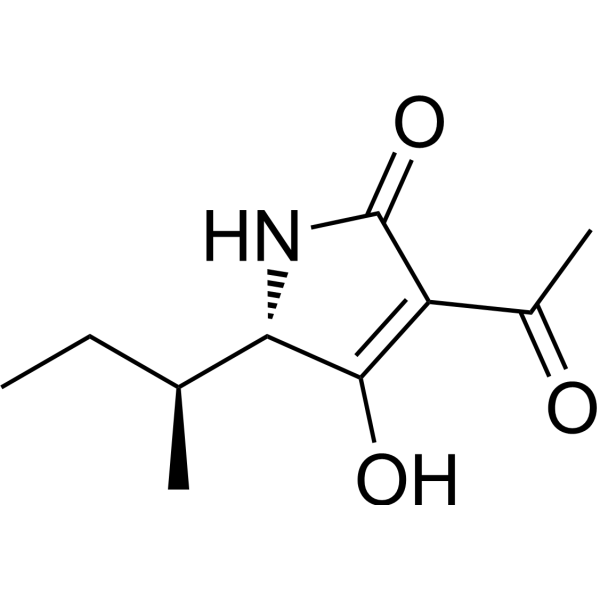
Tenuazonic acid is a nonhost-selective mycotoxin belonging to the tetramic acids family. Tenuazonic acid inhibits protein biosynthesis on ribosomes by suppressing the release of new protein. Tenuazonic acid is acutely toxic, and oral LD50 is set between 81-186 mg/kg in rats and mice. Tenuazonic acid blocks electron transport beyond the primary quinone receptor (QA) by interacting with the D1 protein and is a photosystem II (PSII) inhibitor. In addition, Tenuazonic acid has antiviral effects on measles virus, enterovirus, respiratory virus and so on. Tenuazonic acid has an inhibitory effect on skin cancer.
Nur für Forschungszwecke. Wir verkaufen nicht an Patienten.
- Reinheit : 98.0%
- CAS. Nr.: 610-88-8
- Formel: C10H15NO3
- Molecular Weight:197.23
-
Speicherung:
4°C, protect from light
* In solvent : -80°C, 6 months; -20°C, 1 month (protect from light)

To place orders, for customer services and technical support, please contact: MedChemExpress USA
Tel: 609-228-6898 E-mail: [email protected] [email protected]


-
 Biologische Aktivität
-
Chemical Information
-
Lösungsmittel & Löslichkeit
- Protokoll
- Reinheit & Dokumentation
- Verweise
-
 Help & FAQs


-
HY-134813
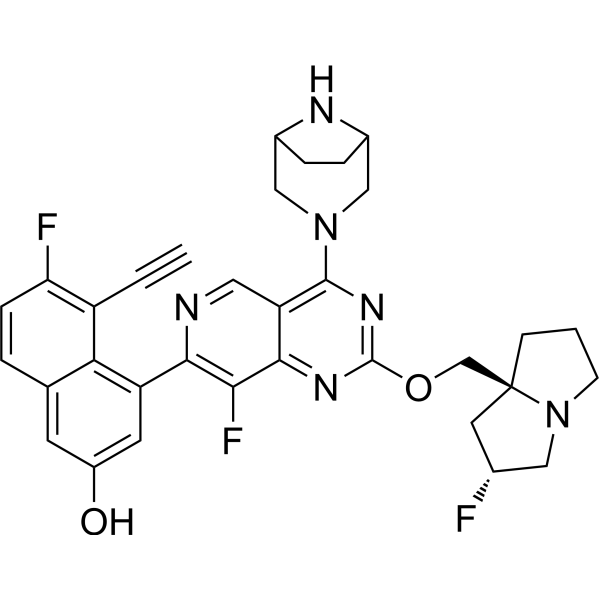
MRTX1133KRAS G12D Inhibitor -
HY-12041
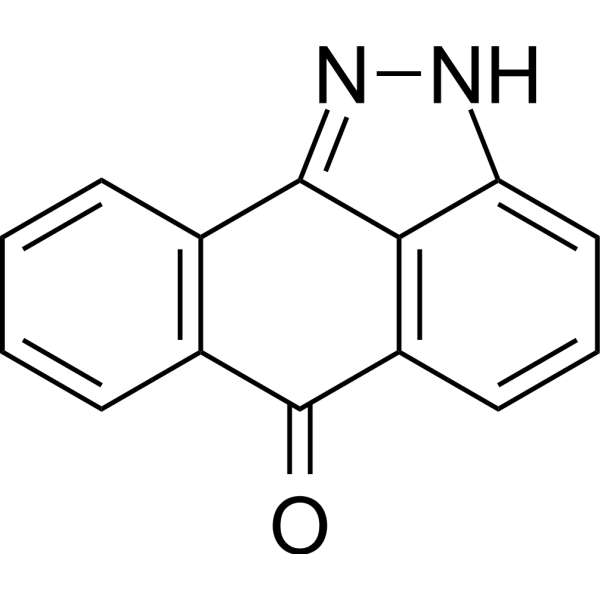
SP600125JNK Inhibitor -
HY-N6713A
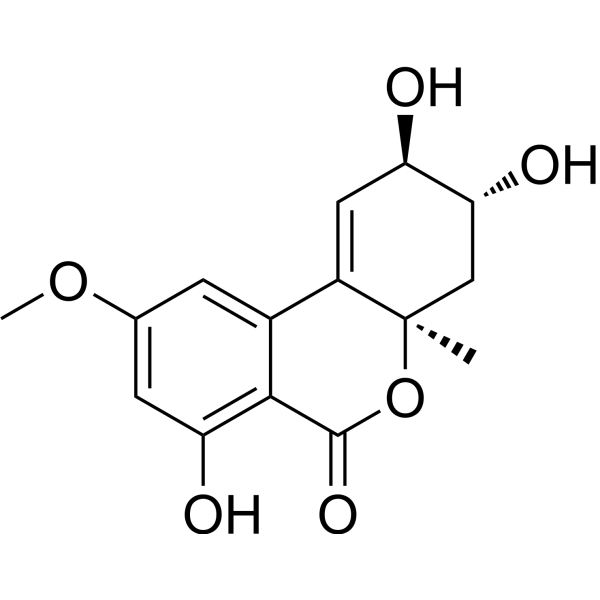
AltenueneMycotoxin -

HY-N6715R
Tenuazonic acid (Standard)Bacterial Inhibitor -
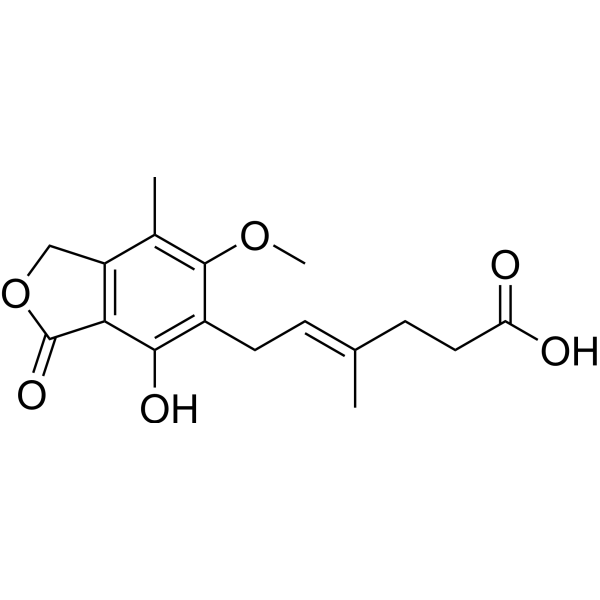
HY-B0421
Mycophenolic acidIMPDH Inhibitor -
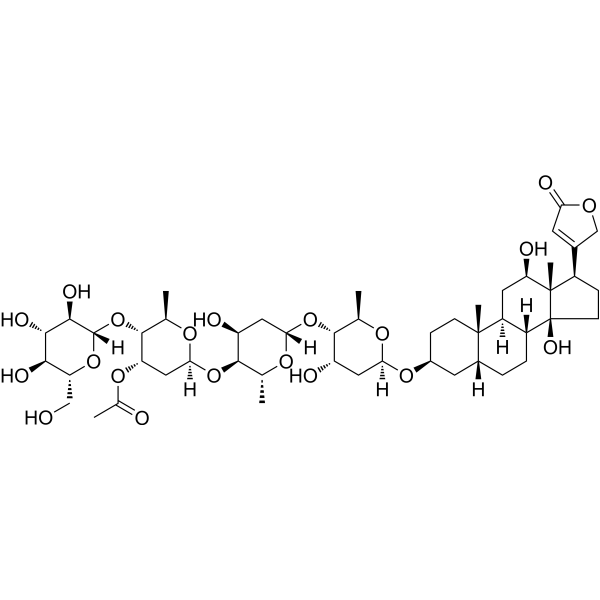
HY-B1030
Lanatoside CCardiac Glycoside -

HY-B0421R
Mycophenolic acid (Standard)IMPDH Inhibitor -
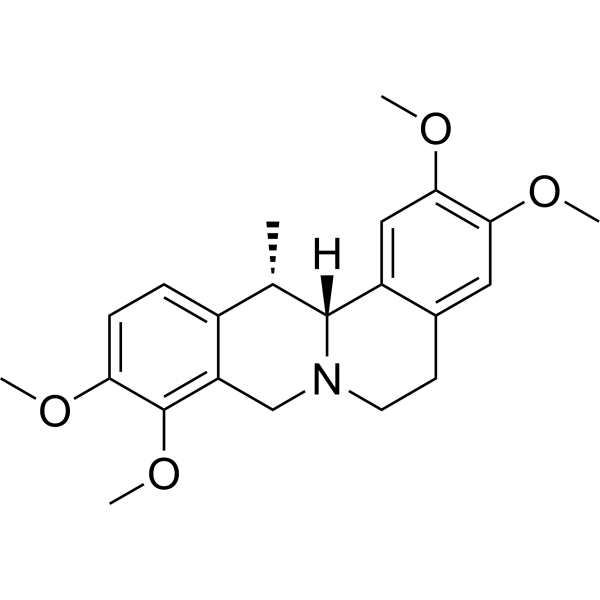
HY-N0923
CorydalineCholinesterase (ChE) Inhibitor -
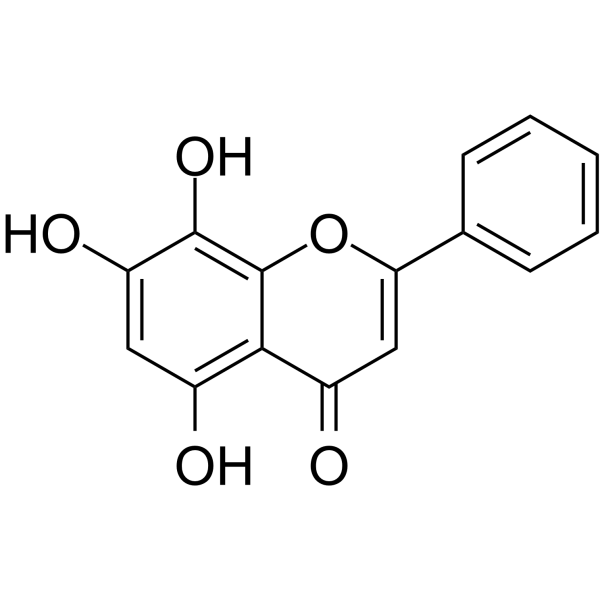
HY-N2562
NorwogoninEnterovirus 71 Inhibitor -
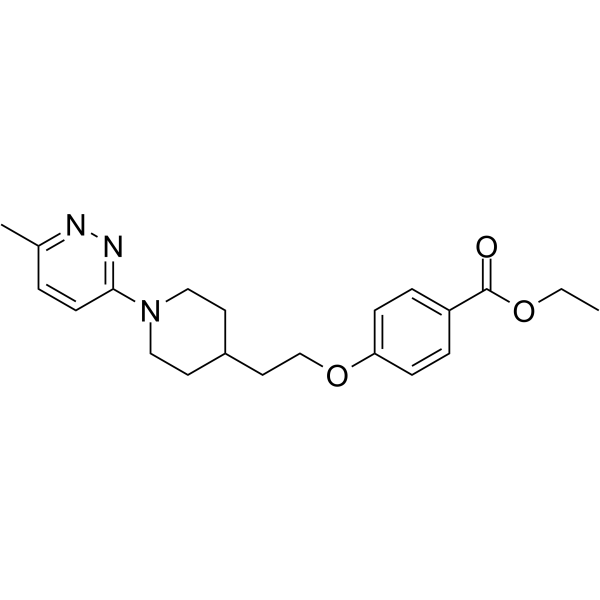
HY-13784
PirodavirPicornavirus Inhibitor -
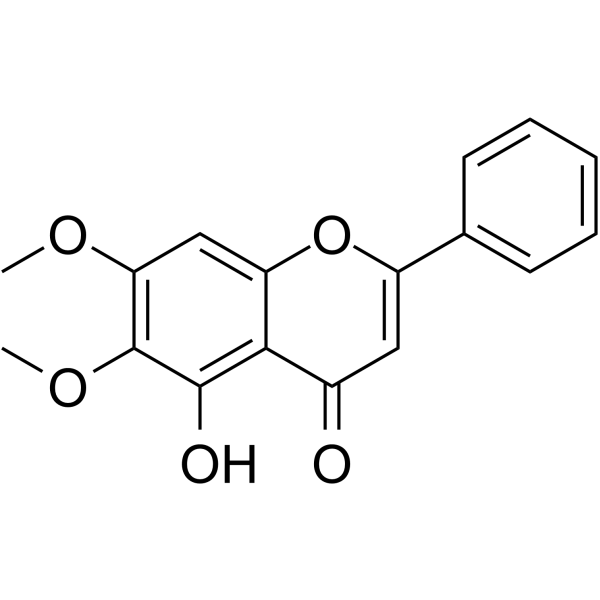
HY-N2036
MosloflavoneEV71 Inhibitor -
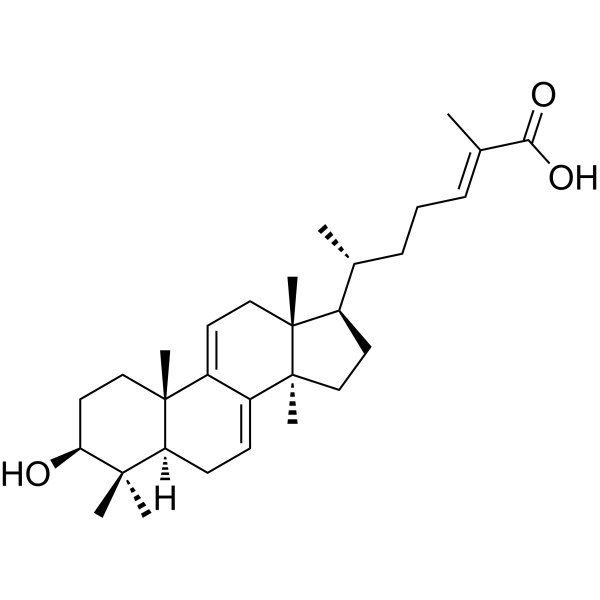
HY-125713
Ganoderic acid YGlucosidase Inhibitor
Publications Citing Use of MedChemExpress (MCE) Tenuazonic acid
More

Biologische Aktivität
Beschreibung
IC50 & Target
ROS[4]
In Vitro
Tenuazonic acid (25 μg/ml; 24 h) regulates immune function through ROS production in leukocytes[4].
MedChemExpress (MCE) has not independently confirmed the accuracy of these methods. They are for reference only. Further protocols information, click here.
In Vivo
Tenuazonic acid (125-500 μg; Topical application; Single dose) inhibits skin tumor in mice[5].
MedChemExpress (MCE) has not independently confirmed the accuracy of these methods. They are for reference only.
-
Animal Model:Cort-S (Hydrocortisone) (HY-N0583) treated swiss mice aged 3 months[4]
-
Dosage:238 μg/kg;
475 μg/kg -
Administration:Intraperitoneal injection (i.p.);
Oral administration (p.o.); 8 weeks -
Result:Caused hair loss and fatigue behavior in mice.
Caused a notable decrease in feed intake and weight over the dosing weeks.
Caused cysts and tumours in mice.
Elevated malondialdehyde, reduced catalase and superoxide dismutase production, along with abnormal levels of aspartate aminotransferase and alanine transaminase.
-
Animal Model:12-O-tetradecanoyl phorbol 13-acetate treated female Swiss albino mice (15 g)[5]
-
Dosage:125, 250 and 500 μg
-
Administration:Topical application; Single dose
-
Result:Inhibited the ornithine decarboxylase (ODC) induction.
Significantly decreased the cumulative number of tumors, reduced the percentage of tumor bearing animals and the rate of tumor growth.
Did not have much effect on the average body weight of the mice.


Chemical Information
-
CAS. Nr. 610-88-8
-
Appearance Solid
-
Molecular Weight 197.23
-
Formel C10H15NO3
-
Color Off-white to yellow
-
SMILES
O=C1N[C@@H]([C@@H](C)CC)C(O)=C1C(C)=O
-
Structure Classification
-
Initial Source
Alternaria alternata
-
Versand
Room temperature in continental US; may vary elsewhere.
-
Speicherung
4°C, protect from light
* In solvent : -80°C, 6 months; -20°C, 1 month (protect from light)


Publications (1)
-
Journal Impact Factor
-
Most Recent
-
J Agric Food Chem
Emerging Alternaria Toxins Drive LX-2 Cells Transdifferentiation into Myofibroblasts for Liver Fibrosis and CotA Detoxification. [Abstract]2026 Apr 29;74(16):13162-13178. PMID: 41906758


Lösungsmittel & Löslichkeit
In Vitro:
DMSO : 50 mg/mL (253.51 mM; Need ultrasonic; Hygroscopic DMSO has a significant impact on the solubility of product, please use newly opened DMSO)
Please refer to the solubility information to select the appropriate solvent. Once prepared, please aliquot and store the solution to prevent product inactivation from repeated freeze-thaw cycles.
Storage method and period of stock solution: -80°C, 6 months; -20°C, 1 month (protect from light). When stored at -80°C, please use it within 6 months. When stored at -20°C, please use it within 1 month.
Please refer to the solubility information to select the appropriate solvent. Once prepared, please aliquot and store the solution to prevent product inactivation from repeated freeze-thaw cycles.
Storage method and period of stock solution: -80°C, 6 months; -20°C, 1 month (protect from light). When stored at -80°C, please use it within 6 months. When stored at -20°C, please use it within 1 month.
Konzentration (Stammlösung) × Volumen (Stammlösung) = Konzentration (Ziellösung) × Volumen (Ziellösung)
In Vivo:
Select the appropriate dissolution method based on your experimental animal and administration route.
- For the following dissolution methods, please ensure to first prepare a clear stock solution using an In Vitro approach and then sequentially add co-solvents:
- To ensure reliable experimental results, the clarified stock solution can be appropriately stored based on storage conditions. As for the working solution for In Vivo experiments, it is recommended to prepare freshly and use it on the same day.
- The percentages shown for the solvents indicate their volumetric ratio in the final prepared solution. If precipitation or phase separation occurs during preparation, heat and/or sonication can be used to aid dissolution.
Add each solvent one by one: 10% DMSO 40% PEG300 5% Tween-80 45% Saline
Solubility: ≥ 1.25 mg/mL (6.34 mM); Clear solution
This protocol yields a clear solution of ≥ 1.25 mg/mL (saturation unknown).
Taking 1 mL working solution as an example, add 100 μL DMSO stock solution (12.5 mg/mL) to 400 μL PEG300, and mix evenly; then add 50 μL Tween-80 and mix evenly; then add 450 μL Saline to adjust the volume to 1 mL.
Preparation of Saline: Dissolve 0.9 g sodium chloride in ddH₂O and dilute to 100 mL to obtain a clear Saline solution.
Add each solvent one by one: 10% DMSO 90% (20% SBE-β-CD in Saline)
Solubility: ≥ 1.25 mg/mL (6.34 mM); Clear solution
This protocol yields a clear solution of ≥ 1.25 mg/mL (saturation unknown).
Taking 1 mL working solution as an example, add 100 μL DMSO stock solution (12.5 mg/mL) to 900 μL 20% SBE-β-CD in Saline, and mix evenly.
Preparation of 20% SBE-β-CD in Saline (4°C, storage for one week): 2 g SBE-β-CD powder is dissolved in 10 mL Saline, completely dissolve until clear.
In Vivo Dissolution Calculator
Please enter the basic information of animal experiments:
-
-
-
-
Recommended: Prepare an additional quantity of animals to account for potential losses during experiments.
Please enter your animal formula composition:
-
%DMSO +
Recommended: Keep the proportion of DMSO in working solution below 2% if your animal is weak.
-
%+
-
+%Tween-80 + +
-
%Saline +
The co-solvents required include: DMSO, . All of co-solvents are available by MedChemExpress (MCE). , Tween 80. All of co-solvents are available by MedChemExpress (MCE).
Working solution concentration: 0.22 mg/mL
Method for preparing stock solution: mg drug dissolved in μL DMSO. Stock solution concentration: mg/mL. * In solvent : -80°C, 6 months; -20°C, 1 month (protect from light)
1. Take μL DMSO stock solution;
2. Add μL .
μL , mix evenly;
3. Then add μL Tween 80, mix evenly;
4. Then add μL
Please ensure that the stock solution in the first step is dissolved to a clear state, and add co-solvents in sequence. You can use ultrasonic heating (ultrasonic cleaner, recommended frequency 20-40 kHz), vortexing, etc. to assist dissolution.

Protokoll
-
Research Protocol for Infectious Diseases
Infectious-disease experiments test how pathogens interact with host barriers, innate immune receptors, inflammatory signaling, pathogen replication, and tissue injury; pattern-recognition receptors such as TLRs, RIG-I-like receptors, NOD-like receptors, and inflammasomes detect microbial molecules and activate NF-κB, interferon, and cytokine responses. The central hypothesis is that infection severity reflects the balance between pathogen burden and host response: protective inflammation restricts pathogen growth, whereas excessive or mislocalized inflammation contributes to tissue damage and disease phenotype. Unresolved questions include which host pathways are protective versus pathogenic, why some infection models fail to translate to human disease, and which combined readouts best predict clinically relevant infection outcomes.
-
Acute Systemic Toxicity Study
Acute systemic toxicity studies evaluate adverse effects occurring after a single exposure, or repeated exposure within a short acute window, and the main in vivo readouts are mortality, moribund condition, clinical signs, body-weight change, and gross pathological findings; acute oral toxicity methods were developed to replace classical LD50 testing with reduced-animal designs such as fixed-dose procedure, acute toxic class method, and up-and-down procedure. The fixed-dose procedure classifies acute toxicity by administering predefined dose levels and observing evident toxicity rather than using death as the primary endpoint, whereas the acute toxic class method uses sequential groups of three animals per step and the up-and-down procedure doses animals sequentially to estimate an LD50 with fewer animals than conventional LD50 testing.


Reinheit & Dokumentation
-
Data Sheet (293 KB)
-
SDS (479 KB)
- English - EN (479 KB)
- Français - FR (479 KB)
- Deutsch - DE (479 KB)
- Norwegian - NO (479 KB)
- Español - ES (479 KB)
- Swedish - SV (479 KB)
- Italian - IT (479 KB)
- Korean - KR (479 KB)
- Portuguese - PT (479 KB)
-
Handling Instructions (2659 KB)
Verweise
[1]. Zhou B, et al. An evaluation of tenuazonic acid, a potential biobased herbicide in cotton. Pest Manag Sci. 2019 Mar 7. [Content Brief]
[2]. Chen S, et al. Recent advances in tenuazonic acid as a potential herbicide. Pestic Biochem Physiol. 2017 Nov;143:252-257. [Content Brief]
[3]. MILLER FA, et al. ANTIVIRAL ACTIVITY OF TENUAZONIC ACID. Nature. 1963 Dec 28;200:1338-9. [Content Brief]
[4]. Kumari A, et al. Tenuazonic acid-induced mycotoxicosis in an immunosuppressed mouse model and its prophylaxis with cinnamaldehyde. Chemosphere. 2024 Sep;363:142812. [Content Brief]
[5]. Antony M, et al. Inhibition of mouse skin tumor promotion by tenuazonic acid. Cancer Lett. 1991 Dec 9;61(1):21-5. [Content Brief]
[6]. Yun CS, Motoyama T, Osada H. Biosynthesis of the mycotoxin tenuazonic acid by a fungal NRPS-PKS hybrid enzyme. Nat Commun. 2015 Oct 27;6:8758. [Content Brief]
[7]. Gil-Serna J., et al. Encyclopedia of Food Microbiology. MYCOTOXINS | Toxicology. 2014 887–892.


Complete Stock Solution Preparation Table
Please refer to the solubility information to select the appropriate solvent. Once prepared, please aliquot and store the solution to prevent product inactivation from repeated freeze-thaw cycles.
Storage method and period of stock solution: -80°C, 6 months; -20°C, 1 month (protect from light). When stored at -80°C, please use it within 6 months. When stored at -20°C, please use it within 1 month.
| Optional Solvent | Concentration Solvent Mass | 1 mg | 5 mg | 10 mg | 25 mg |
|---|---|---|---|---|---|
| DMSO | 1 mM | 5.0702 mL | 25.3511 mL | 50.7022 mL | 126.7556 mL |
| 5 mM | 1.0140 mL | 5.0702 mL | 10.1404 mL | 25.3511 mL | |
| 10 mM | 0.5070 mL | 2.5351 mL | 5.0702 mL | 12.6756 mL | |
| 15 mM | 0.3380 mL | 1.6901 mL | 3.3801 mL | 8.4504 mL | |
| 20 mM | 0.2535 mL | 1.2676 mL | 2.5351 mL | 6.3378 mL | |
| 25 mM | 0.2028 mL | 1.0140 mL | 2.0281 mL | 5.0702 mL | |
| 30 mM | 0.1690 mL | 0.8450 mL | 1.6901 mL | 4.2252 mL | |
| 40 mM | 0.1268 mL | 0.6338 mL | 1.2676 mL | 3.1689 mL | |
| 50 mM | 0.1014 mL | 0.5070 mL | 1.0140 mL | 2.5351 mL | |
| 60 mM | 0.0845 mL | 0.4225 mL | 0.8450 mL | 2.1126 mL | |
| 80 mM | 0.0634 mL | 0.3169 mL | 0.6338 mL | 1.5844 mL | |
| 100 mM | 0.0507 mL | 0.2535 mL | 0.5070 mL | 1.2676 mL |


Tenuazonic acid Related Classifications
HY-N6715 Related Classifications
 Powered by Bioz