



Trichlormethiazide (Standard)

Based on 1 Customer Validation
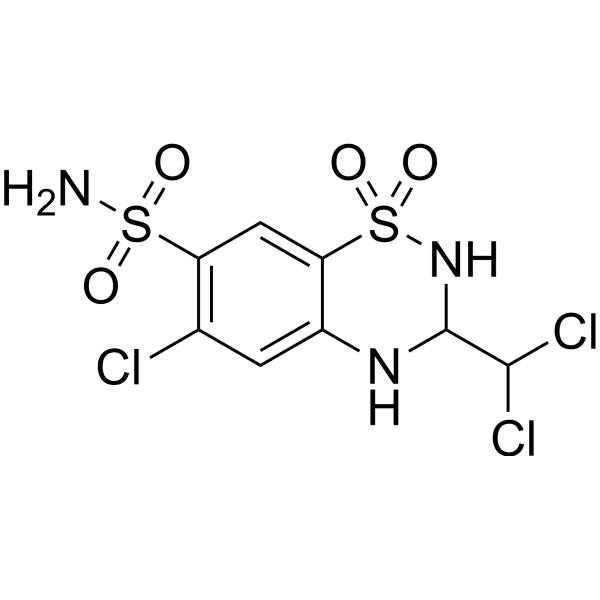
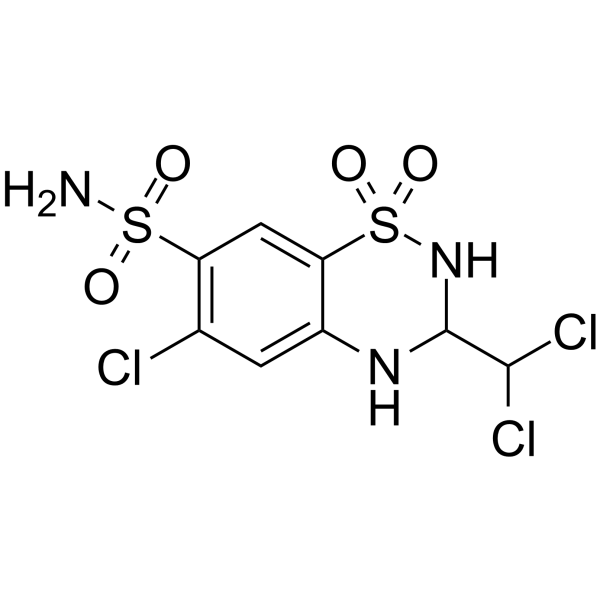
Trichlormethiazide (Standard) is the analytical standard of Trichlormethiazide. This product is intended for research and analytical applications. Trichlormethiazide is an orally active thiazide diuretic, with antihypertensive effect. Trichlormethiazide increases urine volume (UV), Na and K excretion and tends to improve the depressed creatinine clearance (CCRE) in acute renal failure rats model.
Nur für Forschungszwecke. Wir verkaufen nicht an Patienten.
- Reinheit : 98.11%
- CAS. Nr.: 133-67-5
- Formel: C8H8Cl3N3O4S2
- Molecular Weight:380.66
-
Speicherung:
Please store the product under the recommended conditions in the Certificate of Analysis.

To place orders, for customer services and technical support, please contact: MedChemExpress USA
Tel: 609-228-6898 E-mail: [email protected] [email protected]


-
 Product Information
-
Chemical Information
- Reinheit & Dokumentation
-
 Help & FAQs


-
HY-B0235
TrichlormethiazideDiuretic -

HY-B1363R
Bendroflumethiazide (Standard)Standard of Bendroflumethiazide -
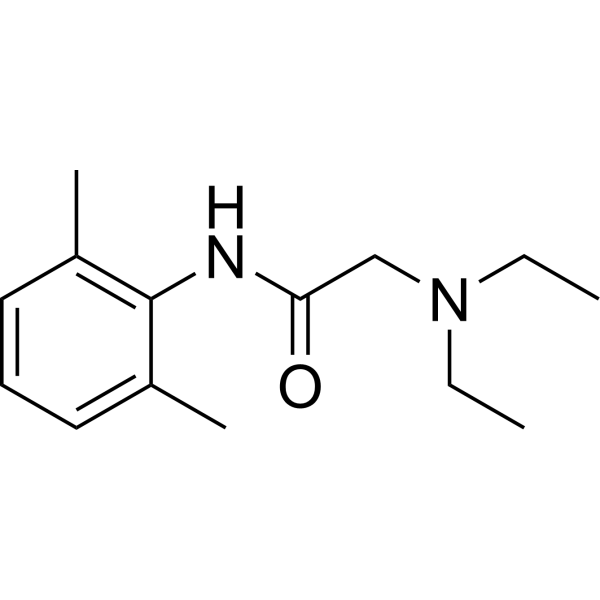
HY-B0185
LidocaineNa+ Channel Blocker -
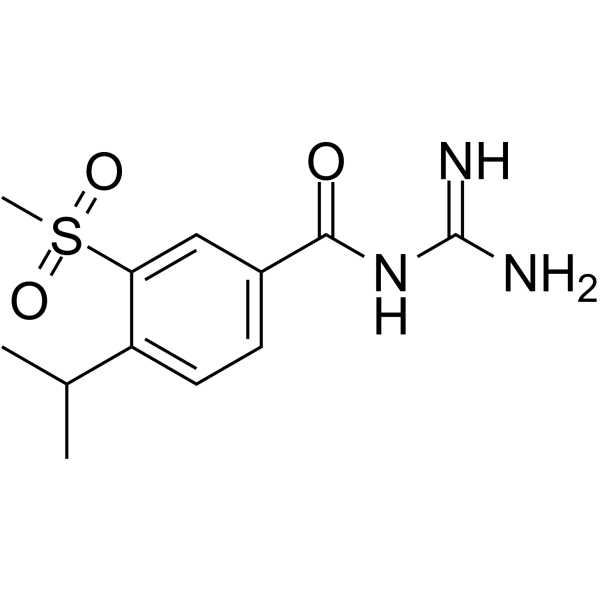
HY-19693
CariporideNa+/H+ Exchange Inhibitor -
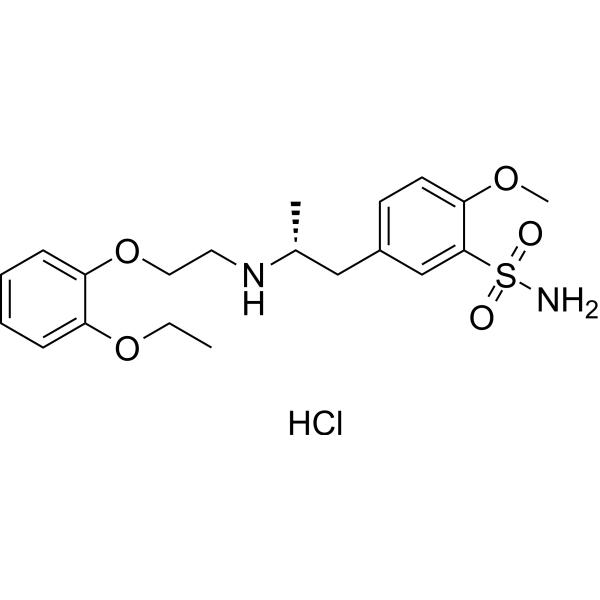
HY-B0661A
Tamsulosin hydrochlorideα1-Adrenergic Receptor Antagonist -
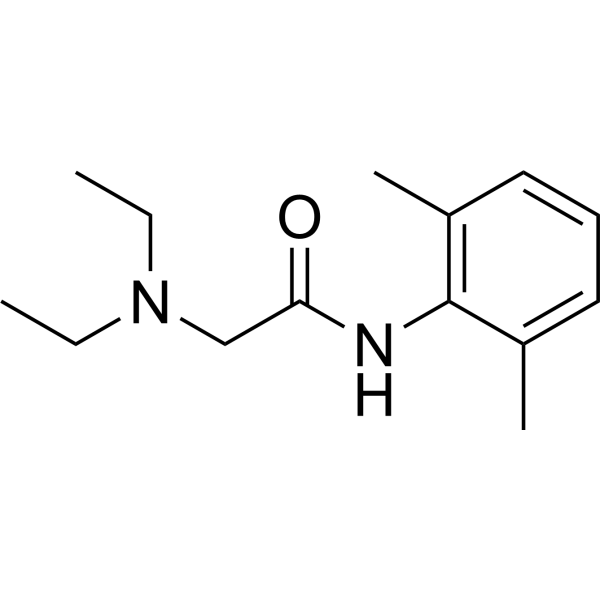
HY-B0185R
Lidocaine (Standard) -
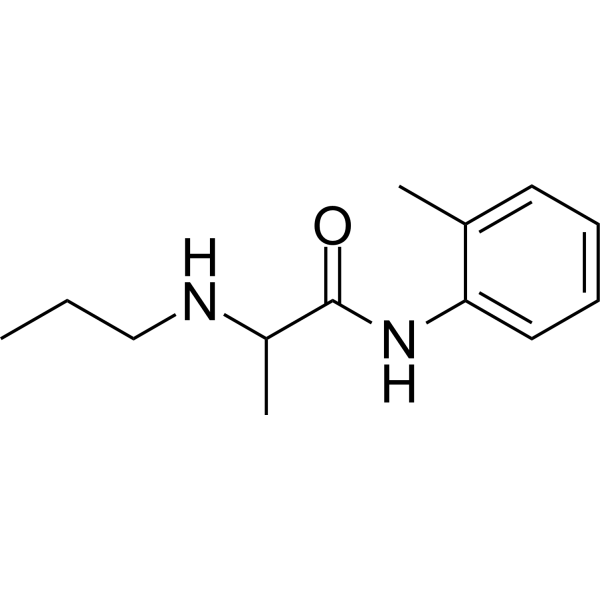
HY-B0137
PrilocaineNa, K-ATPase Inhibitor -
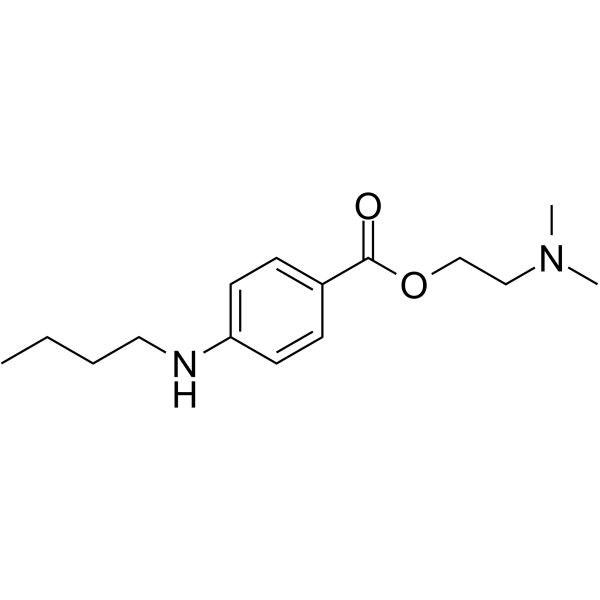
HY-A0079
TetracaineSodium Channel Inhibitor -

HY-B0137R
Prilocaine (Standard)Na, K-ATPase Inhibitor -
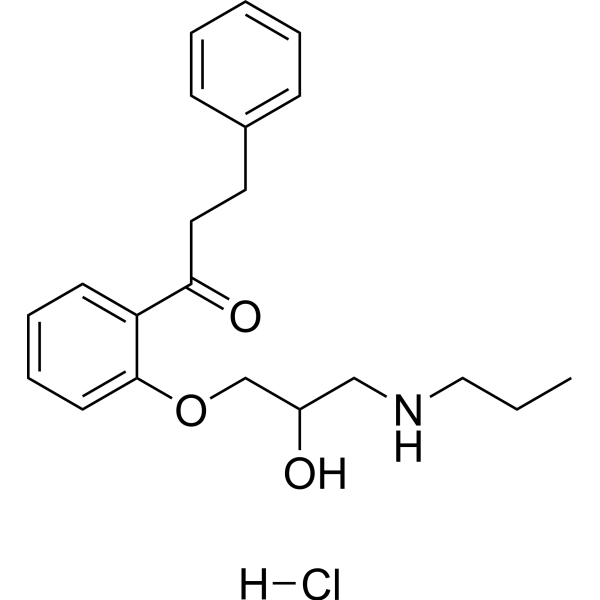
HY-B0432A
Propafenone hydrochlorideSodium Channel Inhibitor -
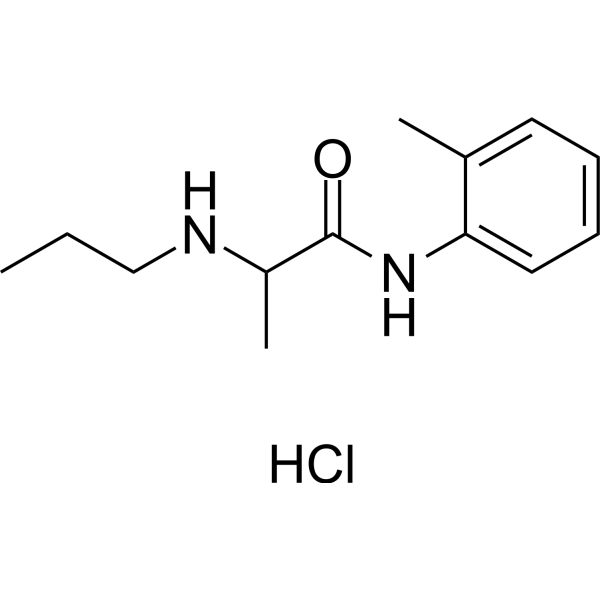
HY-B0137A
Prilocaine hydrochlorideNa, K-ATPase Inhibitor -

HY-B0661AR
Tamsulosin hydrochloride (Standard)α1-Adrenergic Receptor Antagonist


Product Information
Information
Anwendung
The compound is the grade of analytical standard, which is the reference standard supplied assay. It is commonly used in qualitative, quantitative and methodological research experiments in HPLC, GC and MS.


Chemical Information
-
CAS. Nr. 133-67-5
-
Appearance Solid
-
Molecular Weight 380.66
-
Formel C8H8Cl3N3O4S2
-
Color White to off-white
-
SMILES
O=S(C1=C(Cl)C=C(C2=C1)NC(C(Cl)Cl)NS2(=O)=O)(N)=O
-
Versand
Room temperature in continental US; may vary elsewhere.
-
Speicherung
Please store the product under the recommended conditions in the Certificate of Analysis.


Reinheit & Dokumentation
-
SDS (419 KB)
- English - EN (419 KB)
- Français - FR (419 KB)
- Deutsch - DE (419 KB)
- Norwegian - NO (419 KB)
- Español - ES (419 KB)
- Swedish - SV (419 KB)
- Italian - IT (419 KB)
- Korean - KR (419 KB)
- Portuguese - PT (419 KB)
-
Handling Instructions (2659 KB)
Verweise
[1]. K Yao, et al. Diuretic effects of KW-3902, a novel adenosine A1-receptor antagonist, in various models of acute renal failure in rats. Jpn J Pharmacol. 1994 Apr;64(4):281-8. [Content Brief]
[2]. J R Ballew, et al. Characterization of the antihypertensive effect of a thiazide diuretic in angiotensin II-induced hypertension. J Hypertens. 2001 Sep;19(9):1601-6. [Content Brief]

Calculators
Konzentration (Stammlösung) × Volumen (Stammlösung) = Konzentration (Ziellösung) × Volumen (Ziellösung)


Trichlormethiazide (Standard) Related Classifications
HY-B0235R Related Classifications
 Powered by Bioz