



Parmodulin 2
Based on 5 publication(s) in Google Scholar
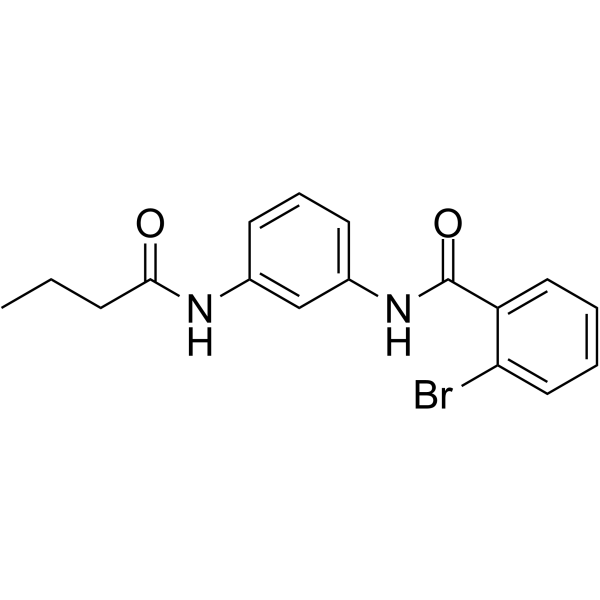
Parmodulin 2 (ML161) is an allosteric inhibitor of protease-activated receptor 1 (PAR1) with an IC50 of 0.26 μM. Parmodulin 2 is a potent and non-competitive inhibitor of SFLLRN-induced P-selectin expression leading to inhibition of platelet aggregation in vitro and platelet thrombus formation in vivo.
For research use only. We do not sell to patients.
- Purity : 99.82%
- CAS No.: 423735-93-7
- Formula: C17H17BrN2O2
- Molecular Weight:361.23
-
Storage:Powder -20°C, 3 years , 4°C, 2 years ; In solvent -80°C, 2 years , -20°C, 1 year

To place orders, for customer services and technical support, please contact: MedChemExpress USA
Tel: 609-228-6898 E-mail: [email protected] [email protected]


-
 Biological Activity
-
Chemical Information
-
Solvent & Solubility
- Protocols
- Purity & Documentation
- References
-
 Help & FAQs


-
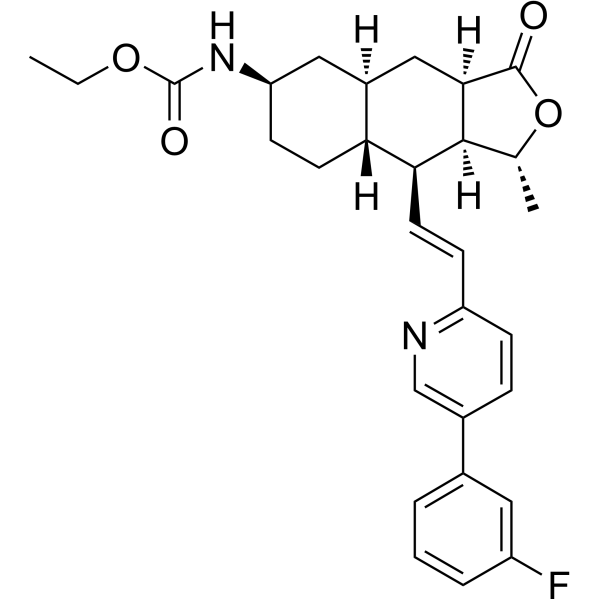
HY-10119
VorapaxarPAR-1 Antagonist -
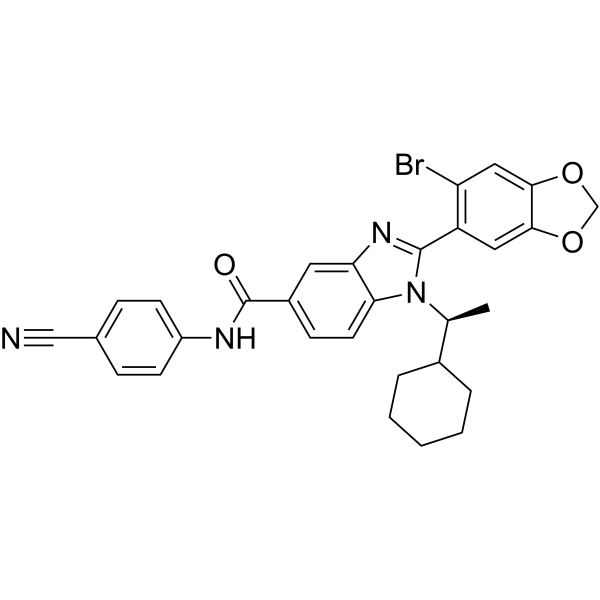
HY-112558
AZ3451PAR2 Antagonist -
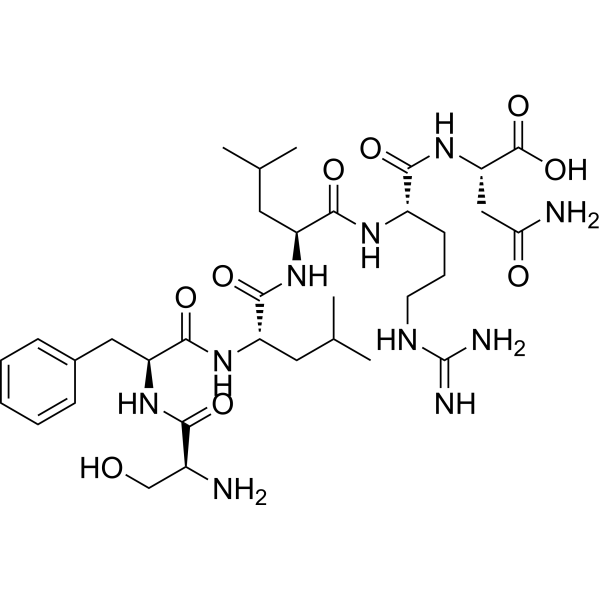
HY-P0078
TRAP-6PAR1 Agonist -
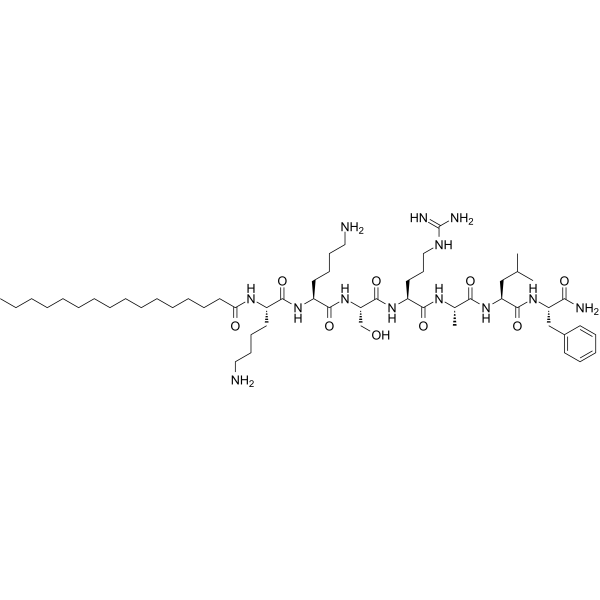
HY-107146
PZ-128PAR1 Antagonist -
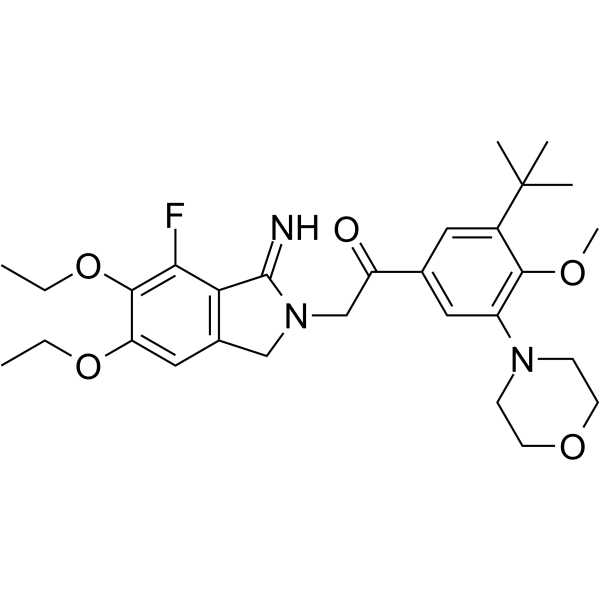
HY-18200
AtopaxarPAR-1 Antagonist -
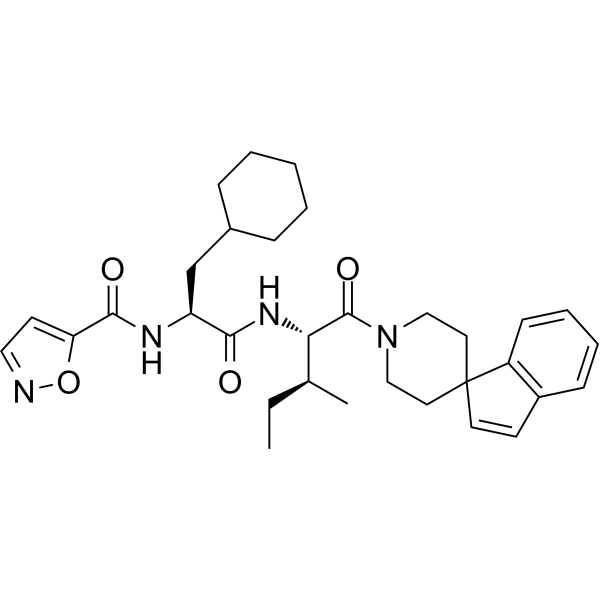
HY-120261
GB-88PAR2 Antagonist -
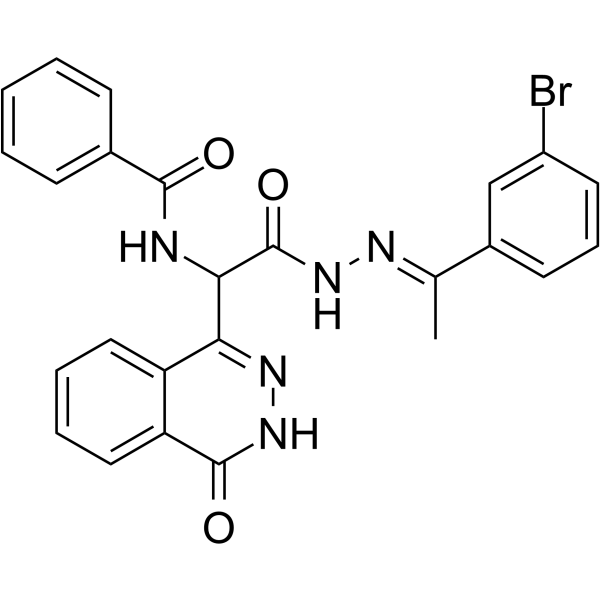
HY-14350
AC-55541PAR Agonist -
HY-123617
AZ8838PAR2 Antagonist -
HY-19837
BMS-986120PAR4 Antagonist -
HY-14993
SCH79797PAR1 Antagonist -
HY-138558
PAR-2-IN intermediate-1Drug Intermediate -
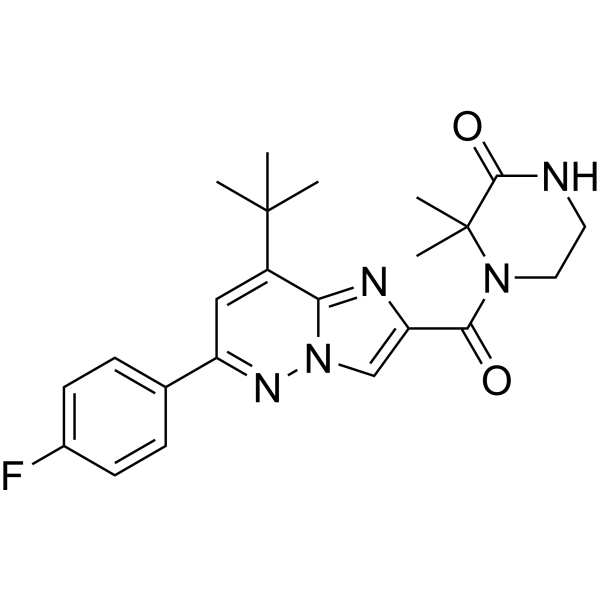
HY-117793
I-191PAR2 Antagonist
Publications Citing Use of MedChemExpress (MCE) Parmodulin 2
More Customer Validation & Images

-
WB
-
In Vivo Imaging
-
Cell Imaging/Staining


Biological Activity
Description
IC50 & Target
[1]|
PAR1 .26 μM (IC50) |
Cellular Effect
|
Cell Line

|
Type | Value | Description | References |
|---|---|---|---|---|
| HepG2 | CC50 |
>150 μM
Compound: 1; ML161
|
Cytotoxicity against human HepG2 cells assessed as reduction in cell viability
Cytotoxicity against human HepG2 cells assessed as reduction in cell viability
|
[PMID: 31320211] |
In Vitro
Parmodulin 2 (ML161; 10 μM; for 30 minutes) inhibits proinflammatory signaling in endothelial HUVECs cells[3].
MedChemExpress (MCE) has not independently confirmed the accuracy of these methods. They are for reference only.
In Vivo
Parmodulin 2 inhibits platelet thrombus formation in vivo, and it does not prolong bleeding time. Parmodulin 2 selectively inhibits platelet aggregation through Par1 and the α2A-adrenergic receptor[2].
MedChemExpress (MCE) has not independently confirmed the accuracy of these methods. They are for reference only.
-
Animal Model:C57BL/6J wild type mice[2]
-
Dosage:5 mg/kg (Pharmacokinetic Analysis)
-
Administration:IV
-
Result:Significantly inhibited platelet thrombus formation, with a 73% inhibition in AUC.


Chemical Information
-
CAS No. 423735-93-7
-
Appearance Solid
-
Molecular Weight 361.23
-
Formula C17H17BrN2O2
-
Color White to off-white
-
SMILES
O=C(NC1=CC=CC(NC(CCC)=O)=C1)C2=CC=CC=C2Br
-
Synonyms
ML161
-
Shipping
Room temperature in continental US; may vary elsewhere.
-
Storage
Powder -20°C 3 years 4°C 2 years In solvent -80°C 2 years -20°C 1 year


Publications (5)
-
Journal Impact Factor
-
Most Recent
-
Nat Commun
2025 Nov 10;16(1):9657. PMID: 41213940 -
Nat Cardiovasc Res
The thrombin receptor PAR1 orchestrates changes in lymphatic endothelial cell junction morphology to augment lymphatic drainage during lung injury. [Abstract]2025 Aug;4(8):964-975. PMID: 40676263
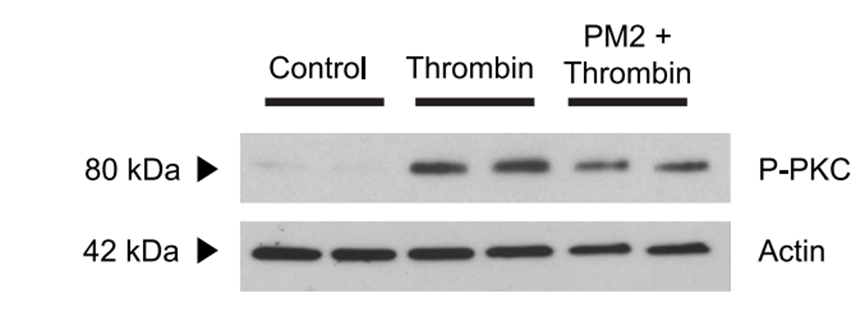
Parmodulin 2 purchased from MedChemExpress. Usage Cited in: Nat Cardiovasc Res. 2025 Aug;4(8):964-975. [Abstract]
Western blot for phospho-PKC (P-PKC) and actin in lysates of Human Lung Microvascular Lymphatic Endothelial Cells (HMVEC-LLy) grown in culture and treated with 1 unit/ml thrombin for 10 min +/- pretreatment with 10 μM parmodulin2 (PM2) for 1 hour.
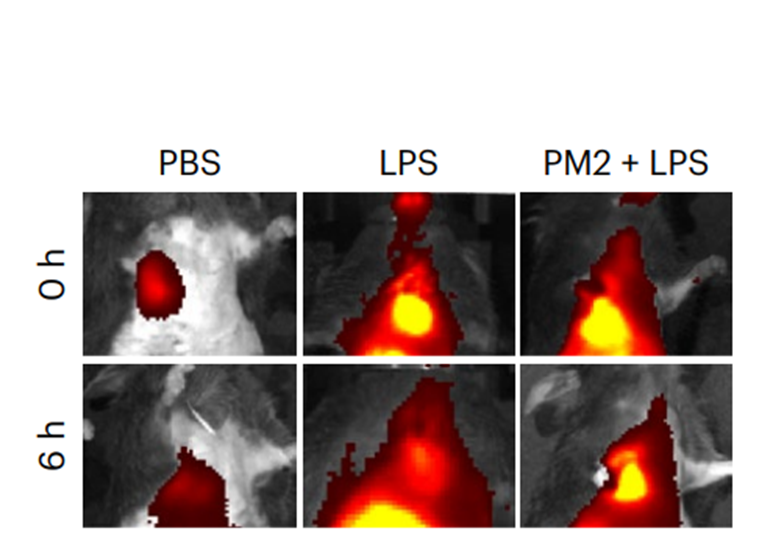
Parmodulin 2 purchased from MedChemExpress. Usage Cited in: Nat Cardiovasc Res. 2025 Aug;4(8):964-975. [Abstract]
Representative IVIS images of ICG fluorescence detected over the chest of mice after intratracheal ICG instillation, demonstrating the retention of ICG in Parmodulin 2 (PM2) (10 mg/kg)-treated mice.
-
Adv Healthc Mater
Impact of Fibrinogen, Fibrin Thrombi and Thrombin on Cancer Cell Extravasation Using in vitro Microvascular Networks. [Abstract]2023 Jul;12(19):e2202984. PMID: 37119127 -
Blood Adv
Targeting PAR1 biased signaling with parmodulin reduces thromboinflammation and acute lung injury in sickle cell disease. [Abstract]2026 Feb 3:bloodadvances.2025017522. PMID: 41632640 -
Kidney360
2024 Jan 1;5(1):8-21. PMID: 38037228
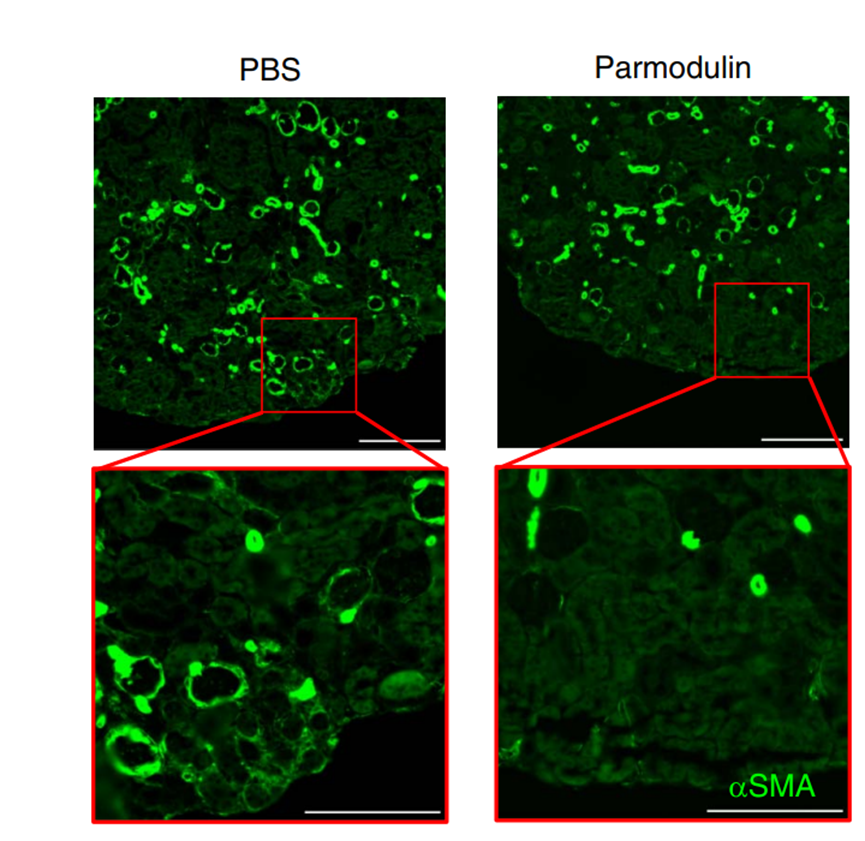
Parmodulin 2 purchased from MedChemExpress. Usage Cited in: Kidney360. 2024 Jan 1;5(1):8-21. [Abstract]
Representative sections of αSMA immunolabeling in Parmodulin (125 μg/500 μL)-treated or PBS-treated mice 49 days after CA/CPR.


Solvent & Solubility
In Vitro:
DMSO : 100 mg/mL (276.83 mM; Need ultrasonic; Hygroscopic DMSO has a significant impact on the solubility of product, please use newly opened DMSO)
Please refer to the solubility information to select the appropriate solvent. Once prepared, please aliquot and store the solution to prevent product inactivation from repeated freeze-thaw cycles.
Storage method and period of stock solution: -80°C, 2 years; -20°C, 1 year. When stored at -80°C, please use it within 2 years. When stored at -20°C, please use it within 1 year.
Please refer to the solubility information to select the appropriate solvent. Once prepared, please aliquot and store the solution to prevent product inactivation from repeated freeze-thaw cycles.
Storage method and period of stock solution: -80°C, 2 years; -20°C, 1 year. When stored at -80°C, please use it within 2 years. When stored at -20°C, please use it within 1 year.
Concentration (start) × Volume (start) = Concentration (final) × Volume (final)
In Vivo:
Select the appropriate dissolution method based on your experimental animal and administration route.
- For the following dissolution methods, please ensure to first prepare a clear stock solution using an In Vitro approach and then sequentially add co-solvents:
- To ensure reliable experimental results, the clarified stock solution can be appropriately stored based on storage conditions. As for the working solution for In Vivo experiments, it is recommended to prepare freshly and use it on the same day.
- The percentages shown for the solvents indicate their volumetric ratio in the final prepared solution. If precipitation or phase separation occurs during preparation, heat and/or sonication can be used to aid dissolution.
Add each solvent one by one: 10% DMSO 40% PEG300 5% Tween-80 45% Saline
Solubility: ≥ 2.5 mg/mL (6.92 mM); Clear solution
This protocol yields a clear solution of ≥ 2.5 mg/mL (saturation unknown).
Taking 1 mL working solution as an example, add 100 μL DMSO stock solution (25.0 mg/mL) to 400 μL PEG300, and mix evenly; then add 50 μL Tween-80 and mix evenly; then add 450 μL Saline to adjust the volume to 1 mL.
Preparation of Saline: Dissolve 0.9 g sodium chloride in ddH₂O and dilute to 100 mL to obtain a clear Saline solution.
Add each solvent one by one: 10% DMSO 90% (20% SBE-β-CD in Saline)
Solubility: 2.5 mg/mL (6.92 mM); Suspended solution; Need ultrasonic
This protocol yields a suspended solution of 2.5 mg/mL. Suspended solution can be used for oral and intraperitoneal injection.
Taking 1 mL working solution as an example, add 100 μL DMSO stock solution (25.0 mg/mL) to 900 μL 20% SBE-β-CD in Saline, and mix evenly.
Preparation of 20% SBE-β-CD in Saline (4°C, storage for one week): 2 g SBE-β-CD powder is dissolved in 10 mL Saline, completely dissolve until clear.
In Vivo Dissolution Calculator
Please enter the basic information of animal experiments:
-
-
-
-
Recommended: Prepare an additional quantity of animals to account for potential losses during experiments.
Please enter your animal formula composition:
-
%DMSO +
Recommended: Keep the proportion of DMSO in working solution below 2% if your animal is weak.
-
%+
-
+%Tween-80 + +
-
%Saline +
The co-solvents required include: DMSO, . All of co-solvents are available by MedChemExpress (MCE). , Tween 80. All of co-solvents are available by MedChemExpress (MCE).
Working solution concentration: 0.22 mg/mL
Method for preparing stock solution: mg drug dissolved in μL DMSO. Stock solution concentration: mg/mL.
1. Take μL DMSO stock solution;
2. Add μL .
μL , mix evenly;
3. Then add μL Tween 80, mix evenly;
4. Then add μL
Please ensure that the stock solution in the first step is dissolved to a clear state, and add co-solvents in sequence. You can use ultrasonic heating (ultrasonic cleaner, recommended frequency 20-40 kHz), vortexing, etc. to assist dissolution.


Purity & Documentation
-
Data Sheet (273 KB)
-
SDS (596 KB)
- English - EN (596 KB)
- Français - FR (596 KB)
- Deutsch - DE (596 KB)
- Norwegian - NO (596 KB)
- Español - ES (596 KB)
- Swedish - SV (596 KB)
- Italian - IT (596 KB)
- Korean - KR (596 KB)
- Portuguese - PT (596 KB)
-
Handling Instructions (2659 KB)
References
[1]. Gandhi DM, et al. Characterization of Protease-Activated Receptor (PAR) ligands: Parmodulins are reversible allosteric inhibitors of PAR1-driven calcium mobilization in endothelial cells. Bioorg Med Chem. 2018 May 15;26(9):2514-2529. [Content Brief]
[3]. Aisiku O, et al. Parmodulins inhibit thrombus formation without inducing endothelial injury caused by vorapaxar. Blood. 2015 Mar 19;125(12):1976-85. [Content Brief]


Complete Stock Solution Preparation Table
Please refer to the solubility information to select the appropriate solvent. Once prepared, please aliquot and store the solution to prevent product inactivation from repeated freeze-thaw cycles.
Storage method and period of stock solution: -80°C, 2 years; -20°C, 1 year. When stored at -80°C, please use it within 2 years. When stored at -20°C, please use it within 1 year.
| Optional Solvent | Concentration Solvent Mass | 1 mg | 5 mg | 10 mg | 25 mg |
|---|---|---|---|---|---|
| DMSO | 1 mM | 2.7683 mL | 13.8416 mL | 27.6832 mL | 69.2080 mL |
| 5 mM | 0.5537 mL | 2.7683 mL | 5.5366 mL | 13.8416 mL | |
| 10 mM | 0.2768 mL | 1.3842 mL | 2.7683 mL | 6.9208 mL | |
| 15 mM | 0.1846 mL | 0.9228 mL | 1.8455 mL | 4.6139 mL | |
| 20 mM | 0.1384 mL | 0.6921 mL | 1.3842 mL | 3.4604 mL | |
| 25 mM | 0.1107 mL | 0.5537 mL | 1.1073 mL | 2.7683 mL | |
| 30 mM | 0.0923 mL | 0.4614 mL | 0.9228 mL | 2.3069 mL | |
| 40 mM | 0.0692 mL | 0.3460 mL | 0.6921 mL | 1.7302 mL | |
| 50 mM | 0.0554 mL | 0.2768 mL | 0.5537 mL | 1.3842 mL | |
| 60 mM | 0.0461 mL | 0.2307 mL | 0.4614 mL | 1.1535 mL | |
| 80 mM | 0.0346 mL | 0.1730 mL | 0.3460 mL | 0.8651 mL | |
| 100 mM | 0.0277 mL | 0.1384 mL | 0.2768 mL | 0.6921 mL |


Parmodulin 2 Related Classifications
HY-13965 Related Classifications
 Powered by Bioz