



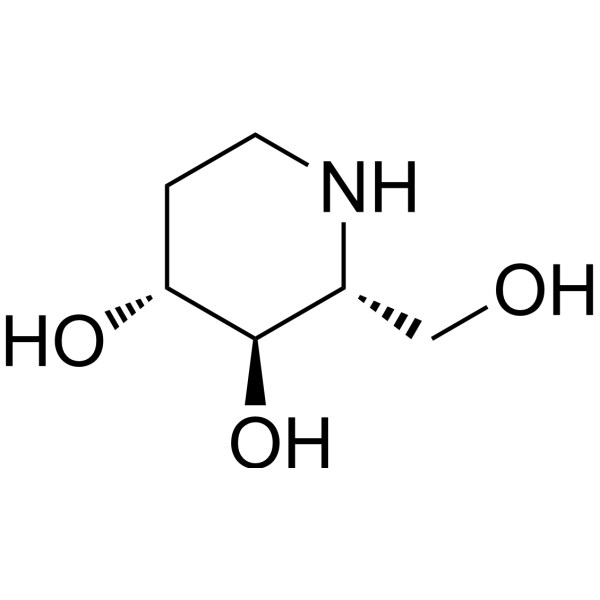
Fagomine
Based on 9 publication(s) in Google Scholar
Fagomine is a mild glycosidase inhibitor. The Ki of the iminosugar Fagomine is 4.8 μM, 39 μM, and 70 μM for Amyloglucosidase (A.niger), β-Glucosidase (bovine), and Isomaltase (yeast), respectively.
Nos produits utilisent uniquement pour la recherche. Nous ne vendons pas aux patients.
- Pureté : 99.24%
- CAS No.: 53185-12-9
- Formule: C6H13NO3
- Masse moléculaire:147.17
-
Stockage:Powder -20°C, 3 years , 4°C, 2 years ; In solvent -80°C, 2 years , -20°C, 1 year

To place orders, for customer services and technical support, please contact: MedChemExpress USA
Tel: 609-228-6898 E-mail: [email protected] [email protected]


-
 Activité biologique
-
Chemical Information
-
Solvant et solubilité
- Pureté et documentation
- Références
-
 Help & FAQs


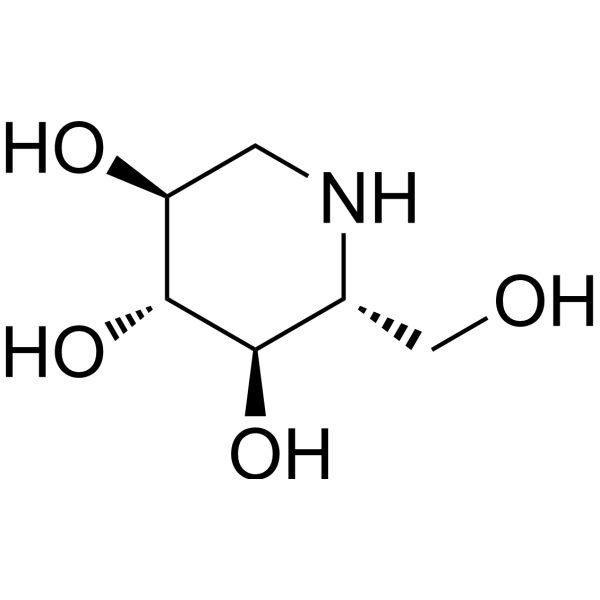
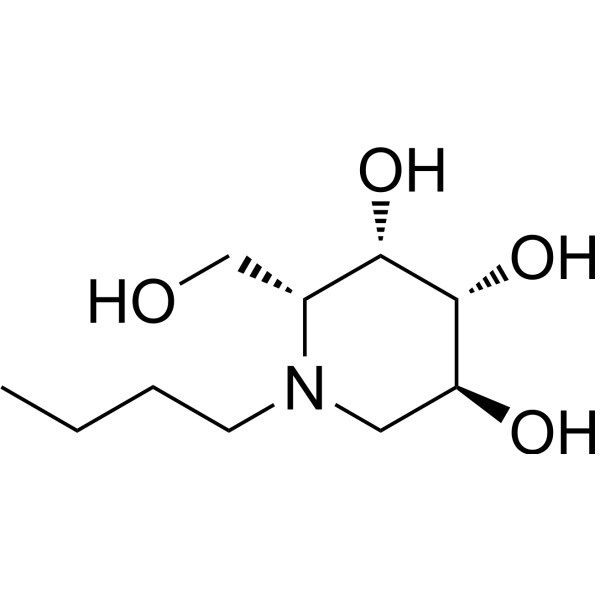
Publications Citing Use of MedChemExpress (MCE) Fagomine
More- Phytomedicine. 2026 Jan:150:157743. [Abstract]
- Phytomedicine. 2025 Oct:146:157150. [Abstract]
- Antioxidants (Basel). 2022 May 5;11(5):905. [Abstract]
- J Agric Food Chem. 2018 Mar 21;66(11):2758-2764. [Abstract]
- Molecules. 2019 May 8;24(9):1776. [Abstract]
- Molecules. 2017 Sep 26;22(10):1616. [Abstract]
- J Pharm Biomed Anal. 2015 Oct 10:114:447-54. [Abstract]
- J Pharm Biomed Anal. 2015 May 10:109:177-83. [Abstract]
- Journal of Tianjin University of Traditional Chinese Medicine. 2016, 33(10): 619-623.
 Customer Validation & Images

-
WB


Activité biologique
Description
IC50 & Target
Glycosidase[1]
Cellular Effect
|
Cell Line

|
Type | Value | Description | References |
|---|---|---|---|---|
| RAW | IC50 |
>10 μM
Compound: 28
|
Inhibition of glucosylceramide synthase in mouse RAW cells preincubated for 15 mins followed by substrate addition and measured after 1 hr by fluorescence scanner
Inhibition of glucosylceramide synthase in mouse RAW cells preincubated for 15 mins followed by substrate addition and measured after 1 hr by fluorescence scanner
|
[PMID: 24900342] |
In Vitro
Fagomine (D-fagomine) is an iminosugar that has been shown to selectively agglutinate Enterobacteriales in vitro. Fagomine selectively agglutinates fimbriated enterobacteria (e.g., E.coli) and inhibits their adhesion to the intestinal mucosa; the reason for this is probably related to its structural similarity with lectin-binding saccharides (e.g., mannose). Fagomine is capable of altering this effect of high-fat high-sucrose diet (HFHS) on the proportion of Enterobacteriales and E.coli[2].
MedChemExpress (MCE) has not independently confirmed the accuracy of these methods. They are for reference only.
In Vivo
MedChemExpress (MCE) has not independently confirmed the accuracy of these methods. They are for reference only.
Essai clinique
| NCT Number | Sponsor | Condition | Start Date |
Phase
|
|---|---|---|---|---|
| NCT01329991 | Plexxikon| | 2011-05 | PHASE1 |


Chemical Information
-
CAS No. 53185-12-9
-
Appearance Solid
-
Masse moléculaire 147.17
-
Formule C6H13NO3
-
Color Off-white to yellow
-
SMILES
O[C@@H]1CCN[C@@H]([C@H]1O)CO
-
Synonyms
D-Fagomine
-
Structure Classification
-
Initial Source
-
Livraison
Room temperature in continental US; may vary elsewhere.
-
Stockage
Powder -20°C 3 years 4°C 2 years In solvent -80°C 2 years -20°C 1 year


Publications (9)
-
Journal Impact Factor
-
Most Recent
-
Phytomedicine
Ramulus Mori (Sangzhi) Alkaloids (SZ-A) exert a renoprotective effect by activating PGC-1α to mediate fatty acid oxidation and mitochondrial homeostasis. [Abstract]2026 Jan:150:157743. PMID: 41505916 -
Phytomedicine
Ramulus Mori (Sangzhi) alkaloids enhance pancreatic β-Cell maturation and function by targeting the CD81/endoplasmic reticulum stress pathway. [Abstract]2025 Oct:146:157150. PMID: 40819639 -
Antioxidants (Basel)
Ramulus Mori (Sangzhi) Alkaloids Alleviate High-Fat Diet-Induced Obesity and Nonalcoholic Fatty Liver Disease in Mice. [Abstract]2022 May 5;11(5):905. PMID: 35624769 -
J Agric Food Chem
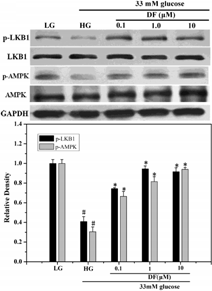
d-Fagomine Attenuates High Glucose-Induced Endothelial Cell Oxidative Damage by Upregulating the Expression of PGC-1α. [Abstract]2018 Mar 21;66(11):2758-2764. PMID: 29489344
Fagomine purchased from MedChemExpress. Usage Cited in: J Agric Food Chem. 2018 Mar 21;66(11):2758-2764. [Abstract]
Effect of D-fagomine on the expression of phosphorylated LKB1, AMPK, SIRT1, and PGC-1α in HUVECs. Cultured HUVECs are treated with D-fagomine (0.1, 1, or 10 μM) for 24 h. Cell lysates are prepared and subjected to Western blotting analyses.
-
Molecules
Investigation on the Enzymatic Profile of Mulberry Alkaloids by Enzymatic Study and Molecular Docking. [Abstract]2019 May 8;24(9):1776. PMID: 31071910 -
Molecules
Pharmacokinetics, Tissue Distribution, and Elimination of Three Active Alkaloids in Rats after Oral Administration of the Effective Fraction of Alkaloids from Ramulus Mori, an Innovative Hypoglycemic Agent. [Abstract]2017 Sep 26;22(10):1616. PMID: 28954438 -
J Pharm Biomed Anal
Rapid determination of 1-deoxynojirimycin in Morus alba L. leaves by direct analysis in real time (DART) mass spectrometry. [Abstract]2015 Oct 10:114:447-54. PMID: 26133103 -
J Pharm Biomed Anal
Simultaneous quantification of three active alkaloids from a traditional Chinese medicine Ramulus Mori (Sangzhi) in rat plasma using liquid chromatography-tandem mass spectrometry. [Abstract]2015 May 10:109:177-83. PMID: 25778928 -


Solvant et solubilité
In Vitro:
H2O : ≥ 36 mg/mL (244.62 mM)
* "≥" means soluble, but saturation unknown.
Please refer to the solubility information to select the appropriate solvent. Once prepared, please aliquot and store the solution to prevent product inactivation from repeated freeze-thaw cycles.
Storage method and period of stock solution: -80°C, 2 years; -20°C, 1 year. When stored at -80°C, please use it within 2 years. When stored at -20°C, please use it within 1 year.
* Note: If you choose water as the stock solution, please dilute it to the working solution, then filter and sterilize it with a 0.22 μm filter before use.
Please refer to the solubility information to select the appropriate solvent. Once prepared, please aliquot and store the solution to prevent product inactivation from repeated freeze-thaw cycles.
Storage method and period of stock solution: -80°C, 2 years; -20°C, 1 year. When stored at -80°C, please use it within 2 years. When stored at -20°C, please use it within 1 year.
* Note: If you choose water as the stock solution, please dilute it to the working solution, then filter and sterilize it with a 0.22 μm filter before use.
Concentration (start) × Volume (start) = Concentration (final) × Volume (final)
In Vivo:
For the following dissolution methods, please prepare the working solution directly:
It is recommended to prepare fresh solutions and use them promptly within a short period of time.
The percentages shown for the solvents indicate their volumetric ratio in the final prepared solution. If precipitation or phase separation occurs during preparation, heat and/or sonication can be used to aid dissolution.
Add each solvent one by one: PBS
Solubility: 100 mg/mL (679.49 mM); Clear solution; Need ultrasonic


Pureté et documentation
-
Fiche technique (279 KB)
-
SDS (251 KB)
- English - EN (251 KB)
- Français - FR (251 KB)
- Deutsch - DE (251 KB)
- Norwegian - NO (251 KB)
- Español - ES (251 KB)
- Swedish - SV (251 KB)
- Italian - IT (251 KB)
- Korean - KR (251 KB)
- Portuguese - PT (251 KB)
-
Instruction de manipulation (2659 KB)
Références
[1]. Mena-Barragán T, et al. Inhibitor versus chaperone behaviour of d-fagomine, DAB and LAB sp2-iminosugar conjugates againstglycosidases: A structure-activity relationship study in Gaucher fibroblasts. Eur J Med Chem. 2015 Aug 31. pii: S0223-5234(15)30222-1. [Content Brief]
[2]. Ramos-Romero S, et al. Effect of (D)-fagomine on excreted Enterobacteria and weight gain in rats fed a high-fat high-sucrose diet. Obesity (Silver Spring). 2014 Apr;22(4):976-9. [Content Brief]
[3]. Molinar-Toribio E, et al. D-Fagomine attenuates metabolic alterations induced by a high-energy-dense diet in rats. Food Funct. 2015 Aug;6(8):2614-9. [Content Brief]


Complete Stock Solution Preparation Table
Please refer to the solubility information to select the appropriate solvent. Once prepared, please aliquot and store the solution to prevent product inactivation from repeated freeze-thaw cycles.
Storage method and period of stock solution: -80°C, 2 years; -20°C, 1 year. When stored at -80°C, please use it within 2 years. When stored at -20°C, please use it within 1 year.
| Optional Solvent | Concentration Solvent Mass | 1 mg | 5 mg | 10 mg | 25 mg |
|---|---|---|---|---|---|
| H2O | 1 mM | 6.7949 mL | 33.9743 mL | 67.9486 mL | 169.8716 mL |
| 5 mM | 1.3590 mL | 6.7949 mL | 13.5897 mL | 33.9743 mL | |
| 10 mM | 0.6795 mL | 3.3974 mL | 6.7949 mL | 16.9872 mL | |
| 15 mM | 0.4530 mL | 2.2650 mL | 4.5299 mL | 11.3248 mL | |
| 20 mM | 0.3397 mL | 1.6987 mL | 3.3974 mL | 8.4936 mL | |
| 25 mM | 0.2718 mL | 1.3590 mL | 2.7179 mL | 6.7949 mL | |
| 30 mM | 0.2265 mL | 1.1325 mL | 2.2650 mL | 5.6624 mL | |
| 40 mM | 0.1699 mL | 0.8494 mL | 1.6987 mL | 4.2468 mL | |
| 50 mM | 0.1359 mL | 0.6795 mL | 1.3590 mL | 3.3974 mL | |
| 60 mM | 0.1132 mL | 0.5662 mL | 1.1325 mL | 2.8312 mL | |
| 80 mM | 0.0849 mL | 0.4247 mL | 0.8494 mL | 2.1234 mL | |
| 100 mM | 0.0679 mL | 0.3397 mL | 0.6795 mL | 1.6987 mL |
* Note: If you choose water as the stock solution, please dilute it to the working solution, then filter and sterilize it with a 0.22 μm filter before use.


Fagomine Related Classifications
HY-13005 Related Classifications
 Powered by Bioz