



JC2-11
Based on 1 publication(s) in Google Scholar
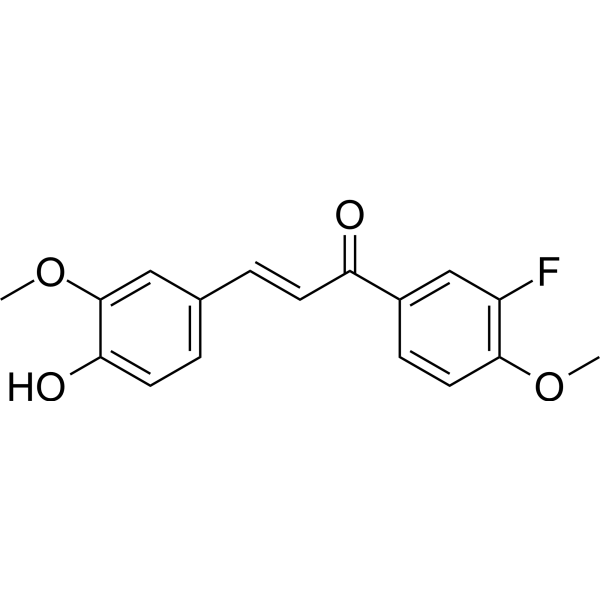
JC2-11 is an inhibitor of inflammatory corpuscles. JC2-11 inhibits domain-containing protein NLRC 4, absent in melanoma 2 (AIM 2) and non-canonical (NC) inflammatory corpuscles. JC2-11 reduces the secretion of caspase-1 (p20), the cleavage of gasdermin D (GSDMD), and the releases of IL-1β and lactate dehydrogenases (LDH) in inflammatory bodies. JC2-11 inhibits the activation of inflammatory bodies by destroying the production of reactive oxygen species and the activity of caspase-1.
Nos produits utilisent uniquement pour la recherche. Nous ne vendons pas aux patients.
- Pureté : 98.03%
- CAS No.: 937820-89-8
- Formule: C17H15FO4
- Masse moléculaire:302.30
-
Stockage:
4°C, sealed storage, away from moisture and light
* In solvent : -80°C, 6 months; -20°C, 1 month (sealed storage, away from moisture and light)

To place orders, for customer services and technical support, please contact: MedChemExpress USA
Tel: 609-228-6898 E-mail: [email protected] [email protected]


-
 Activité biologique
-
Chemical Information
-
Solvant et solubilité
- Protocole
- Pureté et documentation
- Références
-
 Help & FAQs


-
HY-N0822
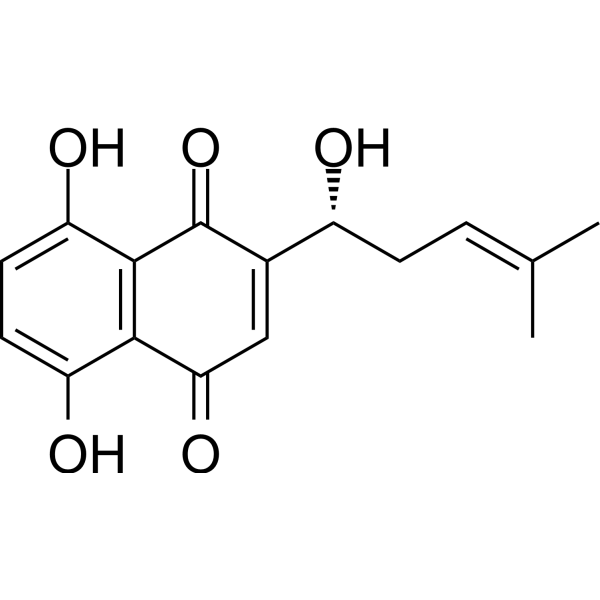
ShikoninChloride Channel Inhibitor -
HY-144223
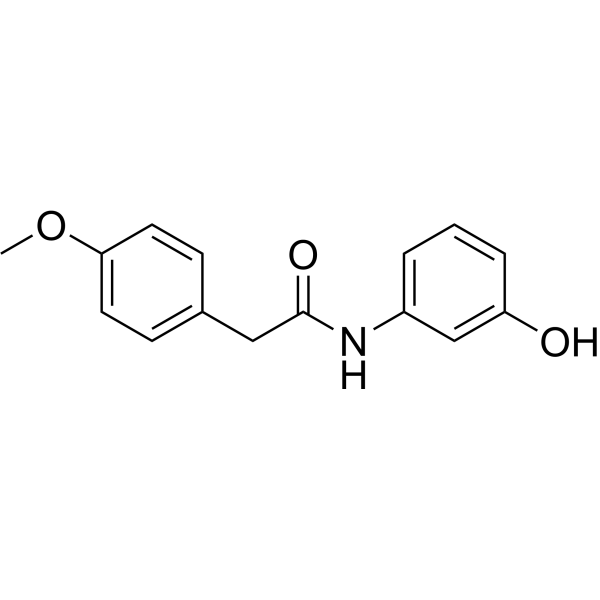
NLRP3-IN-94NLRP3 Inhibitor -
HY-144226
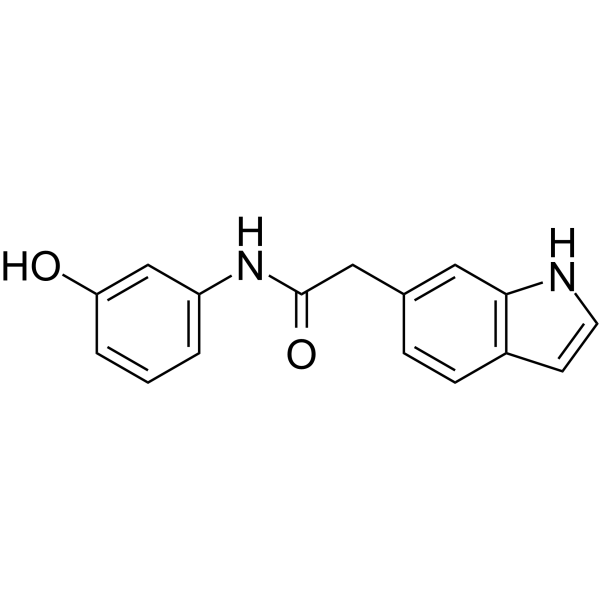
NLRP3/AIM2-IN-3NLRP3/AIM2 Inhibitor -
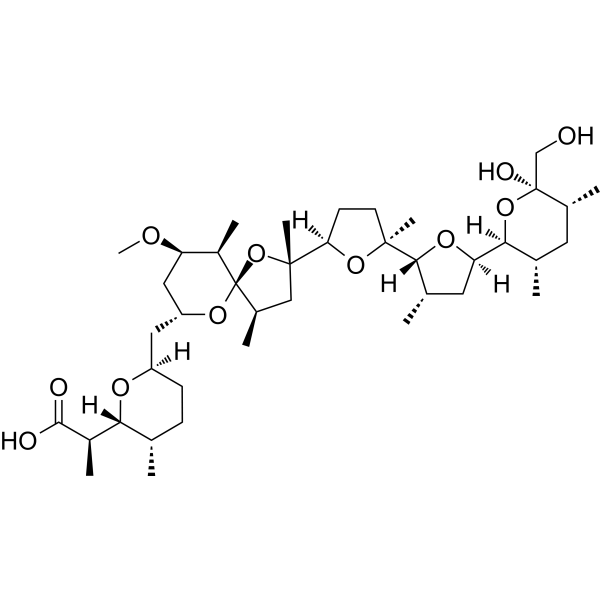
HY-127019
NigericinNLRP3 Activator -
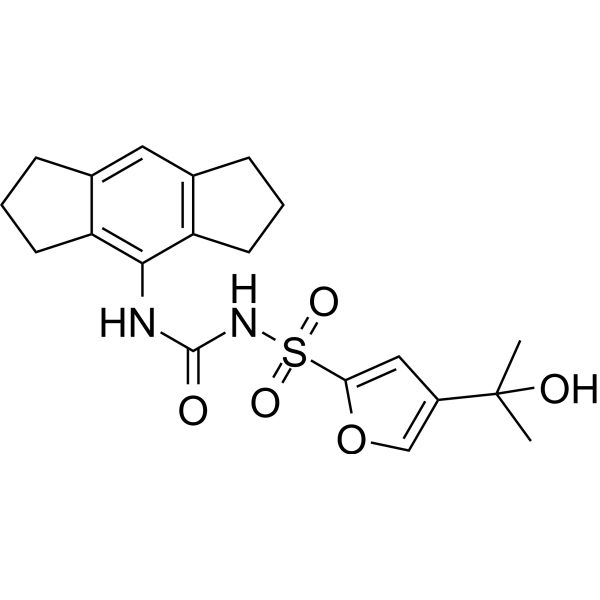
HY-12815
MCC950NLRP3 Inhibitor -
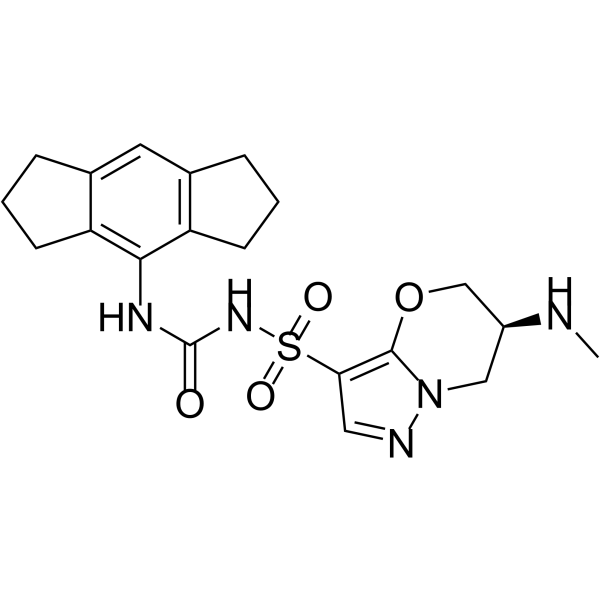
HY-148258
GDC-2394NLRP3 Inhibitor -
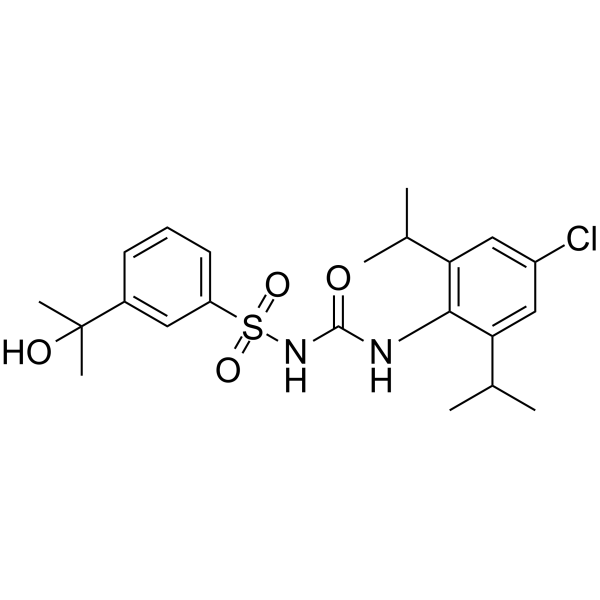
HY-119721
CP-424174IL-1β Processing Inhibitor -

HY-N0822R
Shikonin (Standard)Chloride Channel Inhibitor -
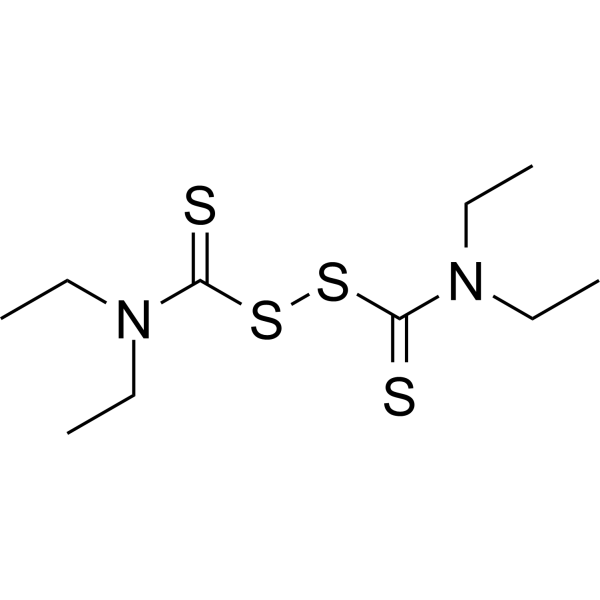
HY-B0240
DisulfiramALDH1 Inhibitor -
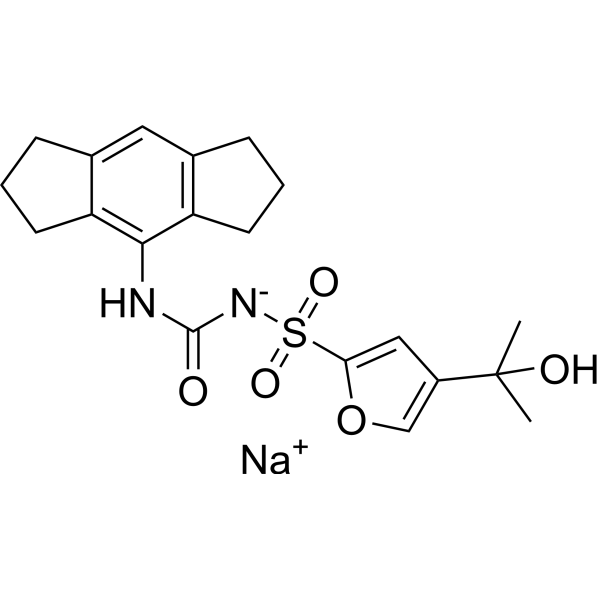
HY-12815A
MCC950 sodiumNLRP3 Inhibitor -
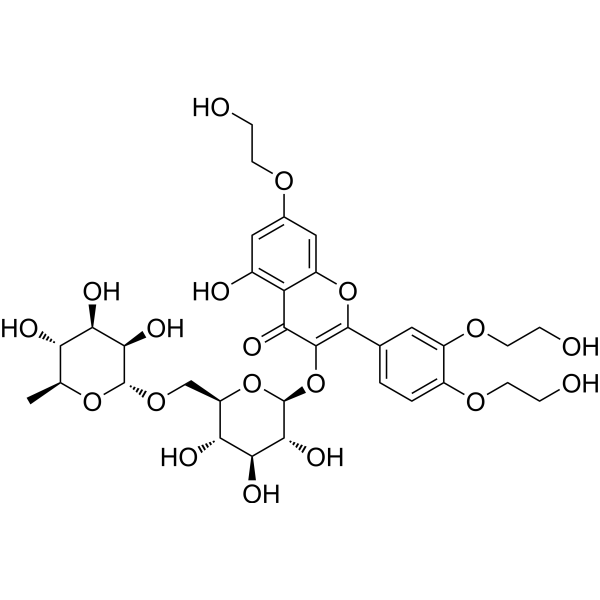
HY-N0139
TroxerutinNOD-like Receptor (NLR) Inhibitor -
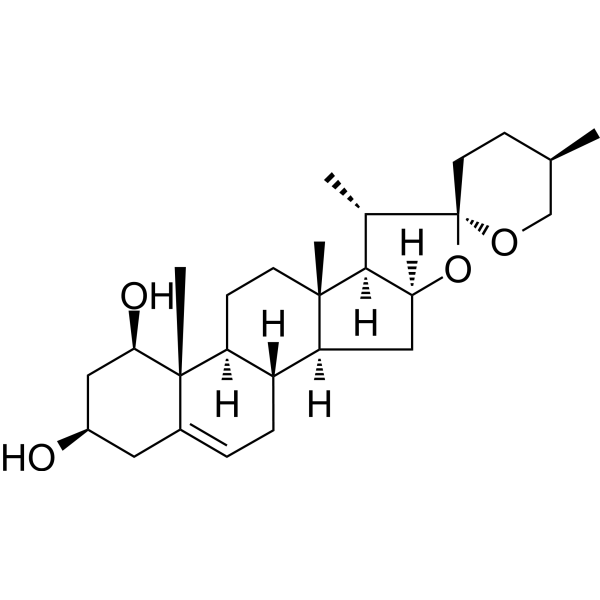
HY-N0496
RuscogeninNOD-like Receptor (NLR) Inhibitor
Publications Citing Use of MedChemExpress (MCE) JC2-11
More

Activité biologique
Description
IC50 & Target
[1]|
NLRP3 inflammasome |
In Vivo
MedChemExpress (MCE) has not independently confirmed the accuracy of these methods. They are for reference only.
-
Animal Model:C57BL/6 mice (8 weeks, female)[1].
-
Dosage:250 μg/mouse.
-
Administration:Intraperitoneal injection; single dose.
-
Result:Exhibited inhibitory effect on NC inflammatory body.


Chemical Information
-
CAS No. 937820-89-8
-
Appearance Solid
-
Masse moléculaire 302.30
-
Formule C17H15FO4
-
Color Off-white to yellow
-
SMILES
COC1=CC(/C=C/C(C2=CC(F)=C(C=C2)OC)=O)=CC=C1O
-
Livraison
Room temperature in continental US; may vary elsewhere.
-
Stockage
4°C, sealed storage, away from moisture and light
* In solvent : -80°C, 6 months; -20°C, 1 month (sealed storage, away from moisture and light)


Publications (1)
-
Journal Impact Factor
-
Most Recent
-
Immun Inflamm Dis
AIM2 inflammasome regulated by the IFN-γ/JAK2/STAT1 pathway promotes activation and pyroptosis of monocytes in Coronary Artery Disease. [Abstract]2024 Jun;12(6):e1317. PMID: 38869352


Solvant et solubilité
In Vitro:
DMSO : ≥ 100 mg/mL (330.80 mM; Hygroscopic DMSO has a significant impact on the solubility of product, please use newly opened DMSO)
* "≥" means soluble, but saturation unknown.
Please refer to the solubility information to select the appropriate solvent. Once prepared, please aliquot and store the solution to prevent product inactivation from repeated freeze-thaw cycles.
Storage method and period of stock solution: -80°C, 6 months; -20°C, 1 month (sealed storage, away from moisture and light). When stored at -80°C, please use it within 6 months. When stored at -20°C, please use it within 1 month.
Please refer to the solubility information to select the appropriate solvent. Once prepared, please aliquot and store the solution to prevent product inactivation from repeated freeze-thaw cycles.
Storage method and period of stock solution: -80°C, 6 months; -20°C, 1 month (sealed storage, away from moisture and light). When stored at -80°C, please use it within 6 months. When stored at -20°C, please use it within 1 month.
Concentration (start) × Volume (start) = Concentration (final) × Volume (final)


Pureté et documentation
-
Fiche technique (271 KB)
-
SDS (252 KB)
- English - EN (252 KB)
- Français - FR (252 KB)
- Deutsch - DE (252 KB)
- Norwegian - NO (252 KB)
- Español - ES (252 KB)
- Swedish - SV (252 KB)
- Italian - IT (252 KB)
- Korean - KR (252 KB)
- Portuguese - PT (252 KB)
-
Instruction de manipulation (2659 KB)
Références


Complete Stock Solution Preparation Table
Please refer to the solubility information to select the appropriate solvent. Once prepared, please aliquot and store the solution to prevent product inactivation from repeated freeze-thaw cycles.
Storage method and period of stock solution: -80°C, 6 months; -20°C, 1 month (sealed storage, away from moisture and light). When stored at -80°C, please use it within 6 months. When stored at -20°C, please use it within 1 month.
| Optional Solvent | Concentration Solvent Mass | 1 mg | 5 mg | 10 mg | 25 mg |
|---|---|---|---|---|---|
| DMSO | 1 mM | 3.3080 mL | 16.5399 mL | 33.0797 mL | 82.6993 mL |
| 5 mM | 0.6616 mL | 3.3080 mL | 6.6159 mL | 16.5399 mL | |
| 10 mM | 0.3308 mL | 1.6540 mL | 3.3080 mL | 8.2699 mL | |
| 15 mM | 0.2205 mL | 1.1027 mL | 2.2053 mL | 5.5133 mL | |
| 20 mM | 0.1654 mL | 0.8270 mL | 1.6540 mL | 4.1350 mL | |
| 25 mM | 0.1323 mL | 0.6616 mL | 1.3232 mL | 3.3080 mL | |
| 30 mM | 0.1103 mL | 0.5513 mL | 1.1027 mL | 2.7566 mL | |
| 40 mM | 0.0827 mL | 0.4135 mL | 0.8270 mL | 2.0675 mL | |
| 50 mM | 0.0662 mL | 0.3308 mL | 0.6616 mL | 1.6540 mL | |
| 60 mM | 0.0551 mL | 0.2757 mL | 0.5513 mL | 1.3783 mL | |
| 80 mM | 0.0413 mL | 0.2067 mL | 0.4135 mL | 1.0337 mL | |
| 100 mM | 0.0331 mL | 0.1654 mL | 0.3308 mL | 0.8270 mL |


JC2-11 Related Classifications
HY-152670 Related Classifications
 Powered by Bioz