



L-732138
Based on 1 publication(s) in Google Scholar
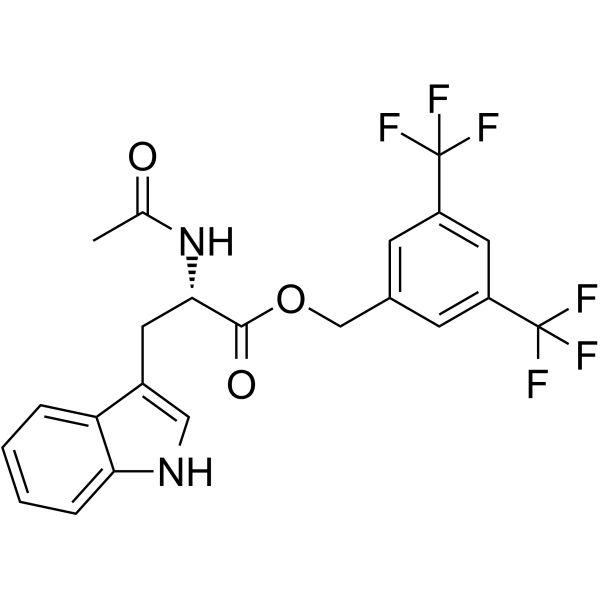
L-732138 is a selective, potent and competitive neurokinin-1 (NK-1) receptor antagonist with an IC50 of 2.3 nM. L-732138 has 200-fold more potent in cloned human NK-1 receptors than cloned rat NK-1 receptors, and has > 1000-fold more potent than human NK-2 and NK-3 receptors. L-732138 can reduce hyperalgesia and has antitumor action.
Nos produits utilisent uniquement pour la recherche. Nous ne vendons pas aux patients.
- Pureté : 99.9%
- CAS No.: 148451-96-1
- Formule: C22H18F6N2O3
- Masse moléculaire:472.38
-
Stockage:Powder -20°C, 3 years , 4°C, 2 years ; In solvent -80°C, 2 years , -20°C, 1 year

To place orders, for customer services and technical support, please contact: MedChemExpress USA
Tel: 609-228-6898 E-mail: [email protected] [email protected]


-
 Activité biologique
-
Chemical Information
-
Solvant et solubilité
- Pureté et documentation
- Références
-
 Help & FAQs


-
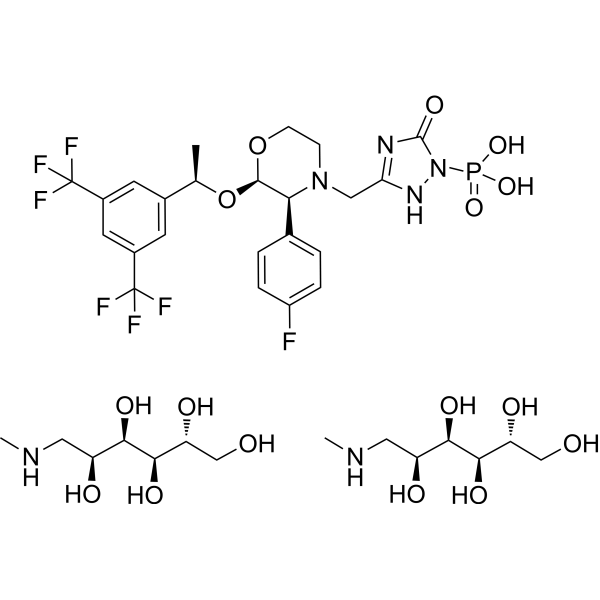
HY-14407A
Fosaprepitant dimeglumineNeurokinin-1 Receptor Antagonist -
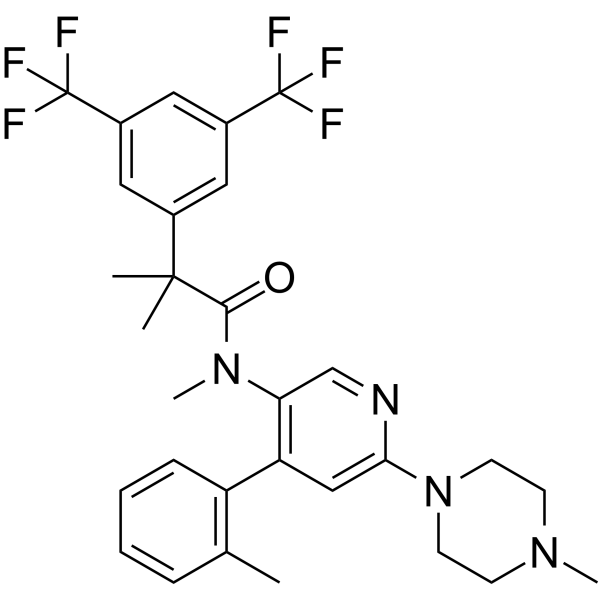
HY-16346
NetupitantNK1 Receptor Inhibitor -
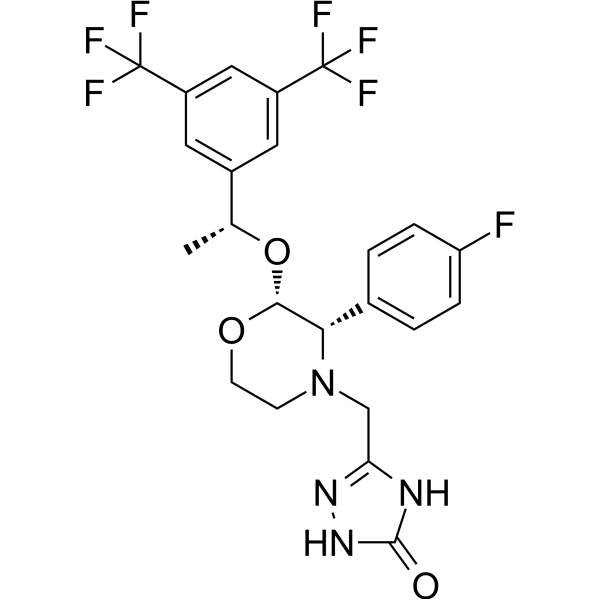
HY-10052
AprepitantNeurokinin 1 Receptor Antagonist -
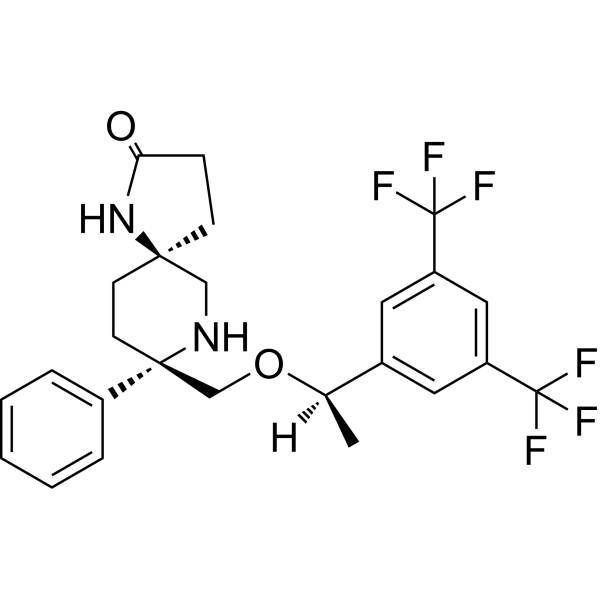
HY-14751
RolapitantNK1 Receptor Antagonist -
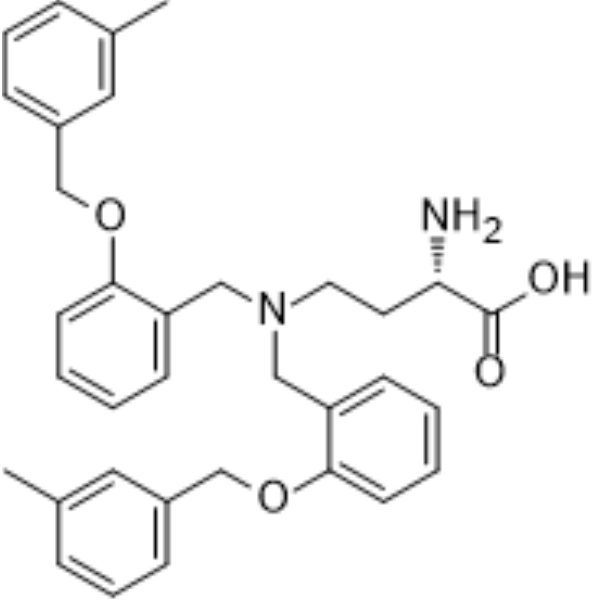
HY-112683
V-9302ASCT2 Antagonist -
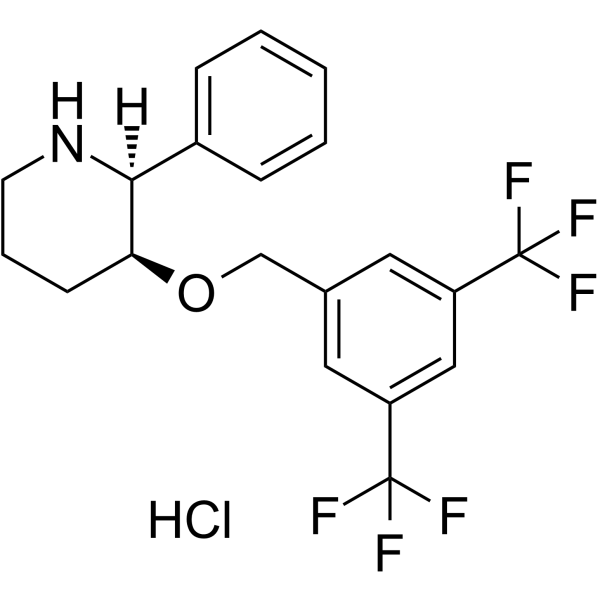
HY-14406A
L-733060 hydrochlorideNK1 Receptor Antagonist -
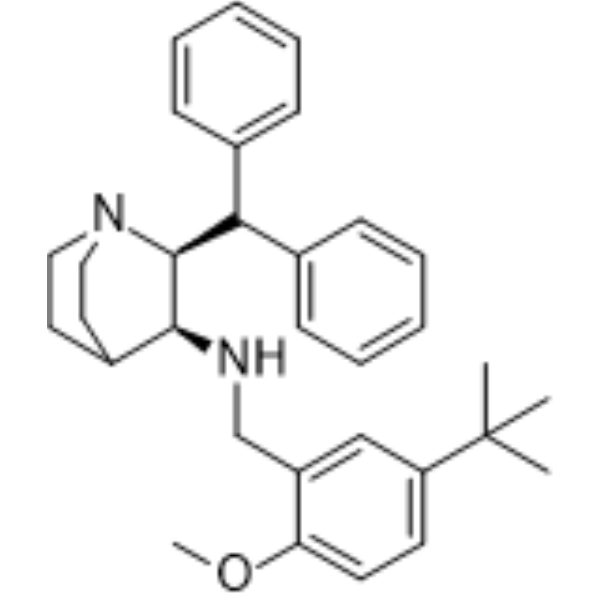
HY-10053
MaropitantNK1 Receptor Antagonist -
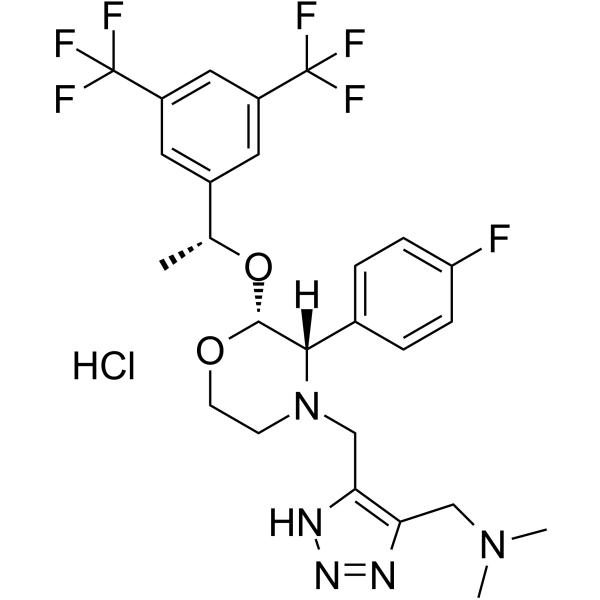
HY-108481
L-760735NK1 receptor antagonist -
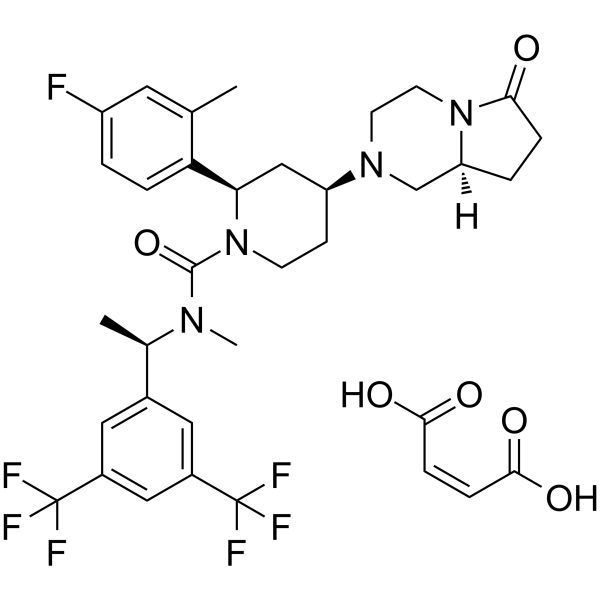
HY-122347A
Orvepitant maleateNeurokinin-1 Receptor Antagonist -
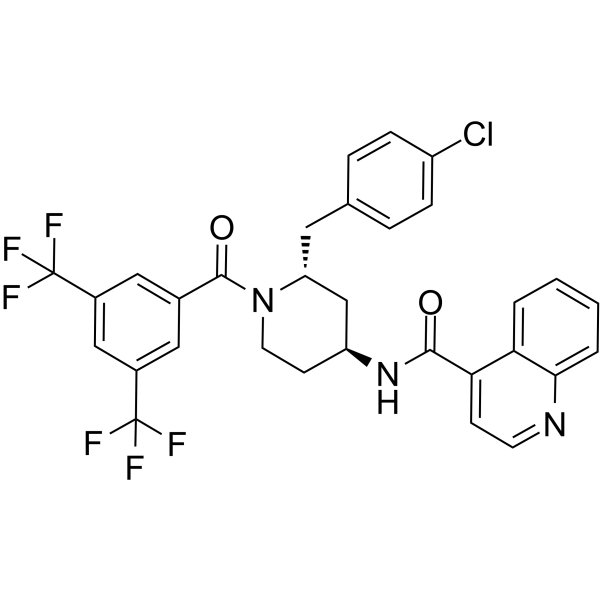
HY-18006
NKP608NK-1 Receptor Antagonist -
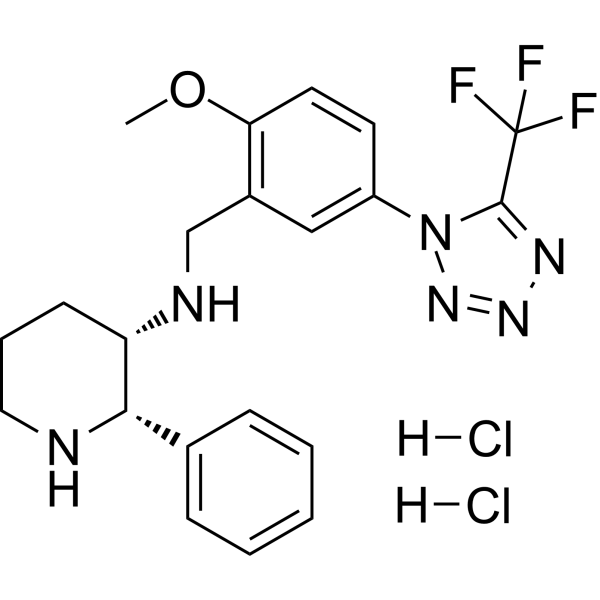
HY-12143
Vofopitant dihydrochlorideNK1 Receptor Inhibitor -
HY-19632
FezolinetantNK3R Antagonist
Publications Citing Use of MedChemExpress (MCE) L-732138
More

Activité biologique
Description
|
NK1R 2.3 nM (IC50) |
Cellular Effect
|
Cell Line

|
Type | Value | Description | References |
|---|---|---|---|---|
| CHO | IC50 |
>5 μM
Compound: 1
|
Inhibition of cloned human NK2 (Neurokinin 2) receptor, stably expressed in chinese hamster ovary (CHO) cells was determined
Inhibition of cloned human NK2 (Neurokinin 2) receptor, stably expressed in chinese hamster ovary (CHO) cells was determined
|
[PMID: 9873524] |
| CHO | IC50 |
1.6 nM
Compound: 3
|
Binding affinity against human Tachykinin receptor 1 expressed in CHO cells was measured by its ability to displace [125I]- Tyr-8 substance P.
Binding affinity against human Tachykinin receptor 1 expressed in CHO cells was measured by its ability to displace [125I]- Tyr-8 substance P.
|
[PMID: 7535362] |
| CHO | IC50 |
1.6 nM
Compound: 7b
|
Tested against cloned human NK1 receptor by displacement of 125 I -labeled substance P expressed in CHO cells
Tested against cloned human NK1 receptor by displacement of 125 I -labeled substance P expressed in CHO cells
|
[PMID: 8393115] |
| CHO | IC50 |
1.6 nM
Compound: 1
|
Inhibition of cloned human NK1 (Neurokinin 1) receptor, stably expressed in chinese hamster ovary (CHO) cells was determined
Inhibition of cloned human NK1 (Neurokinin 1) receptor, stably expressed in chinese hamster ovary (CHO) cells was determined
|
[PMID: 9873524] |
| CHO | IC50 |
2.5 nM
Compound: 1
|
Binding affinity at human Tachykinin receptor 1 expressed in CHO cells by [125 I]Trp8-substance P displacement.
Binding affinity at human Tachykinin receptor 1 expressed in CHO cells by [125 I]Trp8-substance P displacement.
|
[PMID: 7699709] |
| CHO | IC50 |
3.3 nM
Compound: 3
|
Binding affinity against wild type human Tachykinin receptor 1 expressed in CHO cells was measured by its ability to displace [125I]- Tyr-8 substance P.
Binding affinity against wild type human Tachykinin receptor 1 expressed in CHO cells was measured by its ability to displace [125I]- Tyr-8 substance P.
|
[PMID: 7535362] |
| CHO | IC50 |
8.1 nM
Compound: 3
|
Binding affinity against Gln165Ala mutant type human Tachykinin receptor 1 expressed in CHO cells was measured by its ability to displace [125I]- Tyr-8 substance P.
Binding affinity against Gln165Ala mutant type human Tachykinin receptor 1 expressed in CHO cells was measured by its ability to displace [125I]- Tyr-8 substance P.
|
[PMID: 7535362] |
In Vitro
L-732138 (0 -100 μM; first doubling time; COLO 858, MEL HO and COLO 679 cells) treatment results in a concentration-dependent cytotoxicity. L-732138 inhibits cell growth with IC50 of 44.6 μM for COLO 858 cells, 76.3 μM for MEL HO cells and 64.2 μM for COLO 679 cells. L-732138 blocks substance P (SP) mitogen stimulation[1].
L-732,138 treatment results in a large number of apoptotic cells were found in COLO 858, MEL HO and COLO 679 melanoma cell lines. In DAPI-stained cultures, at IC50 concentration of 43.6% apoptotic cells for the three melanoma cell lines, whereas at IC100 concentration of 51.4 % apoptotic cells[1].
MedChemExpress (MCE) has not independently confirmed the accuracy of these methods. They are for reference only. .
-
Cell Line:COLO 858, MEL HO and COLO 679 cells
-
Concentration:0 µM, 20 µM, 40 µM, 60 µM, 80 µM, 100 µM
-
Incubation Time:First doubling time
-
Result:Resulted in a concentration-dependent cytotoxicity.
In Vivo
MedChemExpress (MCE) has not independently confirmed the accuracy of these methods. They are for reference only.
-
Animal Model:Male Dunkin-Hartley guinea-pigs (350-500 g) injected with lipopolysaccharide (LPS)[3]
-
Dosage:10-4 mol/kg , 10-3 mol/kg and 10-2 mol/kg
-
Administration:Intravenous injection; for 15 minutes
-
Result:Abolished the vagally-induced plasma leakage in tracheobronchial tissues, and dose-dependently inhibited the LPS enhanced vagally-induced plasma exudation in traceobronchial tissues.


Chemical Information
-
CAS No. 148451-96-1
-
Appearance Solid
-
Masse moléculaire 472.38
-
Formule C22H18F6N2O3
-
Color White to off-white
-
SMILES
O=C(OCC1=CC(C(F)(F)F)=CC(C(F)(F)F)=C1)[C@H](CC2=CNC3=CC=CC=C23)NC(C)=O
-
Livraison
Room temperature in continental US; may vary elsewhere.
-
Stockage
Powder -20°C 3 years 4°C 2 years In solvent -80°C 2 years -20°C 1 year


Publications (1)
-
Journal Impact Factor
-
Most Recent
-
Antioxidants (Basel)
A Novel SIRT1 Activator Hydroxygenkwanin Alleviates Osteoporosis by Inhibiting Ferroptosis and Lactylation in Skeletal Stem/Progenitor Cells. [Abstract]2026 May 12;15(5):612. PMID: 42193234


Solvant et solubilité
In Vitro:
DMSO : 250 mg/mL (529.23 mM; Need ultrasonic; Hygroscopic DMSO has a significant impact on the solubility of product, please use newly opened DMSO)
Please refer to the solubility information to select the appropriate solvent. Once prepared, please aliquot and store the solution to prevent product inactivation from repeated freeze-thaw cycles.
Storage method and period of stock solution: -80°C, 2 years; -20°C, 1 year. When stored at -80°C, please use it within 2 years. When stored at -20°C, please use it within 1 year.
Please refer to the solubility information to select the appropriate solvent. Once prepared, please aliquot and store the solution to prevent product inactivation from repeated freeze-thaw cycles.
Storage method and period of stock solution: -80°C, 2 years; -20°C, 1 year. When stored at -80°C, please use it within 2 years. When stored at -20°C, please use it within 1 year.
Concentration (start) × Volume (start) = Concentration (final) × Volume (final)
In Vivo:
Select the appropriate dissolution method based on your experimental animal and administration route.
- For the following dissolution methods, please ensure to first prepare a clear stock solution using an In Vitro approach and then sequentially add co-solvents:
- To ensure reliable experimental results, the clarified stock solution can be appropriately stored based on storage conditions. As for the working solution for In Vivo experiments, it is recommended to prepare freshly and use it on the same day.
- The percentages shown for the solvents indicate their volumetric ratio in the final prepared solution. If precipitation or phase separation occurs during preparation, heat and/or sonication can be used to aid dissolution.
Add each solvent one by one: 10% DMSO 40% PEG300 5% Tween-80 45% Saline
Solubility: ≥ 6.25 mg/mL (13.23 mM); Clear solution
This protocol yields a clear solution of ≥ 6.25 mg/mL (saturation unknown).
Taking 1 mL working solution as an example, add 100 μL DMSO stock solution (62.5 mg/mL) to 400 μL PEG300, and mix evenly; then add 50 μL Tween-80 and mix evenly; then add 450 μL Saline to adjust the volume to 1 mL.
Preparation of Saline: Dissolve 0.9 g sodium chloride in ddH₂O and dilute to 100 mL to obtain a clear Saline solution.
In Vivo Dissolution Calculator
Please enter the basic information of animal experiments:
-
-
-
-
Recommended: Prepare an additional quantity of animals to account for potential losses during experiments.
Please enter your animal formula composition:
-
%DMSO +
Recommended: Keep the proportion of DMSO in working solution below 2% if your animal is weak.
-
%+
-
+%Tween-80 + +
-
%Saline +
The co-solvents required include: DMSO, . All of co-solvents are available by MedChemExpress (MCE). , Tween 80. All of co-solvents are available by MedChemExpress (MCE).
Working solution concentration: 0.22 mg/mL
Method for preparing stock solution: mg drug dissolved in μL DMSO. Stock solution concentration: mg/mL.
1. Take μL DMSO stock solution;
2. Add μL .
μL , mix evenly;
3. Then add μL Tween 80, mix evenly;
4. Then add μL
Please ensure that the stock solution in the first step is dissolved to a clear state, and add co-solvents in sequence. You can use ultrasonic heating (ultrasonic cleaner, recommended frequency 20-40 kHz), vortexing, etc. to assist dissolution.


Pureté et documentation
-
Fiche technique (277 KB)
-
SDS (393 KB)
- English - EN (393 KB)
- Français - FR (393 KB)
- Deutsch - DE (393 KB)
- Norwegian - NO (393 KB)
- Español - ES (393 KB)
- Swedish - SV (393 KB)
- Italian - IT (393 KB)
- Korean - KR (393 KB)
- Portuguese - PT (393 KB)
-
Instruction de manipulation (2659 KB)
Références
[1]. Muñoz M, et al. The NK-1 Receptor Antagonist L-732,138 Induces Apoptosis and Counteracts Substance P-Related Mitogenesis in Human Melanoma Cell Lines. Cancers (Basel). 2010 Apr 20;2(2):611-23. [Content Brief]
[2]. Cascieri MA, et al. Characterization of the interaction of N-acyl-L-tryptophan benzyl ester neurokinin antagonists with the human neurokinin-1 receptor. J Biol Chem. 1994 Mar 4;269(9):6587-91. [Content Brief]
[3]. Kuo HP, et al. Lipopolysaccharide enhances neurogenic plasma exudation in guinea-pig airways. Br J Pharmacol. 1998 Oct;125(4):711-6. [Content Brief]


Complete Stock Solution Preparation Table
Please refer to the solubility information to select the appropriate solvent. Once prepared, please aliquot and store the solution to prevent product inactivation from repeated freeze-thaw cycles.
Storage method and period of stock solution: -80°C, 2 years; -20°C, 1 year. When stored at -80°C, please use it within 2 years. When stored at -20°C, please use it within 1 year.
| Optional Solvent | Concentration Solvent Mass | 1 mg | 5 mg | 10 mg | 25 mg |
|---|---|---|---|---|---|
| DMSO | 1 mM | 2.1169 mL | 10.5847 mL | 21.1694 mL | 52.9235 mL |
| 5 mM | 0.4234 mL | 2.1169 mL | 4.2339 mL | 10.5847 mL | |
| 10 mM | 0.2117 mL | 1.0585 mL | 2.1169 mL | 5.2923 mL | |
| 15 mM | 0.1411 mL | 0.7056 mL | 1.4113 mL | 3.5282 mL | |
| 20 mM | 0.1058 mL | 0.5292 mL | 1.0585 mL | 2.6462 mL | |
| 25 mM | 0.0847 mL | 0.4234 mL | 0.8468 mL | 2.1169 mL | |
| 30 mM | 0.0706 mL | 0.3528 mL | 0.7056 mL | 1.7641 mL | |
| 40 mM | 0.0529 mL | 0.2646 mL | 0.5292 mL | 1.3231 mL | |
| 50 mM | 0.0423 mL | 0.2117 mL | 0.4234 mL | 1.0585 mL | |
| 60 mM | 0.0353 mL | 0.1764 mL | 0.3528 mL | 0.8821 mL | |
| 80 mM | 0.0265 mL | 0.1323 mL | 0.2646 mL | 0.6615 mL | |
| 100 mM | 0.0212 mL | 0.1058 mL | 0.2117 mL | 0.5292 mL |


L-732138 Related Classifications
HY-101249 Related Classifications
 Powered by Bioz