



Ruscogenin
Based on 7 publication(s) in Google Scholar
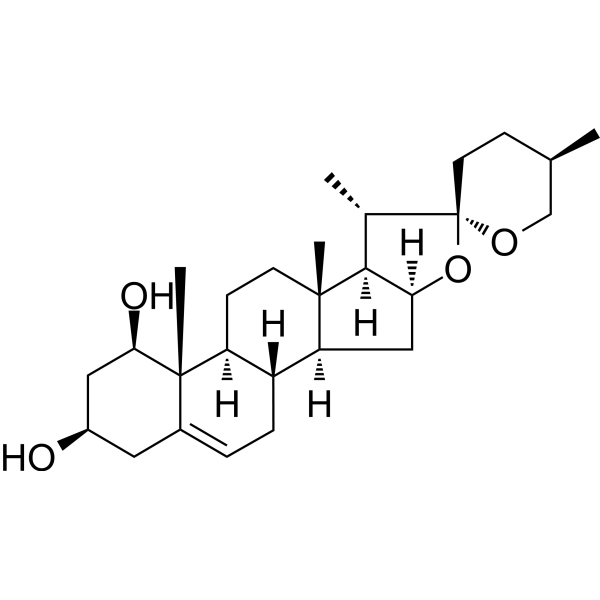
Ruscogenin, an important steroid sapogenin derived from Ophiopogon japonicus, attenuates cerebral ischemia-induced blood-brain barrier dysfunction by suppressing TXNIP/NLRP3 inflammasome activation and the MAPK pathway. Ruscogenin exerts significant anti-inflammatory and anti-thrombotic activities. Ruscogenin has orally bioactivity.
Nos produits utilisent uniquement pour la recherche. Nous ne vendons pas aux patients.
- Pureté : 99.85%
- CAS No.: 472-11-7
- Formule: C27H42O4
- Masse moléculaire:430.62
-
Stockage:
4°C, protect from light
* In solvent : -80°C, 6 months; -20°C, 1 month (protect from light)

To place orders, for customer services and technical support, please contact: MedChemExpress USA
Tel: 609-228-6898 E-mail: [email protected] [email protected]


-
 Activité biologique
-
Chemical Information
-
Solvant et solubilité
- Protocole
- Pureté et documentation
- Références
-
 Help & FAQs


-
HY-N0139
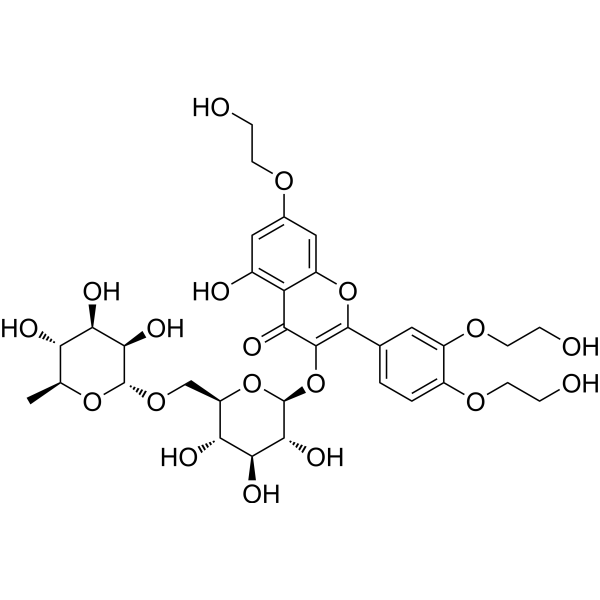
TroxerutinNOD-like Receptor (NLR) Inhibitor -
HY-N1422
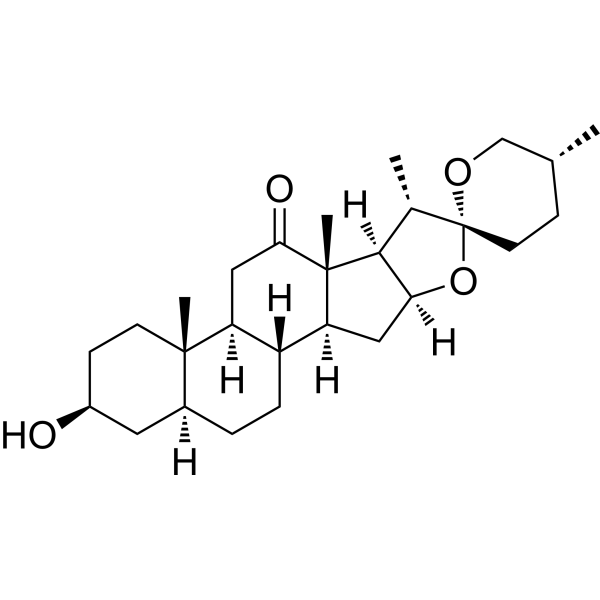
HecogeninFungal Inhibitor -
HY-12815
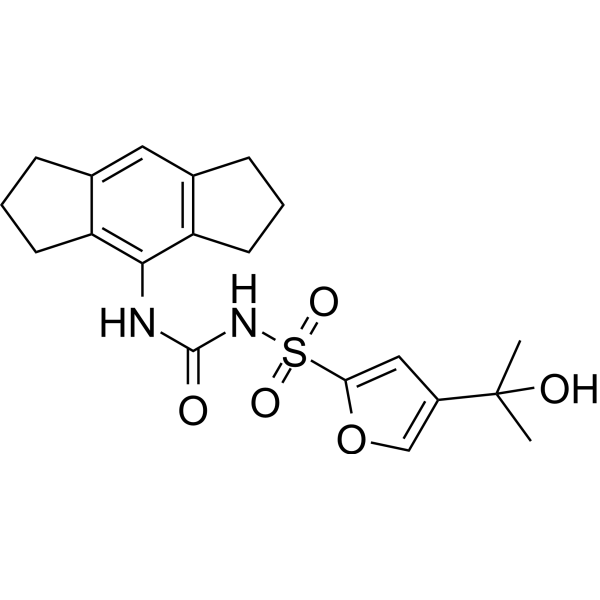
MCC950NLRP3 Inhibitor -
HY-12815A
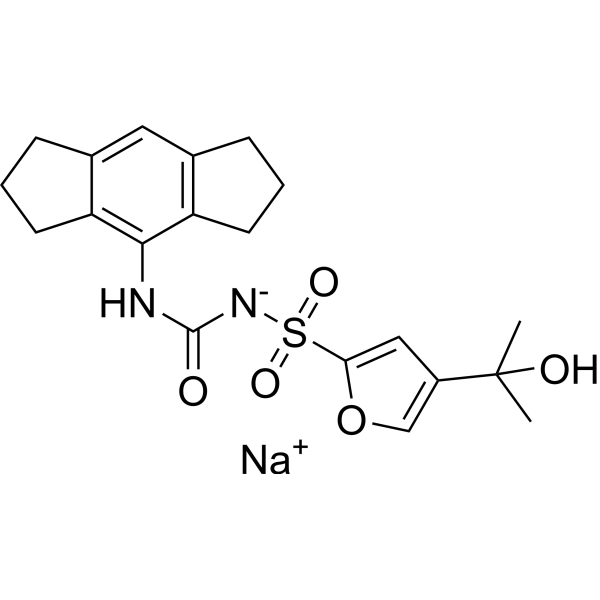
MCC950 sodiumNLRP3 Inhibitor -
HY-139396
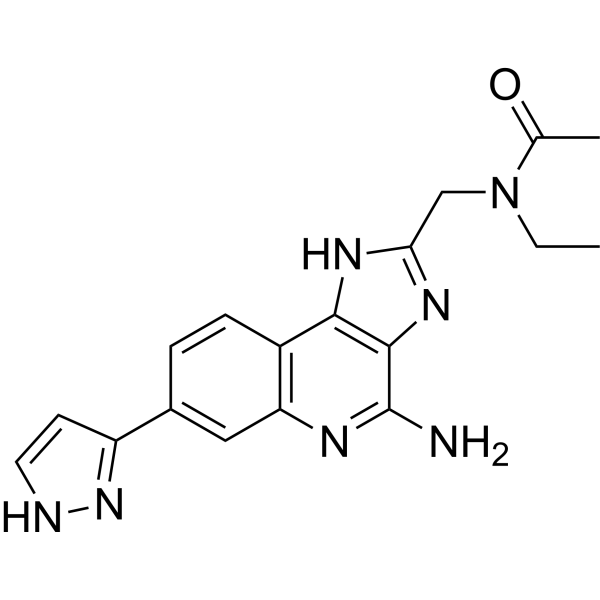
BMS-986299NLRP3 Agonist -
HY-18639
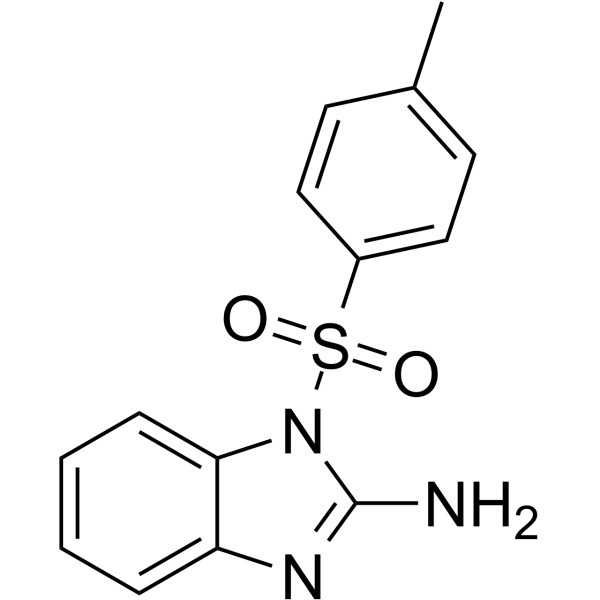
Nodinitib-1NOD-like Receptor (NLR) Inhibitor -

HY-N0496R
Ruscogenin (Standard)NOD-like Receptor (NLR) Inhibitor -
HY-17629
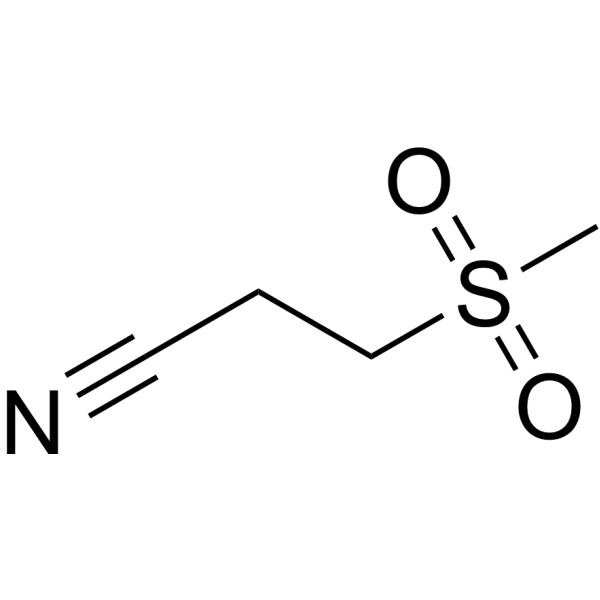
DapansutrileNLRP3 Inhibitor -
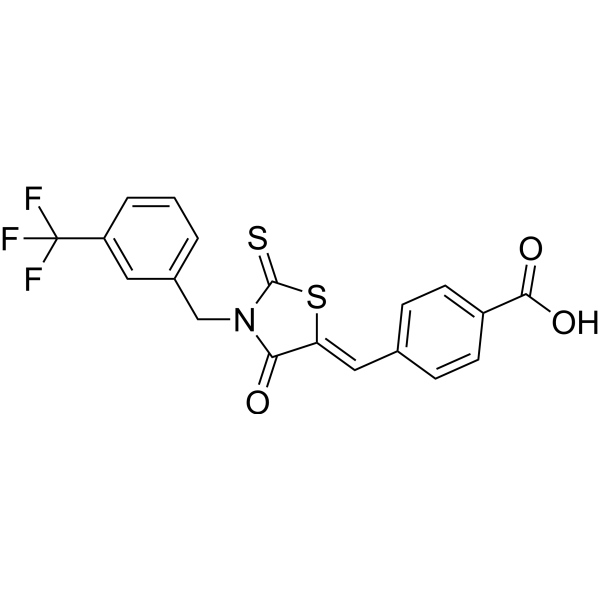
HY-103666
CY-09NLRP3 Inhibitor -
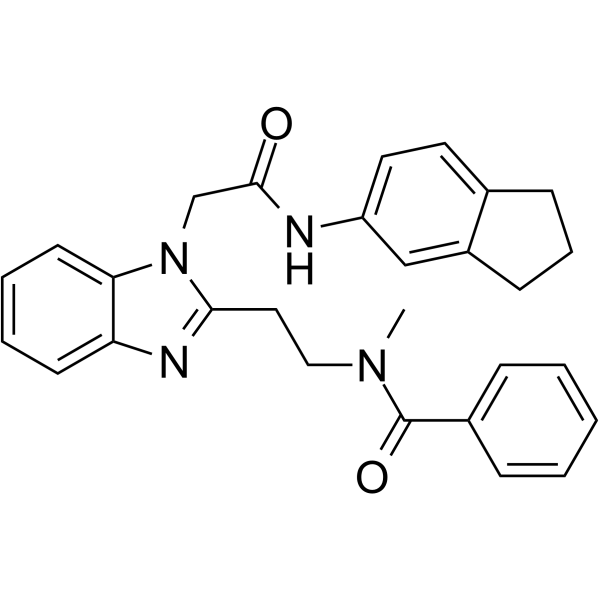
HY-136555
GSK717NOD2 Inhibitor -
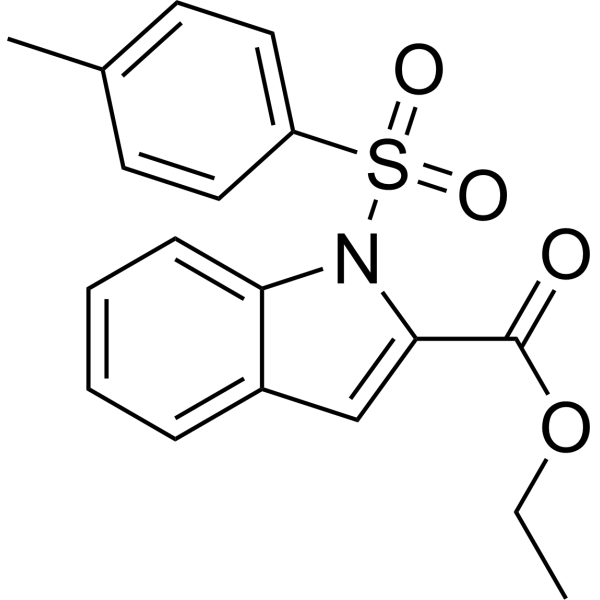
HY-100691
NOD-IN-1NLR Inhibitor -
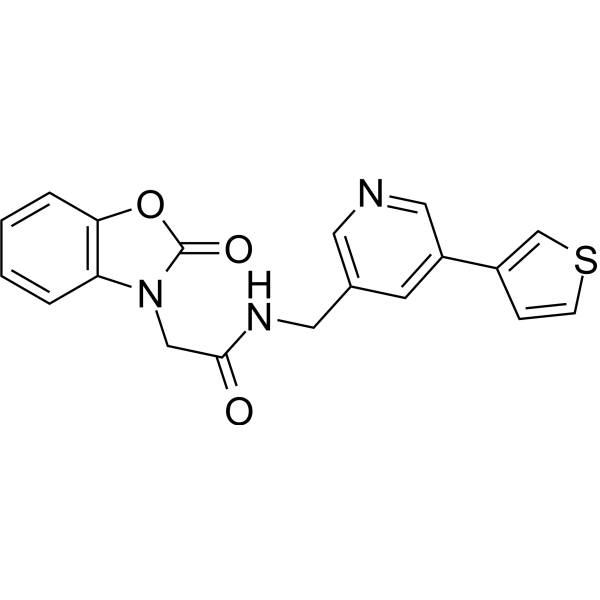
HY-150206
NLRP3-IN-13NLRP3 Inhibitor
Publications Citing Use of MedChemExpress (MCE) Ruscogenin
More- Ecotoxicol Environ Saf. 2022 Dec 1:247:114263. [Abstract]
- Int Immunopharmacol. 2024 Oct 7;143(Pt 1):113336. [Abstract]
- Sci Rep. 2025 Aug 19;15(1):30411. [Abstract]
- FASEB J. 2026 Apr 15;40(7):e71755. [Abstract]
- Res Sq. 2025 Apr 20.
- Rev Bras Farm. 2025 Apr.
- Comput Intell Neurosci. 2022 Jul 8:2022:8066126. [Abstract]
 Customer Validation & Images

-
WB
-
IF
-
Flow Cytometry
-
Cell Imaging/Staining
-
Histological Imaging/Staining


Activité biologique
Description
IC50 & Target
|
NLRP3 |
Cellular Effect
|
Cell Line

|
Type | Value | Description | References |
|---|---|---|---|---|
| BXPC-3 | IC50 |
7.32 μM
Compound: 48
|
Anticancer activity against human BXPC-3 cells assessed as reduction in cell viability incubated for 48 hrs by MTT assay
Anticancer activity against human BXPC-3 cells assessed as reduction in cell viability incubated for 48 hrs by MTT assay
|
[PMID: 36332549] |
| SW1990 | IC50 |
8.14 μM
Compound: 48
|
Anticancer activity against human SW1990 cells assessed as reduction in cell viability incubated for 48 hrs by MTT assay
Anticancer activity against human SW1990 cells assessed as reduction in cell viability incubated for 48 hrs by MTT assay
|
[PMID: 36332549] |
| THP-1 | IC50 |
2.27 μM
Compound: 1
|
Anticoagulant activity in human THP1 cells assessed as inhibition of TNF-alpha-stimulated tissue factor expression incubated 1 hr before TNFalpha challenge measured after 5 hrs
Anticoagulant activity in human THP1 cells assessed as inhibition of TNF-alpha-stimulated tissue factor expression incubated 1 hr before TNFalpha challenge measured after 5 hrs
|
[PMID: 20561785] |
In Vitro
Ruscogenin (0.01-40 μM; 24 h) increases the cell viability in bEnd.3 cells subjected to OGD/R[1].
Ruscogenin (0.01-10 μM; 24 h) reverts the endothelial barrier leakage, inhibits the expression of IL-Iβ and Caspase-1, and modulats the TXNIP/NLRP3 pathway in bEnd.3 cells subjected to OGD/R[1].
Ruscogenin (0.01-10 μM; 4 h) inhibits the production of ROS, and regulated the MAPK Pathway in bEnd.3 Cells subjected to OGD/R[1].
MedChemExpress (MCE) has not independently confirmed the accuracy of these methods. They are for reference only. Further protocols information, click here.
-
Cell Line:bEnd.3 cell
-
Concentration:0.01 μM, 0.1 μM, 1 μM, 10 μM, 20 μM, 40 μM
-
Incubation Time:24 h
-
Result:Showed that the cell viability reduction in OGD/R-induced bEnd.3 cell was significantly recovered.
-
Cell Line:bEnd.3 cell
-
Concentration:0.1 μM, 1 μM, 10 μM
-
Incubation Time:24 h
-
Result:Demonstrated increase in the TEER value and inhibition the sodium fluorescein permeability.
-
Cell Line:bEnd.3 cell
-
Concentration:0.01 μM, 0.1 μM, 1 μM, 10 μM, 20 μM, 40 μM
-
Incubation Time:24 h
-
Result:Demonstrated downregulation of the expression of IL-1β and Caspase-1 proteins, and inhibition in the expressions of NLRP3 and TXNIP.
-
Cell Line:bEnd.3 cell
-
Concentration:0.01 μM, 0.1 μM, 1 μM, 10 μM, 20 μM, 40 μM
-
Incubation Time:4 h
-
Result:Demonstrated reduction in the production of ROS.
In Vivo
MedChemExpress (MCE) has not independently confirmed the accuracy of these methods. They are for reference only.
-
Animal Model:MCAO/R Mice[1]
-
Dosage:10mg/kg
-
Administration:Oral Gavage (i.g.)
-
Result:Showed smaller infarct size, ameliorating histopathological damage by decreasing the cell loss, and significant increase in CBF (cerebral blood flow) compared to the model group.
Resulted inhibiting the expression of IL-1β and Caspase-1, NLRP3 and TXNIP compared to the model group.


Chemical Information
-
CAS No. 472-11-7
-
Appearance Solid
-
Masse moléculaire 430.62
-
Formule C27H42O4
-
Color White to off-white
-
SMILES
C[C@@]12[C@]([C@@H]3C)([H])[C@](O[C@]34CC[C@@H](C)CO4)([H])C[C@@]1([H])[C@@](CC=C(C[C@@H](O)C5)[C@@]6([C@@H]5O)C)([H])[C@]6([H])CC2
-
Structure Classification
-
Initial Source
-
Livraison
Room temperature in continental US; may vary elsewhere.
-
Stockage
4°C, protect from light
* In solvent : -80°C, 6 months; -20°C, 1 month (protect from light)


Publications (7)
-
Journal Impact Factor
-
Most Recent
-
Ecotoxicol Environ Saf
Low-dose arsenite causes overexpression of EGF, TGFα, and HSP90 through Trx1-TXNIP-NLRP3 axis mediated signaling pathways in the human bladder epithelial cells. [Abstract]2022 Dec 1:247:114263. PMID: 36343453 -
Int Immunopharmacol
Ruscogenin attenuates osteoarthritis by modulating oxidative stress-mediated macrophage reprogramming via directly targeting Sirt3. [Abstract]2024 Oct 7;143(Pt 1):113336. PMID: 39378655
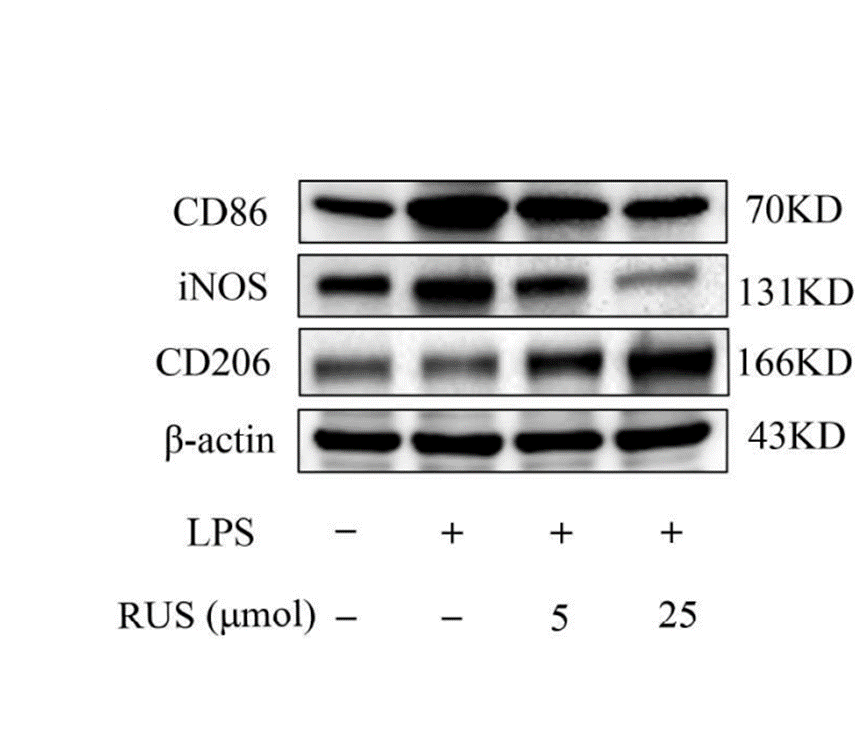
Ruscogenin purchased from MedChemExpress. Usage Cited in: Int Immunopharmacol. 2024 Oct 7;143(Pt 1):113336. [Abstract]
The CD86, iNOS, and CD206 protein levels in RAW264.7 following LPS and Ruscogenin (RUS) (5, 25 μM) treatment were quantified by western blotting.
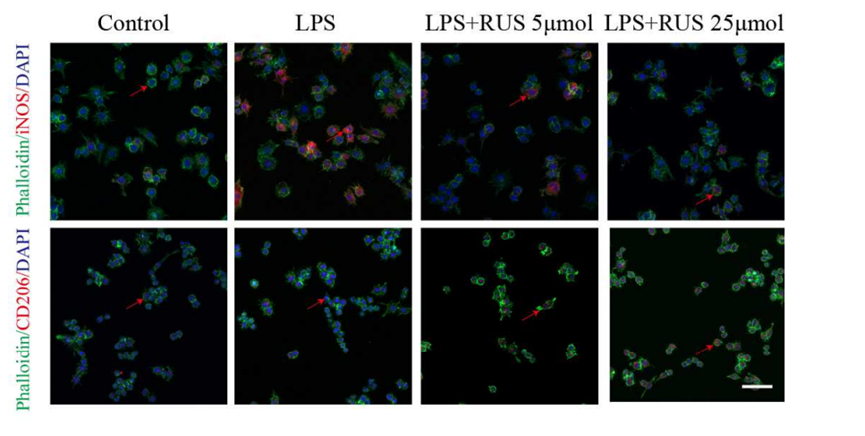
Ruscogenin purchased from MedChemExpress. Usage Cited in: Int Immunopharmacol. 2024 Oct 7;143(Pt 1):113336. [Abstract]
Illustrative images of immunofluorescence staining: red ( iNOS/CD206), green (cytoskeleton), and blue (nuclei) following LPS and Ruscogenin (RUS) (5, 25 μM) treatment.
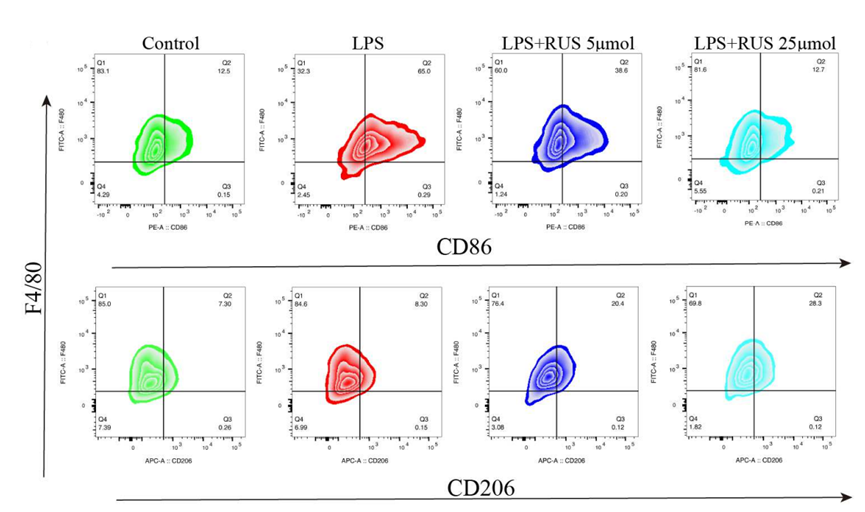
Ruscogenin purchased from MedChemExpress. Usage Cited in: Int Immunopharmacol. 2024 Oct 7;143(Pt 1):113336. [Abstract]
Flow cytometry was used to examine CD86+ and CD206+ cells following LPS and Ruscogenin (RUS) (5, 25 μM) treatment.
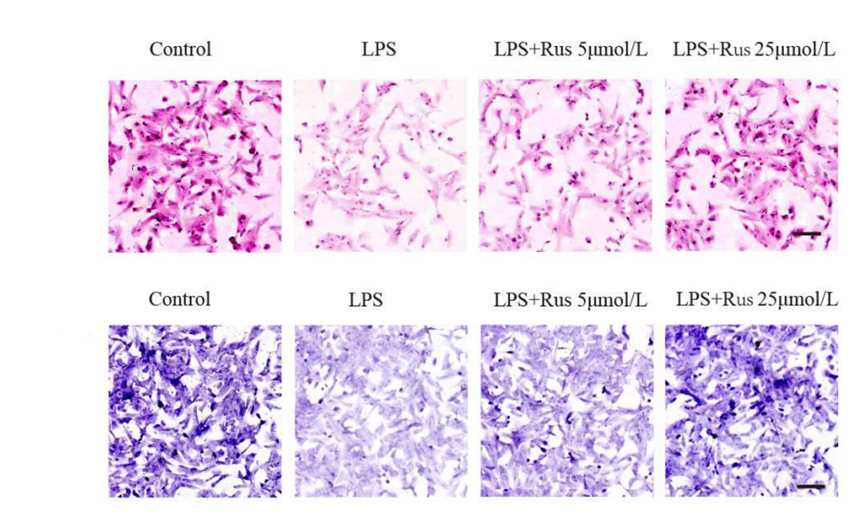
Ruscogenin purchased from MedChemExpress. Usage Cited in: Int Immunopharmacol. 2024 Oct 7;143(Pt 1):113336. [Abstract]
S F and toluidine blue staining of chondrocytes following LPS and Ruscogenin (RUS) (5, 25 μM) treatment.
Ruscogenin purchased from MedChemExpress. Usage Cited in: Int Immunopharmacol. 2024 Oct 7;143(Pt 1):113336. [Abstract]
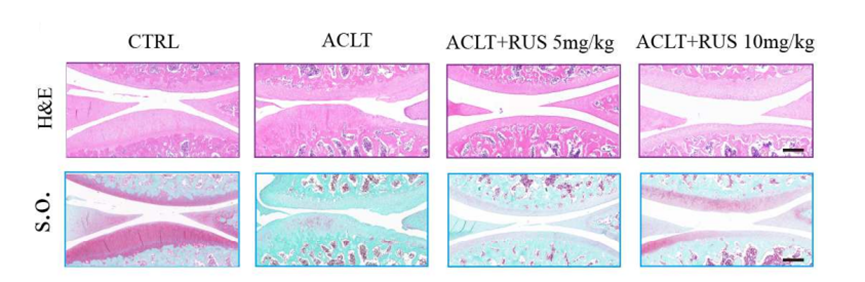
Illustrative images of S.O and HE staining of ACLT or Ruscogenin (RUS) (5, 10 mg/kg) rat samples at 8 weeks post-surgery.
-
Sci Rep
HIIT and MICT mitigate endothelial dysfunction in early atherosclerotic mice via PCSK9 inhibition. [Abstract]2025 Aug 19;15(1):30411. PMID: 40830352 -
FASEB J
2026 Apr 15;40(7):e71755. PMID: 41934343 -
-
-
Comput Intell Neurosci
Ruscogenin Prevents Folic Acid-Induced Acute Kidney Damage by Inhibiting Rev-erb α/ β- Mediated Ferroptosis. [Abstract]2022 Jul 8:2022:8066126. PMID: 35845882


Solvant et solubilité
In Vitro:
Ethanol : 25 mg/mL (58.06 mM; Need ultrasonic)
DMSO : 4.31 mg/mL (10.01 mM; Need ultrasonic; Hygroscopic DMSO has a significant impact on the solubility of product, please use newly opened DMSO)
Please refer to the solubility information to select the appropriate solvent. Once prepared, please aliquot and store the solution to prevent product inactivation from repeated freeze-thaw cycles.
Storage method and period of stock solution: -80°C, 6 months; -20°C, 1 month (protect from light). When stored at -80°C, please use it within 6 months. When stored at -20°C, please use it within 1 month.
Please refer to the solubility information to select the appropriate solvent. Once prepared, please aliquot and store the solution to prevent product inactivation from repeated freeze-thaw cycles.
Storage method and period of stock solution: -80°C, 6 months; -20°C, 1 month (protect from light). When stored at -80°C, please use it within 6 months. When stored at -20°C, please use it within 1 month.
Concentration (start) × Volume (start) = Concentration (final) × Volume (final)
In Vivo:
Select the appropriate dissolution method based on your experimental animal and administration route.
- For the following dissolution methods, please ensure to first prepare a clear stock solution using an In Vitro approach and then sequentially add co-solvents:
- To ensure reliable experimental results, the clarified stock solution can be appropriately stored based on storage conditions. As for the working solution for In Vivo experiments, it is recommended to prepare freshly and use it on the same day.
- The percentages shown for the solvents indicate their volumetric ratio in the final prepared solution. If precipitation or phase separation occurs during preparation, heat and/or sonication can be used to aid dissolution.
For the following dissolution methods, please prepare the working solution directly:
It is recommended to prepare fresh solutions and use them promptly within a short period of time.
The percentages shown for the solvents indicate their volumetric ratio in the final prepared solution. If precipitation or phase separation occurs during preparation, heat and/or sonication can be used to aid dissolution.
Add each solvent one by one: 50% PEG300 50% Saline
Solubility: 1.67 mg/mL (3.88 mM); Suspended solution; Need ultrasonic
In Vivo Dissolution Calculator
Please enter the basic information of animal experiments:
-
-
-
-
Recommended: Prepare an additional quantity of animals to account for potential losses during experiments.
Please enter your animal formula composition:
-
%DMSO +
Recommended: Keep the proportion of DMSO in working solution below 2% if your animal is weak.
-
%+
-
+%Tween-80 + +
-
%Saline +
The co-solvents required include: DMSO, . All of co-solvents are available by MedChemExpress (MCE). , Tween 80. All of co-solvents are available by MedChemExpress (MCE).
Working solution concentration: 0.22 mg/mL
Method for preparing stock solution: mg drug dissolved in μL DMSO. Stock solution concentration: mg/mL. * In solvent : -80°C, 6 months; -20°C, 1 month (protect from light)
1. Take μL DMSO stock solution;
2. Add μL .
μL , mix evenly;
3. Then add μL Tween 80, mix evenly;
4. Then add μL
Please ensure that the stock solution in the first step is dissolved to a clear state, and add co-solvents in sequence. You can use ultrasonic heating (ultrasonic cleaner, recommended frequency 20-40 kHz), vortexing, etc. to assist dissolution.

Protocole
-
Research Protocol for Inflammation-related Diseases
The NLRP3 inflammasome is a cytosolic innate immune signaling platform that integrates priming signals and danger-signal activation to promote caspase-1 activation, maturation of IL-1β and IL-18, and gasdermin D-mediated pyroptotic cell death. The core experimental logic is to determine whether inflammatory disease phenotypes are driven by increased NLRP3 expression, ASC-containing inflammasome assembly, caspase-1 cleavage, GSDMD cleavage, and extracellular release of IL-1β/IL-18 rather than by nonspecific cell injury alone. The pathway is strongly linked to inflammation-related disease phenotypes because monosodium urate crystals activate NALP3/NLRP3 inflammasome signaling in gout-like crystal inflammation, cholesterol crystals activate NLRP3 inflammasomes in atherogenesis models, and DSS-induced intestinal inflammation has been reported to involve NLRP3 inflammasome activity. However, experimental colitis studies also show context-dependent protective effects of NLRP3 inflammasome co
-
Pyroptosis Solutions
Pyroptosis is a lytic inflammatory cell-death pathway executed by gasdermin pores, most classically through inflammasome-mediated activation of caspase-1, cleavage of gasdermin D, membrane pore formation, LDH release, and secretion of IL-1β and IL-18. The canonical pathway is commonly modeled by priming cells with an inflammatory signal such as LPS to induce pro-IL-1β and inflammasome components, followed by an activation signal such as ATP or nigericin to activate NLRP3, ASC speck formation, caspase-1 cleavage, GSDMD cleavage, cytokine release, and pyroptotic membrane rupture. The non-canonical pathway is triggered when cytosolic LPS activates mouse caspase-11 or human caspase-4/5, leading to GSDMD cleavage and pyroptosis, and this can secondarily activate NLRP3-dependent IL-1β release. Pyroptosis is linked to inflammatory injury, infection, cancer, liver disease, ocular disease, placental inflammation, and other disease phenotypes, but unresolved questions include which gasdermin fam


Pureté et documentation
-
Fiche technique (281 KB)
-
SDS (393 KB)
- English - EN (393 KB)
- Français - FR (393 KB)
- Deutsch - DE (393 KB)
- Norwegian - NO (393 KB)
- Español - ES (393 KB)
- Swedish - SV (393 KB)
- Italian - IT (393 KB)
- Korean - KR (393 KB)
- Portuguese - PT (393 KB)
-
Instruction de manipulation (2659 KB)
Références
[1]. Cao G, et al. Ruscogenin Attenuates Cerebral Ischemia-Induced Blood-Brain Barrier Dysfunction by Suppressing TXNIP/NLRP3 Inflammasome Activation and the MAPK Pathway. Int J Mol Sci. 2016 Aug 29;17(9). pii: E1418. [Content Brief]
[2]. Huang YL, et al. Possible mechanism of the anti-inflammatory activity of ruscogenin: role of intercellular adhesion molecule-1 and nuclear factor-kappaB. J Pharmacol Sci. 2008 Oct;108(2):198-205. [Content Brief]


Complete Stock Solution Preparation Table
Please refer to the solubility information to select the appropriate solvent. Once prepared, please aliquot and store the solution to prevent product inactivation from repeated freeze-thaw cycles.
Storage method and period of stock solution: -80°C, 6 months; -20°C, 1 month (protect from light). When stored at -80°C, please use it within 6 months. When stored at -20°C, please use it within 1 month.
| Optional Solvent | Concentration Solvent Mass | 1 mg | 5 mg | 10 mg | 25 mg |
|---|---|---|---|---|---|
| DMSO / Ethanol | 1 mM | 2.3222 mL | 11.6112 mL | 23.2223 mL | 58.0558 mL |
| 5 mM | 0.4644 mL | 2.3222 mL | 4.6445 mL | 11.6112 mL | |
| 10 mM | 0.2322 mL | 1.1611 mL | 2.3222 mL | 5.8056 mL | |
| Ethanol | 15 mM | 0.1548 mL | 0.7741 mL | 1.5482 mL | 3.8704 mL |
| 20 mM | 0.1161 mL | 0.5806 mL | 1.1611 mL | 2.9028 mL | |
| 25 mM | 0.0929 mL | 0.4644 mL | 0.9289 mL | 2.3222 mL | |
| 30 mM | 0.0774 mL | 0.3870 mL | 0.7741 mL | 1.9352 mL | |
| 40 mM | 0.0581 mL | 0.2903 mL | 0.5806 mL | 1.4514 mL | |
| 50 mM | 0.0464 mL | 0.2322 mL | 0.4644 mL | 1.1611 mL |


Ruscogenin Related Classifications
HY-N0496 Related Classifications
 Powered by Bioz