



Chitosan (MW 150000) (≥85% deacetylated)
Based on 5 publication(s) in Google Scholar
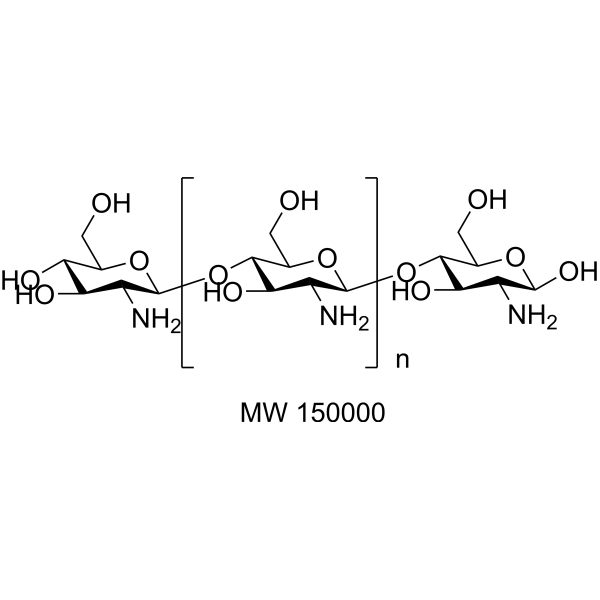
Chitosan (MW 150000) (Deacetylated chitin (MW 150000)) is a polycationic linear polysaccharide derived from chitin with the molecular weight of 150000. Chitosan is an versatile biomaterial because of its non-toxicity, low allergenicity, biocompatibility and biodegradability. Chitosan also has antitumor, antibacterial, antifungal, and antioxidant activities.
Para uso exclusivo en investigación. No vendemos a pacientes.
- No. CAS: 9012-76-4
- Peso molecular:150000 (Average)
-
Almacenamiento:Powder -20°C, 3 years , 4°C, 2 years ; In solvent -80°C, 6 months , -20°C, 1 month

To place orders, for customer services and technical support, please contact: MedChemExpress USA
Tel: 609-228-6898 E-mail: [email protected] [email protected]


-
 Actividad biológica
-
Chemical Information
-
Solvente y solubilidad
- Protocolo
- Pureza y Documentación
- Referencias
-
 Help & FAQs


-
HY-B2144B
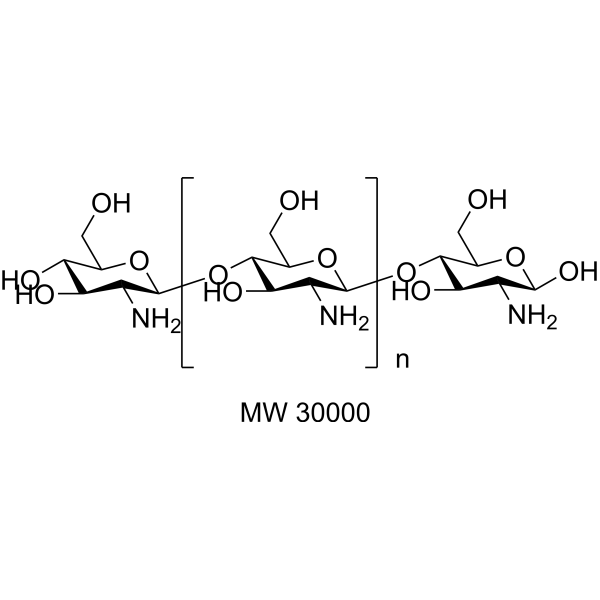
Chitosan (MW 30000) (≥85% deacetylated)Bacterial Inhibitor -
HY-B2144E
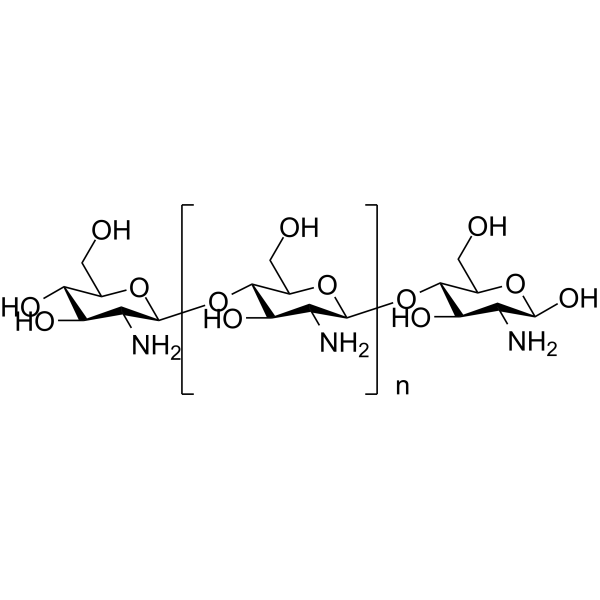
Chitosan (≥90% deacetylated, Low viscosity,<200mPa.s)Biochemical Assay Reagent -
HY-B0633
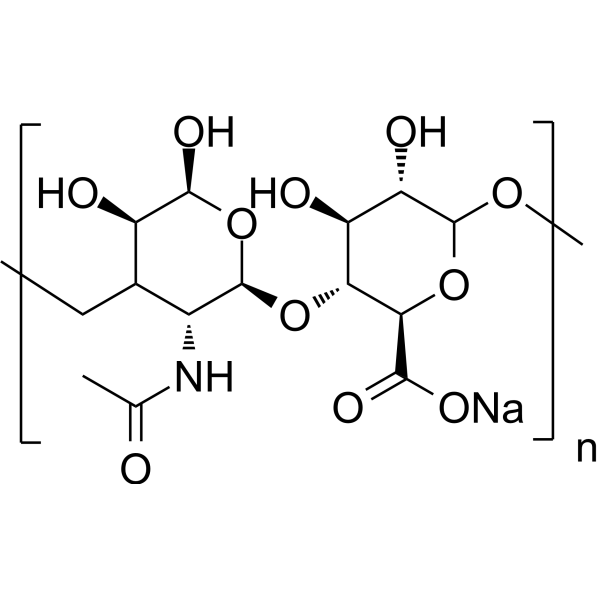
Hyaluronic acid sodiumGlycosaminoglycan -

HY-B2144K
Chitosan (≥85% deacetylated, viscosity>90 mPa.s, MW 15000)Polysaccharid -
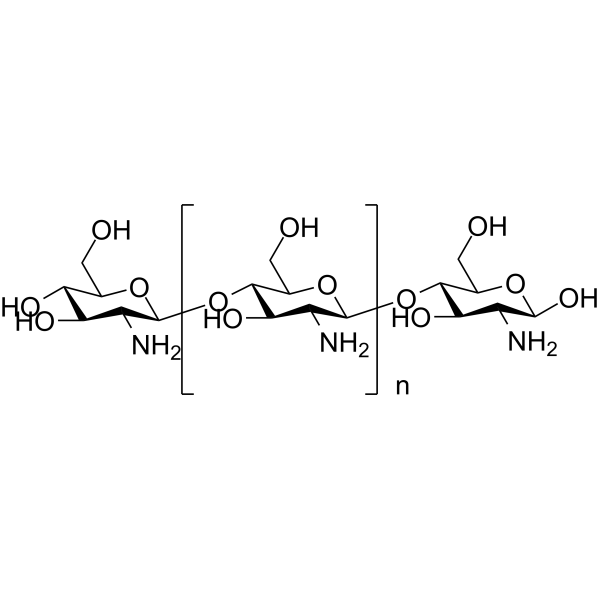
HY-B2144F
Chitosan (≥80% deacetylated, Medium viscosity,200-400mPa.s)Biochemical Assay Reagent -
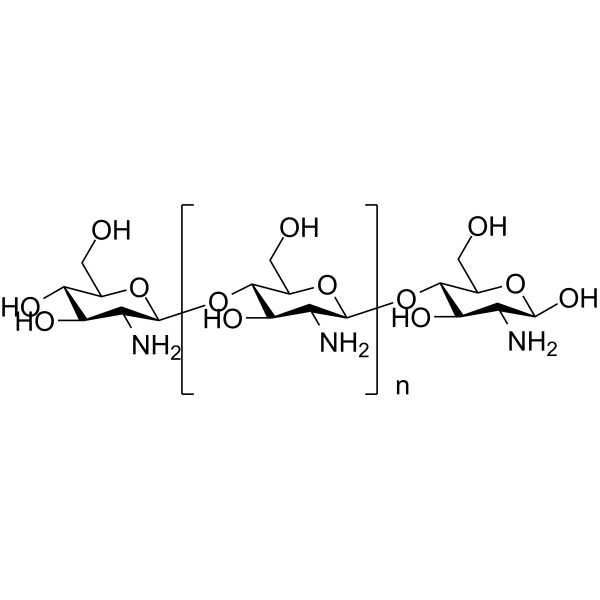
HY-B2144C
Chitosan (≥95% deacetylated,viscosity 100-200 mPa.s)Biochemical Assay Reagent -

HY-B2144J
Chitosan (≥90% deacetylated,viscosity 650-700 mPa.s)Biochemical Assay Reagent -

HY-B2144I
Chitosan (≥90% deacetylated,viscosity 10 mPa.s)Biochemical Assay Reagent -

HY-B2144N
Chitosan (≥98% deacetylated,mushroom)PEG Derivative -
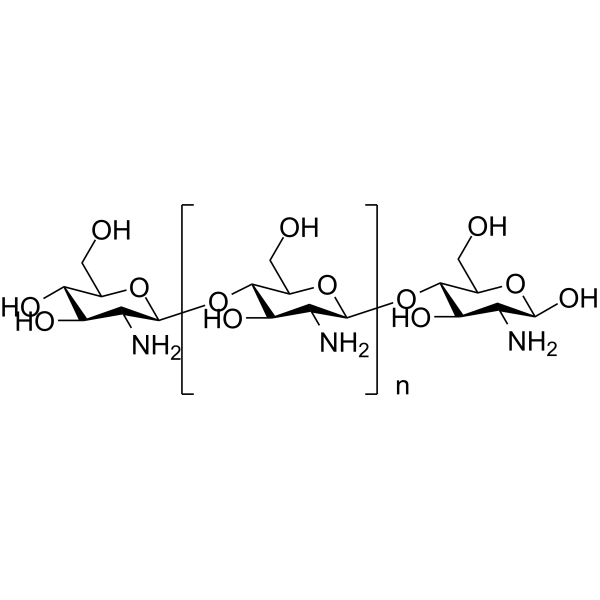
HY-B2144G
Chitosan (≥80% deacetylated, High viscosity,>400mPa.s)Biochemical Assay Reagent -
HY-Y0703A
Sodium carboxymethyl cellulose (Viscosity:1200-1400 mPa.s)Biochemical Assay Reagent -
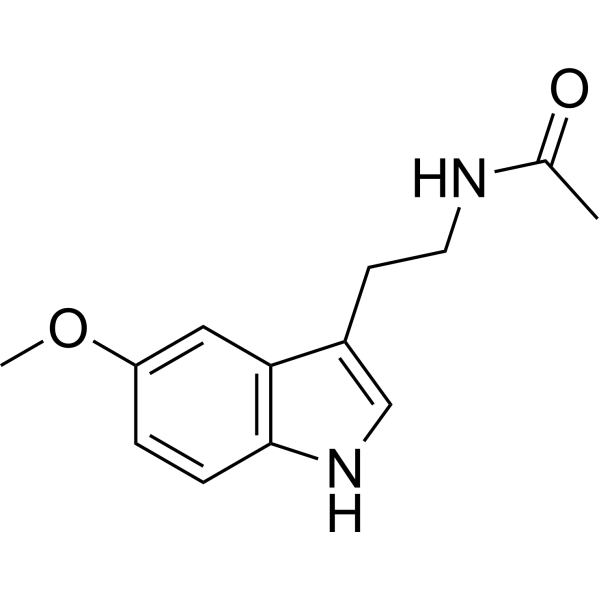
HY-B0075
MelatoninMelatonin Receptor Activator
Publications Citing Use of MedChemExpress (MCE) Chitosan (MW 150000) (≥85% deacetylated)
More

Actividad biológica
Descripciòn
In Vitro
Chitosan (2 mg/mL; 48 hours; SKMEL28 and RPMI7951 cells) treatment presents a reduced growth potential[1].
Chitosan (2 mg/mL; 48 hours; RPMI7951 cells) treatment shows potent pro-apoptotic effects against RPMI7951 through the mitochondrial pathway[1].
Chitosan (2 mg/mL; 48 hours; RPMI7951 cells) treatment induces an up regulation of pro-apoptotic molecules such as Bax and a down regulation of anti-apoptotic proteins like Bcl-2 and Bcl-XL[1].
Low-molecular-weight chitosan can penetrate bacterial cell walls, bind with DNA and inhibit DNA transcription and mRNA synthesis, while high-molecular-weight Chitosan can bind to the negatively charged components on the bacterial cell wall. It forms an impermeable layer around the cell, changes cell permeability and blocks transport into the cell. Chitosan also can be used in water treatment, wound-healing materials, pharmaceutical excipient or drug carrier, obesity research and as a scaffold for tissue engineering[2].
MedChemExpress (MCE) has not independently confirmed the accuracy of these methods. They are for reference only. Further protocols information, click here.
-
Cell Line:SKMEL28 and RPMI7951 cells
-
Concentration:2 mg/mL
-
Incubation Time:48 hours
-
Result:Presented a reduced growth potential.
-
Cell Line:RPMI7951 cells
-
Concentration:2 mg/mL
-
Incubation Time:48 hours
-
Result:Had potent pro-apoptotic effects against RPMI7951.
-
Cell Line:RPMI7951 cells
-
Concentration:2 mg/mL
-
Incubation Time:48 hours
-
Result:Induced an up regulation of pro-apoptotic molecules such as Bax and a down regulation of anti-apoptotic proteins like Bcl-2 and Bcl-XL.
In Vivo
MedChemExpress (MCE) has not independently confirmed the accuracy of these methods. They are for reference only.


Chemical Information
-
No. CAS 9012-76-4
-
Appearance Solid
-
Peso molecular 150000 (Average)
-
Color White to light yellow
-
SMILES
OC[C@H]1O[C@@H](O[C@H]2[C@H](O)[C@@H](N)[C@H](O[C@H]3[C@H](O)[C@@H](N)[C@H](O)O[C@@H]3CO)O[C@@H]2CO)[C@H](N)[C@@H](O)[C@@H]1O.[n].[MW 150000]
-
Synonyms
Deacetylated chitin (MW 150000) (≥85% deacetylated); Poly(D-glucosamine) (MW 150000) (≥85% deacetylated)
-
Envío
Room temperature in continental US; may vary elsewhere.
-
Almacenamiento
Powder -20°C 3 years 4°C 2 years In solvent -80°C 6 months -20°C 1 month


Publications (5)
-
Journal Impact Factor
-
Most Recent
-
Biomacromolecules
2025 Feb 10;26(2):1012-1022. PMID: 39836774 -
Eur J Pharm Biopharm
Spatiotemporally controlled systemic delivery reshapes the in vivo fate of a cationic antimicrobial peptide for lung-selective exposure and an improved therapeutic index. [Abstract]2026 Jul:224:115081. PMID: 42044857 -
-
-


Solvente y solubilidad
In Vitro:
0.1 M HCl : 16.67 mg/mL (ultrasonic and warming and adjust pH to 2 with HCl and heat to 60°C)

Protocolo
-
Research Protocol for Infectious Diseases
Infectious-disease experiments test how pathogens interact with host barriers, innate immune receptors, inflammatory signaling, pathogen replication, and tissue injury; pattern-recognition receptors such as TLRs, RIG-I-like receptors, NOD-like receptors, and inflammasomes detect microbial molecules and activate NF-κB, interferon, and cytokine responses. The central hypothesis is that infection severity reflects the balance between pathogen burden and host response: protective inflammation restricts pathogen growth, whereas excessive or mislocalized inflammation contributes to tissue damage and disease phenotype. Unresolved questions include which host pathways are protective versus pathogenic, why some infection models fail to translate to human disease, and which combined readouts best predict clinically relevant infection outcomes.


Pureza y Documentación
-
Ficha de datos (278 KB)
-
SDS (393 KB)
- English - EN (393 KB)
- Français - FR (393 KB)
- Deutsch - DE (393 KB)
- Norwegian - NO (393 KB)
- Español - ES (393 KB)
- Swedish - SV (393 KB)
- Italian - IT (393 KB)
- Korean - KR (393 KB)
- Portuguese - PT (393 KB)
-
Instrucciones de manejo (2659 KB)
Referencias
[1]. Laure Gibot, et al. Anticancer properties of chitosan on human melanoma are cell line dependent. Int J Biol Macromol. 2015 Jan;72:370-9. [Content Brief]
[2]. Randy Chi Fai Cheung, et al. Chitosan: An Update on Potential Biomedical and Pharmaceutical Applications. Mar Drugs. 2015 Aug 14;13(8):5156-86. [Content Brief]
[3]. Shyr-Yi Lin, et al. Chitosan prevents the development of AOM-induced aberrant crypt foci in mice and suppressed the proliferation of AGS cells by inhibiting DNA synthesis. J Cell Biochem. 2007 Apr 15;100(6):1573-80. [Content Brief]

Calculators
Concentration (start) × Volume (start) = Concentration (final) × Volume (final)


Chitosan (MW 150000) (≥85% deacetylated) Related Classifications
HY-B2144A Related Classifications
 Powered by Bioz
Keywords
- Chitosan (MW 150000) (≥85% deacetylated)
- 9012-76-4
- Deacetylated chitin (MW 150000) (≥85% deacetylated)
- Poly(D-glucosamine) (MW 150000) (≥85% deacetylated)
- Environmental Pollutants
- Bacterial
- Fungal
- Polysaccharide
- polycationic
- antitumor
- antimicrobial
- antioxidant
- antibacterial
- antifungal
- pro-apoptotic
- Inhibitor
- inhibitor
- inhibit