



Cirsilineol
Based on 3 publication(s) in Google Scholar
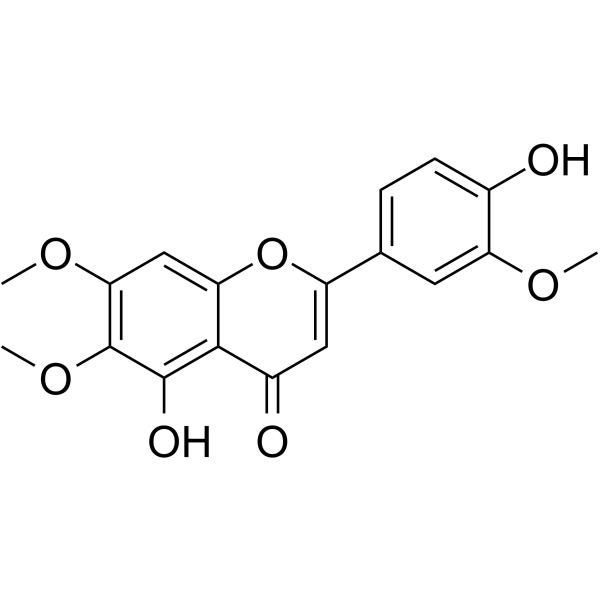
Cirsilineol, a natural flavone compound, selectively inhibits IFN-γ/STAT1/T-bet signaling in intestinal CD4+ T cells. Cirsilineol has potent immunosuppressive and anti-tumor properties. Cirsilineol significantly ameliorates trinitro-benzene sulfonic acid (TNBS)-induced T-cell-mediated experimental colitis in mice.
For research use only. We do not sell to patients.
- Purity : 98.0%
- CAS No.: 41365-32-6
- Formula: C18H16O7
- Molecular Weight:344.32
-
Storage:
4°C, protect from light
* In solvent : -80°C, 6 months; -20°C, 1 month (protect from light)

To place orders, for customer services and technical support, please contact: MedChemExpress USA
Tel: 609-228-6898 E-mail: [email protected] [email protected]


-
 Biological Activity
-
Chemical Information
-
Solvent & Solubility
- Protocols
- Purity & Documentation
- References
-
 Help & FAQs


-
HY-100564
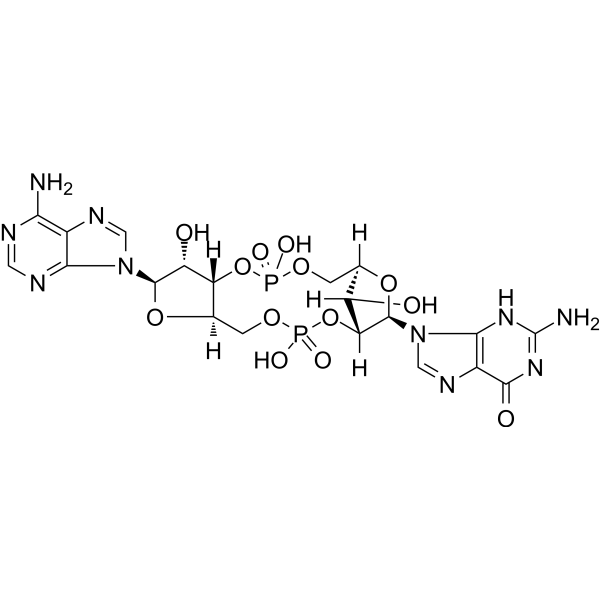
2',3'-cGAMPSTING Agonist -

HY-119347R
Cirsilineol (Standard)Immunosuppressive Drug -
HY-16196
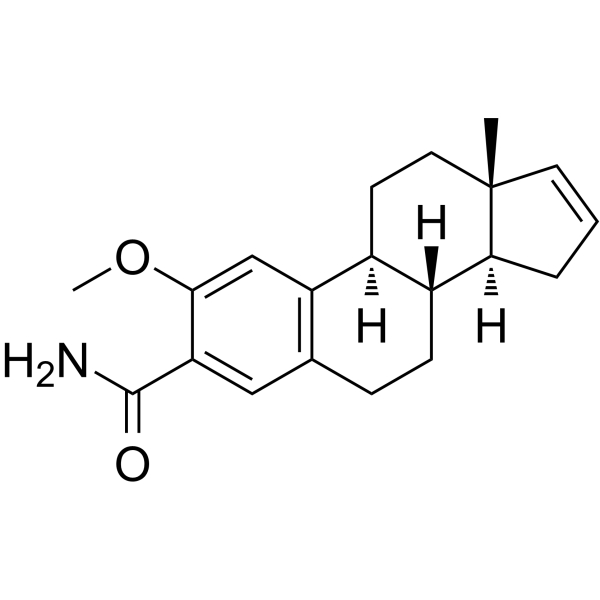
ENMD-1198Microtubule-Targeting Agent -
HY-18061
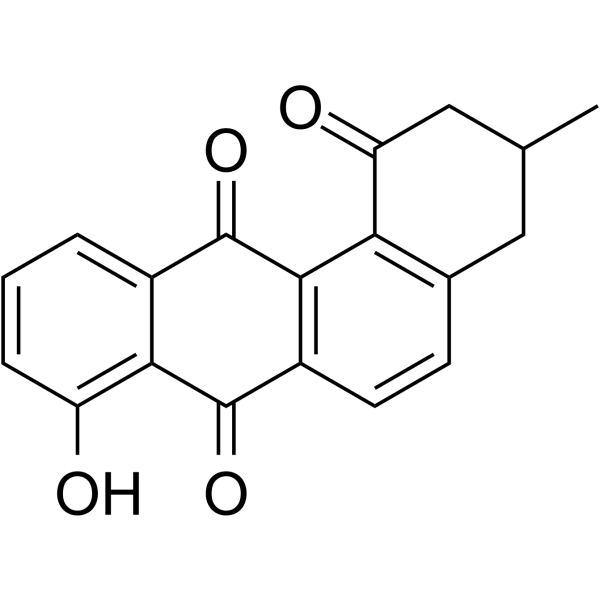
OchromycinoneSTAT3 Inhibitor -

HY-117511
HJC0123STAT3 Inhibitor -
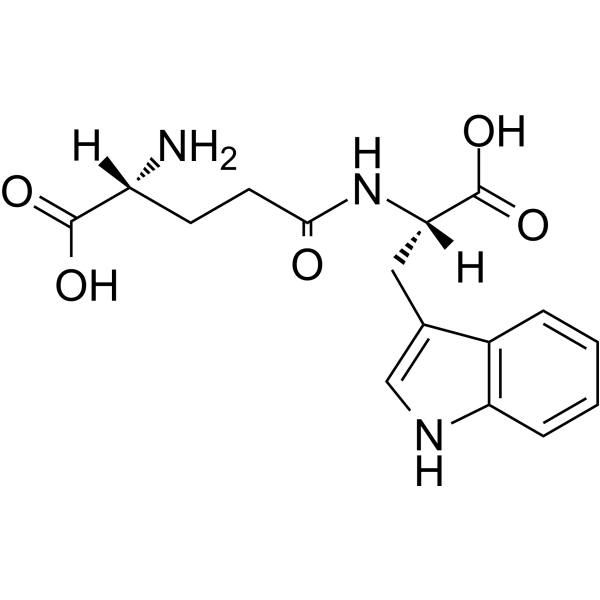
HY-14743
GolotimodAntibacterial Peptide -

HY-14743R
Golotimod (Standard)Antibacterial Peptide -

HY-18061R
Ochromycinone (Standard)Standard of Ochromycinone
Publications Citing Use of MedChemExpress (MCE) Cirsilineol
More

Biological Activity
Description
Cellular Effect
|
Cell Line

|
Type | Value | Description | References |
|---|---|---|---|---|
| A2780 | IC50 |
33 μg/mL
Compound: Cirsilineol
|
Cytotoxicity against human A2780 cells after 72 hrs by MTT assay
Cytotoxicity against human A2780 cells after 72 hrs by MTT assay
|
[PMID: 31784199] |
| A-431 | IC50 |
33 μg/mL
Compound: Cirsilineol
|
Cytotoxicity against human A431 cells after 72 hrs by MTT assay
Cytotoxicity against human A431 cells after 72 hrs by MTT assay
|
[PMID: 31784199] |
| HeLa | IC50 |
33 μg/mL
Compound: Cirsilineol
|
Cytotoxicity against human HeLa cells after 72 hrs by MTT assay
Cytotoxicity against human HeLa cells after 72 hrs by MTT assay
|
[PMID: 31784199] |
| MCF7 | IC50 |
33 μg/mL
Compound: Cirsilineol
|
Cytotoxicity against human MCF7 cells after 72 hrs by MTT assay
Cytotoxicity against human MCF7 cells after 72 hrs by MTT assay
|
[PMID: 31784199] |
In Vitro
Cirsilineol (0.1-10 μM; 96 hours) inhibits single mixed lymphocyte reaction and Concanava A-induced T-cell proliferation in a dose-dependent manner. Cirsilineol (10 μM) does not affect T lymphocyte's viability. The inhibition of cirsilineol (10 μM) on T-cell proliferation is not due to a cytotoxic activity[1].
Cirsilineol (1-10 μM; pretreatment for 3 hours) completely inhibits IFN-γ-induced Tyr701 phosphorylation of STAT1 and JAK2 activation[1].
MedChemExpress (MCE) has not independently confirmed the accuracy of these methods. They are for reference only. Further protocols information, click here.
-
Cell Line:Splenocytes
-
Concentration:0.1, 1, 10 μM
-
Incubation Time:96 hours
-
Result:Inhibited single mixed lymphocyte reaction and Concanavalin A (Con A; 5 μg/mL; for 72 h)-induced T-cell proliferation in a dose-dependent manner.
Suppressed OVA323-339-specific CD4+ T-cell proliferation.
-
Cell Line:Splenic CD4+ T cells
-
Concentration:1, 5, 10 μM
-
Incubation Time:Pretreatment for 3 hours
-
Result:Completely inhibited IFN-γ-induced (25 ng; 30 mins) Tyr701 phosphorylation of STAT1 and JAK2 activation.
Suppressed IFN-γ-induced (25 ng; 12 hours) Th1-specific transcription factor T-bet.
In Vivo
MedChemExpress (MCE) has not independently confirmed the accuracy of these methods. They are for reference only.
-
Animal Model:8-10-week-old female C57BL/6, BALB/c and DO11.10 transgenic mice with TNBS (10 mg; 100 μL)[1]
-
Dosage:3, 10, 30 mg/kg
-
Administration:IP; daily; for 11 days
-
Result:Showed a significant improved effect on the body weights and survival rate of mice.
Markedly reduced inflammatory infiltration, restoration of the destructive mucosal architecture and remission of edema.


Chemical Information
-
CAS No. 41365-32-6
-
Appearance Solid
-
Molecular Weight 344.32
-
Formula C18H16O7
-
Color White to light yellow
-
SMILES
O=C1C=C(OC2=CC(OC)=C(C(O)=C12)OC)C3=CC=C(C(OC)=C3)O
-
Structure Classification
-
Shipping
Room temperature in continental US; may vary elsewhere.
-
Storage
4°C, protect from light
* In solvent : -80°C, 6 months; -20°C, 1 month (protect from light)


Publications (3)
-
Journal Impact Factor
-
Most Recent
-
Chin Med
Cirsilineol inhibits RANKL-induced osteoclast activity and ovariectomy-induced bone loss via NF-κb/ERK/p38 signaling pathways. [Abstract]2024 May 14;19(1):69. PMID: 38745234 -
PeerJ
Cirsilineol improves anesthesia/surgery-induced postoperative cognitive dysfunction through attenuating oxidative stress and modulating microglia M1/M2 polarization. [Abstract]2024 Nov 15:12:e18507. PMID: 39559329 -


Solvent & Solubility
In Vitro:
DMSO : 3.5 mg/mL (10.16 mM; Need ultrasonic and warming; Hygroscopic DMSO has a significant impact on the solubility of product, please use newly opened DMSO)
Please refer to the solubility information to select the appropriate solvent. Once prepared, please aliquot and store the solution to prevent product inactivation from repeated freeze-thaw cycles.
Storage method and period of stock solution: -80°C, 6 months; -20°C, 1 month (protect from light). When stored at -80°C, please use it within 6 months. When stored at -20°C, please use it within 1 month.
Please refer to the solubility information to select the appropriate solvent. Once prepared, please aliquot and store the solution to prevent product inactivation from repeated freeze-thaw cycles.
Storage method and period of stock solution: -80°C, 6 months; -20°C, 1 month (protect from light). When stored at -80°C, please use it within 6 months. When stored at -20°C, please use it within 1 month.
Concentration (start) × Volume (start) = Concentration (final) × Volume (final)

Protocols
-
DSS-Induced Colitis
Dextran sulfate sodium (DSS)-induced colitis is generated by administering DSS in mouse drinking water, producing epithelial injury, barrier disruption, weight loss, diarrhea, fecal blood, colon shortening, histologic mucosal damage, and inflammatory mediator changes; the model is mainly used to study acute or chronic intestinal inflammation resembling selected features of ulcerative colitis. DSS injury is interpreted through clinical and tissue readouts rather than a single molecular endpoint: daily body weight, stool consistency, and bleeding are combined into a disease activity index, while colon length, histology, cytokines, myeloperoxidase activity, intestinal permeability, and tight-junction markers provide complementary measures of inflammation and barrier damage.
-
TNBS-Induced Colitis
TNBS-induced colitis is produced by intrarectal delivery of 2,4,6-trinitrobenzene sulfonic acid in ethanol, where ethanol disrupts the mucosal barrier and TNBS haptenates colonic proteins, generating immune-mediated colonic inflammation with weight loss, diarrhea, ulceration, transmural injury, inflammatory-cell infiltration, and cytokine responses. The model is used as an experimental intestinal inflammation model with Crohn’s disease–like features, especially when Th1-type responses, IL-12–dependent inflammation, chronic relapsing inflammation, or fibrosis-related endpoints are studied.


Purity & Documentation
-
Data Sheet (276 KB)
-
SDS (252 KB)
- English - EN (252 KB)
- Français - FR (252 KB)
- Deutsch - DE (252 KB)
- Norwegian - NO (252 KB)
- Español - ES (252 KB)
- Swedish - SV (252 KB)
- Italian - IT (252 KB)
- Korean - KR (252 KB)
- Portuguese - PT (252 KB)
-
Handling Instructions (2659 KB)
References


Complete Stock Solution Preparation Table
Please refer to the solubility information to select the appropriate solvent. Once prepared, please aliquot and store the solution to prevent product inactivation from repeated freeze-thaw cycles.
Storage method and period of stock solution: -80°C, 6 months; -20°C, 1 month (protect from light). When stored at -80°C, please use it within 6 months. When stored at -20°C, please use it within 1 month.
| Optional Solvent | Concentration Solvent Mass | 1 mg | 5 mg | 10 mg | 25 mg |
|---|---|---|---|---|---|
| DMSO | 1 mM | 2.9043 mL | 14.5214 mL | 29.0428 mL | 72.6069 mL |
| 5 mM | 0.5809 mL | 2.9043 mL | 5.8086 mL | 14.5214 mL | |
| 10 mM | 0.2904 mL | 1.4521 mL | 2.9043 mL | 7.2607 mL |


Cirsilineol Related Classifications
HY-119347 Related Classifications
 Powered by Bioz