



Coniferaldehyde
Based on 1 publication(s) in Google Scholar
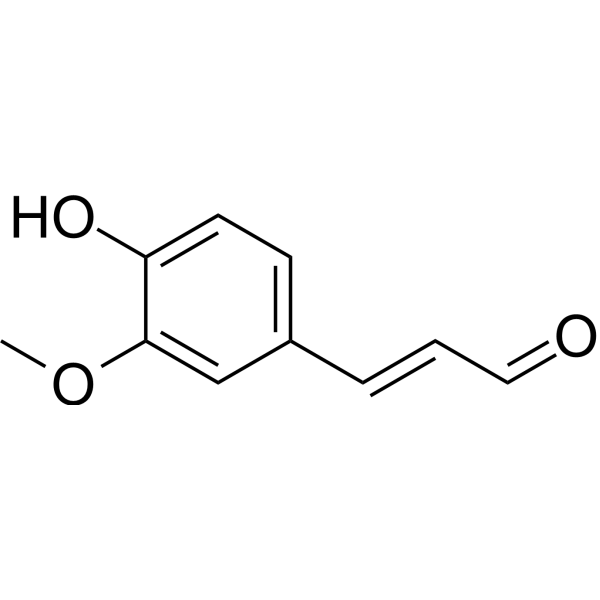
Coniferaldehyde (4-Hydroxy-3-methoxycinnamaldehyde) is an effective inducer of heme oxygenase-1 (HO-1). Coniferaldehyde inhibits LPS-induced apoptosis through the PKCα/β II/Nrf-2/HO-1 dependent pathway in RAW264.7 macrophage cells. Coniferaldehyde has antioxidant and anti-inflammatory activities.
연구목적의 판매만을 진행합니다. 환자를 대상으로 한 판매는 하지 않습니다.
- Purity : 99.94%
- CAS No.: 458-36-6
- 화학식: C10H10O3
- 분자량:178.18
-
보관:
4°C, protect from light
* In solvent : -80°C, 6 months; -20°C, 1 month (protect from light)

To place orders, for customer services and technical support, please contact: MedChemExpress USA
Tel: 609-228-6898 E-mail: [email protected] [email protected]


-
 Biological Activity
-
Chemical Information
-
용액&용해도
- Protocol
- 순도&문서
- References
-
 Help & FAQs


-
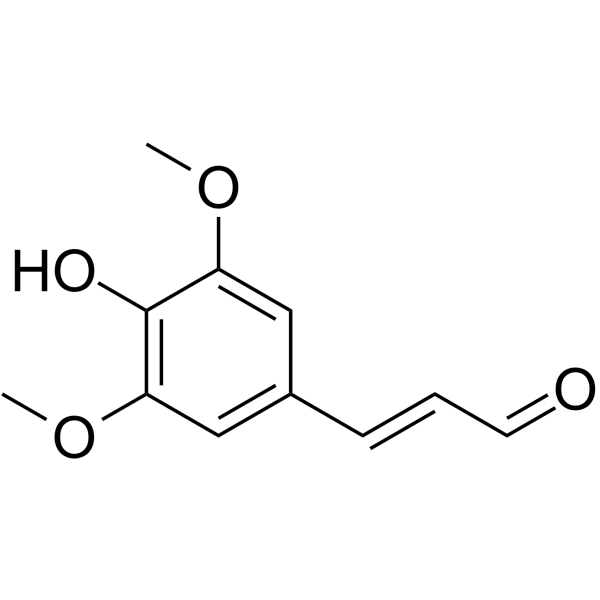
HY-N1312
SinapaldehydeAntibacterial/anti-inflammatory Agent -
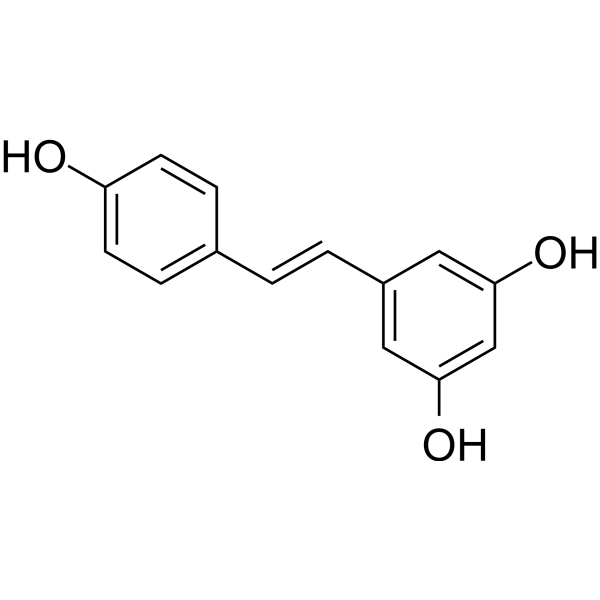
HY-16561
ResveratrolPolyphenolic Phytoalexin -
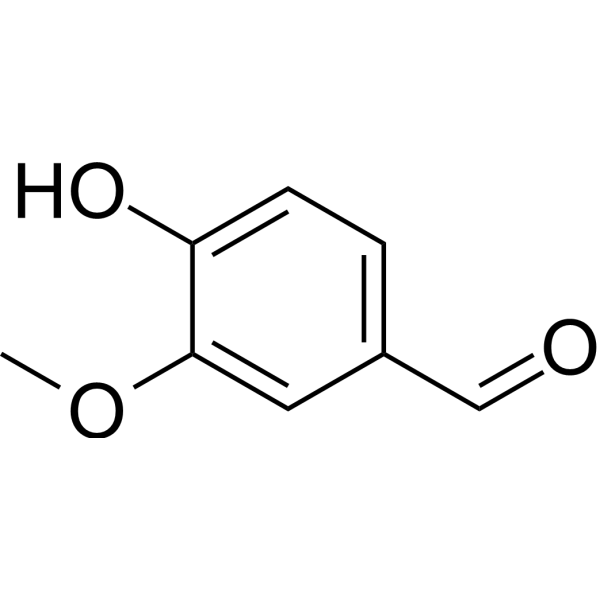
HY-N0098
VanillinPhenolic Aldehyde -
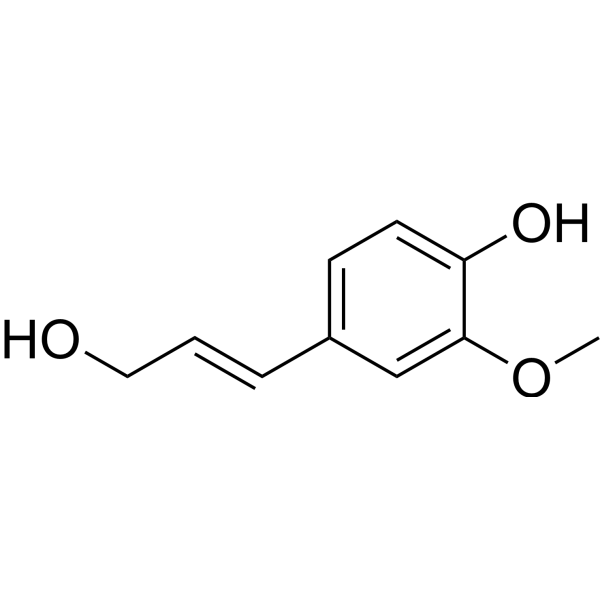
HY-N4283
Coniferyl alcoholLignin Intermediate -
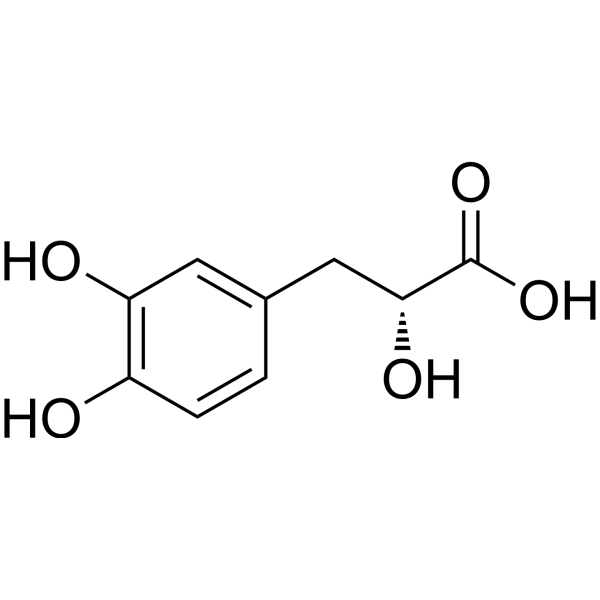
HY-N1913
DanshensuNrf2/HO-1 Activator -

HY-N2535R
Coniferaldehyde (Standard)Antioxidant Agent -
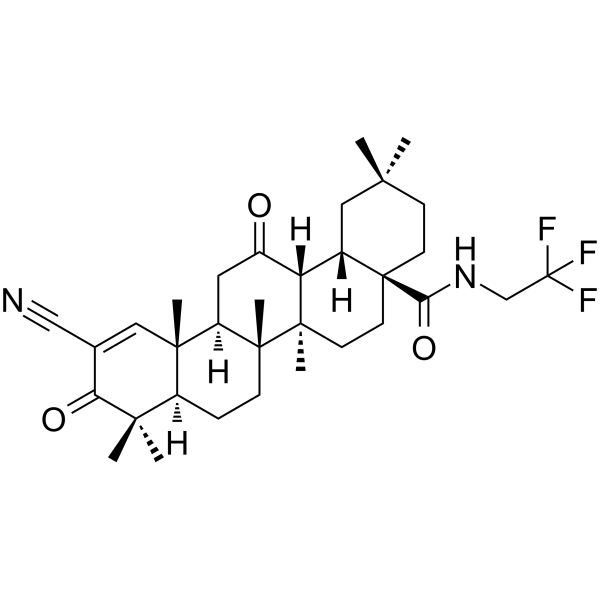
HY-112671
CDDO-dhTFEANrf2 Activator -
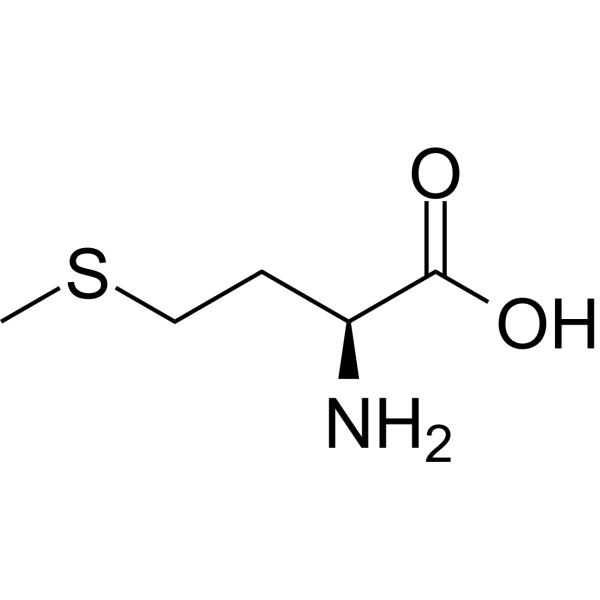
HY-N0326
L-MethionineEndogenous Metabolite -
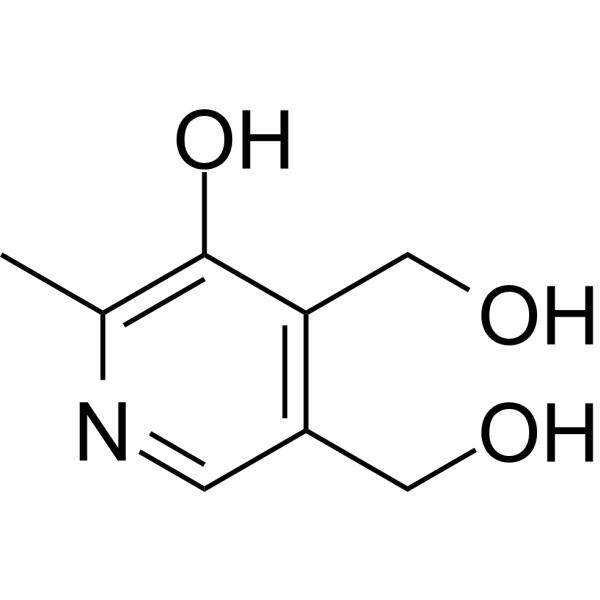
HY-B1328
PyridoxinePyridine Derivative -
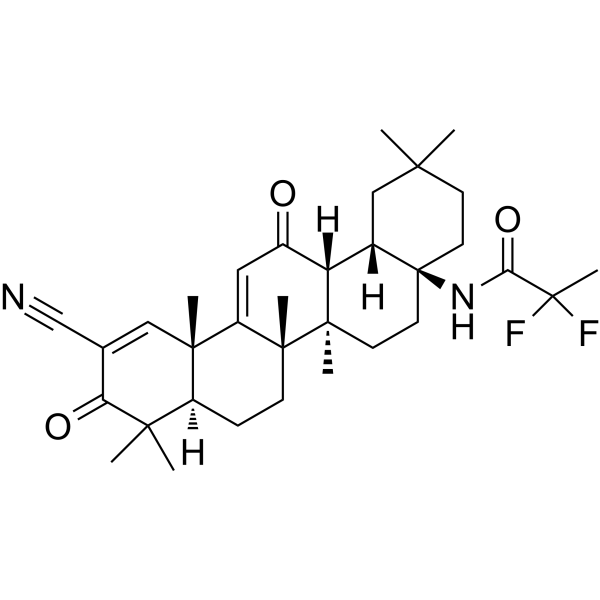
HY-12212
OmaveloxoloneNrf2 Activator -
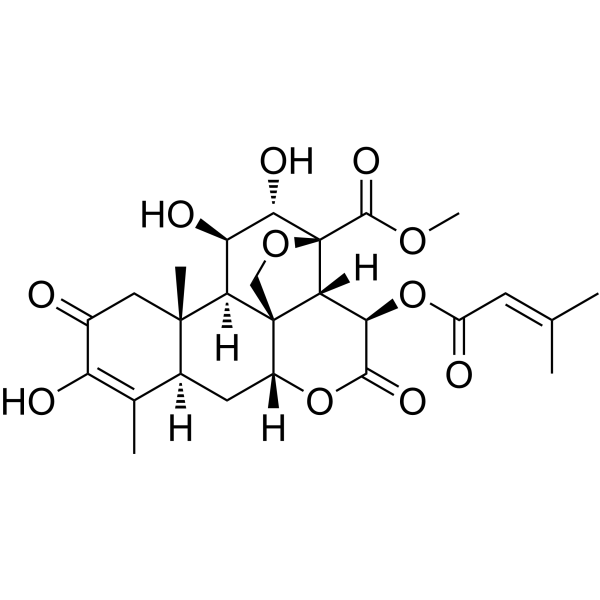
HY-19543
BrusatolNrf2 Inhibitor -

HY-N0326R
L-Methionine (Standard)Endogenous Metabolite
Publications Citing Use of MedChemExpress (MCE) Coniferaldehyde
More

Biological Activity
제품 설명
Cellular Effect
|
Cell Line

|
Type | Value | Description | References |
|---|---|---|---|---|
| A549 | GI50 |
1.7 μM
Compound: 10
|
Growth inhibition of human A549 cells by Sulforhodamine B assay
Growth inhibition of human A549 cells by Sulforhodamine B assay
|
[PMID: 21106458] |
| A549 | IC50 |
21.18 μM
Compound: 19
|
Anticancer activity against human A549 cells by SRB assay
Anticancer activity against human A549 cells by SRB assay
|
[PMID: 21420296] |
| A549 | IC50 |
59 μM
Compound: 30
|
Cytotoxicity against human A549 cells after 72 hrs by MTT assay
Cytotoxicity against human A549 cells after 72 hrs by MTT assay
|
[PMID: 21696954] |
| B16-4A5 | IC50 |
15.3 μM
Compound: 15
|
Antimelanogenic activity in theophylline-stimulated mouse B16-4A5 cells assessed as inhibition of melanogenesis after 72 hrs relative to control
Antimelanogenic activity in theophylline-stimulated mouse B16-4A5 cells assessed as inhibition of melanogenesis after 72 hrs relative to control
|
[PMID: 27756508] |
| HeLa | GI50 |
61.8 μM
Compound: 10
|
Growth inhibition of human HeLa cells by Sulforhodamine B assay
Growth inhibition of human HeLa cells by Sulforhodamine B assay
|
[PMID: 21106458] |
| HeLa | EC50 |
9.03 μM
Compound: 5
|
Induction of cell surface translocation of MR1 in human HeLa overexpressing MR1 assessed as increase in MR1 cell surface levels incubated for 8 hrs followed by labeling with PE-conjugated anti-hMR1 antibody by flow cytometry analysis
Induction of cell surface translocation of MR1 in human HeLa overexpressing MR1 assessed as increase in MR1 cell surface levels incubated for 8 hrs followed by labeling with PE-conjugated anti-hMR1 antibody by flow cytometry analysis
|
[PMID: 37638616] |
| HT-1080 | ED50 |
4.05 μg/mL
Compound: 9
|
Cytotoxicity against human HT1080 cells after 24 hrs by MTT assay
Cytotoxicity against human HT1080 cells after 24 hrs by MTT assay
|
[PMID: 9677271] |
| LoVo | IC50 |
23 μM
Compound: 30
|
Cytotoxicity against human LoVo cells after 72 hrs by MTT assay
Cytotoxicity against human LoVo cells after 72 hrs by MTT assay
|
[PMID: 21696954] |
| MCF7 | GI50 |
39.5 μM
Compound: 10
|
Growth inhibition of human MCF7 cells by Sulforhodamine B assay
Growth inhibition of human MCF7 cells by Sulforhodamine B assay
|
[PMID: 21106458] |
| PC-3 | IC50 |
35 μM
Compound: 30
|
Cytotoxicity against human PC3 cells after 72 hrs by MTT assay
Cytotoxicity against human PC3 cells after 72 hrs by MTT assay
|
[PMID: 21696954] |
| RAW264.7 | IC50 |
>0.3 mM
Compound: 30
|
Antiinflammatory activity in mouse RAW264.7 cells assessed as inhibition of LPS-induced nitric oxide production after 24 hrs
Antiinflammatory activity in mouse RAW264.7 cells assessed as inhibition of LPS-induced nitric oxide production after 24 hrs
|
[PMID: 18986199] |
| RAW264.7 | IC50 |
>0.3 μM/mL
Compound: 30
|
Antiinflammatory activity in mouse RAW264.7 cells assessed as inhibition of LPS-induced nitric oxide production after 24 hrs
Antiinflammatory activity in mouse RAW264.7 cells assessed as inhibition of LPS-induced nitric oxide production after 24 hrs
|
[PMID: 18986199] |
| SK-MEL-2 | IC50 |
>30 μM
Compound: 19
|
Anticancer activity against human SK-MEL-2 cells by SRB assay
Anticancer activity against human SK-MEL-2 cells by SRB assay
|
[PMID: 21420296] |
| SK-MEL-28 | IC50 |
33 μM
Compound: 30
|
Cytotoxicity against human SK-MEL-28 cells after 72 hrs by MTT assay
Cytotoxicity against human SK-MEL-28 cells after 72 hrs by MTT assay
|
[PMID: 21696954] |
| SK-N-SH | GI50 |
10.6 μM
Compound: 10
|
Growth inhibition of human SK-N-SH cells by Sulforhodamine B assay
Growth inhibition of human SK-N-SH cells by Sulforhodamine B assay
|
[PMID: 21106458] |
| SK-OV-3 | IC50 |
>30 μM
Compound: 19
|
Anticancer activity against human SKOV3 cells by SRB assay
Anticancer activity against human SKOV3 cells by SRB assay
|
[PMID: 21420296] |
| U-373MG ATCC | IC50 |
28 μM
Compound: 30
|
Cytotoxicity against human U373 cells after 72 hrs by MTT assay
Cytotoxicity against human U373 cells after 72 hrs by MTT assay
|
[PMID: 21696954] |
| XF498 | IC50 |
>30 μM
Compound: 19
|
Anticancer activity against human XF498 cells by SRB assay
Anticancer activity against human XF498 cells by SRB assay
|
[PMID: 21420296] |
In Vitro
Coniferaldehyde (0.1-5 μM; Pretreatment with 1 h; and then treated with 24 h) exerts cytoprotective function against LPS-induced cell death and dramatically inhibits LPS-induced NO production as assessed by the Griess reaction in a dose dependent manner[1].
Coniferaldehyde (0.5-5 μM; 4-24 h) dramatically increases the Nrf-2 nuclear translocation and HO-1 expression. Furthermore, Coniferaldehyde specifically enhances the phosphorylation of PKCα/PKCβ II[1].
MedChemExpress (MCE) has not independently confirmed the accuracy of these methods. They are for reference only.
-
Cell Line:Raw264.7 cells inudced with LPS
-
Concentration:0.1 μM, 0.5 μM, 1 μM, 2 μM, 5 μM
-
Incubation Time:Pretreatment with 1 h, and then treated with 24 h
-
Result:Inhibited LPS-induced NO production and cell death.
-
Cell Line:Raw264.7 cells
-
Concentration:0.5 μM, 1 μM, 2 μM, 5 μM
-
Incubation Time:4 h, 8 h, 12 h, 24 h
-
Result:Increased HO-1 protein level in a dose- and time-dependent manner.
In Vivo
MedChemExpress (MCE) has not independently confirmed the accuracy of these methods. They are for reference only.
-
Animal Model:B6 male mice (26 g; 8-10 weeks old), surgical-induced osteoarthritis (OA)[2]
-
Dosage:0.05 mmol kg/day (approx. 8.9 mg/kg)
-
Administration:i.p; for 6 weeks
-
Result:Evidently alleviated the medial meniscus cartilage damage in mice subjected to the destabilization.


Chemical Information
-
CAS No. 458-36-6
-
Appearance Solid
-
분자량 178.18
-
화학식 C10H10O3
-
Color Light yellow to brown
-
SMILES
O=C/C=C/C1=CC=C(O)C(OC)=C1
-
Synonyms
4-Hydroxy-3-methoxycinnamaldehyde
-
Structure Classification
-
Initial Source
-
선적
Room temperature in continental US; may vary elsewhere.
-
보관
4°C, protect from light
* In solvent : -80°C, 6 months; -20°C, 1 month (protect from light)


Publications (1)
-
Journal Impact Factor
-
Most Recent


용액&용해도
In Vitro:
DMSO : 100 mg/mL (561.23 mM; Need ultrasonic; Hygroscopic DMSO has a significant impact on the solubility of product, please use newly opened DMSO)
Please refer to the solubility information to select the appropriate solvent. Once prepared, please aliquot and store the solution to prevent product inactivation from repeated freeze-thaw cycles.
Storage method and period of stock solution: -80°C, 6 months; -20°C, 1 month (protect from light). When stored at -80°C, please use it within 6 months. When stored at -20°C, please use it within 1 month.
Please refer to the solubility information to select the appropriate solvent. Once prepared, please aliquot and store the solution to prevent product inactivation from repeated freeze-thaw cycles.
Storage method and period of stock solution: -80°C, 6 months; -20°C, 1 month (protect from light). When stored at -80°C, please use it within 6 months. When stored at -20°C, please use it within 1 month.
Concentration (start) × Volume (start) = Concentration (final) × Volume (final)
In Vivo:
Select the appropriate dissolution method based on your experimental animal and administration route.
- For the following dissolution methods, please ensure to first prepare a clear stock solution using an In Vitro approach and then sequentially add co-solvents:
- To ensure reliable experimental results, the clarified stock solution can be appropriately stored based on storage conditions. As for the working solution for In Vivo experiments, it is recommended to prepare freshly and use it on the same day.
- The percentages shown for the solvents indicate their volumetric ratio in the final prepared solution. If precipitation or phase separation occurs during preparation, heat and/or sonication can be used to aid dissolution.
Add each solvent one by one: 10% DMSO 40% PEG300 5% Tween-80 45% Saline
Solubility: ≥ 1 mg/mL (5.61 mM); Clear solution
This protocol yields a clear solution of ≥ 1 mg/mL (saturation unknown).
Taking 1 mL working solution as an example, add 100 μL DMSO stock solution (10.0 mg/mL) to 400 μL PEG300, and mix evenly; then add 50 μL Tween-80 and mix evenly; then add 450 μL Saline to adjust the volume to 1 mL.
Preparation of Saline: Dissolve 0.9 g sodium chloride in ddH₂O and dilute to 100 mL to obtain a clear Saline solution.
Add each solvent one by one: 10% DMSO 90% (20% SBE-β-CD in Saline)
Solubility: ≥ 1 mg/mL (5.61 mM); Clear solution
This protocol yields a clear solution of ≥ 1 mg/mL (saturation unknown).
Taking 1 mL working solution as an example, add 100 μL DMSO stock solution (10.0 mg/mL) to 900 μL 20% SBE-β-CD in Saline, and mix evenly.
Preparation of 20% SBE-β-CD in Saline (4°C, storage for one week): 2 g SBE-β-CD powder is dissolved in 10 mL Saline, completely dissolve until clear.
In Vivo Dissolution Calculator
Please enter the basic information of animal experiments:
-
-
-
-
Recommended: Prepare an additional quantity of animals to account for potential losses during experiments.
Please enter your animal formula composition:
-
%DMSO +
Recommended: Keep the proportion of DMSO in working solution below 2% if your animal is weak.
-
%+
-
+%Tween-80 + +
-
%Saline +
The co-solvents required include: DMSO, . All of co-solvents are available by MedChemExpress (MCE). , Tween 80. All of co-solvents are available by MedChemExpress (MCE).
Working solution concentration: 0.22 mg/mL
Method for preparing stock solution: mg drug dissolved in μL DMSO. Stock solution concentration: mg/mL. * In solvent : -80°C, 6 months; -20°C, 1 month (protect from light)
1. Take μL DMSO stock solution;
2. Add μL .
μL , mix evenly;
3. Then add μL Tween 80, mix evenly;
4. Then add μL
Please ensure that the stock solution in the first step is dissolved to a clear state, and add co-solvents in sequence. You can use ultrasonic heating (ultrasonic cleaner, recommended frequency 20-40 kHz), vortexing, etc. to assist dissolution.


순도&문서
-
Data Sheet (277 KB)
-
SDS (393 KB)
- English - EN (393 KB)
- Français - FR (393 KB)
- Deutsch - DE (393 KB)
- Norwegian - NO (393 KB)
- Español - ES (393 KB)
- Swedish - SV (393 KB)
- Italian - IT (393 KB)
- Korean - KR (393 KB)
- Portuguese - PT (393 KB)
-
Handling Instructions (2659 KB)
References
[1]. Kim KM, et al. Coniferaldehyde inhibits LPS-induced apoptosis through the PKC α/β II/Nrf-2/HO-1 dependent pathway in RAW264.7 macrophage cells. Environ Toxicol Pharmacol. 2016 Dec;48:85-93. [Content Brief]
[2]. Dawei Cai, et al. Coniferaldehyde prevents articular cartilage destruction in a murine model via Nrf2/HO‑1 pathway. Mol Med Rep. 2021 Mar;23(3):224. [Content Brief]


Complete Stock Solution Preparation Table
Please refer to the solubility information to select the appropriate solvent. Once prepared, please aliquot and store the solution to prevent product inactivation from repeated freeze-thaw cycles.
Storage method and period of stock solution: -80°C, 6 months; -20°C, 1 month (protect from light). When stored at -80°C, please use it within 6 months. When stored at -20°C, please use it within 1 month.
| Optional Solvent | Concentration Solvent Mass | 1 mg | 5 mg | 10 mg | 25 mg |
|---|---|---|---|---|---|
| DMSO | 1 mM | 5.6123 mL | 28.0615 mL | 56.1230 mL | 140.3076 mL |
| 5 mM | 1.1225 mL | 5.6123 mL | 11.2246 mL | 28.0615 mL | |
| 10 mM | 0.5612 mL | 2.8062 mL | 5.6123 mL | 14.0308 mL | |
| 15 mM | 0.3742 mL | 1.8708 mL | 3.7415 mL | 9.3538 mL | |
| 20 mM | 0.2806 mL | 1.4031 mL | 2.8062 mL | 7.0154 mL | |
| 25 mM | 0.2245 mL | 1.1225 mL | 2.2449 mL | 5.6123 mL | |
| 30 mM | 0.1871 mL | 0.9354 mL | 1.8708 mL | 4.6769 mL | |
| 40 mM | 0.1403 mL | 0.7015 mL | 1.4031 mL | 3.5077 mL | |
| 50 mM | 0.1122 mL | 0.5612 mL | 1.1225 mL | 2.8062 mL | |
| 60 mM | 0.0935 mL | 0.4677 mL | 0.9354 mL | 2.3385 mL | |
| 80 mM | 0.0702 mL | 0.3508 mL | 0.7015 mL | 1.7538 mL | |
| 100 mM | 0.0561 mL | 0.2806 mL | 0.5612 mL | 1.4031 mL |


Coniferaldehyde Related Classifications
HY-N2535 Related Classifications
 Powered by Bioz