



CP-96,345

Based on 1 Customer Validation
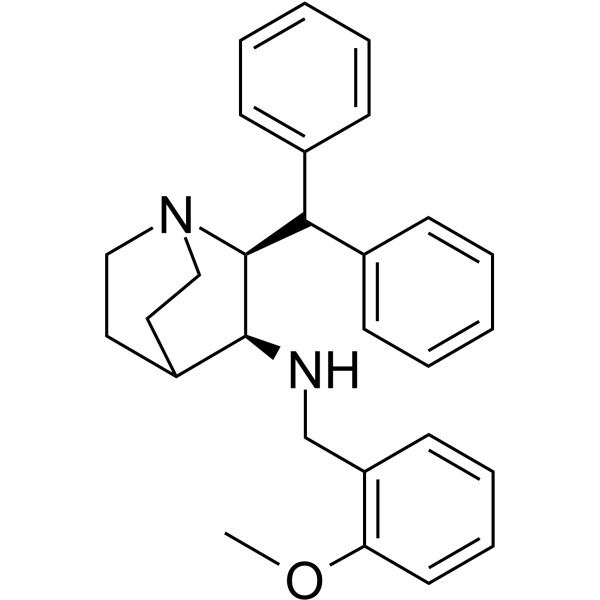
CP-96,345 is a non-peptide selective NK-1 receptor antagonist (Ki = 0.31 nM). CP-96,345 inhibits cell rolling, adhesion, and plasma extravasation, and inhibits degranulation and pancreatic MPO activity. CP-96,345 attenuates neurogenic inflammation, edema, and adhesion molecule expression. CP-96,345 attenuates static contraction- and muscle stretch-evoked pressor reflexes through blockade of NK-1 receptors in the dorsal horn. CP-96,345 impairs post-ischemic recovery of LVDevP, HR, and CF in isolated hearts and increases reperfusion fibrillation. CP-96,345 can be used for research on chronic colitis, myocardial ischemia-reperfusion injury, smoke inhalation and burn injury, acute pancreatitis, oxazolone colitis, and neurogenic inflammation.
For research use only. We do not sell to patients.
- Purity : 99.9%
- CAS No.: 132746-60-2
- Formula: C28H32N2O
- Molecular Weight:412.57
-
Storage:Powder -20°C, 3 years ; In solvent -80°C, 6 months , -20°C, 1 month

To place orders, for customer services and technical support, please contact: MedChemExpress USA
Tel: 609-228-6898 E-mail: [email protected] [email protected]


-
 Biological Activity
-
Chemical Information
- Protocols
- Purity & Documentation
- References
-
 Help & FAQs


-
HY-108483
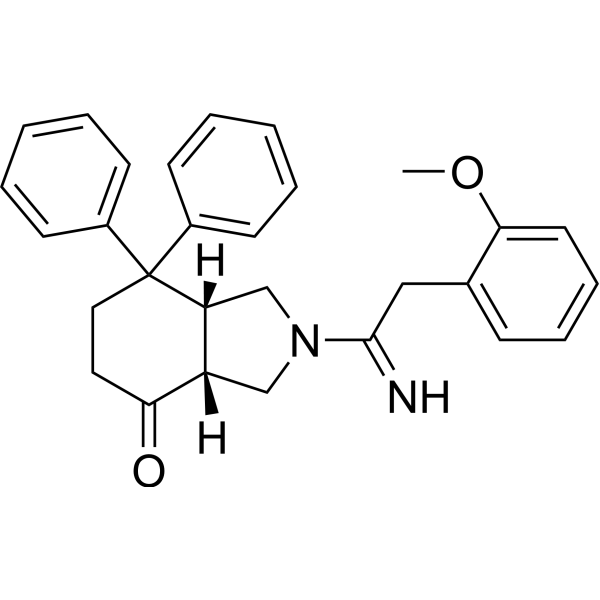
RP 67580NK1 Receptors Antagonist, Substance P Antagonist -
HY-14406A
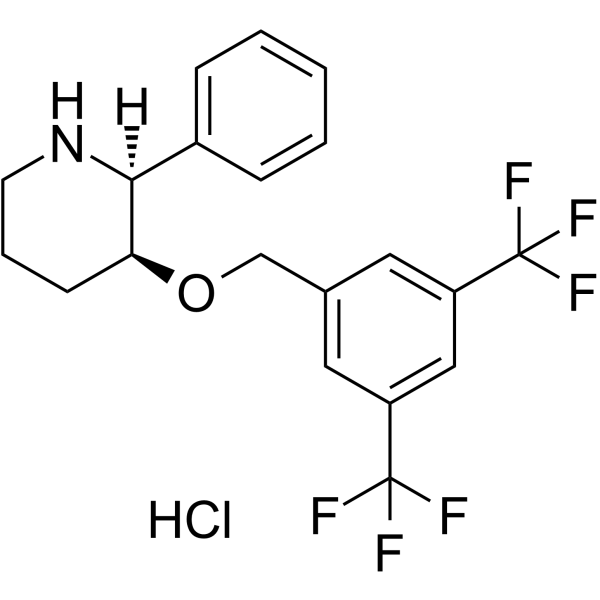
L-733060 hydrochlorideNK1 Receptor Antagonist -
![[Sar9,Met(O2)11]-Substance P](https://file.medchemexpress.com/product_pic/hy-p1012.gif)
HY-P1012
[Sar9,Met(O2)11]-Substance PTachykinin NK1 Receptor Agonist -
HY-14407A
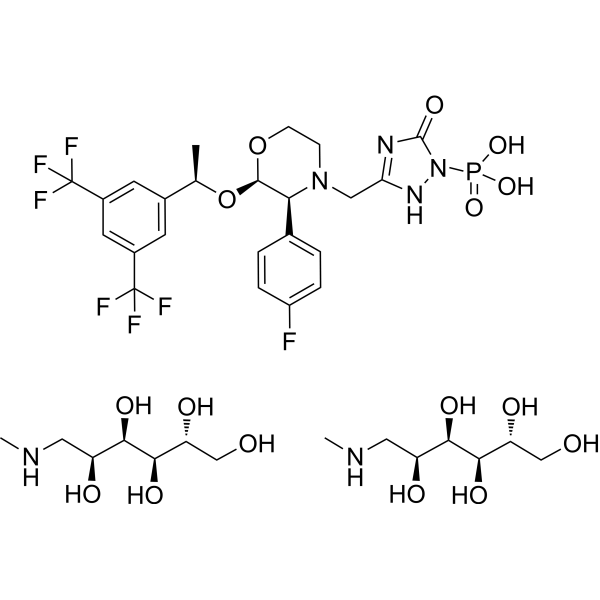
Fosaprepitant dimeglumineNeurokinin-1 Receptor Antagonist -
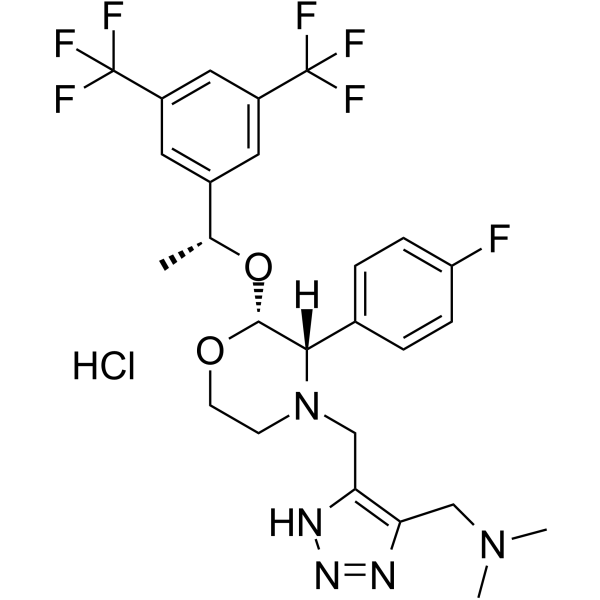
HY-108481
L-760735NK1 receptor antagonist -
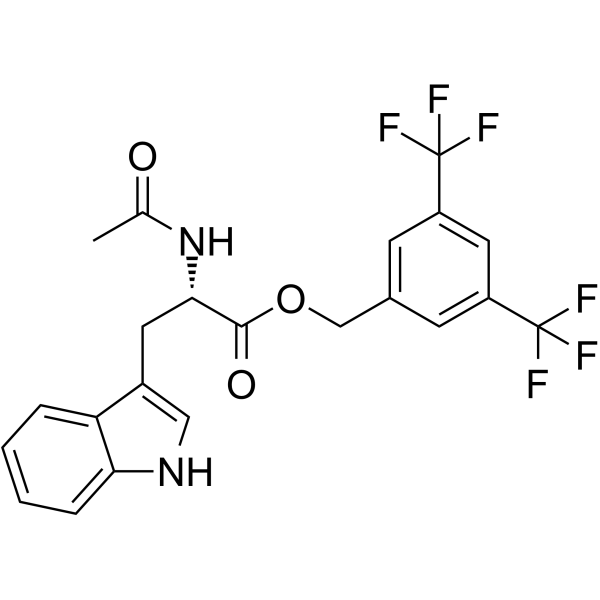
HY-101249
L-732138NK-1 Receptor Antagonist -
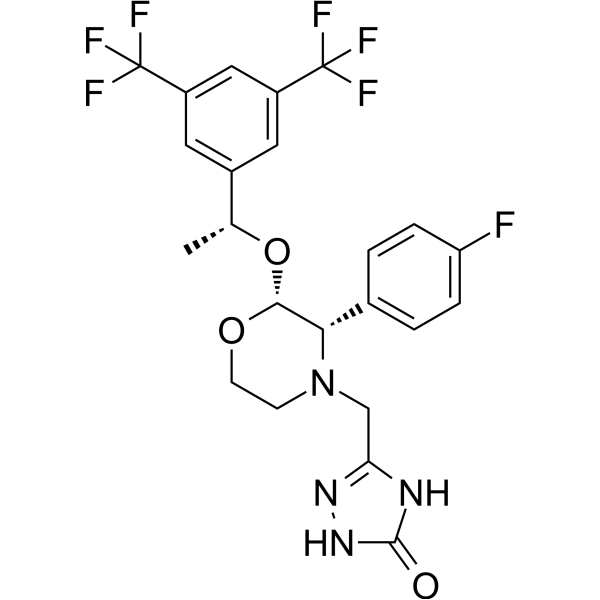
HY-10052
AprepitantNeurokinin 1 Receptor Antagonist -
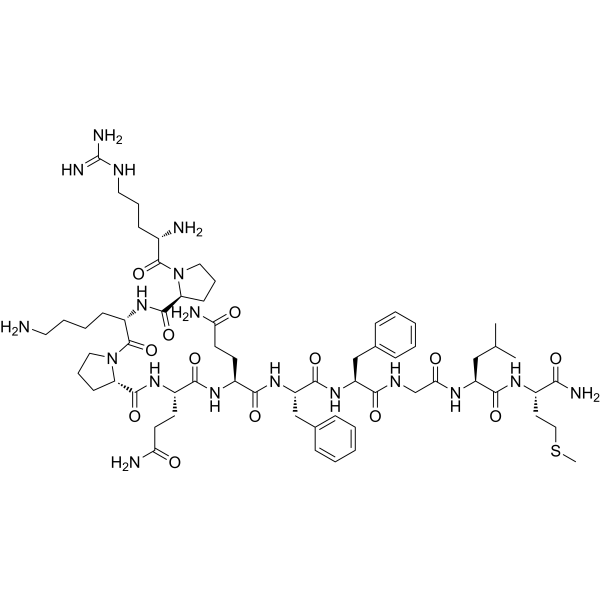
HY-P0201
Substance PNeurotransmitter -
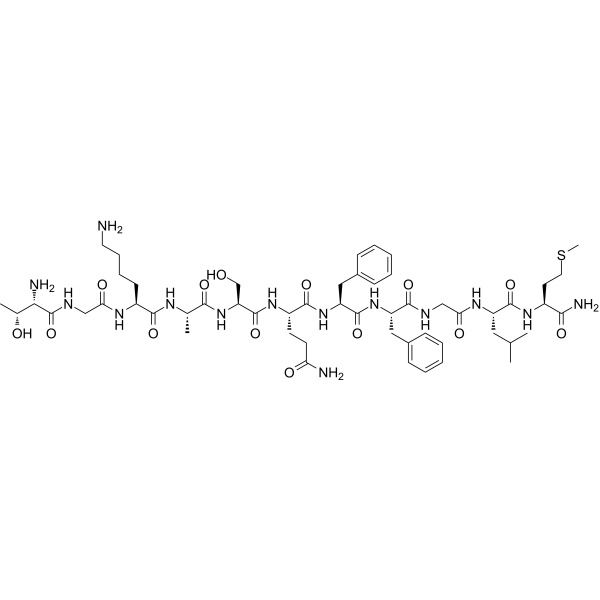
HY-P1198
Hemokinin 1, humanNeurokinin Receptor Agonist -
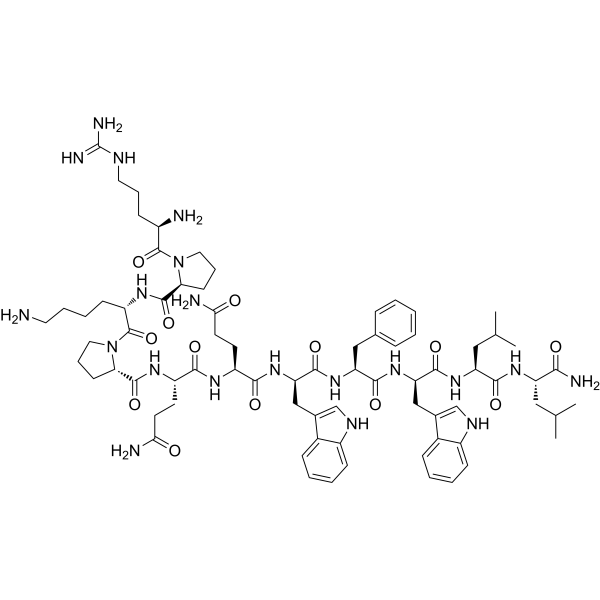
HY-P1194
Spantide INK1 Receptor Antagonist -

HY-12145
CP-99994 hydrochlorideNK-1 Receptor Antagonist -
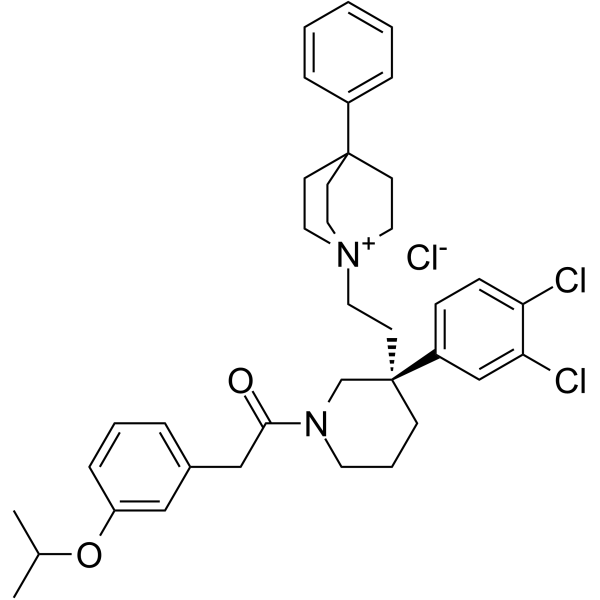
HY-108479
NolpitantiumNK1 Receptor Antagonist


Biological Activity
Description
IC50 & Target
[1]|
NK1R 0.31 nM (Ki) |
Cellular Effect
|
Cell Line

|
Type | Value | Description | References |
|---|---|---|---|---|
| A549 | IC50 |
46.83 μM
Compound: CP-96345
|
Antiproliferative activity against human A549 cells after 48 hrs by MTT assay
Antiproliferative activity against human A549 cells after 48 hrs by MTT assay
|
[PMID: 28710964] |
| CHO | IC50 |
0.45 nM
Compound: CP-96345
|
Binding affinity against human Tachykinin receptor 1 expressed in CHO cells was measured by its ability to displace [125I]- Tyr-8 substance P.
Binding affinity against human Tachykinin receptor 1 expressed in CHO cells was measured by its ability to displace [125I]- Tyr-8 substance P.
|
[PMID: 7535362] |
| CHO | IC50 |
0.5 nM
Compound: CP-96345
|
Binding affinity against wild type human Tachykinin receptor 1 expressed in CHO cells was measured by its ability to displace [125I]- Tyr-8 substance P.
Binding affinity against wild type human Tachykinin receptor 1 expressed in CHO cells was measured by its ability to displace [125I]- Tyr-8 substance P.
|
[PMID: 7535362] |
| CHO | IC50 |
22 nM
Compound: CP-96345
|
Binding affinity against Gln165Ala mutant type human Tachykinin receptor 1 expressed in CHO cells was measured by its ability to displace [125I]- Tyr-8 substance P.
Binding affinity against Gln165Ala mutant type human Tachykinin receptor 1 expressed in CHO cells was measured by its ability to displace [125I]- Tyr-8 substance P.
|
[PMID: 7535362] |
| CHO | IC50 |
0.2 nM
Compound: 1, (CP-96345)
|
Tested against cloned human NK1 receptor by displacement of 125 I -labeled substance P expressed in CHO cells
Tested against cloned human NK1 receptor by displacement of 125 I -labeled substance P expressed in CHO cells
|
[PMID: 8393115] |
| CHO | IC50 |
0.4 nM
Compound: 2
|
Displacement of [125I]-labeled SP from human Tachykinin receptor 1 expressed in CHO cells
Displacement of [125I]-labeled SP from human Tachykinin receptor 1 expressed in CHO cells
|
[PMID: 8627597] |
| CHO | IC50 |
0.5 nM
Compound: CP-96345
|
Inhibition of [125I]-substance P binding to human neurokinin-1 (hNK-1) receptor in CHO cells
Inhibition of [125I]-substance P binding to human neurokinin-1 (hNK-1) receptor in CHO cells
|
10.1016/0960-894X(95)00080-D |
| CHO | IC50 |
0.7 nM
Compound: CP-96345
|
Compound was tested for the displacement of [ 1251] Substance P from hNK1 receptor in CHO cells
Compound was tested for the displacement of [ 1251] Substance P from hNK1 receptor in CHO cells
|
10.1016/S0960-894X(01)80280-8 |
| CHO | IC50 |
0.5 nM
Compound: 1
|
Inhibition of [125I]-Substance P binding to human NK1 receptors in CHO cells
Inhibition of [125I]-Substance P binding to human NK1 receptors in CHO cells
|
10.1016/S0960-894X(01)80747-2 |
| IM-9 | IC50 |
0.77 nM
Compound: 3, (CP-96345)
|
Binding affinity towards Tachykinin receptor 1 in human IM-9 cells using [3H]-substance P as ligand
Binding affinity towards Tachykinin receptor 1 in human IM-9 cells using [3H]-substance P as ligand
|
[PMID: 1378901] |
| IM-9 | IC50 |
0.48 nM
Compound: 1
|
Tested in vitro for the binding affinity towards NK1 receptor in human IM-9 cells using [125I]-labeled bolton-hunter substance P as ligand
Tested in vitro for the binding affinity towards NK1 receptor in human IM-9 cells using [125I]-labeled bolton-hunter substance P as ligand
|
[PMID: 7520943] |
| IM-9 | IC50 |
0.35 nM
Compound: 1
|
Inhibitory activity against Tachykinin receptor 1 in human IM-9 cells using [125I]-labeled Boltan-Hunter substance P as radioligand
Inhibitory activity against Tachykinin receptor 1 in human IM-9 cells using [125I]-labeled Boltan-Hunter substance P as radioligand
|
[PMID: 8576917] |
| IM-9 | IC50 |
0.33 nM
Compound: CP-96345
|
Binding affinity against Neurokinin 1(NK1) receptor from human IM-9 cells using [I]-Bolton Hunter labeled SP
Binding affinity against Neurokinin 1(NK1) receptor from human IM-9 cells using [I]-Bolton Hunter labeled SP
|
10.1016/0960-894X(96)00148-5 |
| IM-9 | IC50 |
4.2 nM
Compound: CP-96345
|
Compound was evaluated for the inhibition of binding of [3H]SP in human IM-9 cells
Compound was evaluated for the inhibition of binding of [3H]SP in human IM-9 cells
|
10.1016/S0960-894X(00)80693-9 |
| IM-9 | IC50 |
0.52 nM
Compound: CP-96345
|
Compound was tested in vitro for its Tachykinin receptor 1 affinity by the displacement of [125I]Bolton-Hunter substance p from human IM-9 cells
Compound was tested in vitro for its Tachykinin receptor 1 affinity by the displacement of [125I]Bolton-Hunter substance p from human IM-9 cells
|
10.1016/S0960-894X(01)80246-8 |
| IM-9 | IC50 |
2 nM
Compound: CP-96345
|
Inhibitory concentration for displacement of [3H]-Substance P (SP) in human IM-9 cells
Inhibitory concentration for displacement of [3H]-Substance P (SP) in human IM-9 cells
|
10.1016/S0960-894X(01)80859-3 |
| MRC5 | IC50 |
57.9 μM
Compound: CP-96345
|
Cytotoxicity against human MRC5 cells after 48 hrs by MTT assay
Cytotoxicity against human MRC5 cells after 48 hrs by MTT assay
|
[PMID: 28710964] |
| U-373MG ATCC | IC50 |
9 nM
Compound: 1, (CP-96345)
|
Compound was tested for inhibition of substance P induced phosphatidyl inositol turnover in human U-373 cells
Compound was tested for inhibition of substance P induced phosphatidyl inositol turnover in human U-373 cells
|
10.1016/0960-894X(96)00287-9 |
In Vitro
CP-96,345 (0.01 mM; 1 h) completely inhibits neurotensin-mediated mast cell degranulation in rat colonic explants, indicating that colonic mast cell activation in response to neurotensin involves substance P release[8].
MedChemExpress (MCE) has not independently confirmed the accuracy of these methods. They are for reference only.
In Vivo
CP 96,345 (10 mg/kg; i.v.; 1 h before injury and every 12 h; 48 h) attenuates lung injury and inflammation in SB-injured mice, significantly reducing Evans blue extravasation by 31%, wet/dry weight ratio by 23%, hemoglobin by 46%, and myeloperoxidase activity by 54%[4].
CP-96,345 (2.5 mg/kg; i.p.; single dose; 30 min before or 1 h after the first caerulein injection) effectively reduces the expression of adhesion molecules and leukocyte recruitment in the pancreas and lung in caerulein (HY-A0190)-induced acute pancreatitis in mice[5].
CP-96345 (2.5 μg/g; i.p.; twice daily; 4 days) abolishes Oxazolone (HY-126360) colitis in CGRP−/− mice[7].
MedChemExpress (MCE) has not independently confirmed the accuracy of these methods. They are for reference only.
-
Animal Model:SCID mice (female, 6-8 weeks old, T-cell transfer model)[1]
-
Dosage:1 µg/g
-
Administration:s.c.; three times a week; 8 weeks
-
Result:Reduced the median colitis inflammatory score to 3 compared to 5 in the control group.
Did not prevent body weight loss.
-
Animal Model:C57BL/6 (male, 5-6 weeks old, 19-21 g, smoke inhalation and burn injury)[4]
-
Dosage:10 mg/kg
-
Administration:i.v.; 1 hr prior to injury and every 12 hours; 48 hr
-
Result:Decreased Evans Blue levels by 31%.
Decreased wet/dry weight ratio by 23%.
Decreased hemoglobin levels by 46%.
Decreased myeloperoxidase activity by 54%.
Showed higher Evans Blue levels (110%) compared to sham animals.
Showed higher hemoglobin levels (14%) compared to sham animals.
-
Animal Model:Balb/C (Male, 20-25 g)[5]
-
Dosage:2.5 mg/kg
-
Administration:i.p.; single dose; 30 min before or 1 h after first caerulein injection
-
Result:Reduced plasma amylase levels and pancreatic water content.
Reduced pancreatic MPO activity.
Reduced protein immunoreactivity of ICAM-1 and VCAM-1 in pancreas.
Reduced mRNA and protein expression of E-selectin and P-selectin in pancreas.
Suppressed elevated ICAM-1, E-selectin, and P-selectin mRNA expression in lungs.
Reduced rolling leukocyte flux to 102.00 cells/min (prophylactic) and 132.75 cells/min (therapeutic).
Reduced adherent leukocytes to 3.67 cells/100 μm (prophylactic) and 4.67 cells/100 μm (therapeutic).
Restored rolling velocity to 25.32 μm/s (prophylactic) and 23.88 μm/s (therapeutic).
Suppressed proinflammatory leukocyte behaviors by approximately 50%.


Chemical Information
-
CAS No. 132746-60-2
-
Appearance Solid
-
Molecular Weight 412.57
-
Formula C28H32N2O
-
Color White to light yellow
-
SMILES
COC1=C(C=CC=C1)CN[C@@H]2[C@@H](N3CCC2CC3)C(C4=CC=CC=C4)C5=CC=CC=C5
-
Shipping
Room temperature in continental US; may vary elsewhere.
-
Storage
Powder -20°C 3 years In solvent -80°C 6 months -20°C 1 month


Purity & Documentation
-
Data Sheet (283 KB)
-
SDS (540 KB)
- English - EN (540 KB)
- Français - FR (540 KB)
- Deutsch - DE (540 KB)
- Norwegian - NO (540 KB)
- Español - ES (540 KB)
- Swedish - SV (540 KB)
- Italian - IT (540 KB)
- Korean - KR (540 KB)
- Portuguese - PT (540 KB)
-
Handling Instructions (2659 KB)
References

Calculators
Concentration (start) × Volume (start) = Concentration (final) × Volume (final)


CP-96,345 Related Classifications
HY-108482 Related Classifications
 Powered by Bioz