



RSPO1/R-spondin-1 Protein, Human (CHO, His)
Based on 18 publication(s) in Google Scholar
RSPO1/R-spondin-1 is a potent activator of the Wnt/β-catenin signaling pathway and a secretory glycoprotein belonging to the R-spondin family. RSPO1 homotetramers synergize with LRP5/6 via LGR4/5/6 and activate the Wnt/β-catenin pathway by inhibiting DKK1/Kremen-mediated LRP6 endocytosis. RSPO1 promotes β-catenin nuclear translocation, drives HSC activation in liver fibrosis, inhibits adipocyte thermogenic gene expression, and promotes intestinal epithelial proliferation. RSPO1/R-spondin-1 Protein, Human (CHO, His) is a recombinant human RSPO1 protein expressed in CHO cells with a C-6*His tag.
- Species: Human
- Source: CHO
-
Storage:Stored at -20°C for 2 years from date of receipt. After reconstitution, it is stable at 4°C for 1 week or -20°C for longer (with carrier protein). It is recommended to freeze aliquots at -20°C or -80°C for extended storage.


To place orders, for customer services and technical support, please contact: MedChemExpress USA
Tel: 609-228-6898 E-mail: [email protected] [email protected]


-
 Biological Activity
-
Technical Parameters
-
Product Properties
- Documentation
- References
- Help & FAQs


-
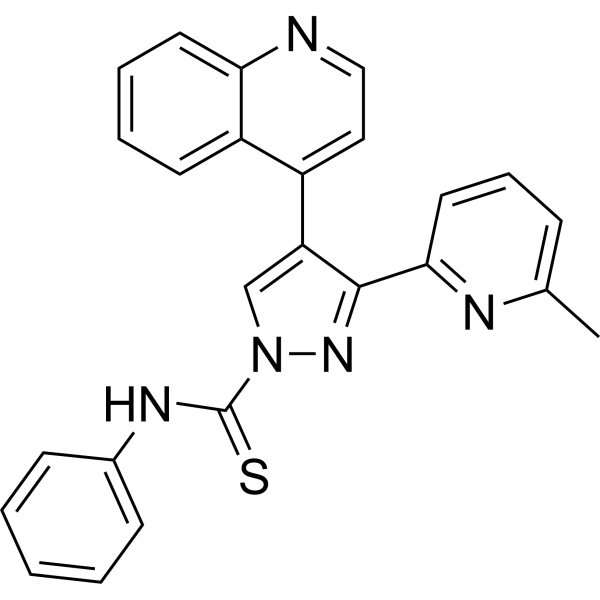
HY-10432
A 83-01ALK4/5/7 Inhibitor -
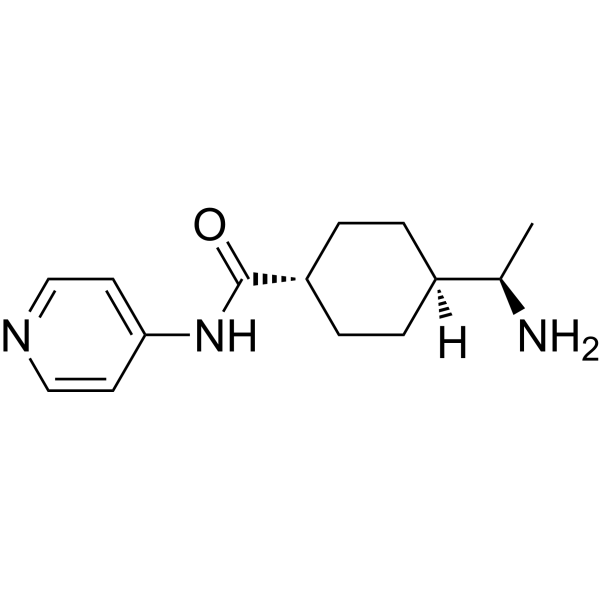
HY-10071
Y-27632ROCK Inhibitor -
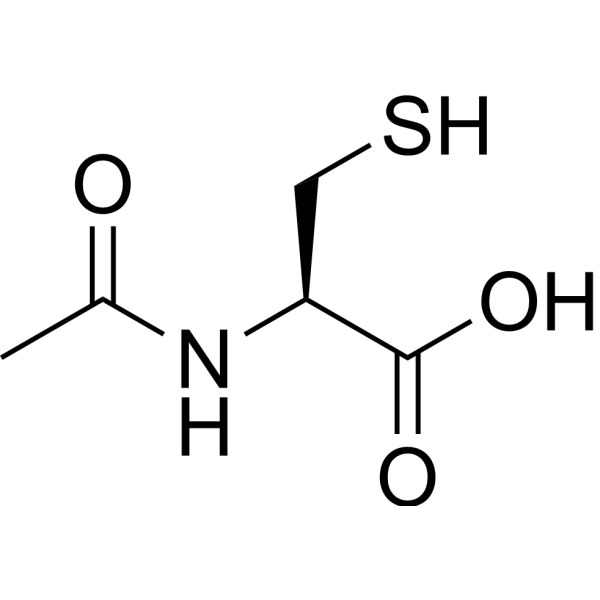
HY-B0215
AcetylcysteineMucolytic Agent -

HY-P7109
EGF Protein, Human -
HY-P70558
Noggin Protein, Human (HEK293) -
HY-P7051A
Noggin Protein, Human (CHO) -
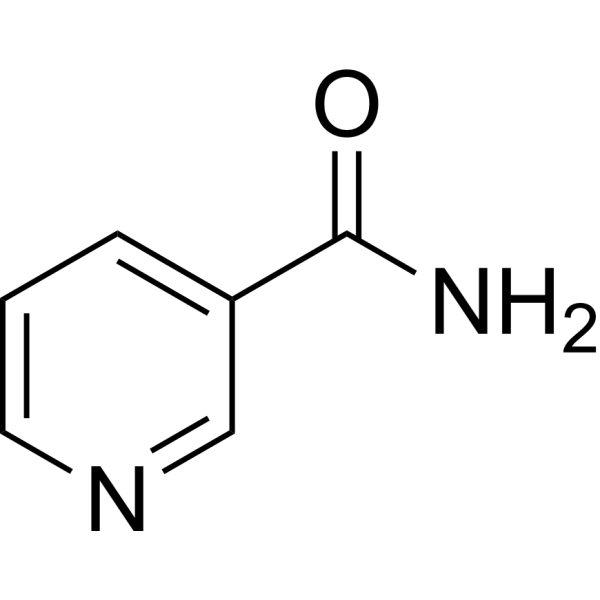
HY-B0150
NicotinamideSIRT Inhibitor -
HY-10295
SB 202190p38 MAPK Inhibitor -
HY-P70453B
Wnt3a Surrogate Protein, Human (HEK293, Fc) -
HY-10182
LaduviglusibGSK-3 Inhibitor -
HY-P7048
KGF-2/FGF-10 Protein, Human (169a.a) -
HY-P1097
Gastrin I, humanCCK2 Agonist


Biological Activity
Description
RSPO1/R-spondin-1 is a potent activator of the Wnt/β-catenin signaling pathway and a secretory glycoprotein belonging to the R-spondin family. RSPO1 homotetramers synergize with LRP5/6 via LGR4/5/6 and activate the Wnt/β-catenin pathway by inhibiting DKK1/Kremen-mediated LRP6 endocytosis. RSPO1 promotes β-catenin nuclear translocation, drives HSC activation in liver fibrosis, inhibits adipocyte thermogenic gene expression, and promotes intestinal epithelial proliferation[1][2][3][4]. RSPO1/R-spondin-1 Protein, Human (CHO, His) is a recombinant human RSPO1 protein expressed in CHO cells with a C-6*His tag.
Background
1. Protein characteristics of RSPO1/R-spondin-1
RSPO1/R-spondin-1, belonging to the R-Spondin (RSpo) secretory protein family (including RSPO1-4 members), is a potent activator of the Wnt/-catenin signaling pathway[1]. RSPO1/R-spondin-1 is a disulfide-linked secretory glycoprotein containing an N-terminal signal peptide, two furin-like domains (FR), a thrombin ospondin 1 domain (TSP1) and a C-terminal positively charged region. It binds to heparin sulfate proteoglycans (HSPGs) through electrostatic interactions to anchor the extracellular matrix[1][3].
The activity of R-spondin-1/RSPO1 depends largely on the presence of classical Wnt ligands and LRP6. Although R-spondin-1/RSPO1 does not directly activate LRP6, it can interfere with DKK1 function, regulate the turnover of LRP5 or LRP6 receptors and amplify Wnt-dependent signaling[2]. RSPO1/R-spondin-1 inhibits DKK1/Kremen-mediated LRP6 endocytosis, maintains cell surface LRP6 levels, and activates the Wnt/β-catenin pathway. After binding to LGR4/5/6, it releases the ubiquitination and degradation of Wnt receptors by ZNRF3/RNF43, promotes β-catenin nuclear translocation and TCF/LEF-dependent gene transcription[1][3].
2. Application of RSPO1/R-spondin-1
RSPO1/R-spondin-1 participates in the regulation of liver fibrosis: RSPO1/R-spondin-1 can promote the activation of hepatic stellate cells (HSC), upregulate α-SMA and Collagen-I, and drive fibrosis through the Wnt pathway[4].
RSPO1/R-spondin-1 inhibits fat metabolism: Wild-type RSPO1 enhances Wnt signaling through LGR4, inhibits adipocyte mitochondrial respiration and the expression of thermogenic genes (UCP1, PGC-1α), while the p.R219W mutation destroys HSPG binding, which leads to abnormal release and aggravates obesity[3].
RSPO1/R-spondin-1 promotes intestinal epithelial proliferation: RSPO1 promotes the proliferation of intestinal crypt stem cells through the Wnt pathway and repairs mucosal damage[2].
Verified Bioactivity
1.R-Spondin-1 enhances BMP-2-mediated differentiation of MC3T3-E1 cells. The expected ED50 is 1.182 μg/mL.corresponding to a specific activity is 8.46 ×10² units/mg.
2.Measured by its ability to induce Topflash reporter activity in HEK293T human embryonic kidney cells. The ED50 for this effect is 1-10 ng/mL.
MCE Validation Data
-
Purity - SDS-PAGE
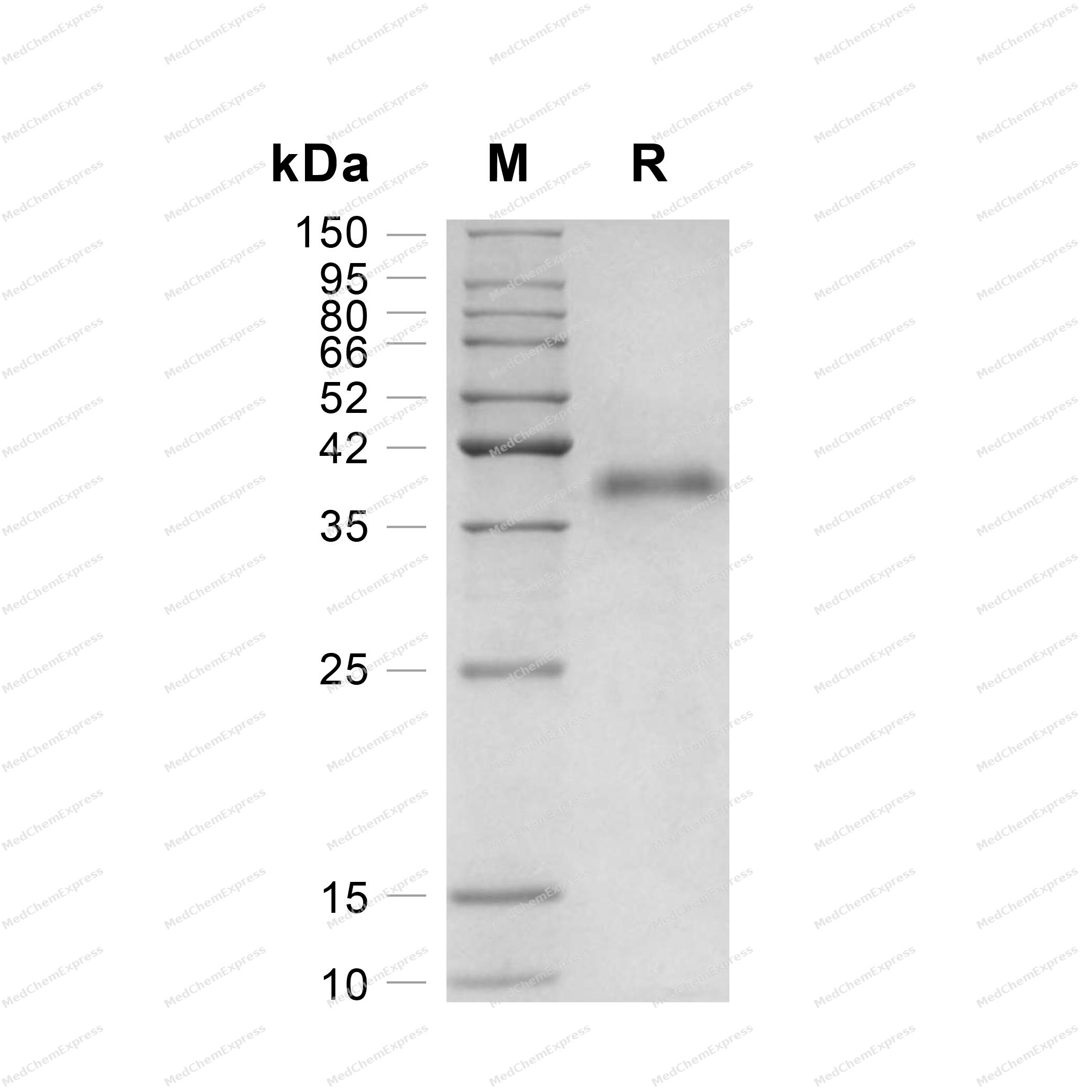
Purity - SDS-PAGE
-
Bioactivity - Cell-Based Assay
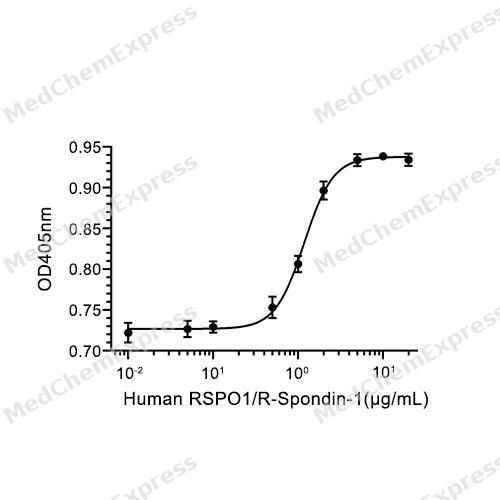
Bioactivity - Cell-Based Assay


Publications (18)
-
Journal Impact Factor
-
Most Recent
-
Mol Cancer
Organoids derived from patients provide a new opportunity for research and individualized treatment of malignant peritoneal mesothelioma. [Abstract]2024 Jan 10;23(1):12. PMID: 38200517 -
Nat Commun
2026 Jun 8. PMID: 42259794 -
Biomark Res
Glycochenodeoxycholic acid promotes hepatocarcinogenesis by inducing hepatic progenitor cell differentiation into cancer-associated fibroblasts via sphingosine-1-phosphate receptor 2 signalling. [Abstract]2025 Dec 17;13(1):157. PMID: 41408647 -
Adv Sci (Weinh)
TWEAK Signaling-Induced ID1 Expression Drives Malignant Transformation of Hepatic Progenitor Cells During Hepatocarcinogenesis. [Abstract]2023 Jun;10(18):e2300350. PMID: 37085918 -
Cell Rep Med
An Automated Organoid Platform with Inter-organoid Homogeneity and Inter-patient Heterogeneity. [Abstract]2020 Dec 22;1(9):100161. PMID: 33377132 -
Sci Adv
2025 Sep 5;11(36):eadz0808. PMID: 40911681 -
Cancer Biol Med
Raltitrexed as a synergistic hyperthermia chemotherapy drug screened in patient-derived colorectal cancer organoids. [Abstract]2021 Mar 12;18(3):750-762. PMID: 33710819 -
-
Small
2020 Jun;16(22):e2001371. PMID: 32338439 -
Patterns
Multiplex gene quantification as digital markers for extremely rapid evaluation of chemo-drug sensitivity. [Abstract]2021 Sep 29;2(10):100360. PMID: 34693378 -
Cell Chem Biol
STT3A is essential for Wnt signaling and represents a target for cancers driven by RNF43 deficiency. [Abstract]2025 Oct 22:S2451-9456(25)00306-X. PMID: 41130209 -
Life Sci
2021 Jan 15:265:118737. PMID: 33171177 -
Sci Rep
Comparative analysis of organoid, air-liquid interface, and direct infection models for studying pathogen-host interactions in endometrial tissue. [Abstract]2025 Mar 12;15(1):8531. PMID: 40075187 -
Front Med (Lausanne)
Amnion-Derived Mesenchymal Stromal/Stem Cell Paracrine Signals Potentiate Human Liver Organoid Differentiation: Translational Implications for Liver Regeneration. [Abstract]2021 Sep 23:8:746298. PMID: 34631757 -
World J Psychiatry
Exosomal miR-320e through wnt2targeted inhibition of the Wnt/β-catenin pathway allevisate cerebral small vessel disease and cognitive impairment. [Abstract]2023 Sep 19;13(9):630-644. PMID: 37771642 -
STAR Protoc
2026 Apr 24;7(2):104523. PMID: 42033729 -
-


Technical Parameters
-
Species Human
-
Source CHO
-
Tag C-6*His
-
Accession
Q2MKA7-1 (S21-A263)
-
Molecular Construction
-
N-term
-
RSPO1 (S21-A263)
Accession # Q2MKA7-1 -
6*His
-
C-term
-
-
Protein Length
Full Length of Isoform-1
-
Synonyms
RSPO1; R-Spondin Homolog (Xenopus Laevis); R-Spondin 1; R-Spondin Homolog; Roof Plate-Specific Spondin-1; CRISTIN3; R-Spondin-1; HRspo1; FLJ40906; RSPO; RSPONDIN
-
AA Sequence
SRGIKGKRQRRISAEGSQACAKGCELCSEVNGCLKCSPKLFILLERNDIRQVGVCLPSCPPGYFDARNPDMNKCIKCKIEHCEACFSHNFCTKCKEGLYLHKGRCYPACPEGSSAANGTMECSSPAQCEMSEWSPWGPCSKKQQLCGFRRGSEERTRRVLHAPVGDHAACSDTKETRRCTVRRVPCPEGQKRRKGGQGRRENANRNLARKESKEAGAGSRRRKGQQQQQQQGTVGPLTSAGPA
-
Predicted Molecular Mass
27.8 kDa
-
Molecular Weight
Approximately 40 kDa, based on SDS-PAGE under reducing conditions.
-
Glycosylation
Yes
-
Purity
≥ 95%, as determined by reducing SDS-PAGE.


Product Properties
Lyophilized powder
1.Lyophilized from a 0.22 μm filtered solution of PBS, pH 7.4.
2.Lyophilized from a 0.22 μm filtered solution of PBS, 4% Mannitol, pH 7.4.
Please refer to the lot-specific COA for specific buffer information.
<0.01 EU/μg, determined by LAL method.
It is not recommended to reconstitute to a concentration less than 100 μg/mL in ddH2O.
Stored at -20°C for 2 years from date of receipt. After reconstitution, it is stable at 4°C for 1 week or -20°C for longer (with carrier protein). It is recommended to freeze aliquots at -20°C or -80°C for extended storage.
Room temperature in continental US; may vary elsewhere.


Documentation
-
Data Sheet (265 KB)
-
SDS (252 KB)
- English - EN (252 KB)
- Français - FR (252 KB)
- Deutsch - DE (252 KB)
- Norwegian - NO (252 KB)
- Español - ES (252 KB)
- Swedish - SV (252 KB)
- Italian - IT (252 KB)
- Korean - KR (252 KB)
- Portuguese - PT (252 KB)
-
Handling Instructions (2659 KB)


References
[1]. Binnerts ME, et al. R-Spondin1 regulates Wnt signaling by inhibiting internalization of LRP6. Proc Natl Acad Sci U S A. 2007 Sep 11;104(37):14700-5. [Content Brief]
[2]. Zhao J, et al. Tipping the balance: modulating the Wnt pathway for tissue repair. Trends Biotechnol. 2009 Mar;27(3):131-6. [Content Brief]
[3]. Sun Y, et al. Human RSPO1 Mutation Represses Beige Adipocyte Thermogenesis and Contributes to Diet-Induced Adiposity. Adv Sci (Weinh). 2023 Apr;10(12):e2207152. [Content Brief]
[4]. Yin X, et al. RSPOs facilitated HSC activation and promoted hepatic fibrogenesis. Oncotarget. 2016 Sep 27;7(39):63767-63778. [Content Brief]
[5]. Silvano S, et al. RSPO1, a potent inducer of pancreatic β cell neogenesis. Cell Rep Med. 2025 May 20;6(5):102126. [Content Brief]

Calculators
Concentration (start) × Volume (start) = Concentration (final) × Volume (final)


 Powered by Bioz

