



Angiopeptin
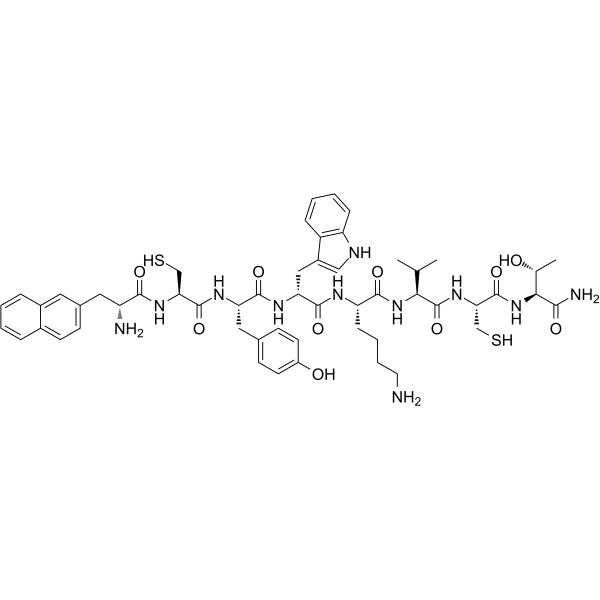
Angiopeptin, a cyclic octapeptide analogue of somatostatin, is a weak sst2/sst5 receptor partial agonist with IC50 values of 0.26 nM and 6.92 nM, respectively. Angiopeptin is a potent inhibitor of growth hormone release and insulin-like growth factor-1 (IGF-1) production. Angiopeptin inhibits adenylate cyclase or stimulates extracellular acidification. Angiopeptin has the potential for coronary atherosclerosis research.
For research use only. We do not sell to patients.
- CAS No.: 113294-82-9
- Formula: C54H71N11O10S2
- Molecular Weight:1098.34
-
Storage:
Please store the product under the recommended conditions in the Certificate of Analysis.

To place orders, for customer services and technical support, please contact: MedChemExpress USA
Tel: 609-228-6898 E-mail: [email protected] [email protected]


-
 Biological Activity
-
Chemical Information
- Protocols
- Purity & Documentation
- References
-
 Help & FAQs




Biological Activity
Description
IC50 & Target
|
SSTR2 |
SSTR5 |
In Vitro
Angiopeptin (0.1 nM- 10 μM; for 1 h) acts as a partial agonist (pEC50=6.57) with a maximum response of 423% at 3 μM on the release of tritium on CHO hsst2 cells[2].
MedChemExpress (MCE) has not independently confirmed the accuracy of these methods. They are for reference only.
In Vivo
Angiopeptin (20 μg/kg; per day) significantly inhibits coronary artery myointimal proliferation in cardiac allografts by appmximalely 50%[1].
MedChemExpress (MCE) has not independently confirmed the accuracy of these methods. They are for reference only.


Chemical Information
-
CAS No. 113294-82-9
-
Molecular Weight 1098.34
-
Formula C54H71N11O10S2
-
Sequence Shortening
{Nal}CYWKVCT-NH2
-
Shipping
Room temperature in continental US; may vary elsewhere.
-
Storage
Please store the product under the recommended conditions in the Certificate of Analysis.


Purity & Documentation
References
[1]. Lundergan CF, et al. Peptide inhibition of myointimal proliferation by angiopeptin, a somatostatin analogue. J Am Coll Cardiol. 1991;17(6 Suppl B):132B-136B. [Content Brief]
[2]. Alderton F, et al. Somatostatin receptor-mediated arachidonic acid mobilization: evidence for partial agonism of synthetic peptides. Br J Pharmacol. 2001;132(3):760-766. [Content Brief]

Calculators
Concentration (start) × Volume (start) = Concentration (final) × Volume (final)


Angiopeptin Related Classifications
HY-P2090 Related Classifications
 Powered by Bioz