



DHODH-IN-14

Based on 1 Customer Validation
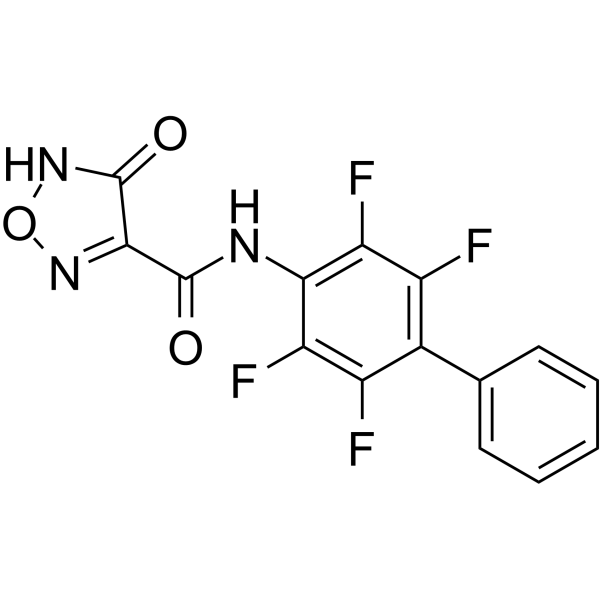
DHODH-IN-14 (Compound 7l) is a hydroxyfurazan analog of A771726. DHODH-IN-14 is a dihydroorotate dehydrogenase (DHODH) inhibitor with an IC50 of 0.49 μM for rat liver DHODH. DHODH-IN-14 can be used for rheumatoid arthritis.
For research use only. We do not sell to patients.
- Purity : 99.81%
- CAS No.: 1364791-93-4
- Formula: C15H7F4N3O3
- Molecular Weight:353.23
-
Storage:Powder -20°C, 3 years , 4°C, 2 years ; In solvent -80°C, 6 months , -20°C, 1 month

To place orders, for customer services and technical support, please contact: MedChemExpress USA
Tel: 609-228-6898 E-mail: [email protected] [email protected]


-
 Biological Activity
-
Chemical Information
-
Solvent & Solubility
- Protocols
- Purity & Documentation
- References
-
 Help & FAQs


-
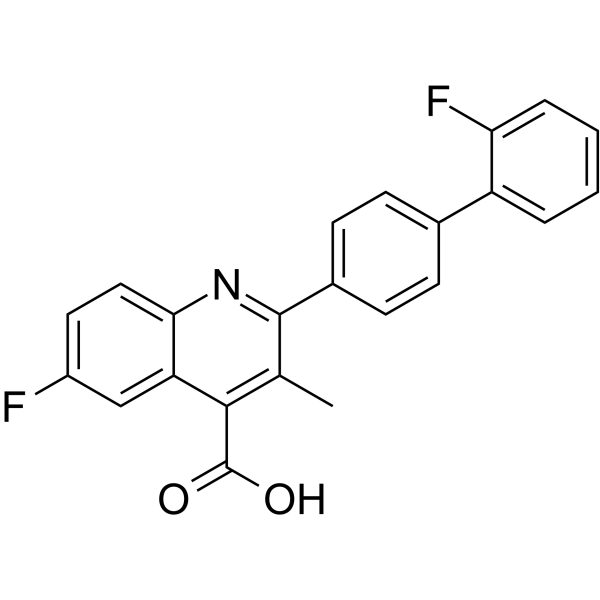
HY-108325
BrequinarDHODH Inhibitor -
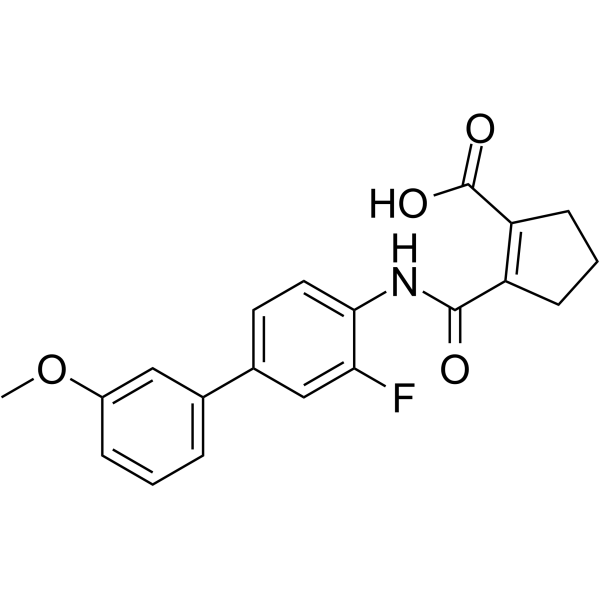
HY-14908
VidofludimusDHODH Inhibitor -
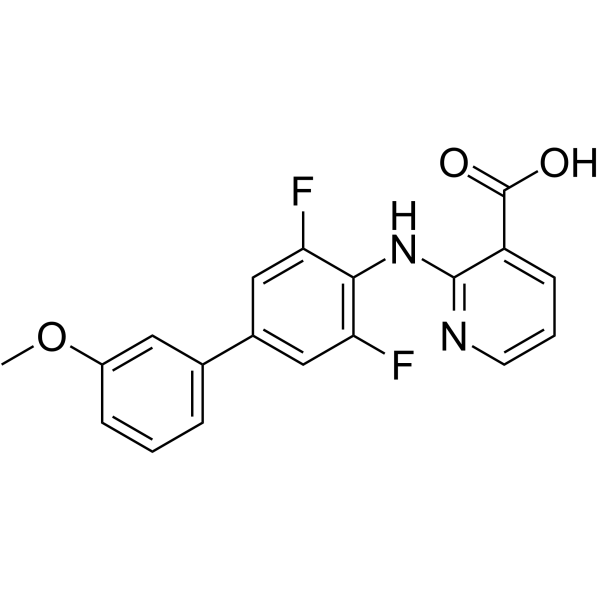
HY-129239
FarudodstatDHODH Inhibitor -
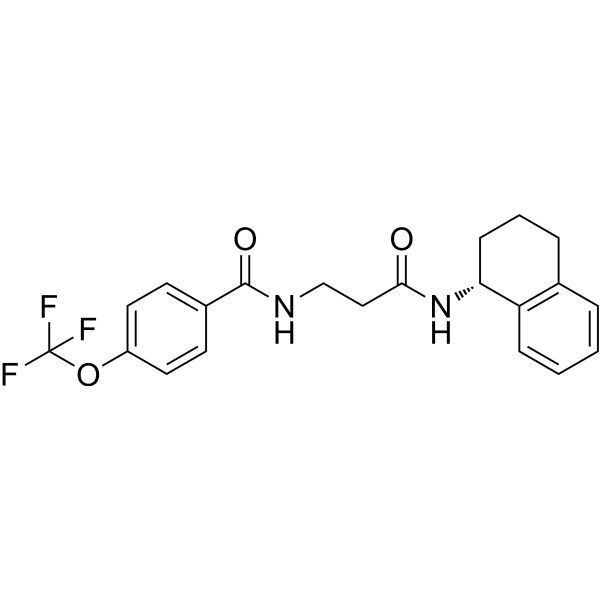
HY-100688
ML390DHODH Inhibitor -
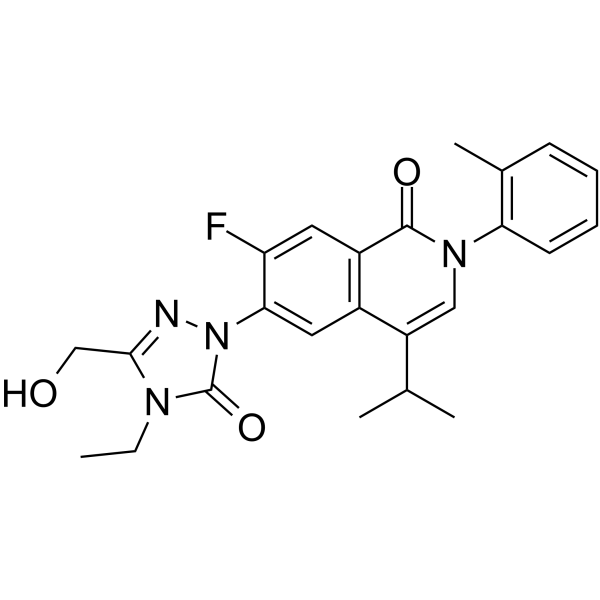
HY-139189
JNJ-74856665DHODH Inhibitor -
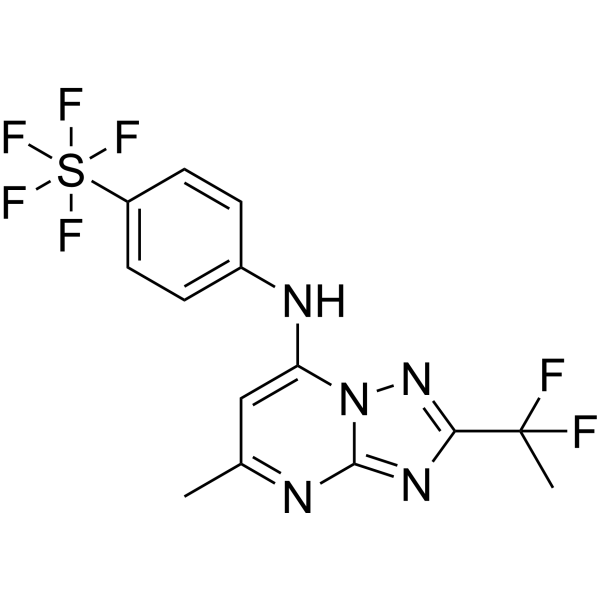
HY-100184
DSM265DHODH Inhibitor -
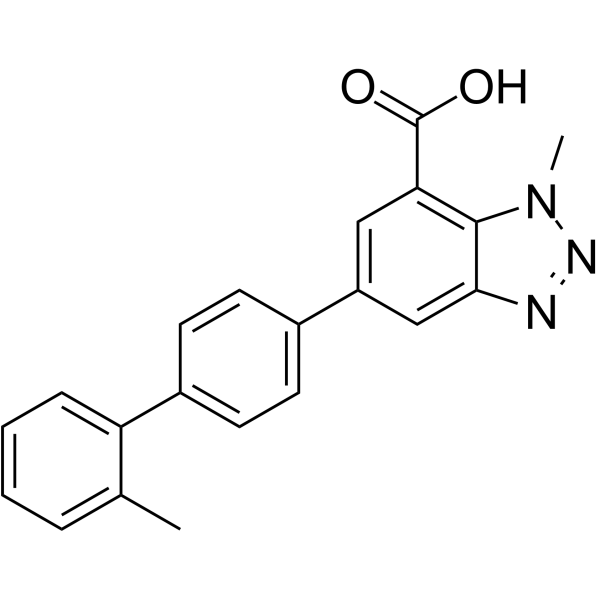
HY-137463
AG-636DHODH Inhibitor -
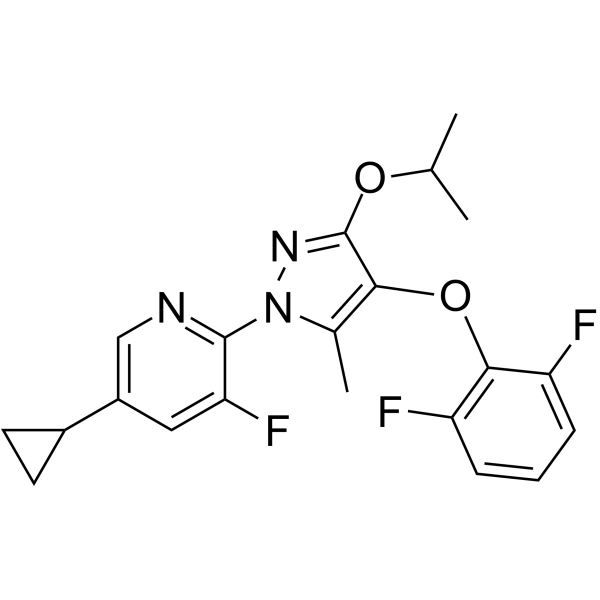
HY-135282
DHODH-IN-1Potent DHODH Inhibitor -
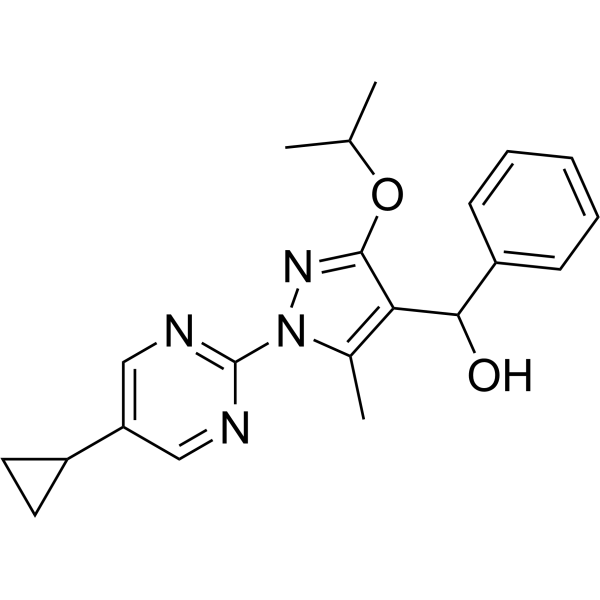
HY-128787
hDHODH-IN-4DHODH Inhibitor -
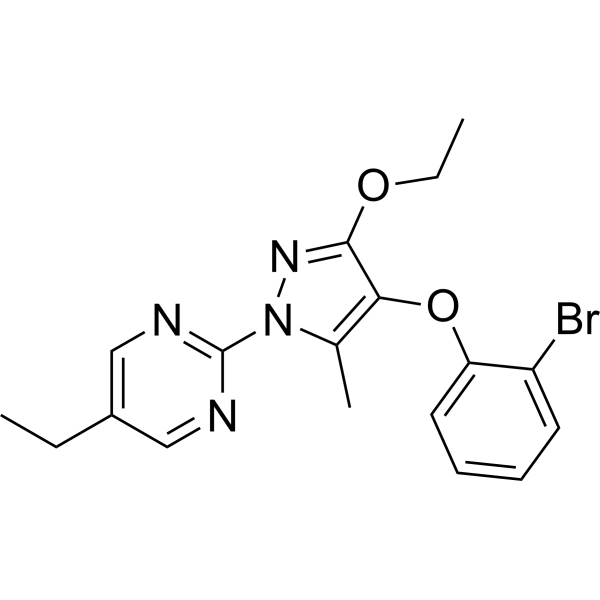
HY-135570
hDHODH-IN-3HsDHODH Inhibitor -
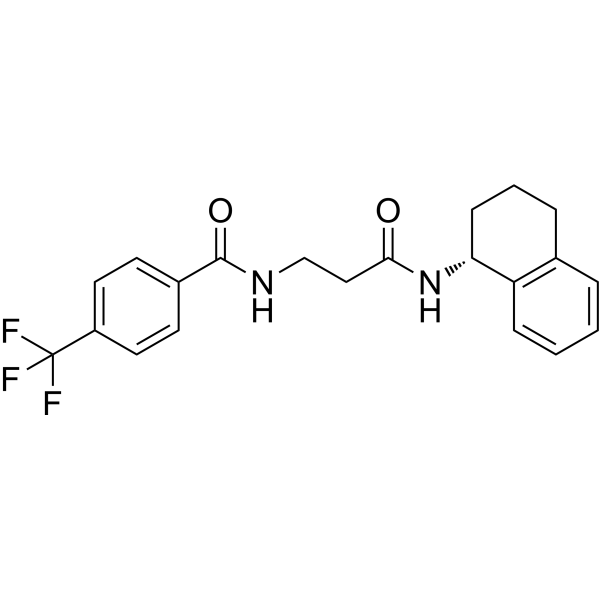
HY-135664
hDHODH-IN-5DHODH Inhibitor -
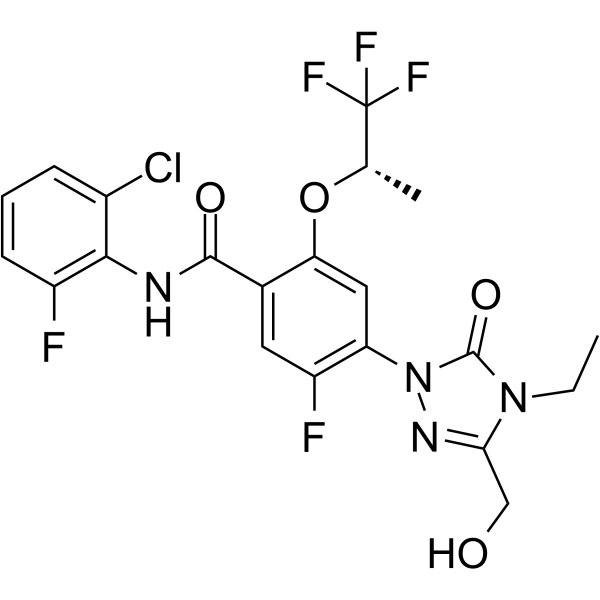
HY-112645
BAY-2402234DHODH Inhibitor
All DNA/RNA Synthesis Isoforms
More

Biological Activity
Description
IC50 & Target
IC50: 0.49 μM (Rat liver DHODH)[1]
Cellular Effect
|
Cell Line

|
Type | Value | Description | References |
|---|---|---|---|---|
| Jurkat | IC50 |
59.7 μM
Compound: 2
|
Antiproliferative activity against human Jurkat T cells assessed as DNA content after 72 hrs by Hoechst 33258 dye based fluorometric method
Antiproliferative activity against human Jurkat T cells assessed as DNA content after 72 hrs by Hoechst 33258 dye based fluorometric method
|
[PMID: 28235702] |
In Vitro
DHODH-IN-14 (Compound 7l) is a hydroxyfurazan analog of A771726, in which the biphenyl scaffold with fluoro substituents. Moving to derivatives DHODH-IN-14, no major differences were observed among the poses obtained on 1UUO and 1D3G; in both cases DHODH-IN-14 is found to bind in a BQN-like fashion, namely with the deprotonated hydroxyfurazan moiety facing Arg136, thus effectively mimicking the carboxyl group of BQN and related compounds. While on 1D3G and 1UUO the hydroxyfurazan is in no case found to interact with Tyr356 in a Leflunomide-like fashion, a significant fraction of such poses is found when 2BXV is used as the docking target[1].
MedChemExpress (MCE) has not independently confirmed the accuracy of these methods. They are for reference only. Further protocols information, click here.


Chemical Information
-
CAS No. 1364791-93-4
-
Appearance Solid
-
Molecular Weight 353.23
-
Formula C15H7F4N3O3
-
Color White to off-white
-
SMILES
O=C(C1=NONC1=O)NC2=C(F)C(F)=C(C3=CC=CC=C3)C(F)=C2F
-
Shipping
Room temperature in continental US; may vary elsewhere.
-
Storage
Powder -20°C 3 years 4°C 2 years In solvent -80°C 6 months -20°C 1 month


Solvent & Solubility
In Vitro:
DMSO : ≥ 125 mg/mL (353.88 mM; Hygroscopic DMSO has a significant impact on the solubility of product, please use newly opened DMSO)
* "≥" means soluble, but saturation unknown.
Please refer to the solubility information to select the appropriate solvent. Once prepared, please aliquot and store the solution to prevent product inactivation from repeated freeze-thaw cycles.
Storage method and period of stock solution: -80°C, 6 months; -20°C, 1 month. When stored at -80°C, please use it within 6 months. When stored at -20°C, please use it within 1 month.
Please refer to the solubility information to select the appropriate solvent. Once prepared, please aliquot and store the solution to prevent product inactivation from repeated freeze-thaw cycles.
Storage method and period of stock solution: -80°C, 6 months; -20°C, 1 month. When stored at -80°C, please use it within 6 months. When stored at -20°C, please use it within 1 month.
Concentration (start) × Volume (start) = Concentration (final) × Volume (final)

Protocols
-
Collagen-Induced Arthritis
Collagen-induced arthritis (CIA) is an autoimmune murine model of rheumatoid arthritis in which immunization with type II collagen (CII) emulsified in an adjuvant induces a T cell- and autoantibody-driven inflammatory arthritis characterized by synovial hyperplasia, immune cell infiltration, and joint destruction. The model typically relies on genetically susceptible mouse strains (e. g. , DBA/1) and reproduces key features of human rheumatoid arthritis, including anti-collagen immune responses and progressive joint inflammation. Disease onset generally occurs within ~3-4 weeks after immunization, depending on antigen/adjuvant combinations and protocol variation. The immunopathology is driven by adaptive immune activation against CII, leading to systemic and local joint inflammation mediated by pro-inflammatory cytokines and effector immune cells, making CIA a standard preclinical platform for evaluating immunomodulatory and anti-arthritic interventions.
-
Cell Cytotoxicity Assay
Cytotoxicity assays are usually based on the assessment of cell membrane damage, which can also be indirectly detected by measuring cell viability. Detection methods include MTT assay, CKK-8 assay, LDH assay and ATP assay, etc.


Purity & Documentation
-
Data Sheet (274 KB)
-
SDS (251 KB)
- English - EN (251 KB)
- Français - FR (251 KB)
- Deutsch - DE (251 KB)
- Norwegian - NO (251 KB)
- Español - ES (251 KB)
- Swedish - SV (251 KB)
- Italian - IT (251 KB)
- Korean - KR (251 KB)
- Portuguese - PT (251 KB)
-
Handling Instructions (2659 KB)
References


Complete Stock Solution Preparation Table
Please refer to the solubility information to select the appropriate solvent. Once prepared, please aliquot and store the solution to prevent product inactivation from repeated freeze-thaw cycles.
Storage method and period of stock solution: -80°C, 6 months; -20°C, 1 month. When stored at -80°C, please use it within 6 months. When stored at -20°C, please use it within 1 month.
| Optional Solvent | Concentration Solvent Mass | 1 mg | 5 mg | 10 mg | 25 mg |
|---|---|---|---|---|---|
| DMSO | 1 mM | 2.8310 mL | 14.1551 mL | 28.3102 mL | 70.7754 mL |
| 5 mM | 0.5662 mL | 2.8310 mL | 5.6620 mL | 14.1551 mL | |
| 10 mM | 0.2831 mL | 1.4155 mL | 2.8310 mL | 7.0775 mL | |
| 15 mM | 0.1887 mL | 0.9437 mL | 1.8873 mL | 4.7184 mL | |
| 20 mM | 0.1416 mL | 0.7078 mL | 1.4155 mL | 3.5388 mL | |
| 25 mM | 0.1132 mL | 0.5662 mL | 1.1324 mL | 2.8310 mL | |
| 30 mM | 0.0944 mL | 0.4718 mL | 0.9437 mL | 2.3592 mL | |
| 40 mM | 0.0708 mL | 0.3539 mL | 0.7078 mL | 1.7694 mL | |
| 50 mM | 0.0566 mL | 0.2831 mL | 0.5662 mL | 1.4155 mL | |
| 60 mM | 0.0472 mL | 0.2359 mL | 0.4718 mL | 1.1796 mL | |
| 80 mM | 0.0354 mL | 0.1769 mL | 0.3539 mL | 0.8847 mL | |
| 100 mM | 0.0283 mL | 0.1416 mL | 0.2831 mL | 0.7078 mL |


DHODH-IN-14 Related Classifications
HY-135678 Related Classifications
 Powered by Bioz