



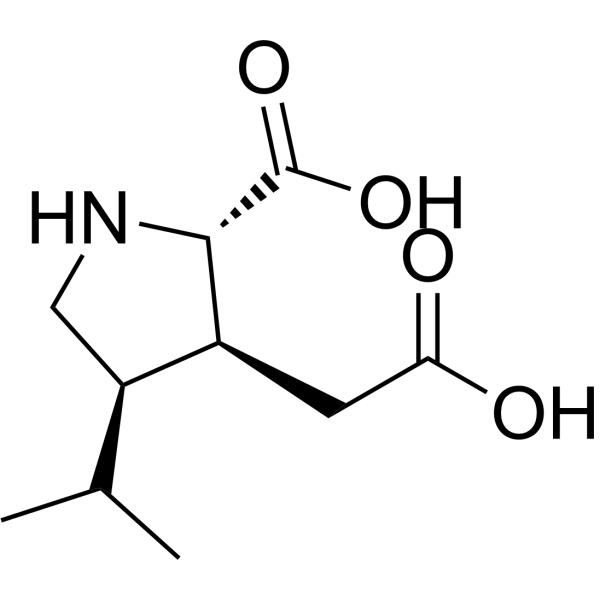
Dihydrokainic acid
Based on 2 publication(s) in Google Scholar
Dihydrokainic acid is a glutamate transporters (especially GLT1) inhibitor. Dihydrokainic acid targets GLT1 with high affinity, effectively inhibiting its transport function. Dihydrokainic acid exerts its effect by inhibiting the uptake of glutamate, leading to an increase in extracellular glutamate concentration, thereby affecting neuronal excitability and neurotransmission. Dihydrokainic acid is mainly applied in the field of neuroscience for research on glutamate-related neural functions, epilepsy, learning, and memory.
For research use only. We do not sell to patients.
- Purity : 99.0%
- CAS No.: 52497-36-6
- Formula: C10H17NO4
- Molecular Weight:215.25
-
Storage:Powder -20°C, 3 years , 4°C, 2 years ; In solvent -80°C, 6 months , -20°C, 1 month

To place orders, for customer services and technical support, please contact: MedChemExpress USA
Tel: 609-228-6898 E-mail: [email protected] [email protected]


-
 Biological Activity
-
Chemical Information
-
Solvent & Solubility
- Protocols
- Purity & Documentation
- References
-
 Help & FAQs


-
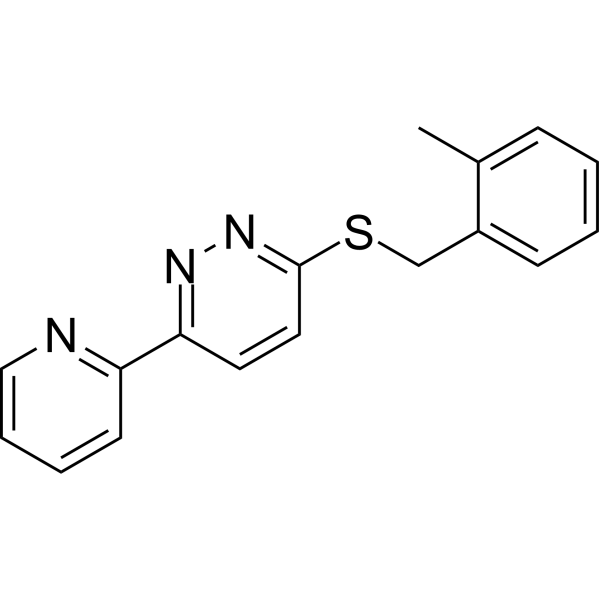
HY-12741
LDN-212320GLT-1/EAAT2 Activator -
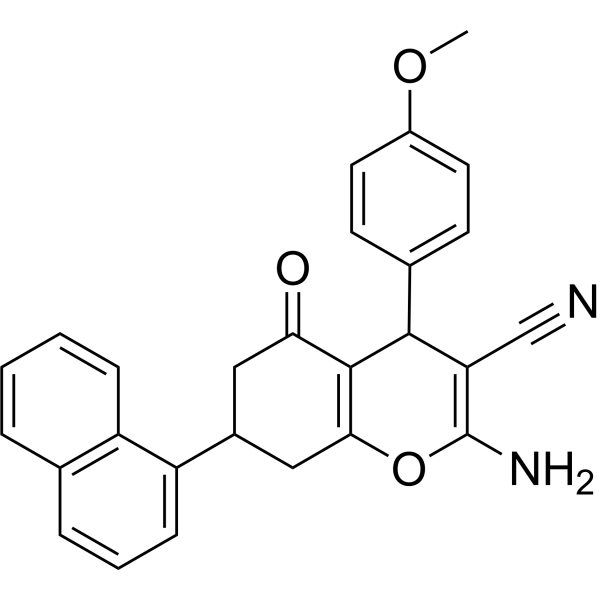
HY-10914
UCPH-101EAAT1 Inhibitor -
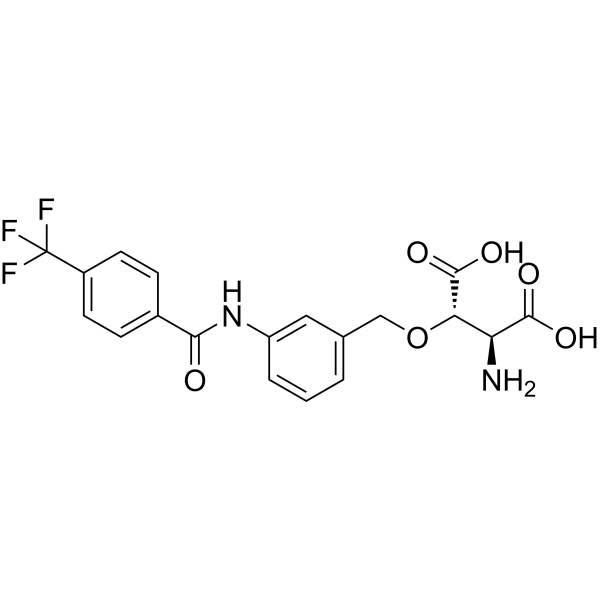
HY-107521
TFB-TBOAGlutamate Transporter Bocker -
HY-107522
DL-TBOAEAAT Inhibitor -
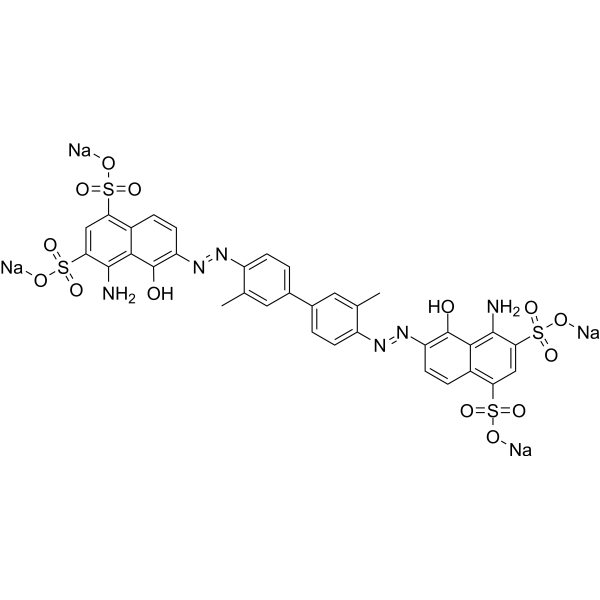
HY-B1102
Evans BlueL-glutamate Uptake Inhibitor -
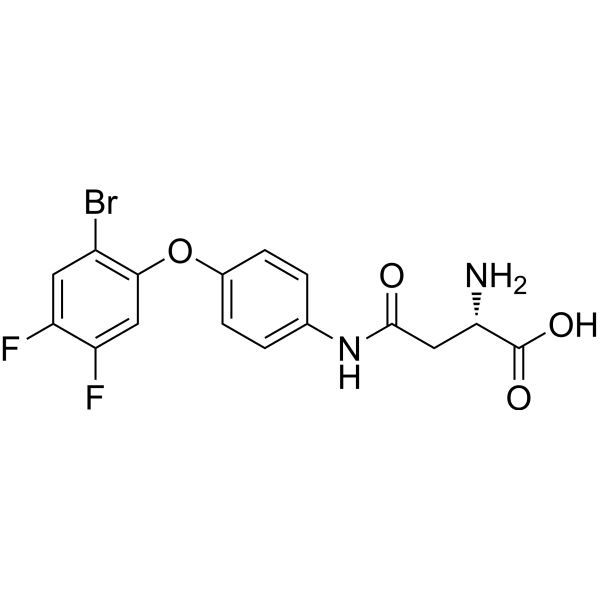
HY-107523
WAY-213613Human EAAT2 Inhibitor -
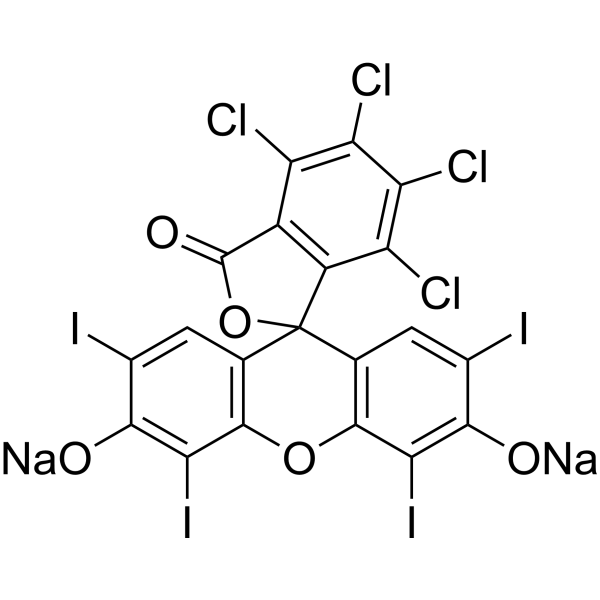
HY-D0214
Acid Red 94 sodiumPhotosensitizer -

HY-100784R
Dihydrokainic acid (Standard)GLT1 Inhibitor -
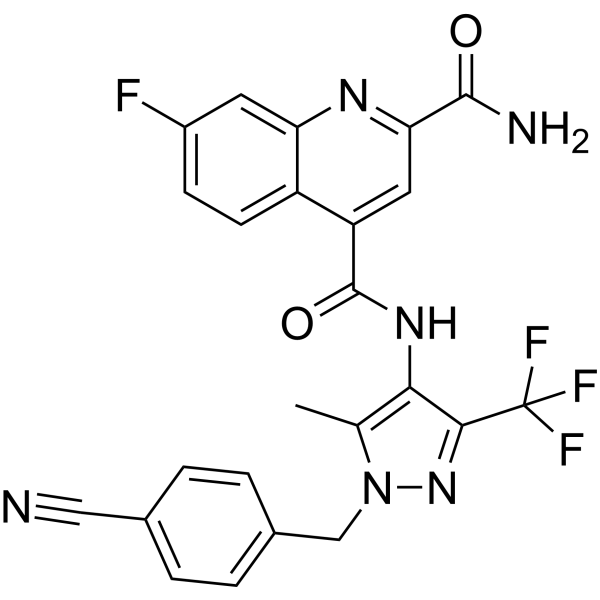
HY-100017
BAY-876GLUT1 Inhibitor -
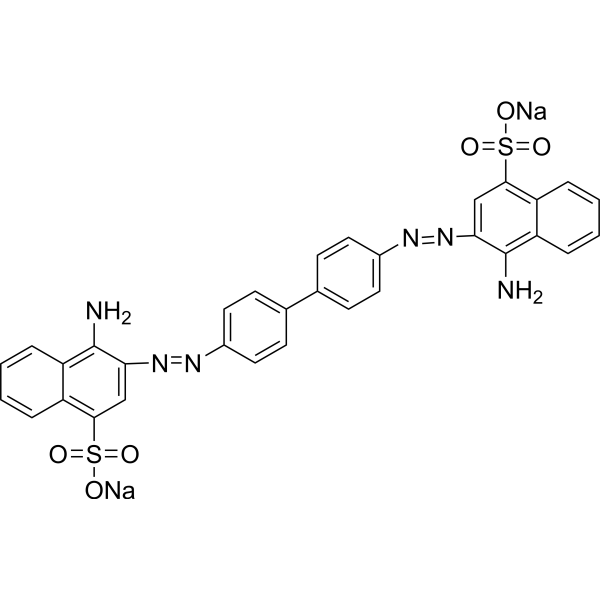
HY-D0236
Congo RedAzo Dye -
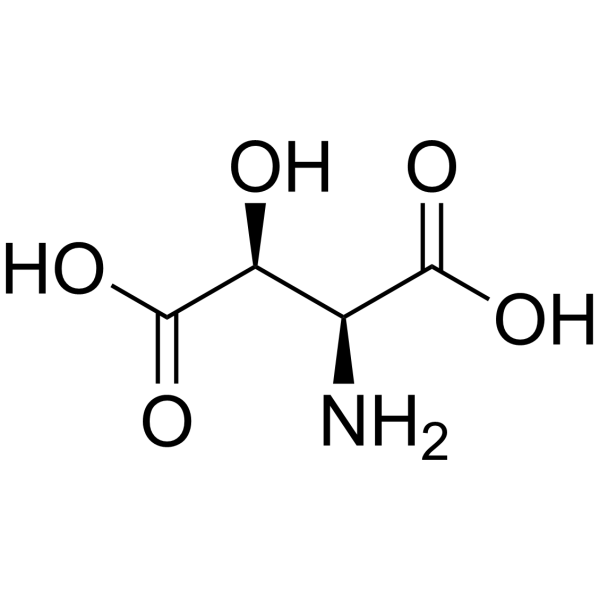
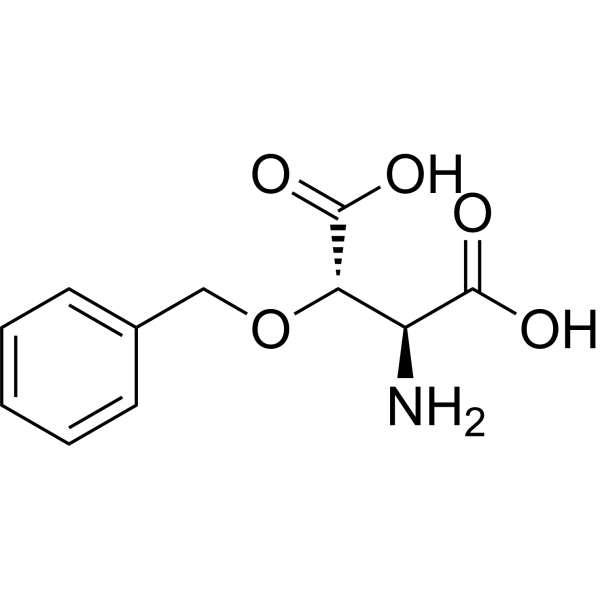
HY-100801
L-threo-3-Hydroxyaspartic acidEAAT Inhibitor -

HY-D0214R
Acid Red 94 sodium (Standard)Biological Dye
Publications Citing Use of MedChemExpress (MCE) Dihydrokainic acid
More

Biological Activity
Description
IC50 & Target
|
EAAT2 |
Cellular Effect
|
Cell Line

|
Type | Value | Description | References |
|---|---|---|---|---|
| HEK293 | IC50 |
>3000 μM
Compound: DHK, dihydrokainic acid
|
Inhibition of glutamate-induced depolarization in human EAAT3 expressed in HEK293 cells by FMP assay
Inhibition of glutamate-induced depolarization in human EAAT3 expressed in HEK293 cells by FMP assay
|
[PMID: 18578477] |
| HEK293 | IC50 |
89 μM
Compound: DHK, dihydrokainic acid
|
Inhibition of glutamate-induced depolarization in human EAAT2 expressed in HEK293 cells by FMP assay
Inhibition of glutamate-induced depolarization in human EAAT2 expressed in HEK293 cells by FMP assay
|
[PMID: 18578477] |
| HEK293 | IC50 |
>3000 μM
Compound: DHK, dihydrokainic acid
|
Inhibition of glutamate-induced depolarization in human EAAT1 expressed in HEK293 cells by FMP assay
Inhibition of glutamate-induced depolarization in human EAAT1 expressed in HEK293 cells by FMP assay
|
[PMID: 18578477] |
In Vitro
Dihydrokainic acid (5 mM; treating cerebellar slices for 15 min) inhibits the uptake of D-[3H]aspartate by cerebellar slices in a concentration-dependent manner[2].
MedChemExpress (MCE) has not independently confirmed the accuracy of these methods. They are for reference only. Further protocols information, click here.
In Vivo
MedChemExpress (MCE) has not independently confirmed the accuracy of these methods. They are for reference only.
-
Animal Model:Kunming strain male mice (male, 35-40 g, not specified age) + novel object recognition (NOR) memory model[4]
-
Dosage:6.25, 12.5, 25 nmol (0.01 M PBS, pH 7.4)
-
Administration:Unilaterally injected into the cerebral ventricle, once at 0.5 h before sampling or 0.5 h before testing
-
Result:Impaired short-term and long-term NOR memory performance, affecting memory acquisition, consolidation, and retrieval.


Chemical Information
-
CAS No. 52497-36-6
-
Appearance Solid
-
Molecular Weight 215.25
-
Formula C10H17NO4
-
Color White to off-white
-
SMILES
O=C(O)C[C@@H]1[C@@H](C(O)=O)NC[C@@H]1C(C)C
-
Shipping
Room temperature in continental US; may vary elsewhere.
-
Storage
Powder -20°C 3 years 4°C 2 years In solvent -80°C 6 months -20°C 1 month


Publications (2)
-
Journal Impact Factor
-
Most Recent
-
J Adv Res
IFITM3 knockout alleviates neuronal parthanatos by restoring astrocytic glutamate uptake in intracerebral hemorrhage mice. [Abstract]2026 May 16:S2090-1232(26)00437-6. PMID: 42144055 -
Cell Chem Biol
Electrochemical sensor toolkit for simultaneous glutamate detection at edge of cleft and peri-soma. [Abstract]2025 Jun 19;32(6):885-898.e11. PMID: 40466640


Solvent & Solubility
In Vitro:
H2O : 5 mg/mL (23.23 mM; Need ultrasonic)
Please refer to the solubility information to select the appropriate solvent. Once prepared, please aliquot and store the solution to prevent product inactivation from repeated freeze-thaw cycles.
Storage method and period of stock solution: -80°C, 6 months; -20°C, 1 month. When stored at -80°C, please use it within 6 months. When stored at -20°C, please use it within 1 month.
* Note: If you choose water as the stock solution, please dilute it to the working solution, then filter and sterilize it with a 0.22 μm filter before use.
Please refer to the solubility information to select the appropriate solvent. Once prepared, please aliquot and store the solution to prevent product inactivation from repeated freeze-thaw cycles.
Storage method and period of stock solution: -80°C, 6 months; -20°C, 1 month. When stored at -80°C, please use it within 6 months. When stored at -20°C, please use it within 1 month.
* Note: If you choose water as the stock solution, please dilute it to the working solution, then filter and sterilize it with a 0.22 μm filter before use.
Concentration (start) × Volume (start) = Concentration (final) × Volume (final)

Protocols
-
Neuronal voltage-sensitive dye imaging
Neuronal voltage-sensitive dye imaging detects membrane-potential-dependent optical changes from dyes associated with neuronal membranes, enabling optical recording of electrical activity from single neurons, dendrites, axons, spines, or neuronal populations in brain slices and cultured neurons. VSD signals are typically reported as fractional fluorescence or absorbance changes over baseline, such as ΔF/F or ΔI/I, and published protocols use high-speed cameras or photodiode arrays because neuronal voltage signals occur on millisecond time scales. Fast VSD imaging can be applied at two common scales: bulk staining of brain slices to measure circuit-level spatiotemporal activity, and single-cell loading or biolistic delivery to record membrane-potential transients from individual neuronal compartments. Optical signals should be interpreted as membrane-potential-related readouts, and validation by simultaneous electrophysiology or pharmacological controls is recommended when the experimen
-
Cell-attached patch-clamp recording
Cell-attached patch-clamp recording measures ionic current through one or more ion channels in a small membrane patch that remains attached to an intact cell; the readout is a time-resolved current trace generated when channels in the sealed patch open and close under controlled pipette voltage or stimulus conditions. Classic applications include single acetylcholine receptor currents in frog skeletal muscle, single sodium-channel currents in cultured rat muscle cells, one-channel NMDA receptor recordings, and mechanically activated PIEZO-channel recordings. The method depends on forming a high-resistance pipette-membrane seal, commonly described as a gigaohm seal, which reduces leak and noise sufficiently to resolve picoampere-scale single-channel currents. In the cell-attached configuration, the patch membrane is not ruptured, so cytosolic composition is not directly dialyzed by the pipette solution.


Purity & Documentation
-
Data Sheet (280 KB)
-
SDS (393 KB)
- English - EN (393 KB)
- Français - FR (393 KB)
- Deutsch - DE (393 KB)
- Norwegian - NO (393 KB)
- Español - ES (393 KB)
- Swedish - SV (393 KB)
- Italian - IT (393 KB)
- Korean - KR (393 KB)
- Portuguese - PT (393 KB)
-
Handling Instructions (2659 KB)
References
[2]. Bouazzaoui M, et al. Kainic acid, AMPA, and dihydrokainic acid effect on uptake and efflux of D-[3H] aspartic acid in cerebellar slices. Neurochem Res. 1996 Dec;21(12):1527-33. [Content Brief]
[3]. Butcher SP, et al. On the epileptogenic effects of kainic acid and dihydrokainic acid in the dentate gyrus of the rat. Neuropharmacology. 1988 Apr;27(4):375-81. [Content Brief]
[4]. Tian SW, et al. Glutamate transporter GLT1 inhibitor dihydrokainic acid impairs novel object recognition memory performance in mice. Physiol Behav. 2019 Feb 1;199:28-32. [Content Brief]


Complete Stock Solution Preparation Table
Please refer to the solubility information to select the appropriate solvent. Once prepared, please aliquot and store the solution to prevent product inactivation from repeated freeze-thaw cycles.
Storage method and period of stock solution: -80°C, 6 months; -20°C, 1 month. When stored at -80°C, please use it within 6 months. When stored at -20°C, please use it within 1 month.
| Optional Solvent | Concentration Solvent Mass | 1 mg | 5 mg | 10 mg | 25 mg |
|---|---|---|---|---|---|
| H2O | 1 mM | 4.6458 mL | 23.2289 mL | 46.4578 mL | 116.1446 mL |
| 5 mM | 0.9292 mL | 4.6458 mL | 9.2916 mL | 23.2289 mL | |
| 10 mM | 0.4646 mL | 2.3229 mL | 4.6458 mL | 11.6145 mL | |
| 15 mM | 0.3097 mL | 1.5486 mL | 3.0972 mL | 7.7430 mL | |
| 20 mM | 0.2323 mL | 1.1614 mL | 2.3229 mL | 5.8072 mL |
* Note: If you choose water as the stock solution, please dilute it to the working solution, then filter and sterilize it with a 0.22 μm filter before use.


Dihydrokainic acid Related Classifications
HY-100784 Related Classifications
 Powered by Bioz