



Dihydrolipoic Acid (Standard)

Based on 1 Customer Validation
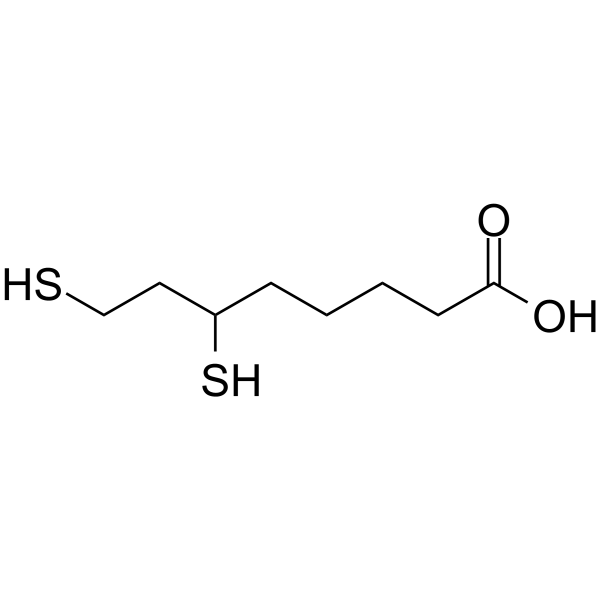
Dihydrolipoic Acid (Standard) is the analytical standard of Dihydrolipoic Acid. This product is intended for research and analytical applications. Dihydrolipoic Acid (DHLA) is an excellent antioxidant capable of scavenging almost any oxygen-centered radical. Dihydrolipoic acid exhibits anti-inflammatory properties in various diseases. Dihydrolipoic Acid exerts a preventive effect via ERK/Nrf2/HO-1/ROS/NLRP3 pathway in LPS-induced sickness behavior rats. Dihydrolipoic Acid can be used for the reaserch of depression.
Para uso exclusivo en investigación. No vendemos a pacientes.
- Pureza : 95.43%
- No. CAS: 462-20-4
- Fòrmula: C8H16O2S2
- Peso molecular:208.34
-
Almacenamiento:
Please store the product under the recommended conditions in the Certificate of Analysis.


To place orders, for customer services and technical support, please contact: MedChemExpress USA
Tel: 609-228-6898 E-mail: [email protected] [email protected]


-
 Product Information
-
Chemical Information
- Pureza y Documentación
-
 Help & FAQs


-
HY-116807
Dihydrolipoic AcidAntioxidant -
HY-B2130A
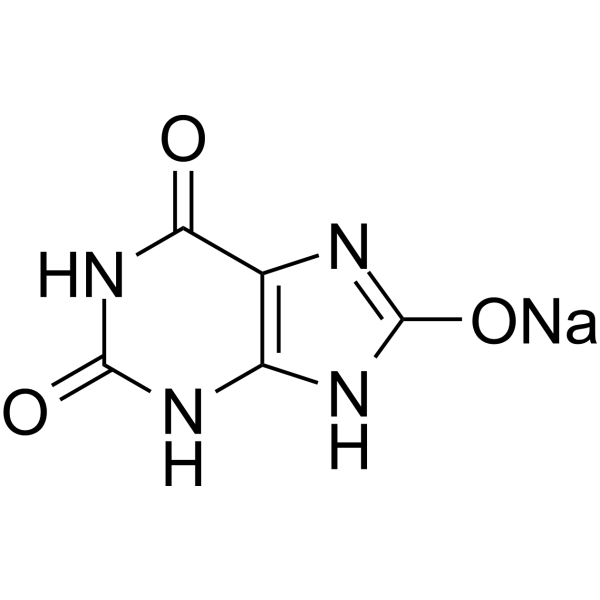
Uric acid sodiumOxygen Radical Scavenger -
HY-Y0366
Lauric acidMiddle Chain-free Fatty Acid -
HY-13653
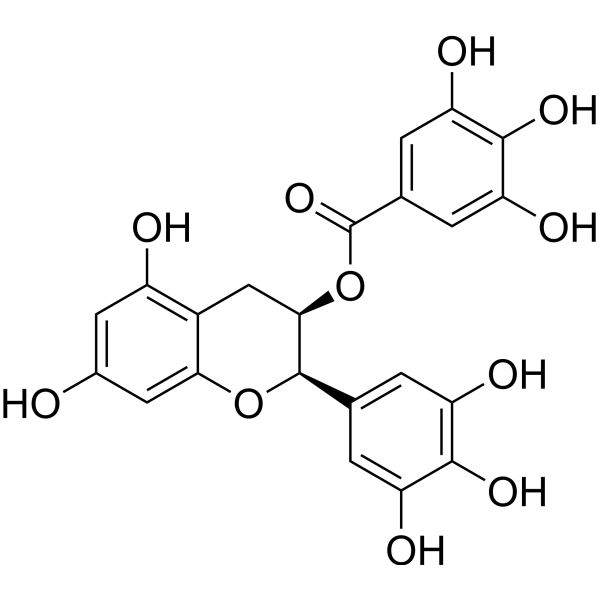
(-)-Epigallocatechin GallateAnticancer Agent -
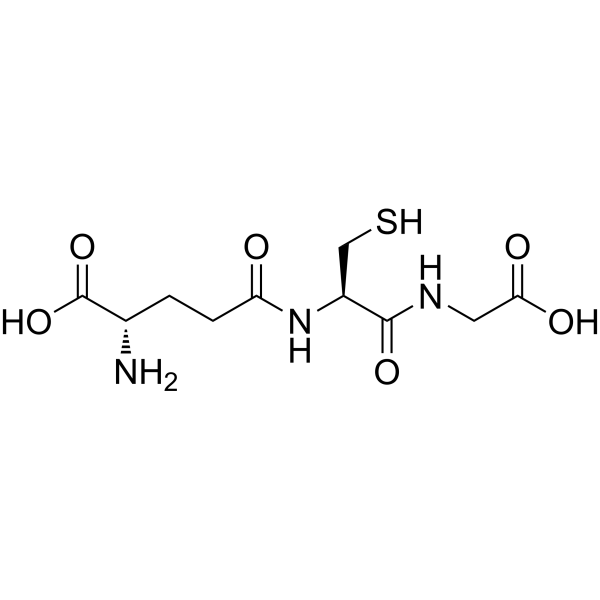
HY-D0187
L-Glutathione reducedAntioxidant -
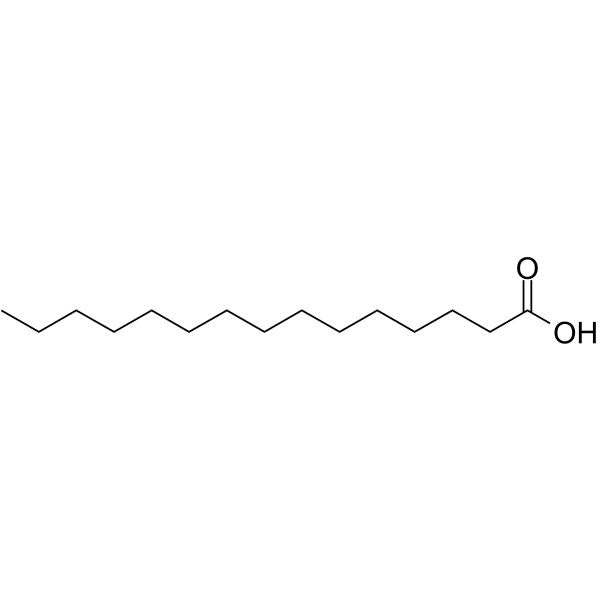
HY-W004283
Pentadecanoic acidSTAT3 Inhibitor -
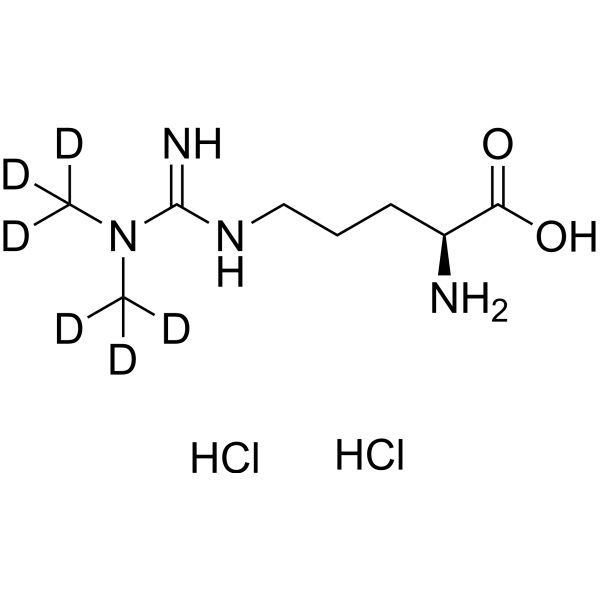
HY-113216BS
Asymmetric-dimethylarginine-d6 dihydrochlorideStable Isotope -

HY-D0187R
L-Glutathione reduced (Standard)Antioxidant -
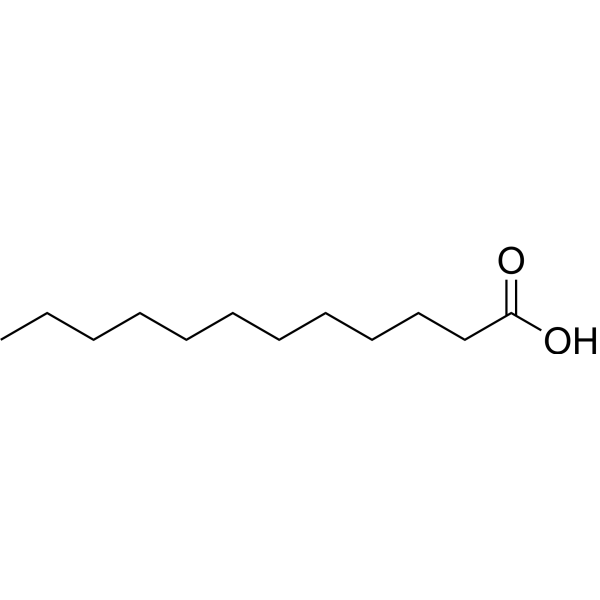
HY-Y0366R
Lauric acid (Standard) -
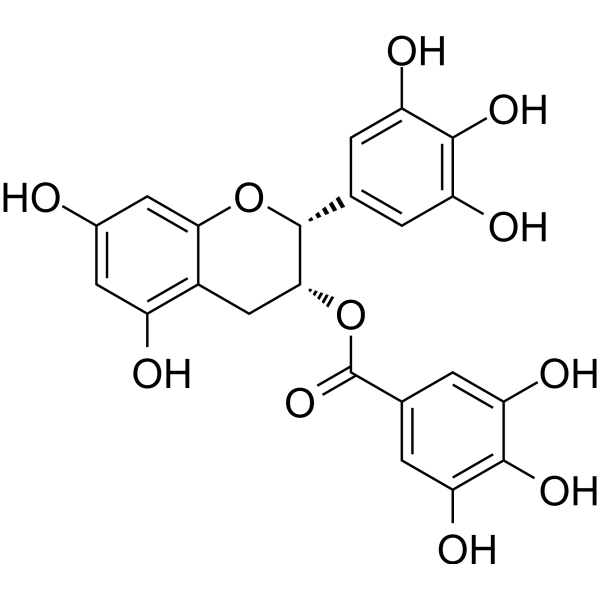
HY-13653R
(-)-Epigallocatechin Gallate (Standard) -

HY-B2130AR
Uric acid sodium (Standard)Reference Standard -
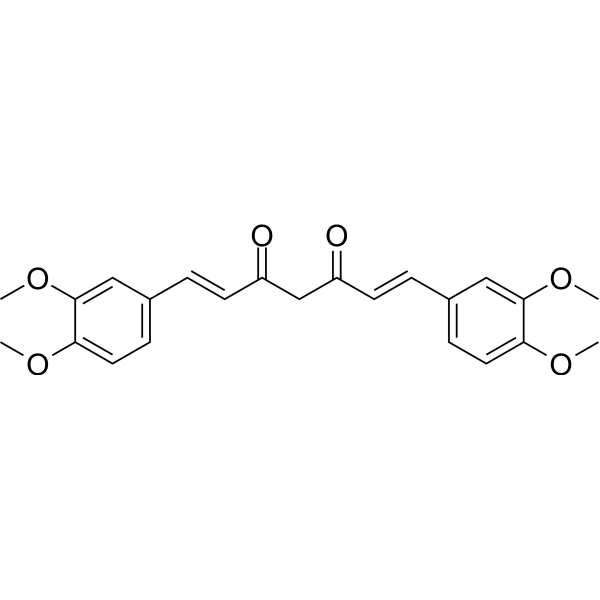
HY-100977
DimethoxycurcuminThioredoxin Reductase Inhibitor


Product Information
Information
Aplicación
The compound is the grade of analytical standard, which is the reference standard supplied assay. It is commonly used in qualitative, quantitative and methodological research experiments in HPLC, GC and MS.


Chemical Information
-
No. CAS 462-20-4
-
Appearance Oil
-
Peso molecular 208.34
-
Fòrmula C8H16O2S2
-
Color Colorless to light yellow
-
SMILES
OC(CCCCC(CCS)S)=O
-
Synonyms
DHLA (Standard)
-
Initial Source
-
Envío
Room temperature in continental US; may vary elsewhere.
-
Almacenamiento
Please store the product under the recommended conditions in the Certificate of Analysis.


Pureza y Documentación
-
SDS (759 KB)
- English - EN (759 KB)
- Français - FR (759 KB)
- Deutsch - DE (759 KB)
- Norwegian - NO (759 KB)
- Español - ES (759 KB)
- Swedish - SV (759 KB)
- Italian - IT (759 KB)
- Korean - KR (759 KB)
- Portuguese - PT (759 KB)
-
Instrucciones de manejo (2659 KB)
Referencias
[1]. Romina Castañeda-Arriaga, et al. Lipoic acid and dihydrolipoic acid. A comprehensive theoretical study of their antioxidant activity supported by available experimental kinetic data. J Chem Inf Model. 2014 Jun 23;54(6):1642-52. [Content Brief]
[2]. Hetao Bian, et al. Dihydrolipoic acid protects against lipopolysaccharide-induced behavioral deficits and neuroinflammation via regulation of Nrf2/HO-1/NLRP3 signaling in rat. J Neuroinflammation. 2020 May 25;17(1):166. [Content Brief]

Calculators
Concentration (start) × Volume (start) = Concentration (final) × Volume (final)


Dihydrolipoic Acid (Standard) Related Classifications
HY-116807R Related Classifications
 Powered by Bioz