



Dimethyl sulfoxide (GMP Like)

Based on 1 Customer Validation
Dimethyl sulfoxide (DMSO) (GMP Like) is the GMP Like class Dimethyl sulfoxide (HY-Y0320C). Dimethyl sulfoxide is an aprotic solvent that can dissolve water-insoluble therapeutic and toxic agents. Dimethyl sulfoxide has a strong affinity for water and has the ability to rapidly penetrate or enhance the penetration of other substances through biological membranes. Dimethyl sulfoxide also has potential free radical scavenging and anticholinesterase effects and may affect coagulation activity. Dimethyl sulfoxide also induces histamine release from mast cells but is thought to have low systemic toxicity.
For research use only. We do not sell to patients.
- Purity : 99.99%
- CAS No.: 67-68-5
- Formula: C2H6OS
- Molecular Weight:78.13
-
Storage:
Please store the product under the recommended conditions in the Certificate of Analysis.


To place orders, for customer services and technical support, please contact: MedChemExpress USA
Tel: 609-228-6898 E-mail: [email protected] [email protected]


-
 Biological Activity
-
Chemical Information
- Protocols
- Purity & Documentation
- References
-
 Help & FAQs


-
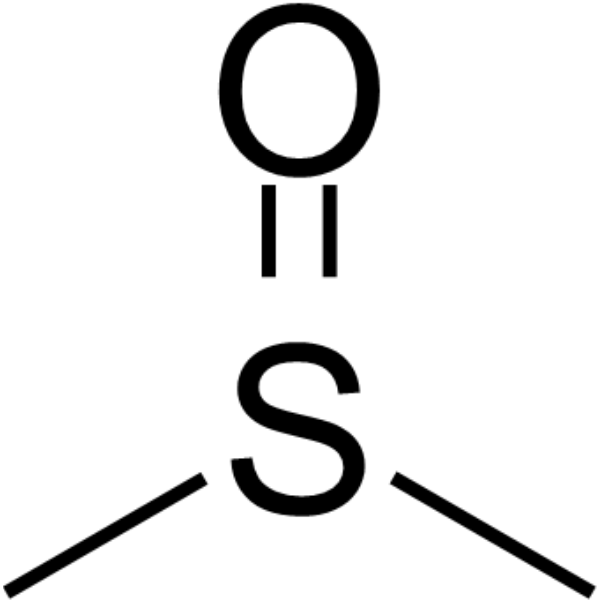
HY-Y0320
Dimethyl sulfoxide, meets analytical specification of Ch.P.Aprotic Solvent -
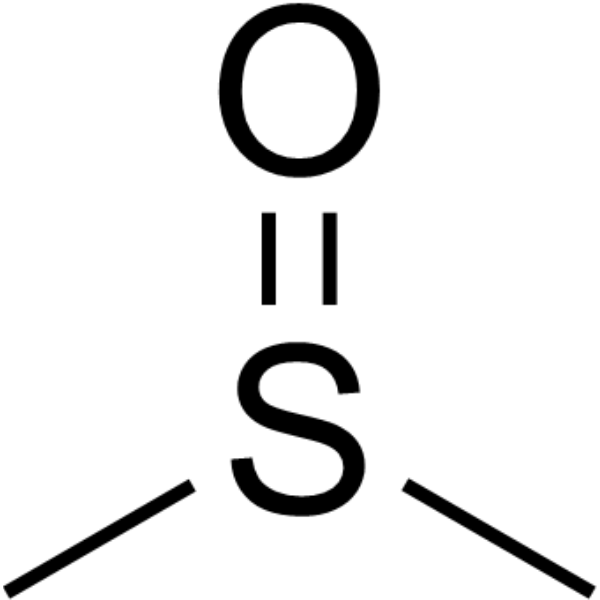
HY-Y0320C
Dimethyl sulfoxideAprotic Solvent -

HY-Y0320D
Dimethyl sulfoxide, cryoprotectant vitrification agentBiochemical Assay Reagent -

HY-Y0320R
Dimethyl sulfoxide (Standard)Aprotic Solvent -
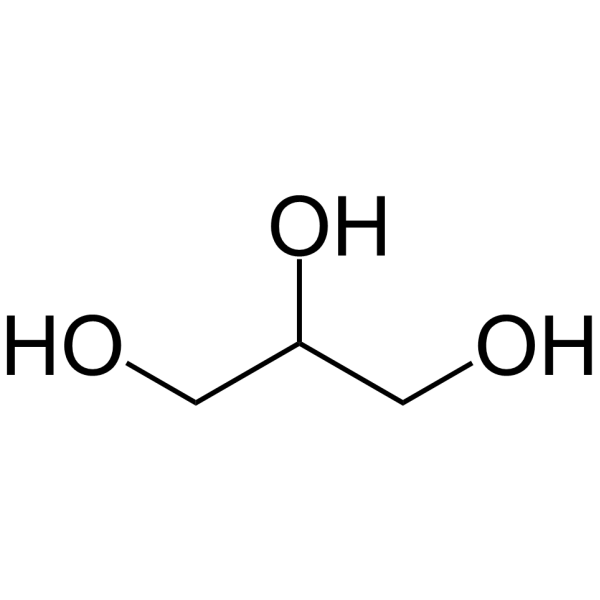
HY-B1659
GlycerolEndogenous Metabolite -

HY-Y0320E
Dimethyl sulfoxide (suitable for HPLC)Aprotic Solvent -
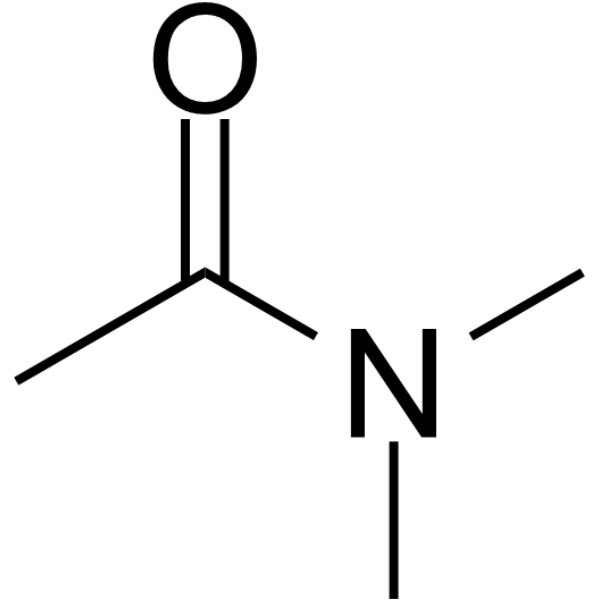
HY-W042416
N,N-DimethylacetamideAnti-inflammatory agent -
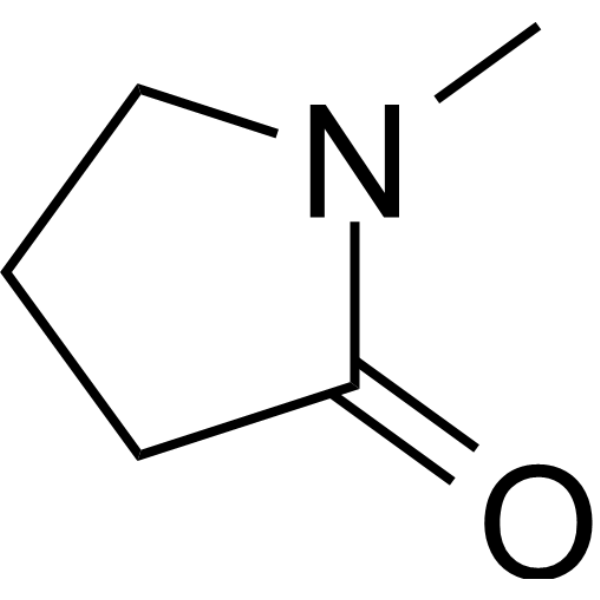
HY-Y1275
N-MethylpyrrolidoneFive-membered Cyclic Amide


Biological Activity
Description
In Vitro
Dimethyl sulfoxide (DMSO) is a colorless liquid. Dimethyl sulfoxide is a polar, aprotic solvent miscible with water and able to dissolve an enormous catalog of polar and nonpolar small molecules.
MedChemExpress (MCE) has not independently confirmed the accuracy of these methods. They are for reference only. Further protocols information, click here.


Chemical Information
-
CAS No. 67-68-5
-
Appearance Liquid (Density: 1.1 g/cm3)
-
Molecular Weight 78.13
-
Formula C2H6OS
-
Color Colorless to light yellow
-
SMILES
O=S(C)C
-
Synonyms
DMSO (GMP Like)
-
Shipping
Room temperature in continental US; may vary elsewhere.
-
Storage
Please store the product under the recommended conditions in the Certificate of Analysis.

Protocols
-
Subchronic/Chronic Toxicity Study
A subchronic/chronic oral toxicity study detects systemic adverse effects caused by repeated administration of a test article, using mortality, clinical signs, body weight, food/water intake, ophthalmology, urinalysis, hematology, serum biochemistry, organ weights, gross necropsy, and histopathology as integrated readouts. The readout reflects dose-related physiological injury, target-organ pathology, reversibility after recovery, and derivation of NOAEL, LOAEL, or related point-of-departure values when the dataset supports them.
-
Acute Systemic Toxicity Study
Acute systemic toxicity studies evaluate adverse effects occurring after a single exposure, or repeated exposure within a short acute window, and the main in vivo readouts are mortality, moribund condition, clinical signs, body-weight change, and gross pathological findings; acute oral toxicity methods were developed to replace classical LD50 testing with reduced-animal designs such as fixed-dose procedure, acute toxic class method, and up-and-down procedure. The fixed-dose procedure classifies acute toxicity by administering predefined dose levels and observing evident toxicity rather than using death as the primary endpoint, whereas the acute toxic class method uses sequential groups of three animals per step and the up-and-down procedure doses animals sequentially to estimate an LD50 with fewer animals than conventional LD50 testing.


Purity & Documentation
-
Data Sheet (271 KB)
-
SDS (251 KB)
- English - EN (251 KB)
- Français - FR (251 KB)
- Deutsch - DE (251 KB)
- Norwegian - NO (251 KB)
- Español - ES (251 KB)
- Swedish - SV (251 KB)
- Italian - IT (251 KB)
- Korean - KR (251 KB)
- Portuguese - PT (251 KB)
-
Handling Instructions (2659 KB)
References

Calculators
Concentration (start) × Volume (start) = Concentration (final) × Volume (final)


Dimethyl sulfoxide (GMP Like) Related Classifications
HY-Y0320GL Related Classifications
 Powered by Bioz