



Paraptosis Inducer
-
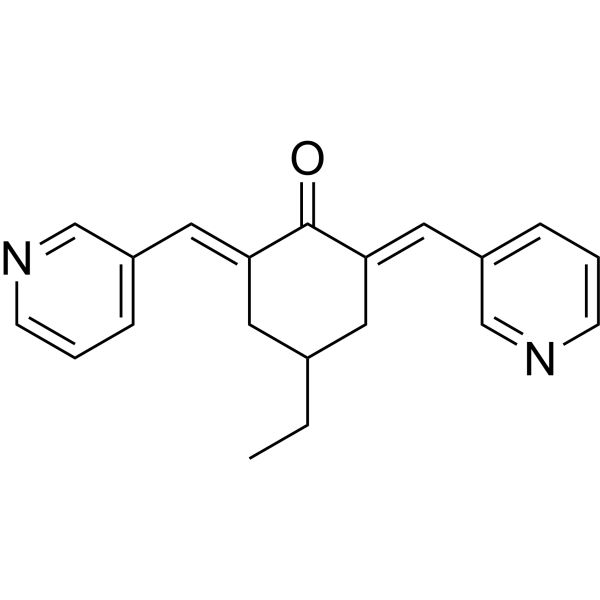
MCB-613
 0 Images
MCB-613 is a potent Steroid receptor coactivator SRC small molecule ‘stimulator’ (SMS), super-stimulates SRCs’ transcriptional activity. MCB-613 increases SRCs’ interactions with other coactivators and markedly induces ER stress coupled to the generation of reactive oxygen species (ROS). MCB-613 is a SMS that target oncogenes can be exploited as anti-cancer agents by over-stimulating the SRC oncogenic program.
-
Brassinin
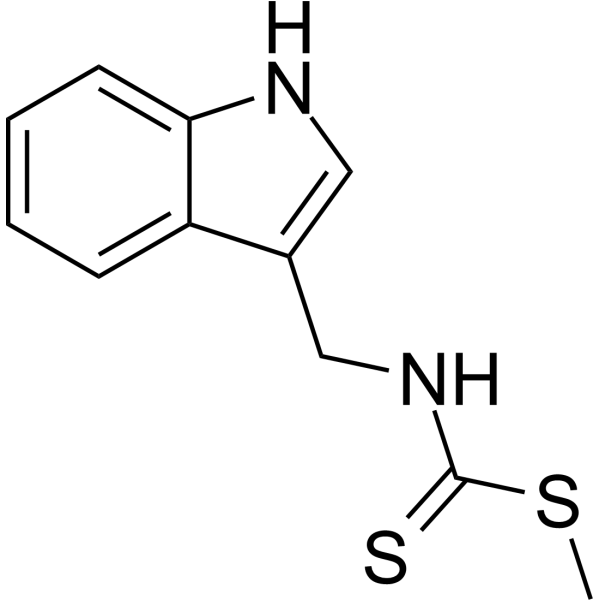 0 ImagesSynonyms: Brassinine
Brassinin is an indole derivative found in cruciferous plants. Brassinin acts as an IDO inhibitor (Ki = 97.7 μM). Brassinin inhibits angiogenesis and induces apoptosis, autophagy, paraptosis, ROS production, and ER stress. Brassinin selectively stimulates lysosomal degradation of Tie2 and promotes lysosomal and proteasomal degradation of FGFR1 in endothelial cells, downregulating AKT and ERK phosphorylation. Brassinin inhibits endothelial cell proliferation, migration, tube formation, spheroid sprouting, and angiogenesis. Brassinin inhibits PI3K/Akt/mTOR/S6K1 signaling, upregulates p21 and p27, and induces G1 phase cell cycle arrest through RB hypophosphorylation. Brassinin inhibits tyrosinase catalytic activity, reduces tyrosinase mRNA, and inhibits MITF nuclear translocation. Brassinin is used for research on triple-negative breast cancer, chronic myeloid leukemia, colon cancer, glioma, atherosclerosis, and skin cancer.
-
BQZ-485
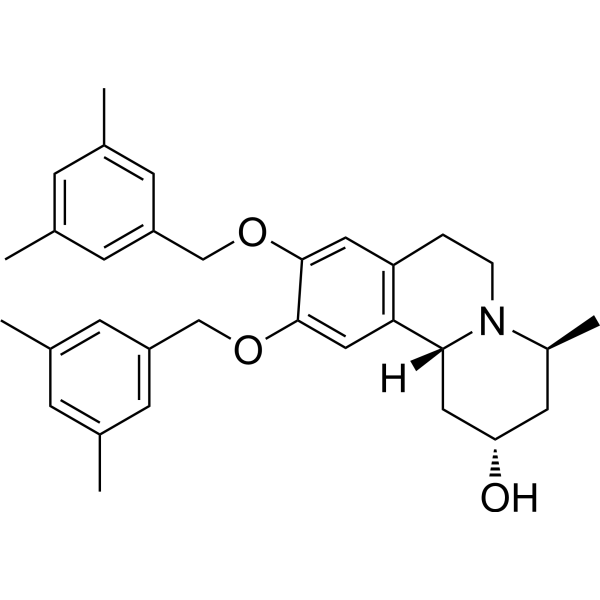 0 ImagesCat. No.: HY-156242CAS No.: 1906915-49-8
BQZ-485 is a GDI2 inhibitor and a paraptosis inducer with antitumor activity. BQZ-485 binds to the Rab-binding platform domain of GDI2, disrupts the interaction between GDI2 and Rab1A, and impairs the membrane recycling of Rab1A. BQZ-485 blocks vesicle trafficking from the endoplasmic reticulum to the Golgi apparatus, and induces endoplasmic reticulum expansion, endoplasmic reticulum fusion, endoplasmic reticulum stress, unfolded protein response and cytoplasmic vacuolization. BQZ-485 is applicable to pancreatic cancer-related research.
-
DHW-221
 0 ImagesCat. No.: HY-130133CAS No.: 2378831-21-9
DHW-221 is a potent orally active dual PI3K/mTOR inhibitor, exhibiting low nanomolar potency against all four Class I PI3K isoforms and mTOR (PI3Kα, IC50 = 0.50 nM; PI3Kβ, IC50 = 1.9 nM; PI3Kγ, IC50 = 1.8 nM; PI3Kδ, IC50 = 0.74 nM; mTOR, IC50 = 3.9 nM). DHW-221 exerts antitumor effects by blocking the PI3K/Akt/mTOR pathway and inducing mitochondrial apoptosis and paraptosis (via Endoplasmic Reticulum (ER) stress and MAPK signaling) and arrests cell cycle, thereby inhibiting cell migration, invasion and angiogenesis. DHW-221 inhibits tumor growth in both the A549/Taxol (HY-B0015) and the HCC827 xenograft mouse models. DHW-221 can be used for non-small cell lung cancer (NSCLC), colon and breast cancer research.
-
fac-[Re(CO)3(L3)(H2O)][NO3]
![fac-[Re(CO)3(L3)(H2O)][NO3]](https://file.medchemexpress.com/product_pic/hy-155719.gif "Click to View fac-[Re(CO)3(L3)(H2O)][NO3] Product Detail") 0 ImagesCat. No.: HY-155719
0 ImagesCat. No.: HY-155719fac-[Re(CO)3(L3)(H2O)][NO3] (compound 3), the rhenium(I) tricarbonyl aqua complex, is an anticancer agent associated with mitochondrial dysfunction. fac-[Re(CO)3(L3)(H2O)][NO3] is cytotoxic to prostate cancer cells with IC50=0.32 μM (PC-3 cells). fac-[Re(CO)3(L3)(H2O)][NO3] mainly accumulates in mitochondria, down-regulates ATP production in PC3 cells, and promotes paraptosis. However, fac-[Re(CO)3(L3)(H2O)][NO3] did not induce necrosis, apoptosis and autophagy.
-
Chalcomoracin
 0 ImagesCat. No.: HY-N20674CAS No.: 76472-89-4
Chalcomoracin is an orally active anticancer agent. Chalcomoracin exhibits anticancer, antibacterial, and α-glucosidase inhibitory activities, with an IC50 of 14.23 µM against yeast α-glucosidase and an IC50 of 5.5 μM against FabI of Staphylococcus aureus. Chalcomoracin reduces the phosphorylation levels of ERK, JNK, and P38; enhances the phosphorylation level of ERK1/2; regulates the MAPK, mTOR, AKT, and p53 signaling pathways; upregulates the expression of Chop, Bip, PINK1, GRP78, and GADD153; and downregulates the expression of Alix. Chalcomoracin induces apoptosis (apoptosis), endoplasmic reticulum stress (endoplasmic reticulum stress), paraptosis (paraptosis), ROS production, mitophagy (mitophagy), and autophagy (autophagy); it inhibits cancer cell viability, colony-forming ability, migration, invasion, proliferation, tumorigenesis, fatty acid synthesis, S. aureus growth, vitreous-stimulated retinal cell activity, and cell cycle progression at the G0/G1 phase. Chalcomoracin can be used in research related to hepatocellular carcinoma, non-small cell lung cancer, triple-negative breast cancer, prostate cancer, proliferative vitreoretinopathy, pancreatic cancer, diabetes, and bacterial infections.
-
(E/Z)-MCB-613
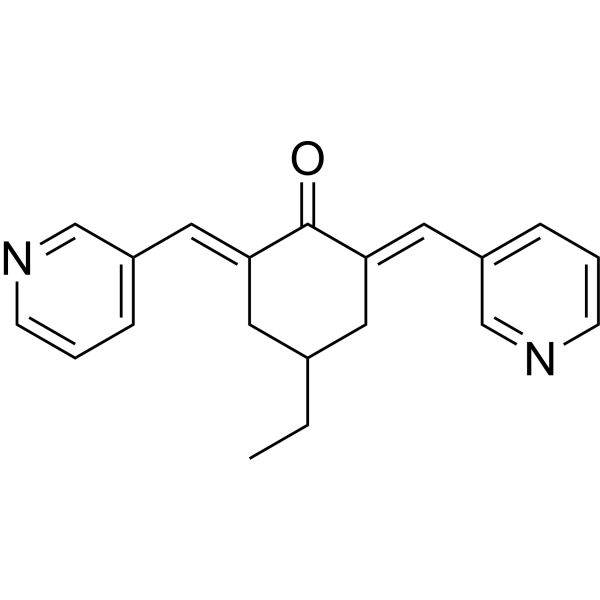 0 ImagesCat. No.: HY-19625ACAS No.: 296792-62-6
(E/Z)-MCB-613 is a pan-Steroid Receptor Coactivator (SRC) stimulator. (E/Z)-MCB-613 overstimulates SRC activity in cancer cells resulting in excessive generation of reactive oxygen species (ROS), leading to cell stress and death by a process called paraptosis. (E/Z)-MCB-613 is a cytotoxic molecule that plays an important role in cancer.
-
PROTAC GDI2 Degrader-1
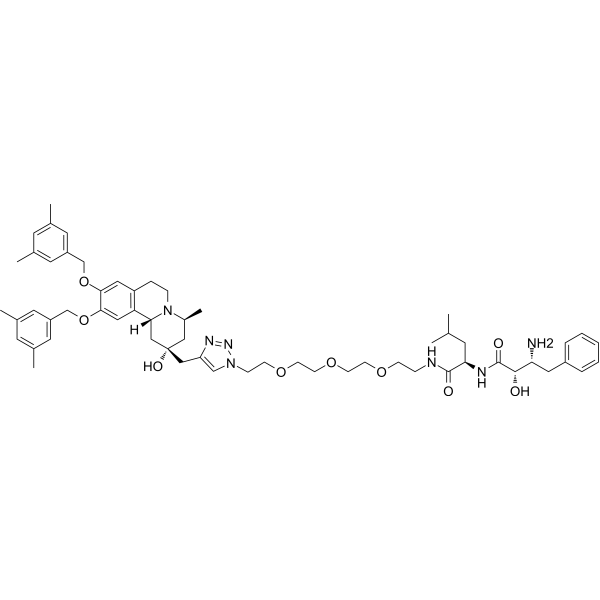 0 ImagesCat. No.: HY-156244
PROTAC GDI2 Degrader-1 is a GDI2 PROTAC degrader with a DC50 value of 1.48 μM and a Kd value of 23.9 μM. PROTAC GDI2 Degrader-1 triggers paraptosis in tumor cells via endoplasmic reticulum expansion and fusion, endoplasmic reticulum stress, unfolded protein response, and cytoplasmic vacuolization. PROTAC GDI2 Degrader-1 exhibits significant in vivo anti-tumor activity in pancreatic cancer xenograft models. PROTAC GDI2 Degrader-1 can be used for research related to pancreatic cancer.
-
[Ag(2,2′-bipy)(dppe)][CF3SO3]
![[Ag(2,2′-bipy)(dppe)][CF3SO3]](https://file.medchemexpress.com/product_pic/hy-157974.gif "Click to View [Ag(2,2′-bipy)(dppe)][CF3SO3] Product Detail") 0 ImagesCat. No.: HY-157974
0 ImagesCat. No.: HY-157974[Ag(2,2′-bipy)(dppe)][CF3SO3] (compound 4) can induce cell paraptosis, and can be used for stusy of resistant ovarian cancer.



